

It’s strange to think that it was barely five years ago that just about every big brand offered a well-priced and well-equipped aluminium bike that mimicked the company’s more premium carbon offerings. Fast-forward to today, and those options are oddly slim.
Specialized was one such brand to have offered nice aluminium bikes aimed at cyclocross racing that doubled as solid and sporty gravel/all-road machines, but the Crux E5 disappeared in 2019 and had been missing since. After a long hiatus, it’s now returned as the new Crux DSW, and quite simply, it’s a metal copy of the company’s gravel/CX carbon race machine.
The Crux DSW Comp is priced at US$2,600 / £2,300 / AU$4,000 for the complete bike (or available as a frameset). I’ve been testing it since June and it’s time to share my thoughts and experiences of this enjoyably simple option.
Good stuff: Incredibly simple to work on and maintain, a frame worth upgrading with easy and wide-open part compatibility, good tyre clearance, well-balanced geometry for racing purposes, SRAM Apex mechanical does the trick.
Bad stuff: A little stack height would broaden its appeal, cut-outs at bottom bracket let dirt into the frame, stock components lead to a stiff ride, the one complete bike option doesn’t represent stellar value, crummy headset, toe overlap in smaller sizes with bigger tyres.
Recap
The Crux was previously the Californian company’s dedicated cyclocross platform, with recent years seeing the model fade into being more of a do-it-all thing for gravel racing, all-road, and cyclocross.
The existing carbon Crux – which the Crux DSW is modelled after – shares a lot in common with Specialized’s Aethos road bike. Simplified tube shapes and bare-bones features work to provide a bike that prioritises low weight, easy ownership, and smooth ride quality over details such as integration and visuals-led aerodynamics. For example, the Crux is one of the few premium race-oriented bikes on the market to not hide hoses/cables through the headset in favour of simpler servicing. That low weight and simplicity has helped to make the carbon Crux a popular pick for not only those into gravel or cylocross racing, but also some riders who wanted what was effectively a wider-tyre and subtly more relaxed version of the Aethos.
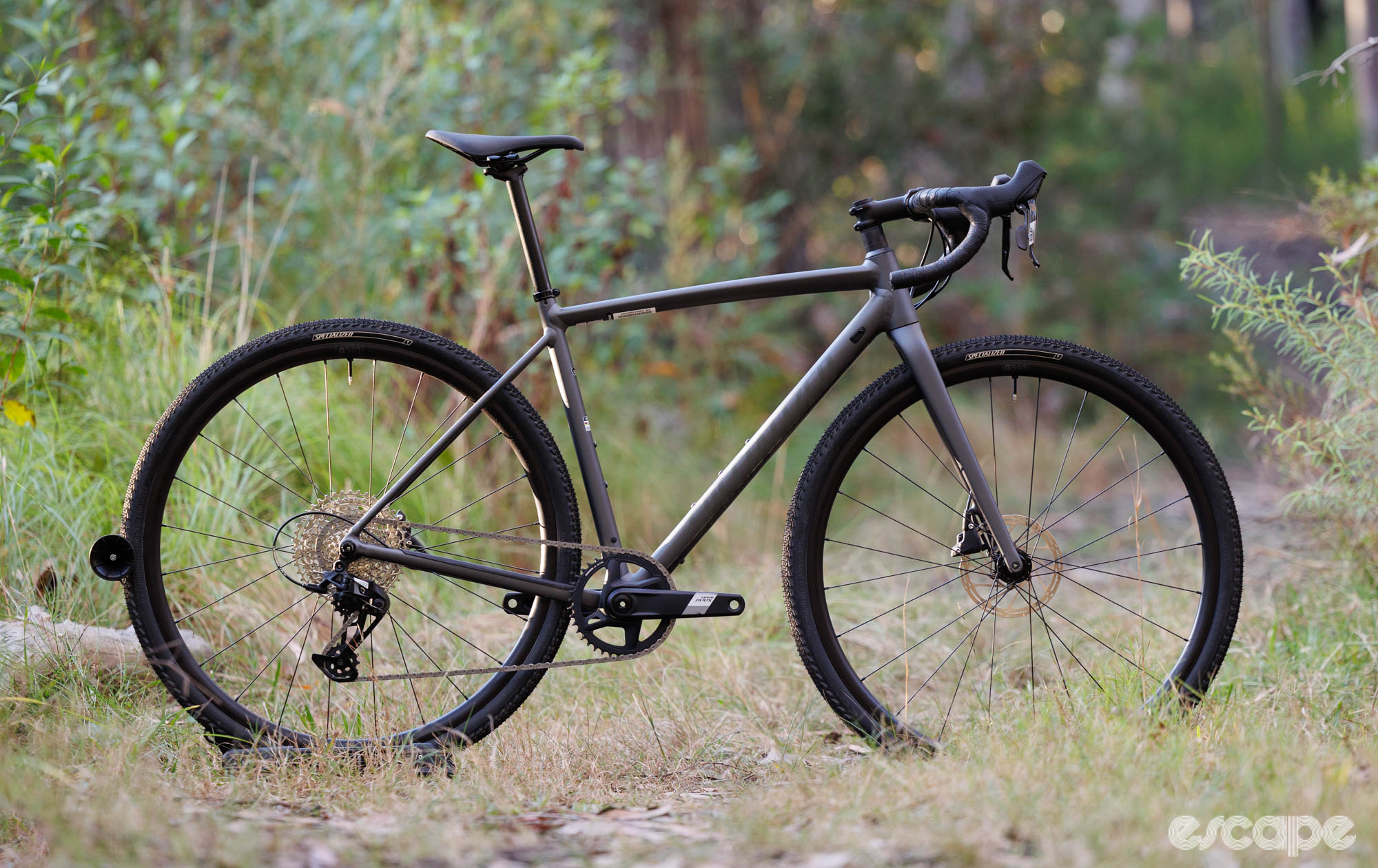
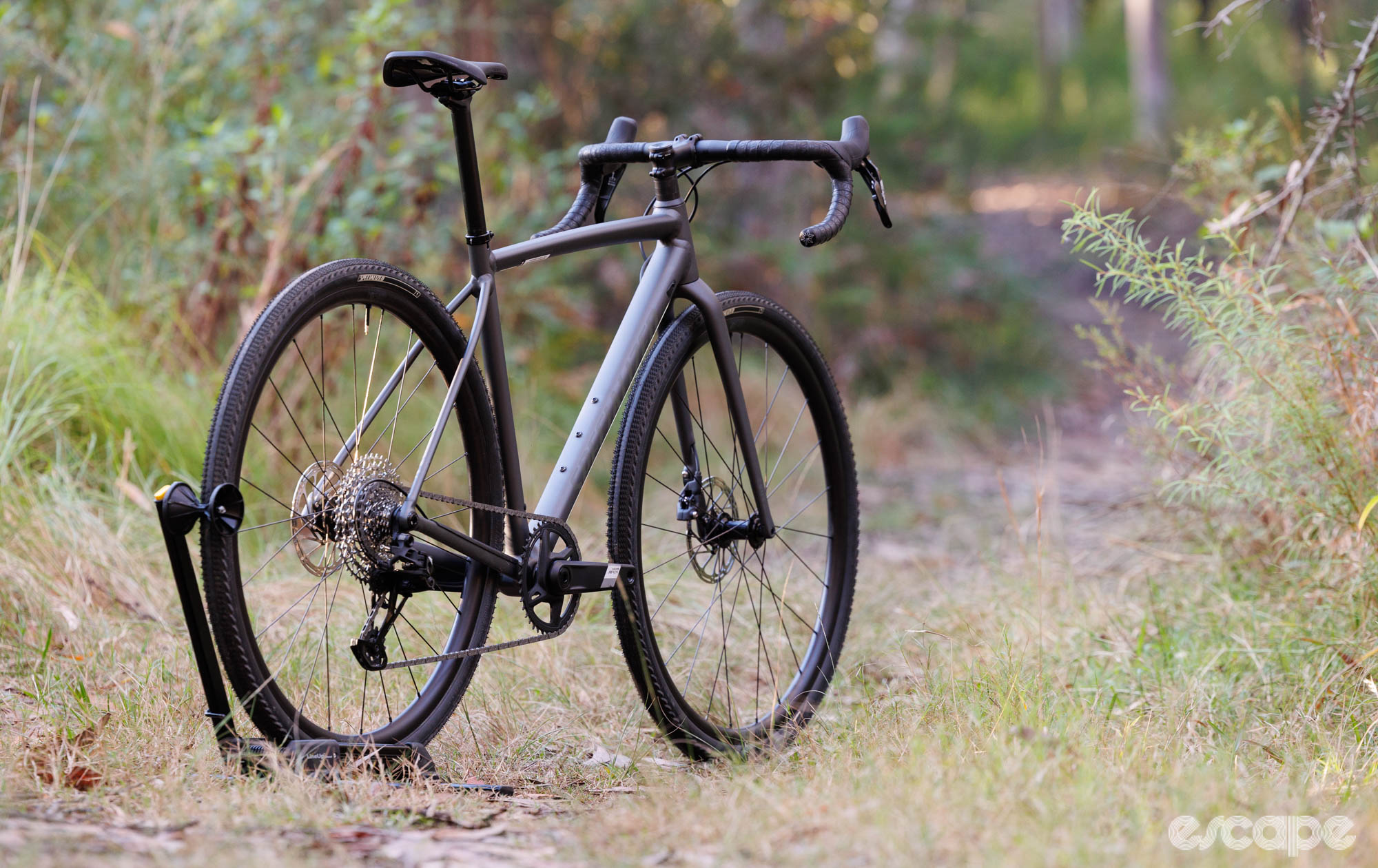
The Crux DSW makes no significant changes from the Crux’s simple design, and from afar, you’d be hard-pressed to pick the metal version from its carbon sibling. The relatively narrow tube shapes offer a similar almost-round and traditional-looking visual without any obvious efforts made toward aerodynamics. The top tube is formed into a diamond-like shape that intersects at the head tube. The seatstays are elegantly thin, while the chainstays are impressively narrow in profile. Up front sits a full carbon fork (50 mm rake for all sizes) that is identical to the top-tier Crux (approximately 400 g).
There are modular cable routing ports on either side of the down tube, with options for electronic or mechanical, 1x or 2x shifting, plus the ability to run a dropper post. Like that cable routing, the regular 27.2 mm round seatpost, external seatpost clamp, standard 1 1/8" stem, and English threaded bottom bracket are all items that we took for granted in the early 2000s and I eagerly welcome back today. Meanwhile, a SRAM Universal Derailleur Hanger (UDH) is a modern addition that keeps the Crux DSW compatible with just about every rear derailleur, new and old (the UDH interface is required for using the latest SRAM Transmission and Red XPLR AXS derailleurs).
Standing for D’Aluisio Smartweld, the DSW in the name signals some fancy details in the aluminium frame construction. While a road bike like the Allez Sprint DSW employs a special head tube lug for greater stiffness and integrated cable routing, the Crux DSW keeps things simpler, with the only unique detail being the double-butted and D-shaped down tube that is hydroformed (molded) as a single piece with the bottom bracket area. The design is said to improve stiffness in the lower part of the frame, and it gives a large area for the chainstays and seat tube to be welded to. The English threaded bottom bracket shell is then welded within this formed down tube, with cut-outs visible from the outer shell that exist largely for fixturing during the welding process.
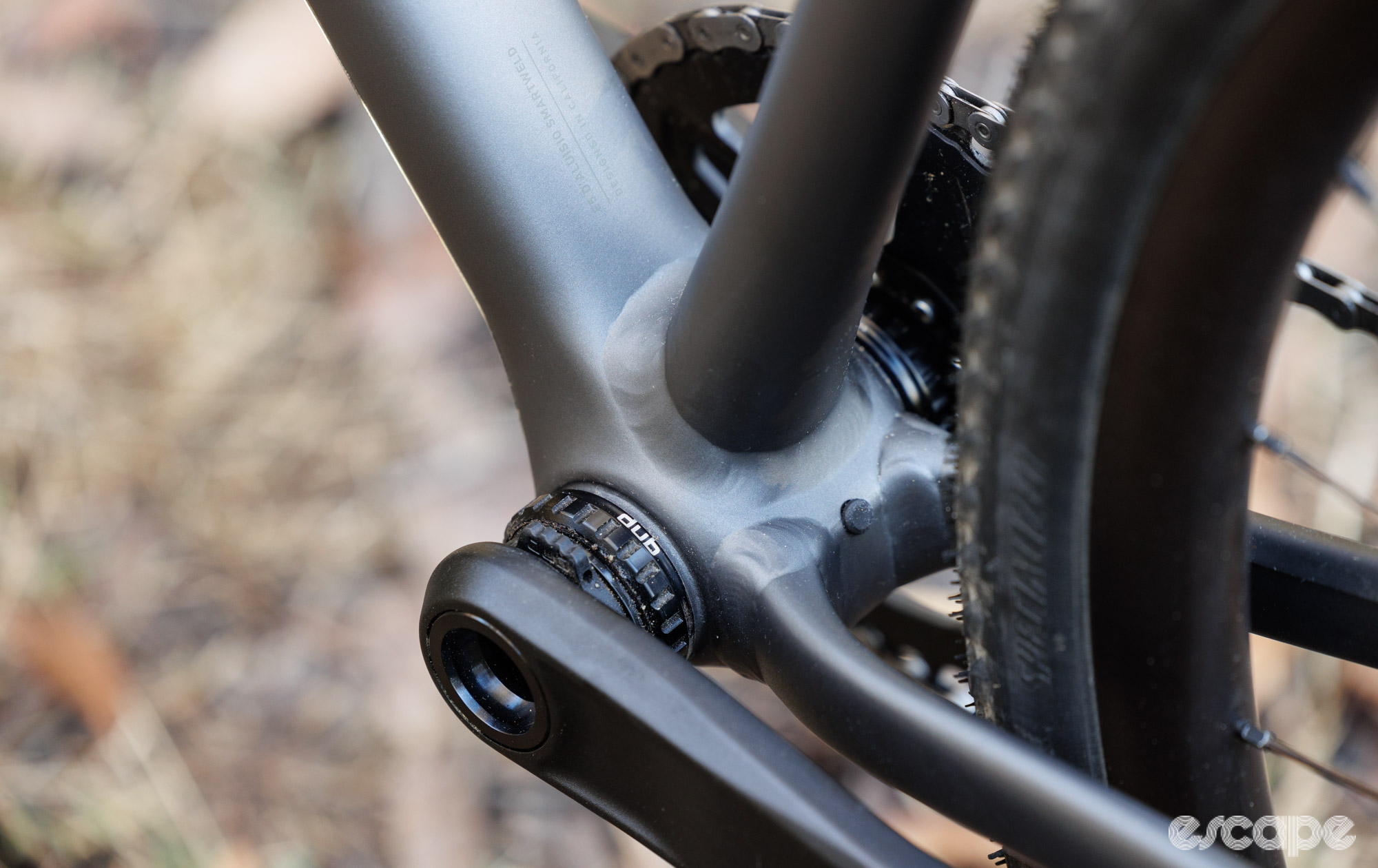
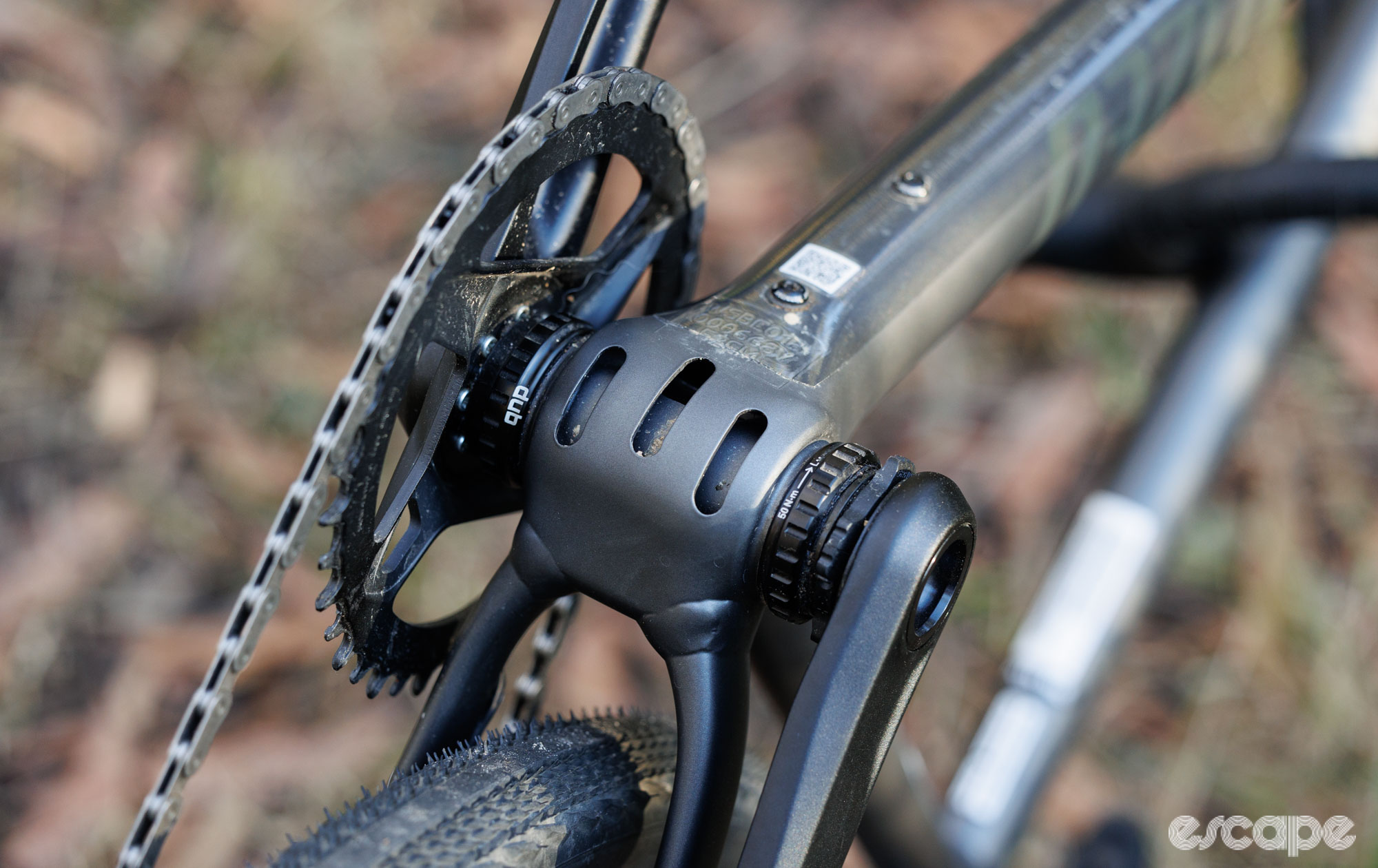
There’s no denying that the welds seen at each tube junction offer plenty of material support and should stand the test of time. Still, they’re the least pretty thing about the frame. It’s a story of function over form, and they remain the big giveaway that you’re looking at an aluminium version of the Crux.
A 56 cm painted version of this frame is claimed to weigh 1,399 grams, an impressive figure for an aluminium frame that, Specialized claims, sets a benchmark. Still, it’s a fair bit more than the approximately 825 g figure of the existing Pro/Expert/Comp Crux carbon frame.
Tyre clearance is unchanged from the carbon version, too. While retaining 6 mm of surrounding clearance, the Crux DSW is rated for 700 x 47 mm tyres or 53 mm (2.1") in a 650B wheelsize. I tested a measured 700 x 46 mm tyre in the frame and the pinch point was the width at the chainstays, but there is some room to go wider if you’re not anticipating thick mud.
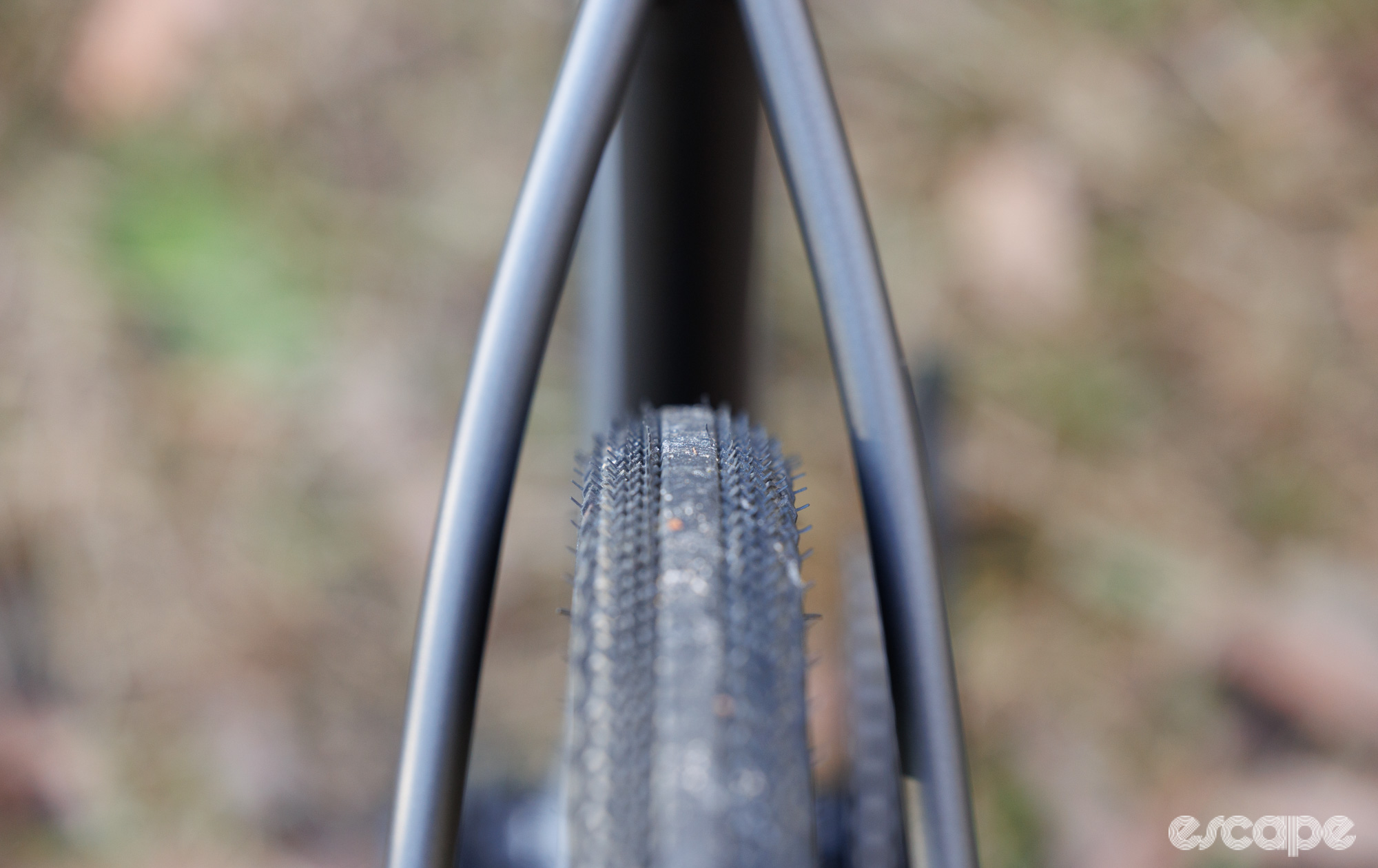
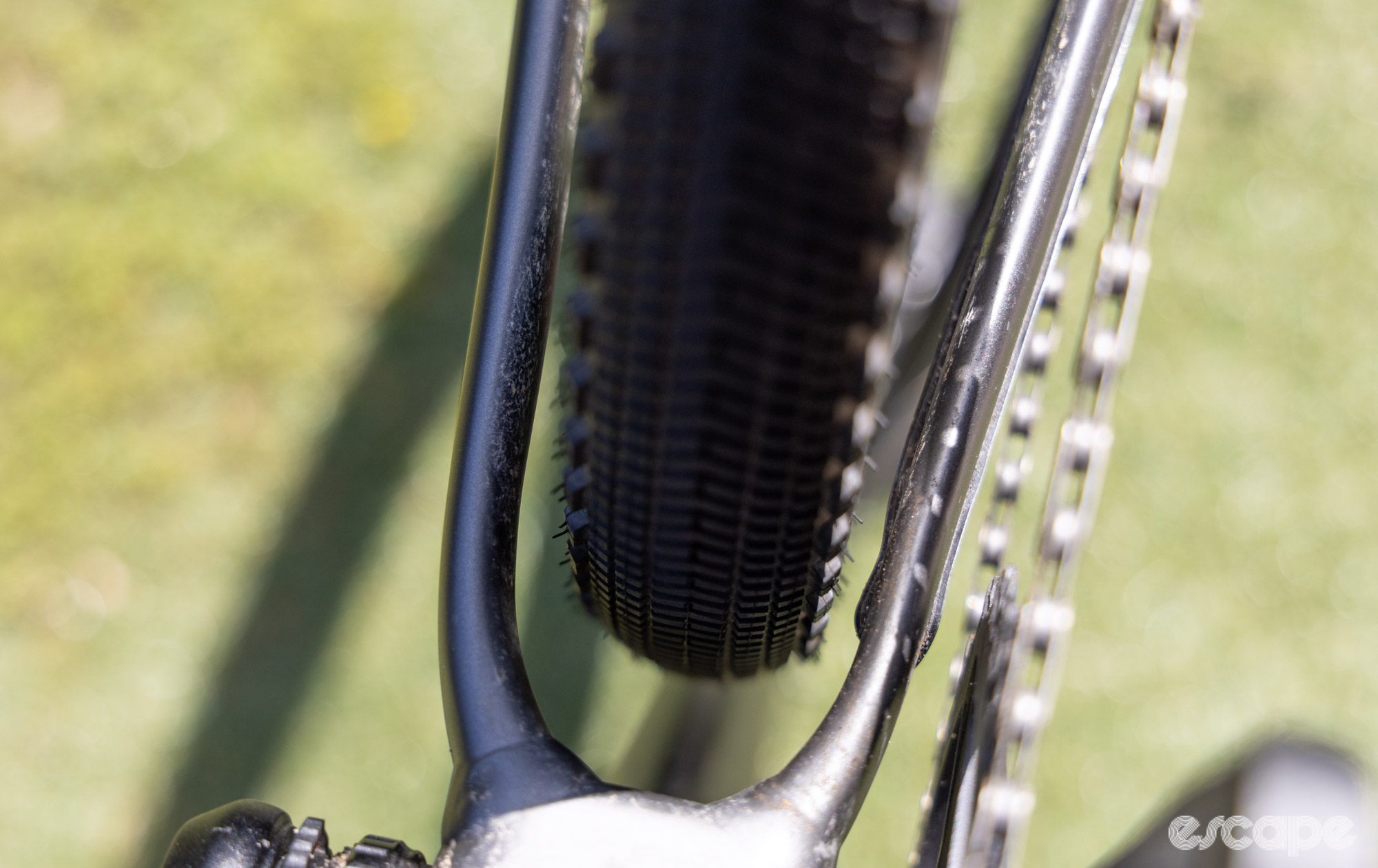
Such tyre clearance exists with either 1x or 2x drivetrain setups, with the latter based on 2x gravel wide setups such as Shimano GRX and SRAM Wide. For 1x (as supplied), those wide cranks will comfortably allow up to a 46T chainring, but likely not more.
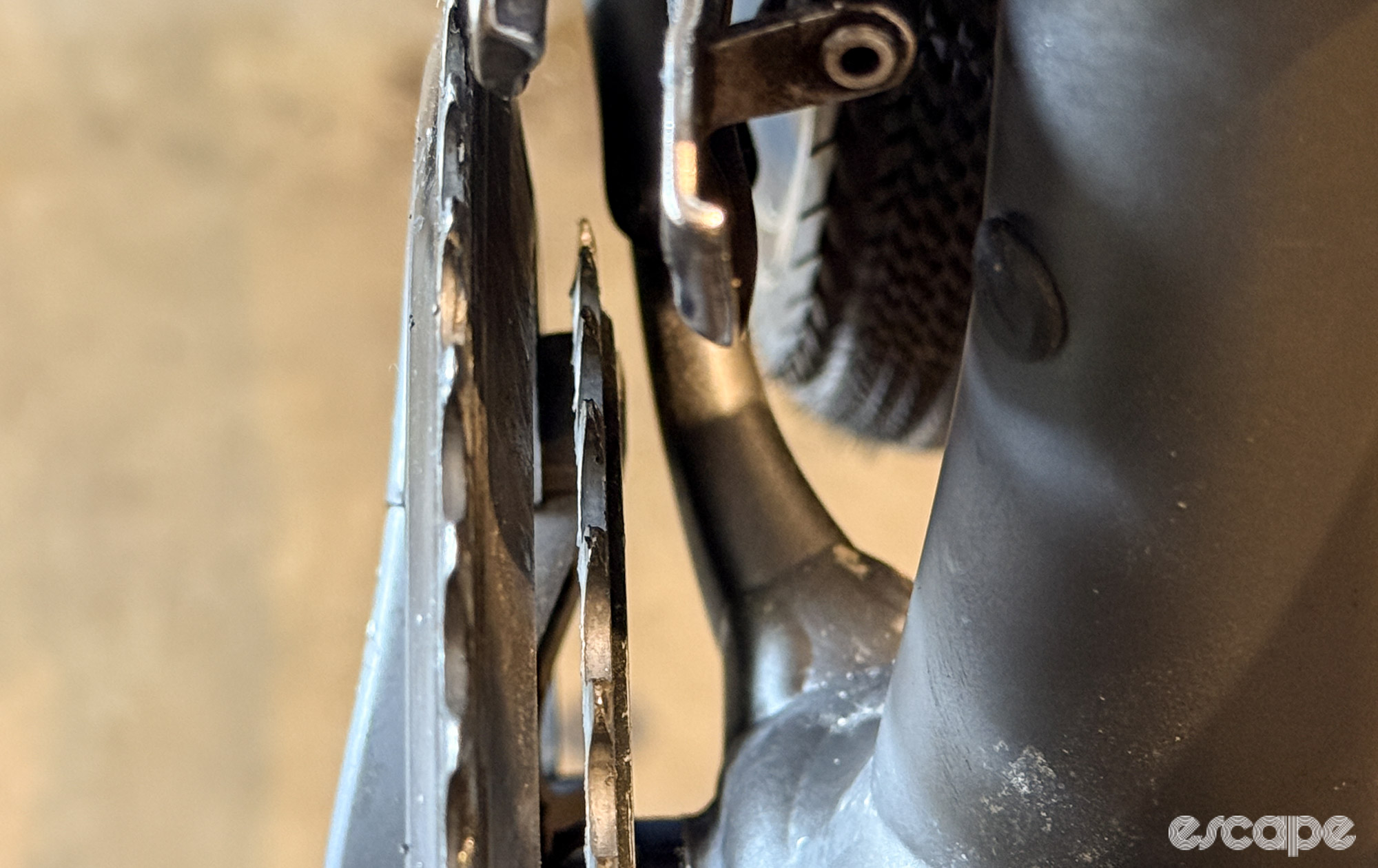
Using a front derailleur requires an old-school 31.8 mm braze-on band clamp, leaving a clean frame for 1x users. While not officially approved, some narrower 2x road cranks can squeeze on. For example, a Shimano Ultegra 50/34T crankset (6800-series) still had 3 mm of clearance between the smaller ring and the frame – enough for my comfort levels. The model of front derailleur you wish to run can limit how wide of a tyre you can use (the Dura-Ace R9100 I tried left heaps of room with a 700 x 40 tyre), and if going bigger than a compact crank, you’ll also need to watch for chainring clearance (a Shimano 52/36T crank would be too close for my comfort).
Everything about the Crux’s design is bare-bones, and that extends to a lack of fender or rack mounts. Similarly, there are no other mounting points beyond the regular placement of water bottles (including one beneath the down tube). If you want to run fenders or bags, they’ll need to be strapped in place, bolted from the axles, or as Specialized pointed out to me, they have the Diverge.
Limited options and competition
Not wholly unlike other DSW bikes, Specialized keeps the Crux DSW rather limited with a single Comp-level complete bike (US$2,600 / £2,300 / AU$4,000) or as a frameset (US$1,700 / £1,500 / AU$2,500).
The complete bike is available in either the tested Satin Smoke (grey) paint or one that is near a gloss white. Meanwhile, the frame-and-fork options are available in a small handful of unique paint options with limited availability – something the company has long done with its Allez Sprint frames.
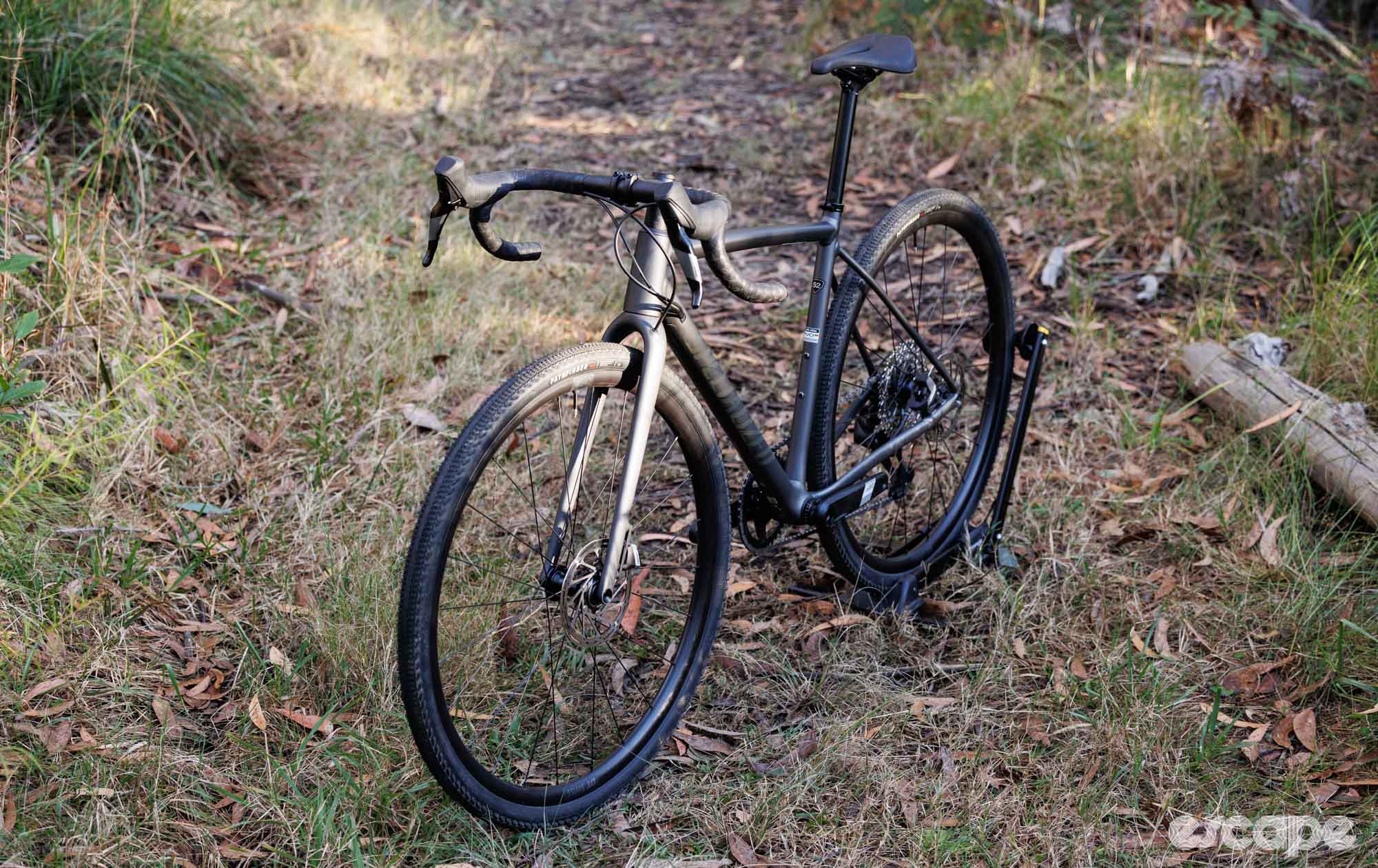
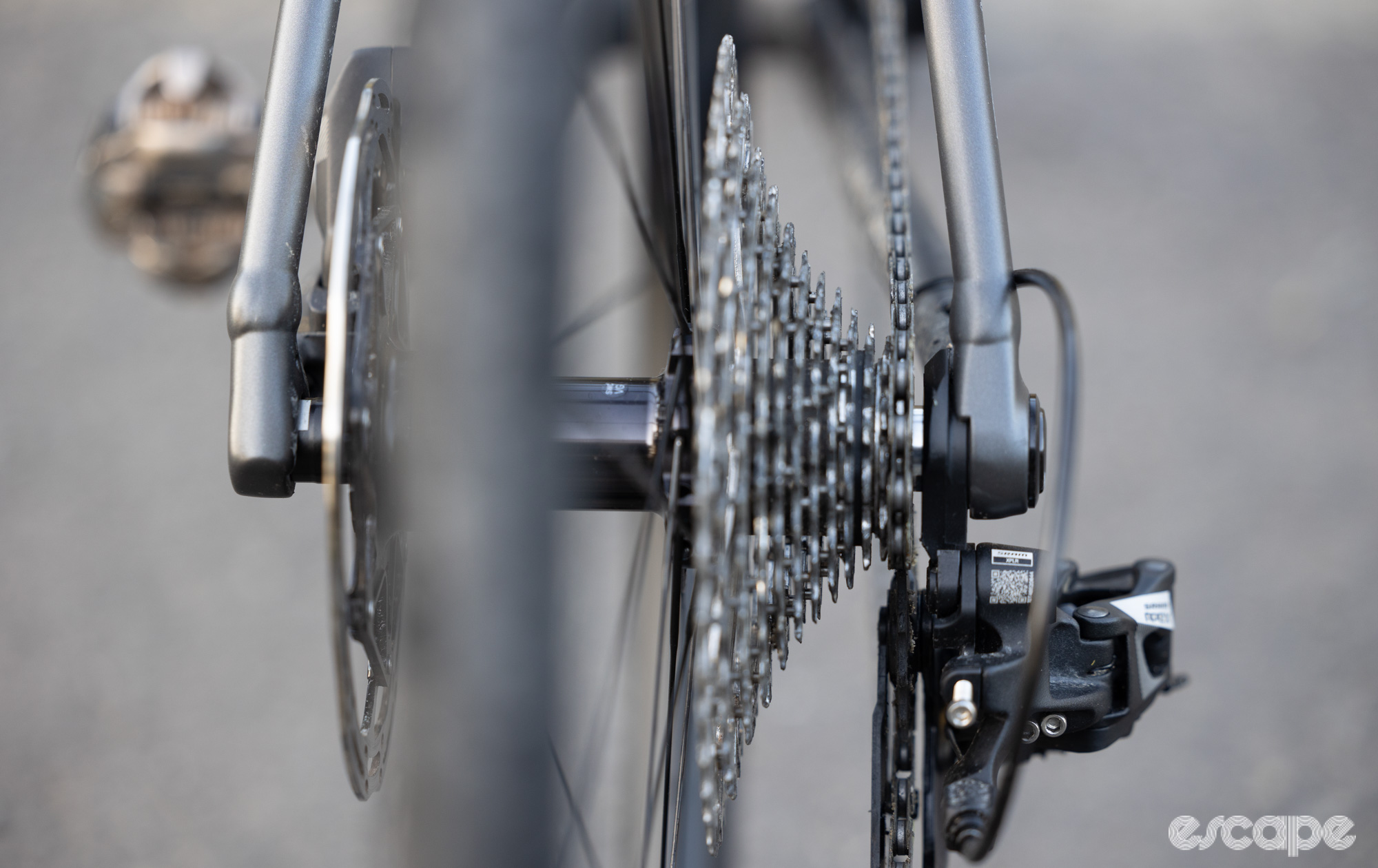
As tested, the Crux DSW Comp offers a functional but not flashy build. There’s a SRAM Apex 1x12 mechanical groupset with an 11-44T cassette and 40T chainring. The wheels feature DT Swiss G540 24 mm internal width alloy tubeless rims, laced to somewhat generic three-pawl sealed bearing hubs via 24 DT Swiss straight-gauge spokes. The aluminium seatpost, handlebar, and stem are similarly fuss-free and reliable. While Specialized provides its own Power saddle and Supacaz bartape as the touch points.
All told, my 52 cm test sample of the bike weighs 9.32 kg (20.55 lbs), setup tubeless with 60 ml of sealant in each tyre, but without pedals. It’s not a super-light build, but as I’ll get to, there are some obvious ways to reduce that figure to something highly respectable.
For comparison, expect to pay an extra US$1,200 / £1,200 / AU$2,000 to get the Crux Comp with its carbon frame. However, it’s not an apples-to-apples comparison with the carbon version also upgrading to a Shimano GRX RX820 1x12-speed mechanical groupset (10-45T cassette) and a carbon seatpost. Meanwhile the wheels and Specialized Pathfinder Pro 2BR 700x38 mm tyres remain the same.
The Crux DSW isn’t Specialized’s only aluminium-framed gravel bike. The Diverge E5 represents a lower entry point (bikes from US$1,300) with more relaxed geometry and a cheaper frame construction. Today the Diverge is more Specialized’s answer to adventure-type gravel riding, while the Crux remains the racier and more road-like offering.
A simplified and racier aluminium bike like the Specialized Crux DSW seems to appeal to many but there are surprisingly few to directly compare it against (however, there are many more relaxed geometry and heavier-framed gravel choices). The most obvious competitor is the Trek Checkpoint ALR 5 (US$2,500), a bike that sits at a nearby price with a frameset that weighs about 280 g more. It too offers cable routing outside of the headset, a regular round seatpost, a threaded (T47) bottom bracket, and similar tyre clearance (700x45 mm or 650B x 53 mm). Though currently it lacks that new UDH.
Did we do a good job with this story?