

Winter is coming, at some point, no matter where you are in the world, and that means there is a need for some bike lights if you wish to keep riding safely. These days, the lights category is a massive segment that sprawls from anything you can get from the large online sellers to some high-cost, high-quality, pricier options.
There are compact "be-seen" lights for city or daytime riding, trail-ready torches that rival car high beams, plus hub-powered dynamos, helmet-mounted setups, and smart sensors that change output on the fly. In short, there are a lot of lights.
With a lot of us riding plenty in dark conditions, and with all that choice, this edition of Collective Favourites looks at our favourite lights. Before we get into the lights we love, here's what you need to know about the category.
Lumens: the measure of brightness
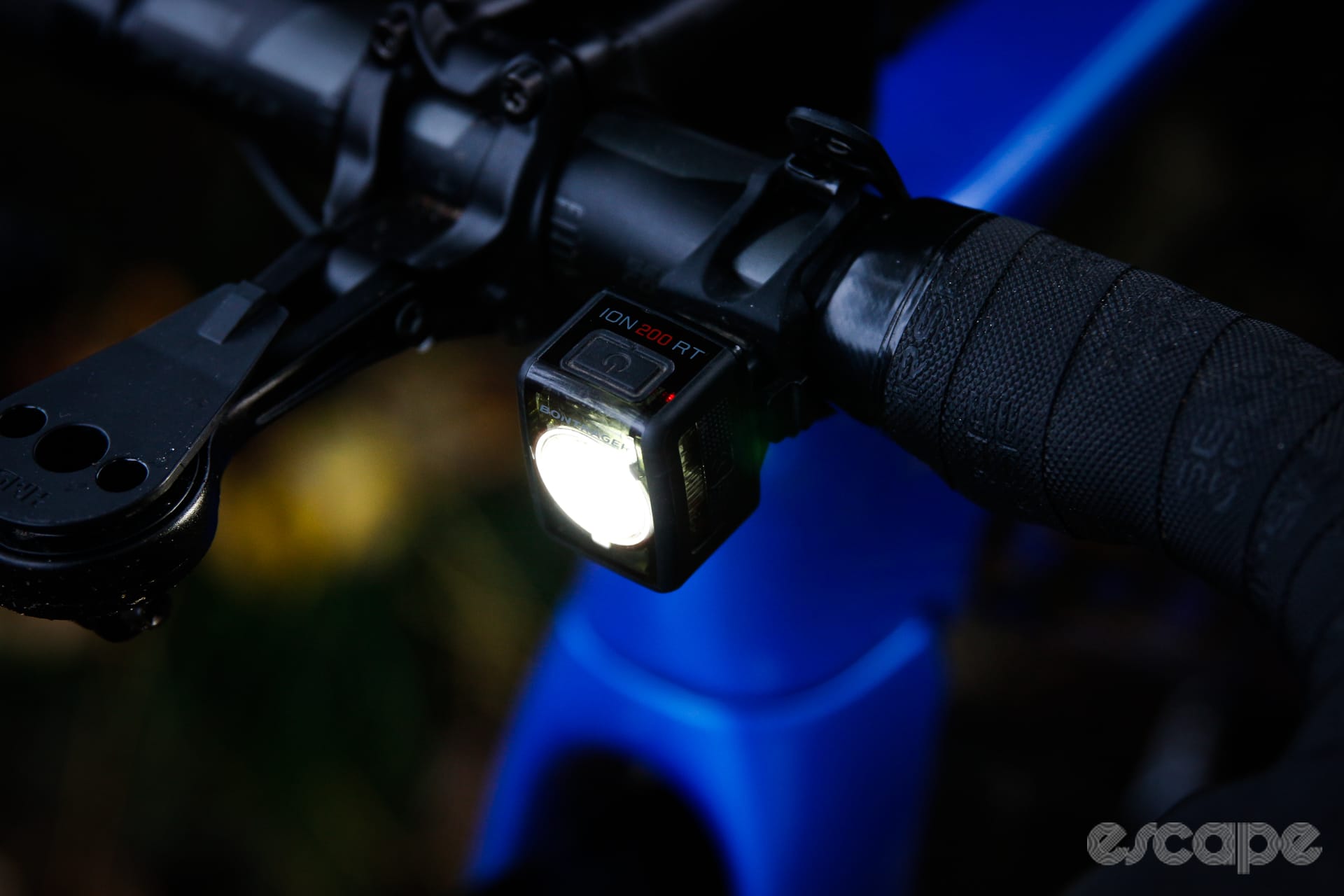
The first thing to think about when it comes to any bike light, whether rear or front, is the lumen number. Lumen is the unit of measurement for the total amount of visible light emitted by a source, indicating its brightness. As you might expect, the higher the number, the brighter the beam, although lumen rating is only one aspect of how bright a light appears or how well it illuminates what is in front of you.
But lumens do offer broad help in categorising lights into two buckets. Be-seen lights make you visible from a distance and preferably, from the side; they’re ideal in urban traffic or on daytime rides where a calm pulse pattern can draw a driver's attention and cut through foggy or busy conditions. But, they do not meaningfully light your path. Generally, these lights are smaller and have a lumen rating from about 100 to several hundred lumens, with a flashing mode (if regulations allow). The dividing line between see and be-seen lights isn't sharp; a light's brightness and intended use depends on factors past the raw lumen rating, and different companies classify their lights in one or the other category on subjective criteria.
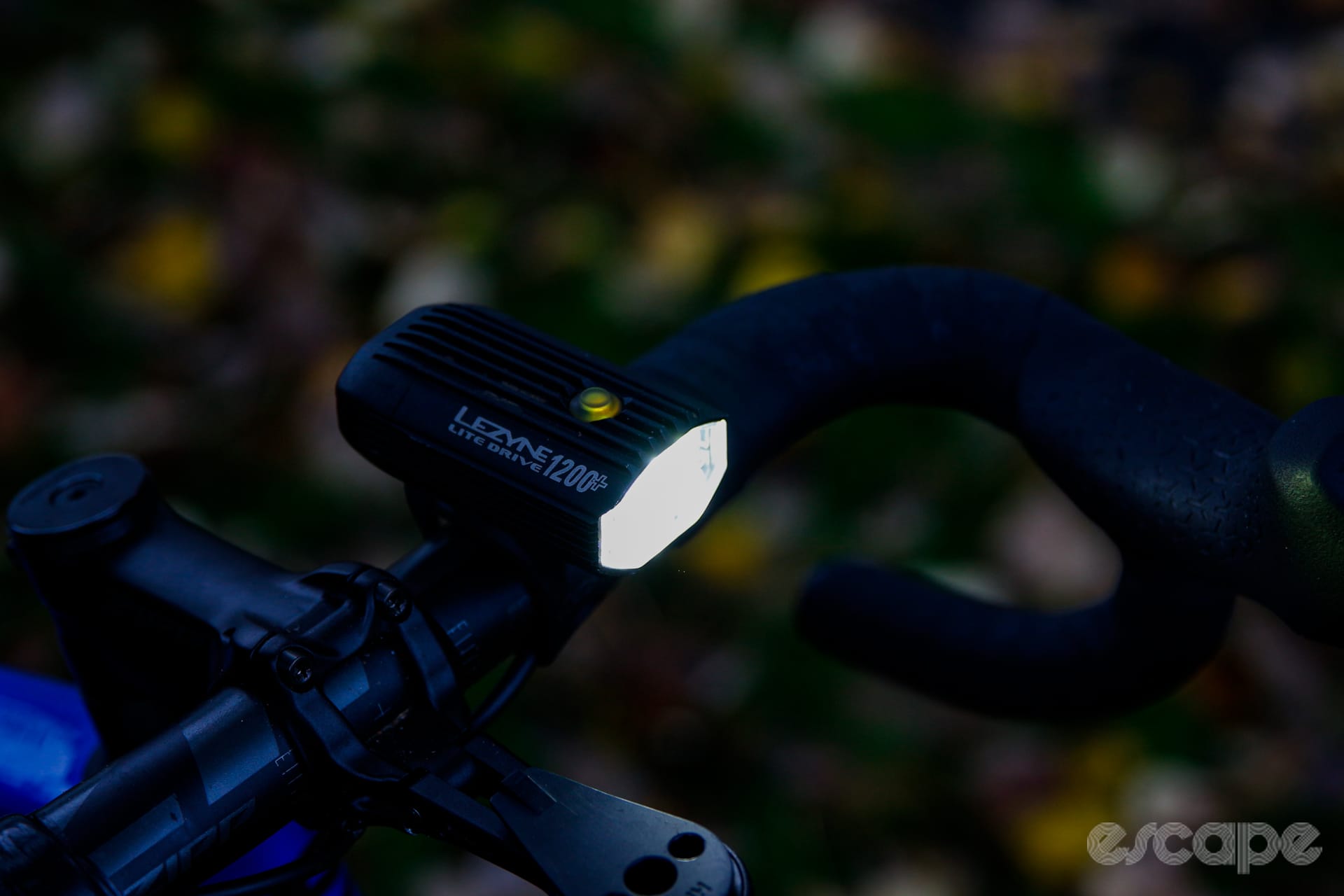
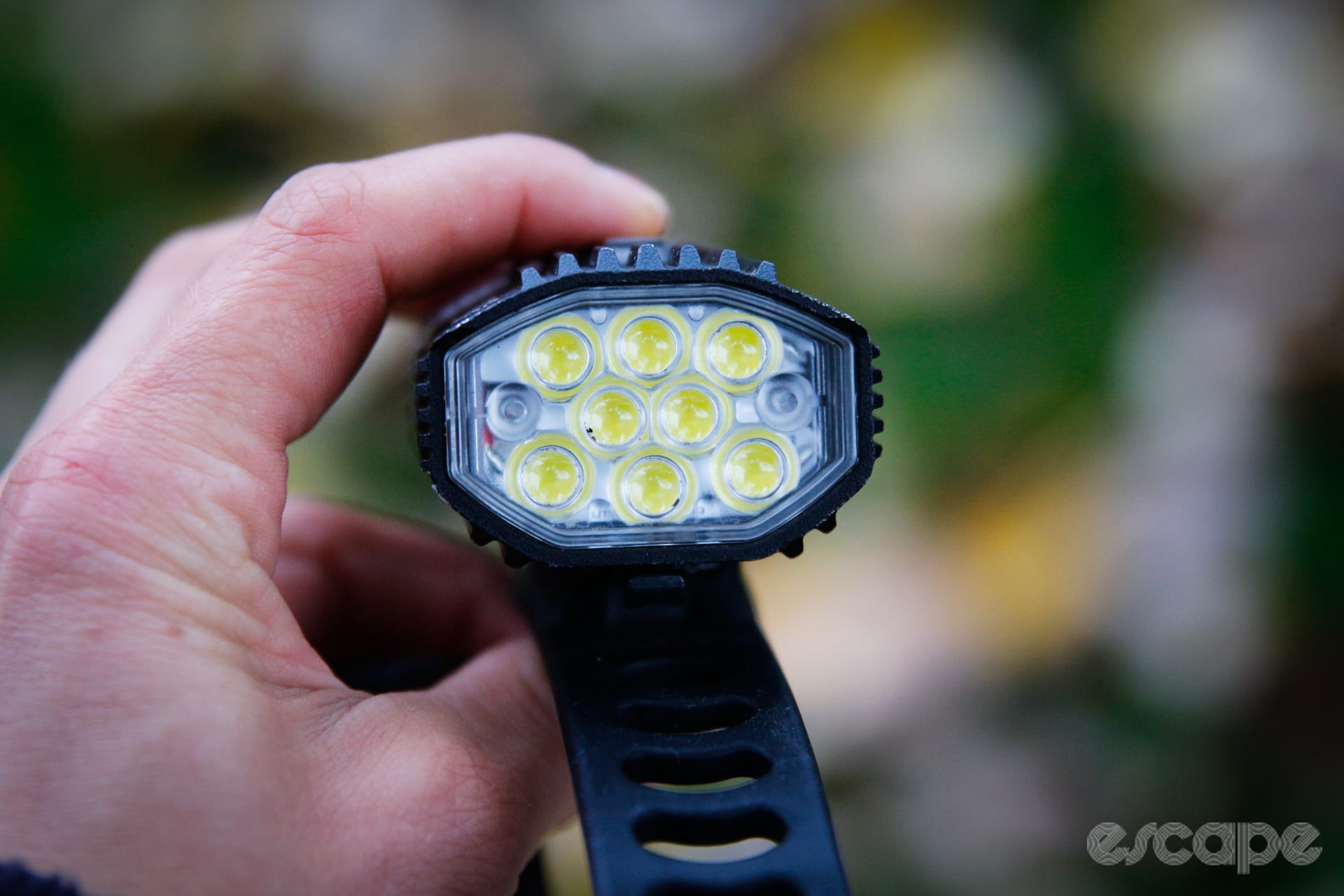
To see where you’re going, especially on unlit roads, you want a steady beam with an even beam of light that reaches far enough ahead for your speed. These lights will have more power (lumens) than the smaller lights to be seen lights, and can match the brightness of car headlights, or more. Lights such as the Magicshine Monteer 12000 and Exposure Six Pack are very, very bright, to the extent that you should really not have them on full beam when riding on the roads. (With any light, take care in aiming it slightly down at the surface in front of you; even less-bright lights can be blinding when pointed directly at oncoming traffic.)
If you ride fast on rough surfaces, then pairing a bar light set low with a smaller helmet light can be a good way to add extra brightness – the bar light lights the foreground while the helmet picks out the sides of the trail better. Also, bar-mounted lights only illuminate where your bike is pointed; a helmet-mounted light can be very helpful for lighting up where you want to go, such as looking around a switchback.
A final consideration: the brightness of a light depends greatly on its reflector geometry, which is what focuses its output into a beam pattern in front of you. Most lightmakers do a good job with this, but beam patterns can vary depending on the intended usage, and you may find you like one brand's approach – wider and more even – more than another, which has a bright center spot, or vice versa. This is difficult to assess without seeing a light pattern at night, so pay attention to what users say about their lights and uses.
What about different light modes?
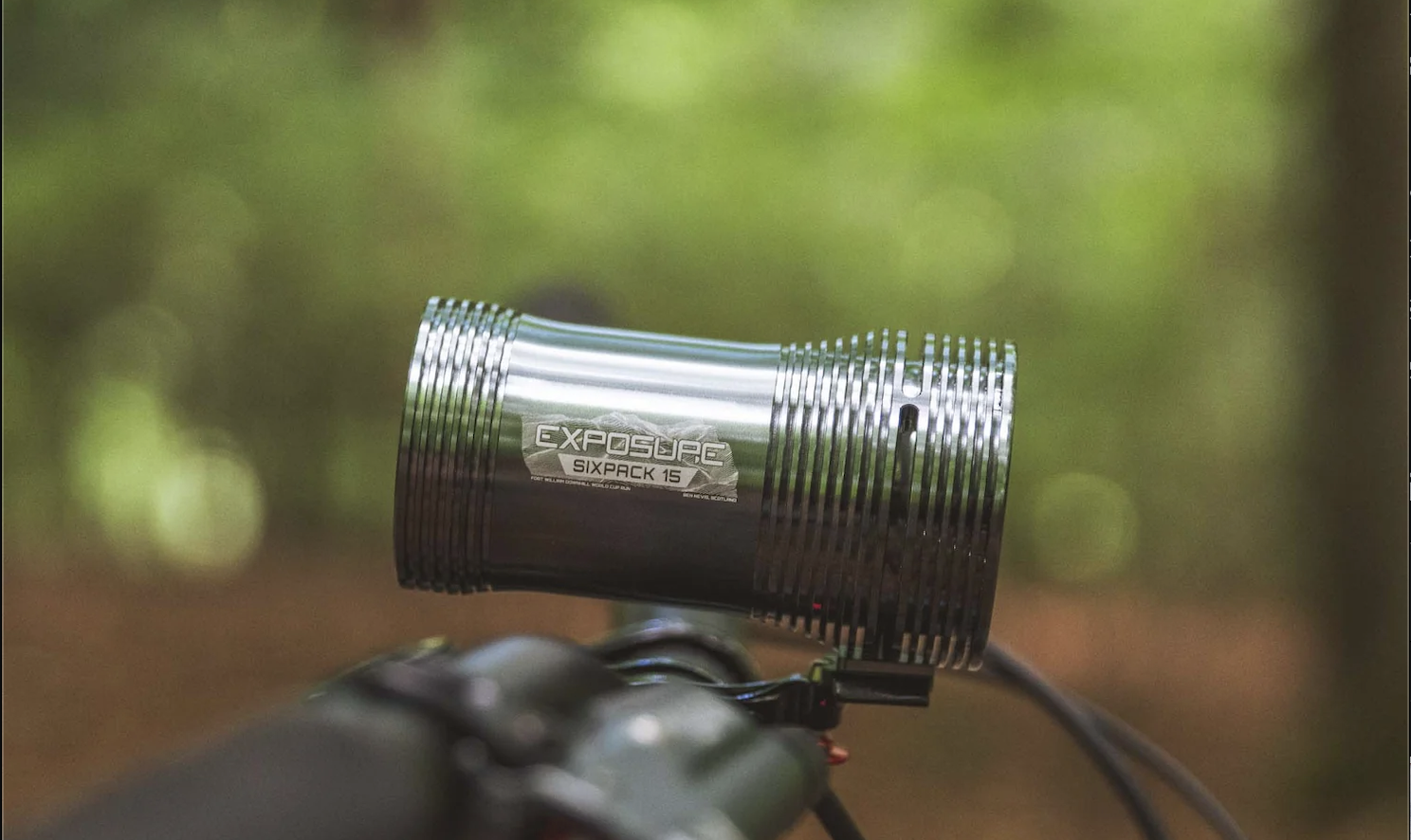
The lumen number stated on the light box is usually the maximum lighting power the light can put out on its highest setting, but nearly all modern lights have more than one mode, featuring steady and flashing light patterns at various intensities.
Depending on what kind of riding you do, you want to look at these for two reasons. If you want a light that has a great battery life for visibility on, say, overnight audax rides, then you want something that has a specific, low-power mode, or alternatively, can be charged on the go when using full-beam.
For riding in busy city areas or daytime visibility, you want a flashing mode so that your bike light can pop out of all the light and road signage clutter that surrounds you. The brighter the ambient conditions, the brighter light you need to stand out, and since the human eye is drawn to motion, a flashing pattern is one way to catch attention.
The way these modes are operated is also a consideration. For most lights, there is only one button to operate; it'll work as an on-off with a long press but also flick through the different modes with each additional short press. For others, you might have a phone app or smart connectivity with your cycling computer.
Light regulations
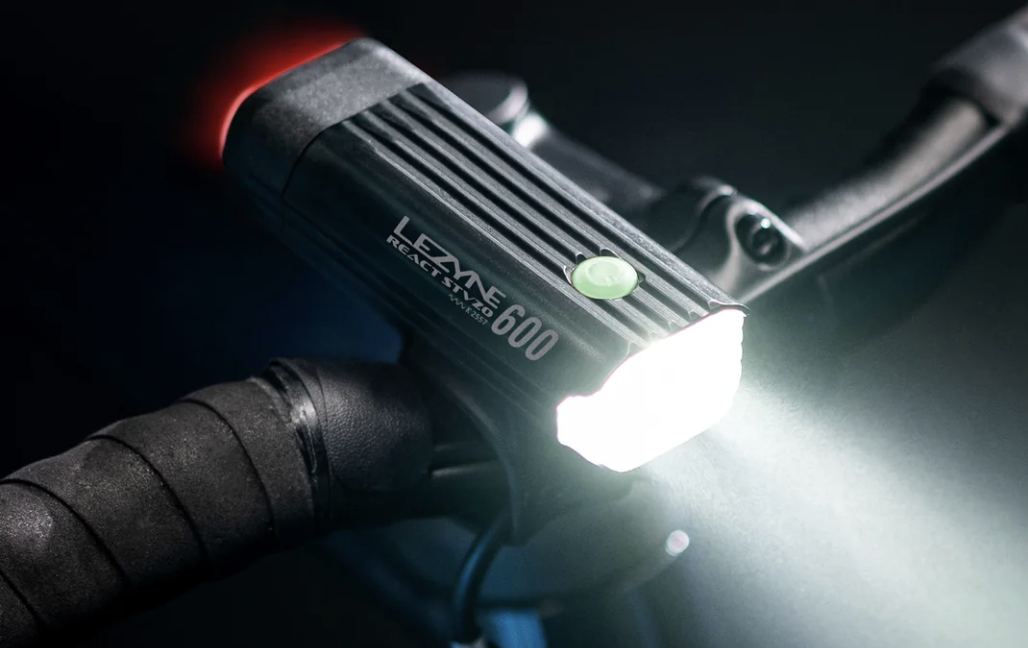
Cycling is full of rules and regulations, and lights are no exception. The most notable one of these is the one that dictates lights aimed for the German market. The regulation is called StVZO (Straßenverkehrs-Zulassungs-Ordnung; in English, road traffic licensing regulations), and it dictates that front beams must be steady and glare-controlled. In practise, this means that the light beam is much narrower, and cuts off on the sides and the top.
StVZO also restricts the light brightness; the front light is limited to 205 lumens maximum. But there is another measurement of the light power that StVZO lights use, called lux. Technically, lux is the amount of perceived light that hits a given surface, or a light's irradiance. An imperfect but decent analogy for lux is it measures a light's intensity at a given distance. The brightness of StVZO lights in Germany must be at least 10 lux, measured at 10 metres. Again, compared to lumens, lux is the measurement of light at one point on a surface, so it looks at more at the intensity rather than pure light output.
There are also lights that are StVZO-approved but still include a high-beam mode, in case you are riding off the roads and need that extra power. If you do need StVZO-compliant lights, then it's safest to filter those from whichever brand you are looking at.
The reality is, though, that many riders might want the flashing lights for extra visibility, and if you ride outside Germany, then you're free to use those, as globally, none of the other regulations are quite as strict as StVZO. Beyond the obvious, that is: use a white light for the front, and red for the rear.
Size, mounts, and battery life
While it might be that you'll not go wrong by opting for a powerful light instead of a small one, there are some caveats. First off, big lights weigh more and are bulky in size. So if you ride a narrow handlebar that already has a computer, you might struggle to fit a large light and still leave space for your hands on the top sections of drop bars.
 Suvi Loponen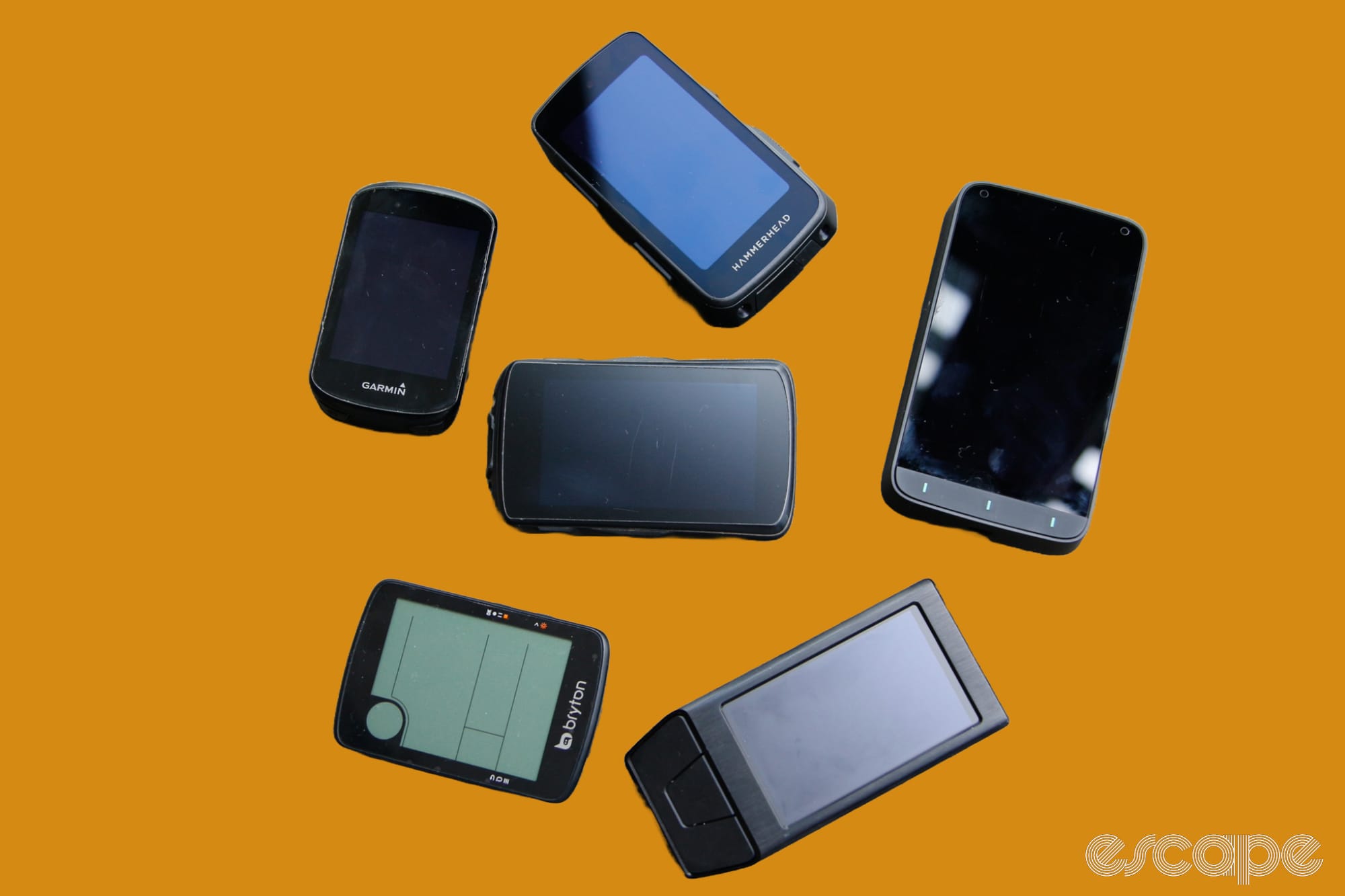
The mounting system is also something to consider. Some lights have a stretchy rubber band that can extend to wrap around almost any shape of bar, but some are only compatible with a round bar, which can again make mounting on modern drop handlebars with flat tops difficult, if not impossible.
Many light makers offer alternative mounts for their lights, or options, for example, to use a below-computer GoPro-style mounting bracket, or similar. If you have a bar bag or any other items attached to your bike, you might also obstruct the light and need to find an alternative place for it, whether on the bag or at a pinch, on your fork leg. Bear in mind that the closer to the ground the light is, the less it may fully illuminate irregularities in the riding surface.
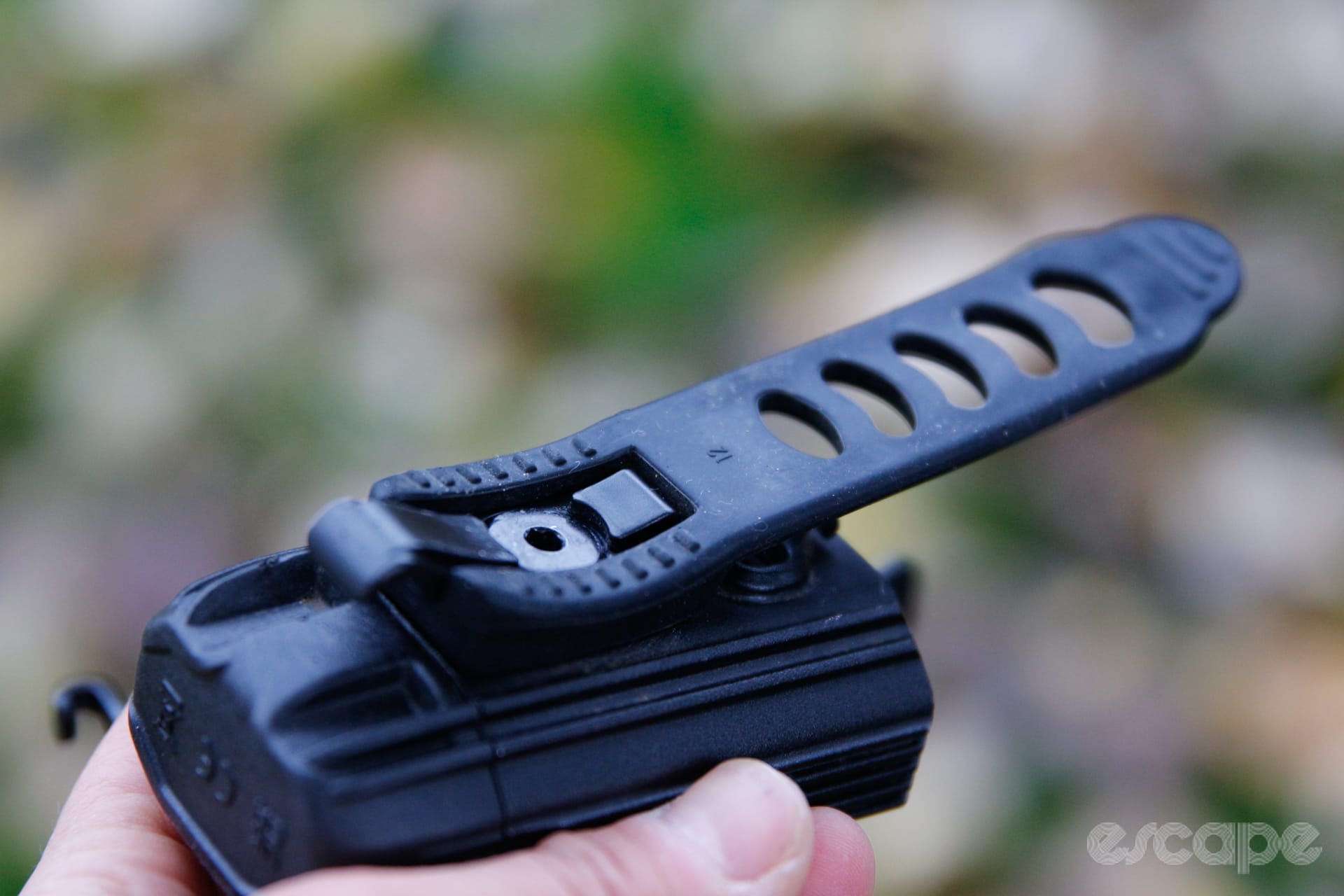
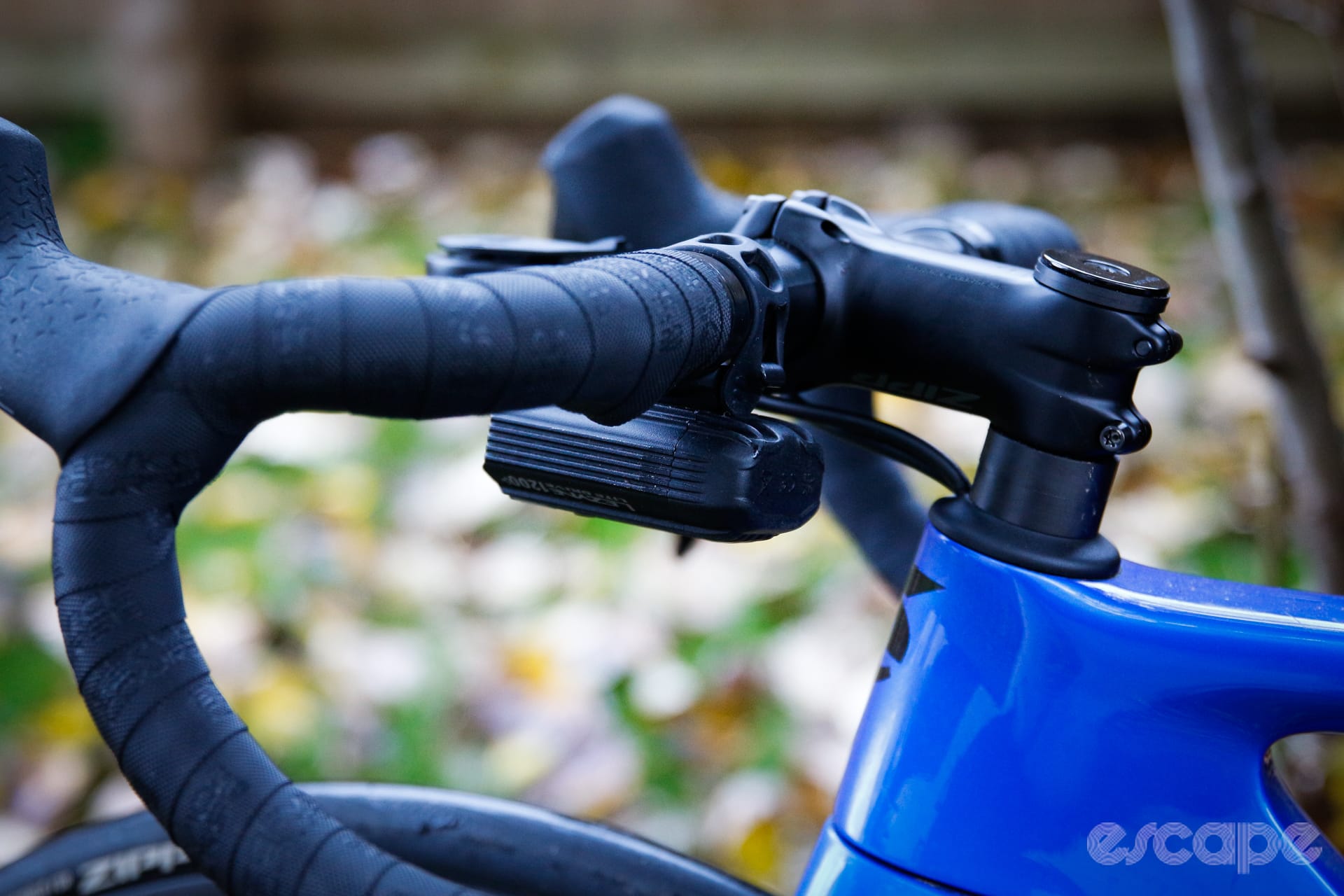
A stretchy band is easy to wrap on any shape of handlebar. Running the light below the bar also frees up the tops for hands.
When it comes to battery life, the more juice your light has, the more likely it is to be quite big in size. Battery life is also very dependent on the mode you use – flashing takes less battery power while full blast, high beam devours the most. As such, comparing battery lifes of different lights can be difficult without direct side-b-side testing, as they are dependent on the maximum output. Another factor: the temperature outside; in the cold, they're likely to die sooner.
Most modern lights do have a recheargeable battery, even if you might still find some devices that can run on disposable batteries. Charging time to full again depends on the size of the battery, but most 1,200-lumen lights charge fast in less than half an hour via a standard USB-C port. Many lights are also compatible with charging on the go, meaning that regardless of the battery, you could plug in a power source during your ride to keep moving.
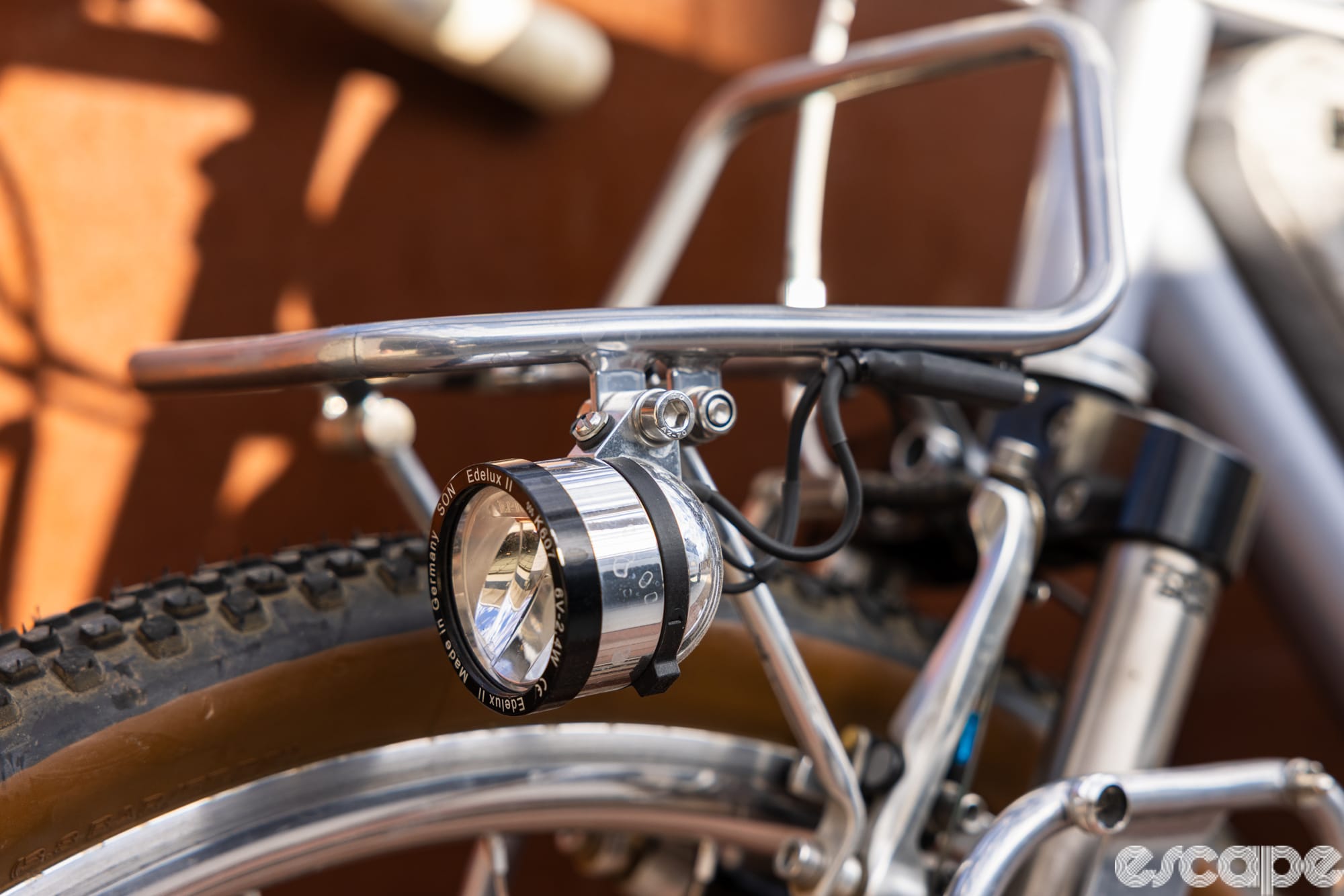
Another option, overcoming a lot of these issues, is a dynamo light. These lights essentially power themselves when the bike is moving, and can run as long as you keep pedaling. They require a special hub, which means that setting up the system is much more costly than a simple front and rear light combo – you can get an idea of the cost from Iain's entry further down – and you're also not able to swap the dynamo lighting between bikes. But for a touring bike, this is the ultimate option: You'll never forget your lights, nor will they ever be out of charge.
What about smart lights?
If all of the above weren't enough features to consider, there are almost endless more to talk about. Modern lights – both rear and front – increasingly include sensors and connectivity that automate their functions, or offer better control of the connection with your other electronics. The common features are ambient-light sensors (auto day/night switching), speed-linked output (more light as you go faster), and head-unit integration via ANT+/Bluetooth so your cycling computer can turn the light on, change modes, and show battery.
If you want more connectivity, then these are useful features; otherwise, they might just make your life more complicated.
Without further diving into the intricacies of lights, let's get into the team and Escape member favourites.
Escape Collective staff favourites
Josh Weinberg - a variety
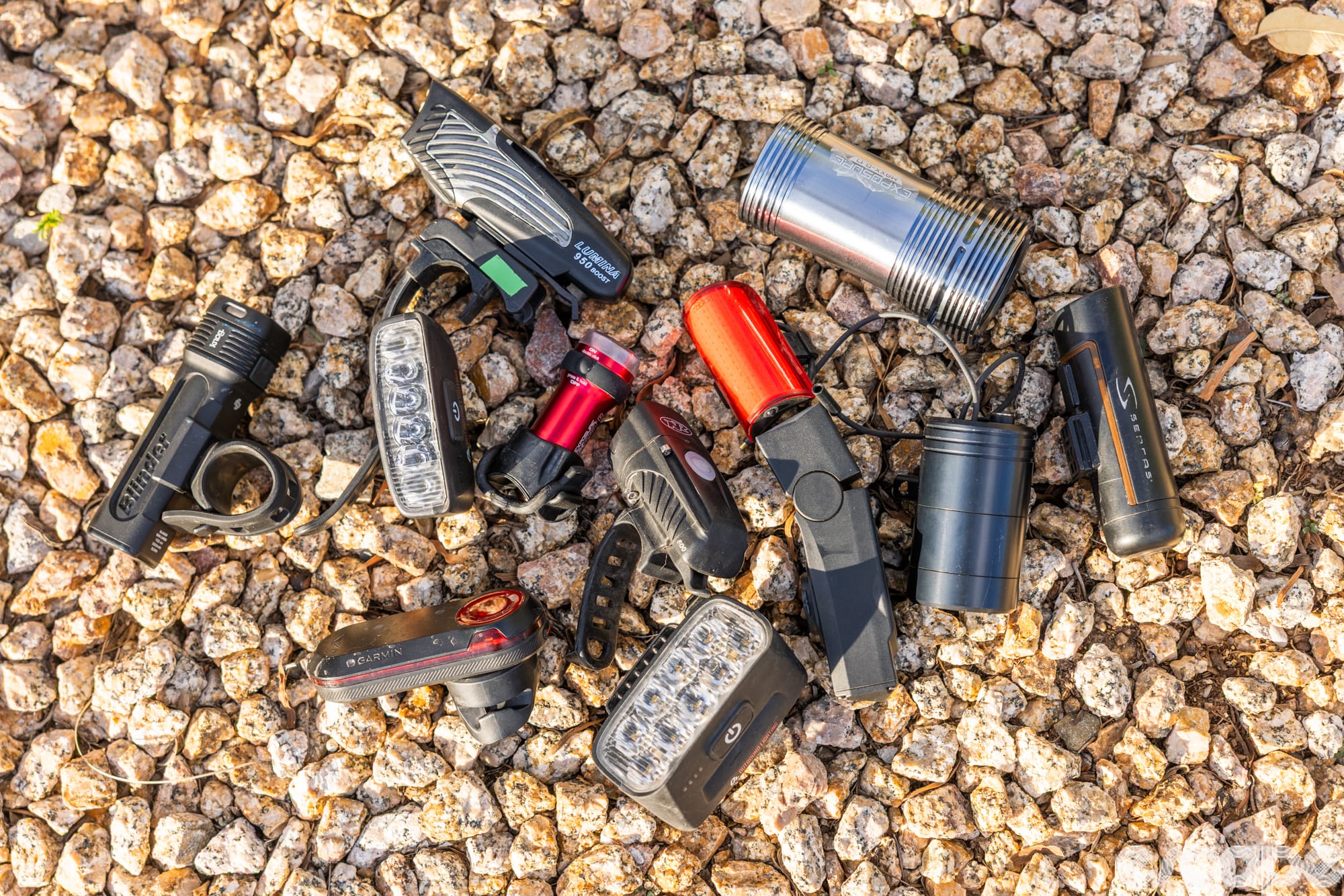
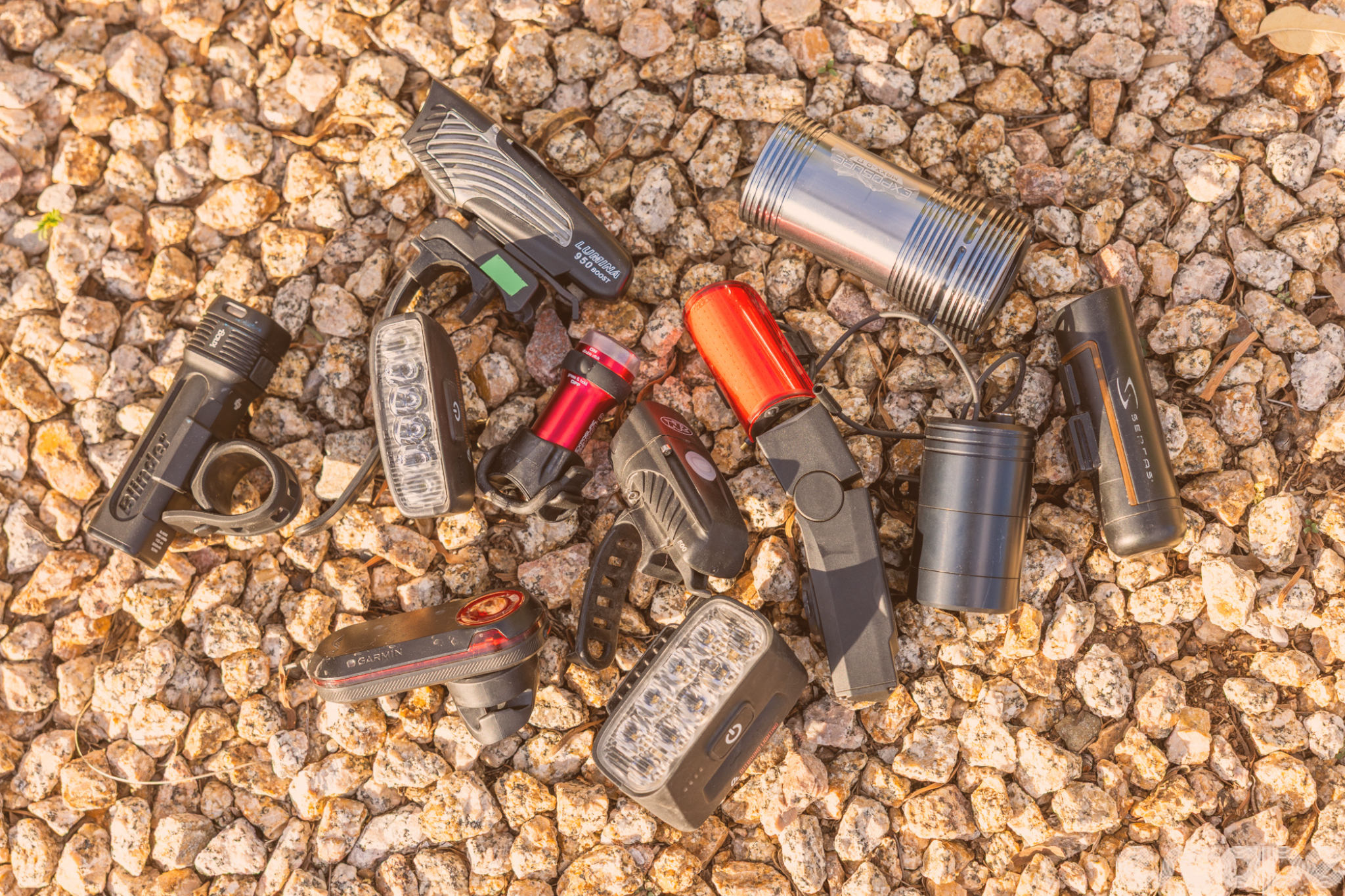
As cyclists in the desert, my family uses a lot of bike lights. Whether it’s waking up at 4 am to beat the summer heat or taking post-work rides in winter when it’s dark by 5 pm, our bikes are typically equipped with lumens to guide the way. Our lighting solutions cover a broad spectrum, spanning a variety of use cases from road riding to mountain touring. And with lighting tech advancing at a quick pace recently, I’m always curious to try the latest and greatest. Thus, I’ve used and collected quite a few over the years.
Did we do a good job with this story?