

The Tour de France presents itself as a race of 184 riders, split across 23 teams, all on the hunt for a taste of glory on the biggest stage in cycling. Cameras broadcasting the race to 190 countries have their lenses trained on almost every attack, crash, and sprint.
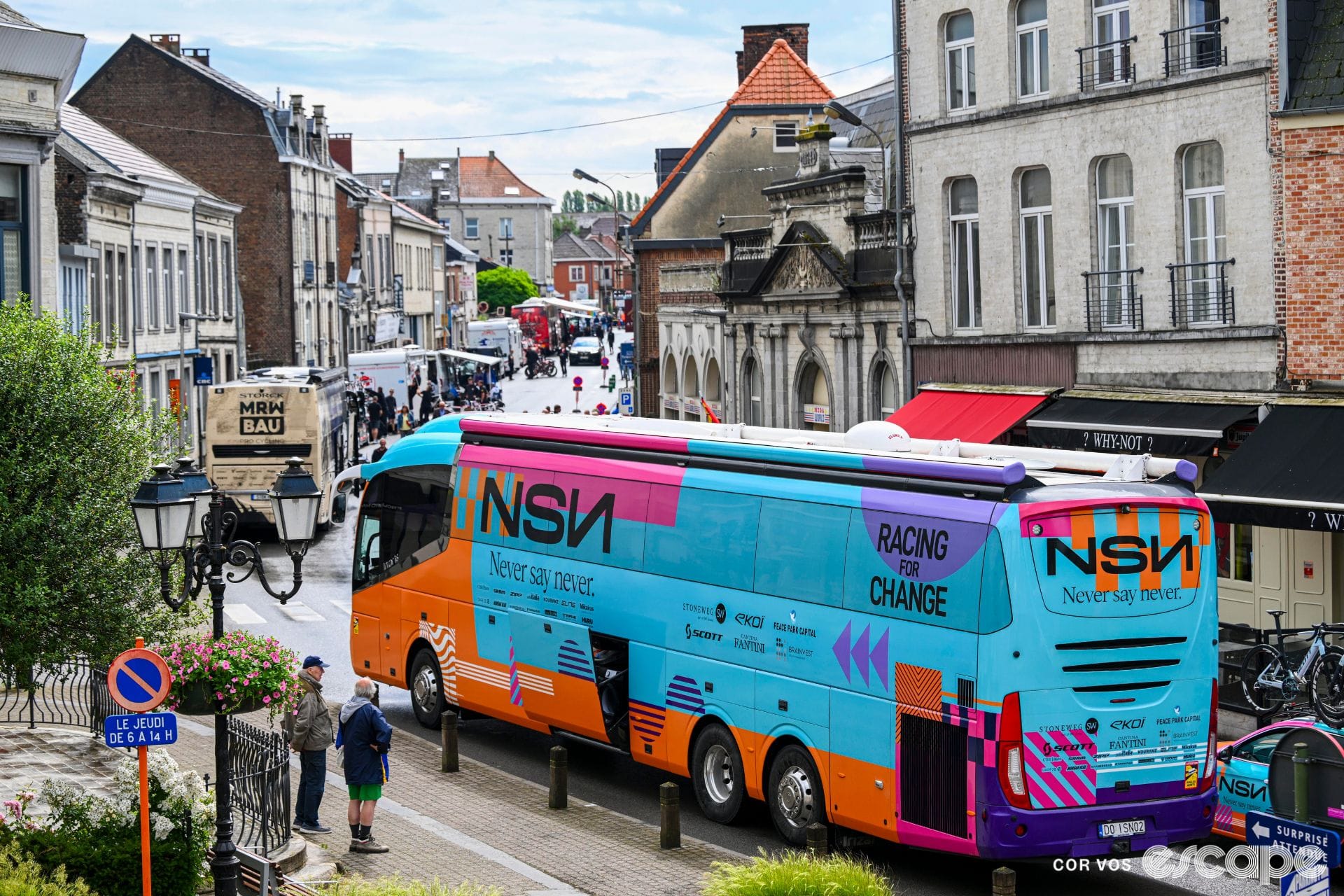
But away from the cameras and media onslaught, following the race across France is a second peloton that rarely makes an appearance on TV screens, and is spoken about even less often. While the live TV broadcast is trying to unpack what the pre-race favourites actually mean when they say they are just taking things day by day, a small army of trucks, vans, and cars has already begun rolling towards the next hotel, ready to set up camp once more.
Mechanics set up temporary workshops that would rival even the best-equipped bike shops, all from the confines of an unremarkable hotel car park. The sound of the air compressors intermittently drowns out the sizzling from the nearby kitchen truck, where chefs prepare to refuel the exhausted bodies of their athletes.
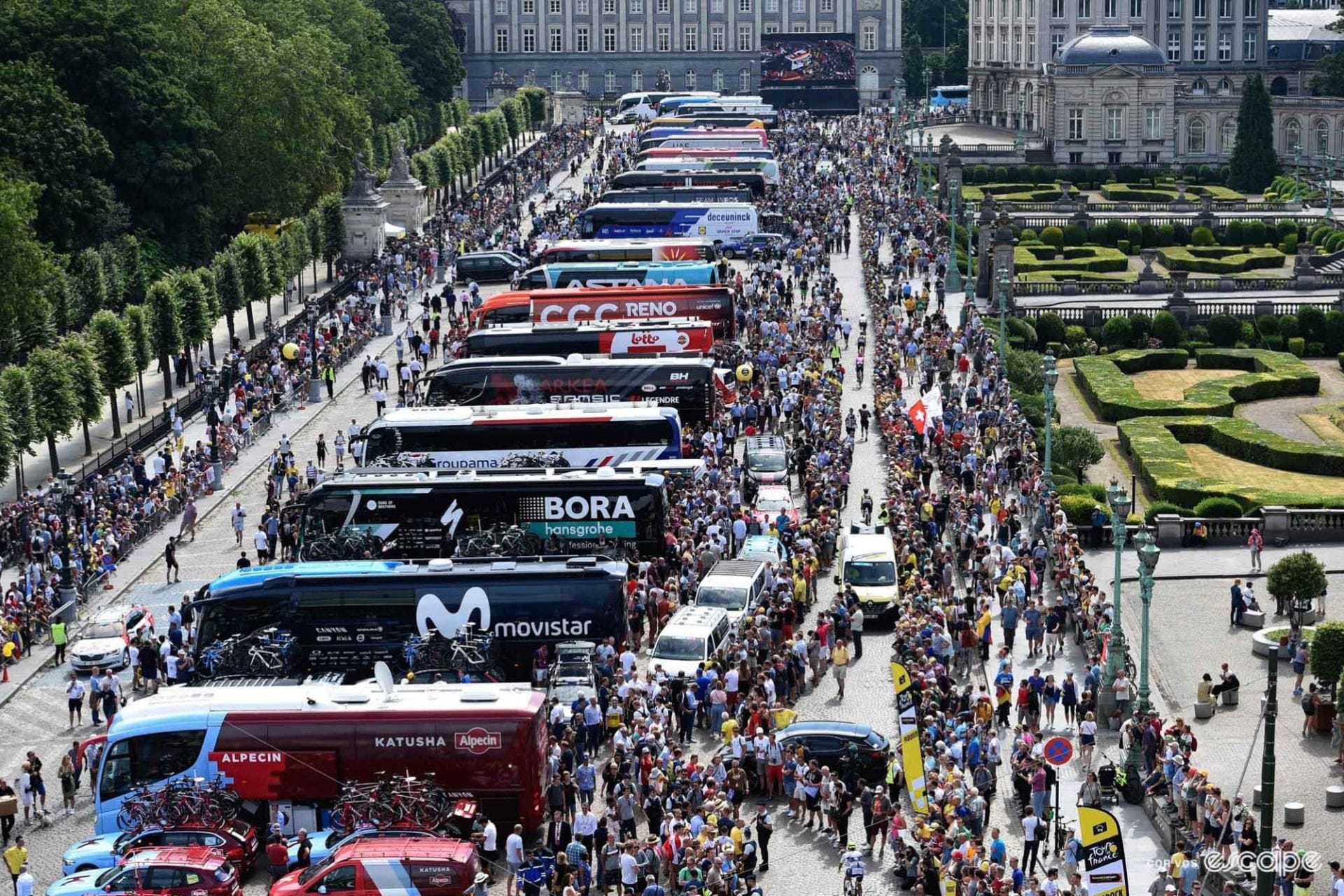
While the riders recover from the day's racing, sports directors begin preparing for the next stage, studying the road book, in the hope of unlocking a secret tactical advantage. Doctors, physiotherapists, and soigneurs prepare for another day that will not end until long after the riders have gone to sleep.
The Tour de France has long been called a travelling circus, but what does each team’s part of that circus actually contain?
Between UAE Team Emirates-XRG and Red Bull-Bora-Hansgrohe, for instance, nearly 100 bikes, 30 vehicles, and more than 50 support staff travel around France to support just 16 riders.
For the eight riders on each team, the amount of product, staff, vehicles and everything else that is hauled from stage to stage quickly becomes difficult to comprehend.
The travelling bike shop
When it comes to the Tour de France, nothing is left to chance. Every potential flashpoint in the race is studied, athletes sacrifice much of what constitutes normality in the build-up to the race, and equipment sponsors often roll out the latest and greatest generation of their flagship road products in the hope of a slice of the media gold rush that a stage win could provide.
Did we do a good job with this story?