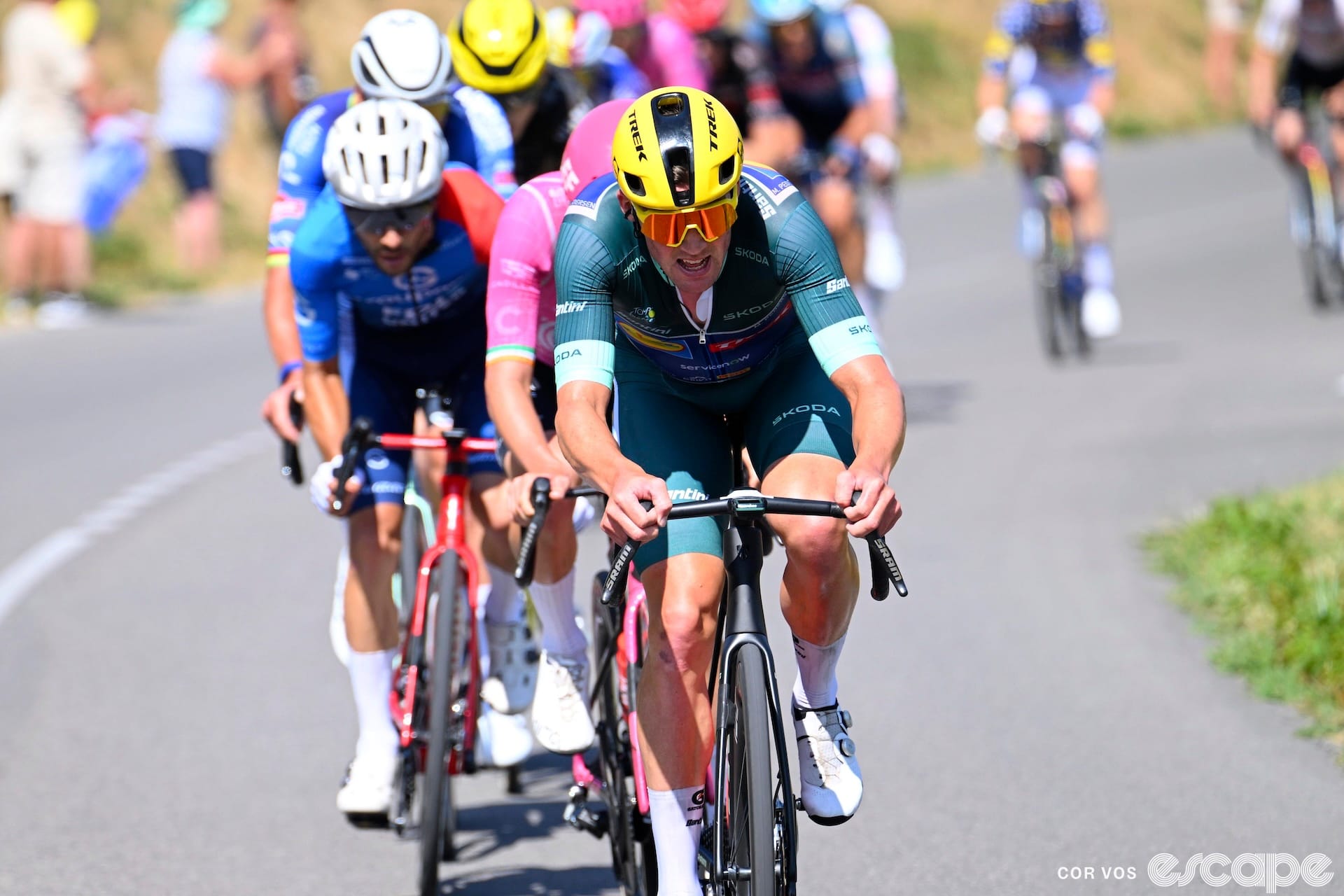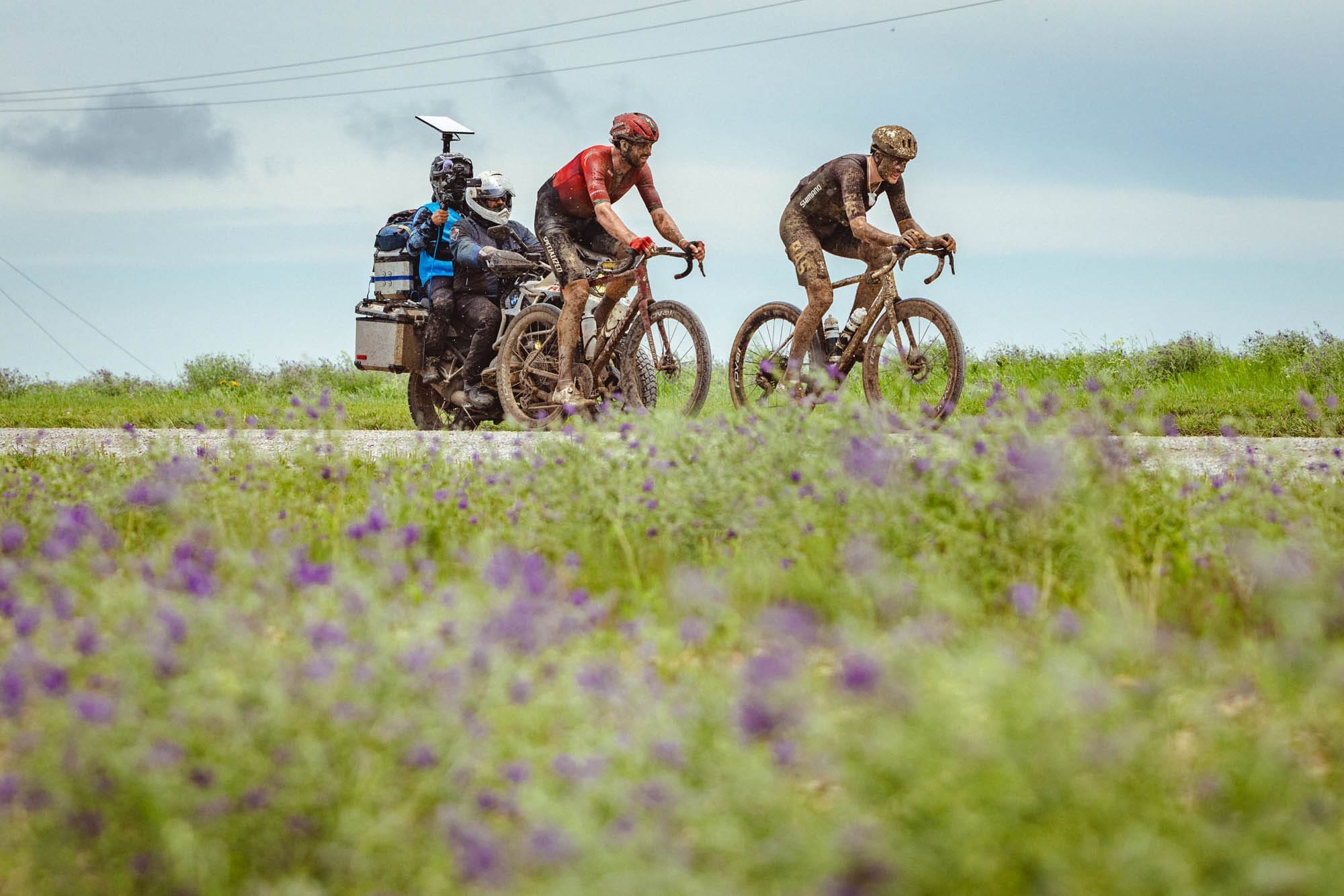


One of the biggest questions hanging over professional gravel racing is whether its success as a participation sport can be replicated as a spectator product. The races are often longer than even the longest professional road races on the calendar, and unlike road racing, there are few obvious landmarks or tactical flashpoints around which to build a broadcast's energy.
Watching the second edition of Life Time's full live Unbound coverage, I didn’t find myself thinking that the racing lacked drama; it was a mud year after all. Instead, the issue I was often left struggling to make sense of was what was actually happening. Who was leading, and how large were the gaps? Were the chasers gaining ground or losing it? Or even more simply, how far into the race were the athletes? Without those answers, it became difficult to know whether what I was seeing on screen actually mattered.
These challenges aren’t isolated to Unbound; gravel racing as a whole has yet to solve them fully. But as the sport's biggest and most prestigious event, Unbound's choices could help shape how gravel racing presents itself to audiences in the years ahead.
 Caley Fretz
So what are the problems standing in the way of things getting better?
Gravel's problem isn't one of action; it's one of context
Before asking whether gravel racing makes for compelling viewing, it is first worth asking a simpler question: Can viewers actually understand what they are seeing?
To Life Time's credit, putting on a free, 11-hour livestream from the middle of Kansas is no small undertaking. Helicopters, camera motos, a commentary team, and continuous live coverage represent a level of investment that would have seemed unimaginable in gravel racing a decade ago.
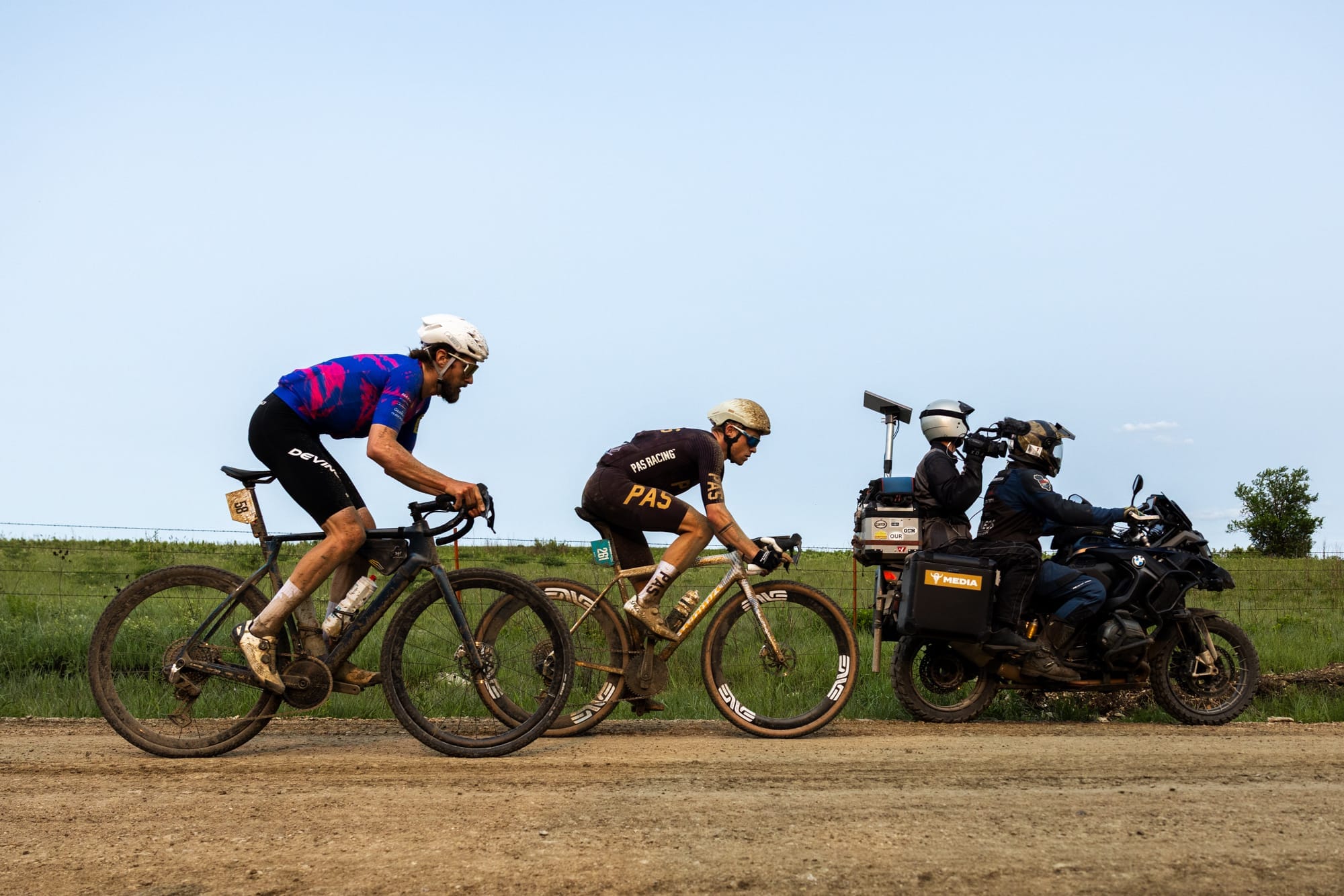
VP of events and retail marketing for Life Time, Michelle Duffy, explained to Escape Collective that the full coverage wasn’t always a given for the 2026 edition. “At one point, we had considered doing what we have done in the past, which was starting the broadcast later into the race," she said. However, she added, “As we got closer to this year’s race, we made the decision internally to push for the full 11 hours live.”
Which brings us to the main issue I found myself grappling with while watching the livestream: it had little to do with the cameras (for the most part, they did a good job of being where the action was) and everything to do with context.
Did we do a good job with this story?