

All around the world, national sporting federations are gearing up for the 2028 Summer Olympics in Los Angeles. Athletes with medal potential have been identified, performance pathways have been drawn up, and governing bodies are doing whatever they can to maximise their eventual medal count come July 2028.
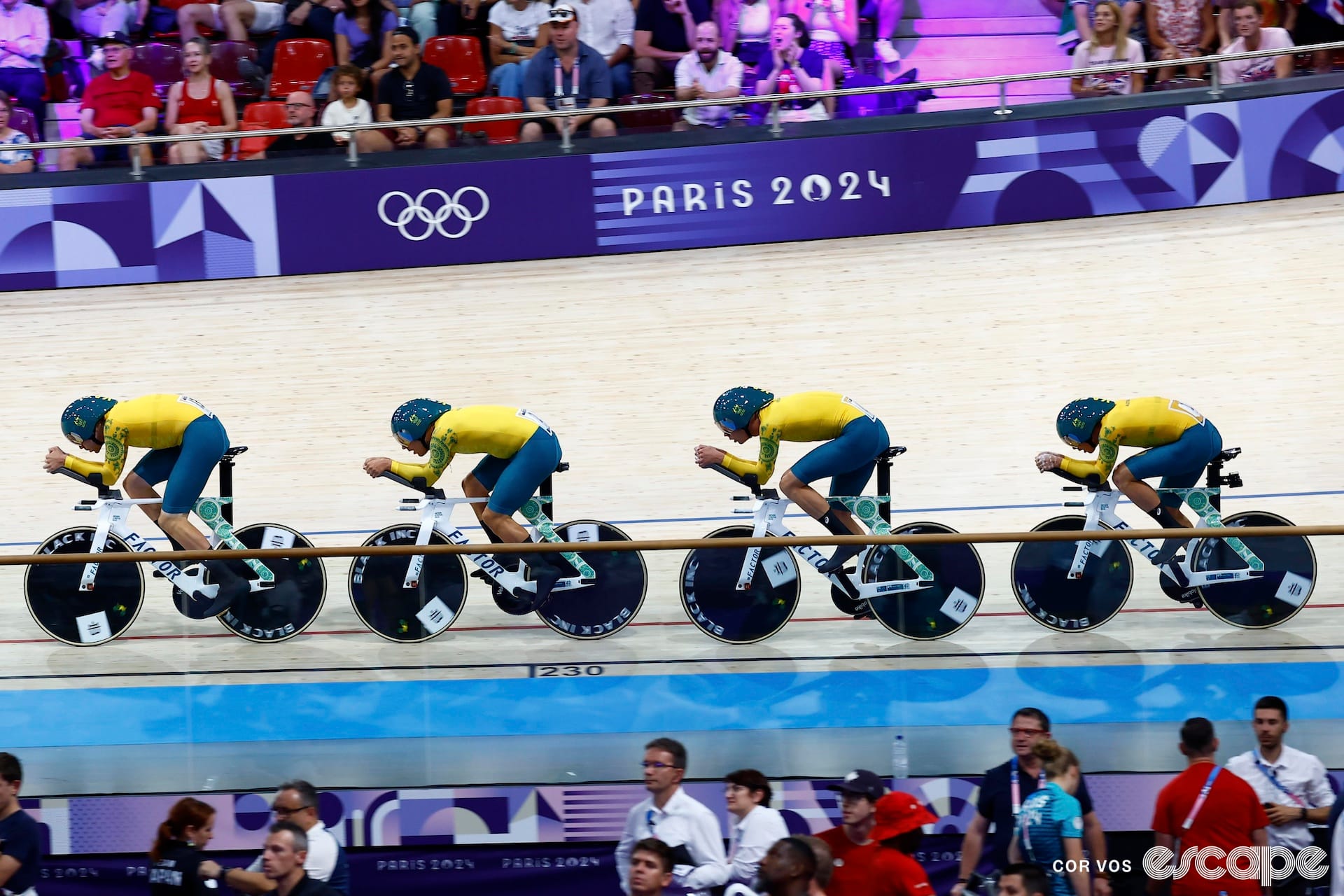
That’s certainly true in cycling, and especially in track cycling where there are more Olympic medals available than in any other cycling discipline. And as a new academic paper out of Massachusetts Institute of Technology (MIT) shows, some organisations are taking an interesting approach when it comes to maximising Olympic success.
The title of Katherine E. Kostecki master’s thesis is as dry as you’d expect for such a paper – “Evaluating the Impact of Equipment Investments on Olympic Medal Probabilities for Australian Professional Cyclists” – but the idea behind it is simple and intriguing: to use machine learning – a kind of AI – to tell AusCycling where to spend its money if it wants to win more medals in Los Angeles.
Should Australia’s national cycling body invest heavily in new bikes? Are skinsuits a better place to invest? Is there an optimal split when it comes to investing in different areas of tech? And ultimately, what impact are these investments likely to have on the medal tally in 2028?
These are the questions that Kostecki and AusCycling are trying to answer.
Did we do a good job with this story?