
The Anthem has long been Giant’s answer to a full-suspension bike for cross-country purposes. For the past 17 or so years, the Anthem has had its rear shock mounted vertically alongside the seat tube. It’s a structurally efficient design that makes use of an already reinforced down tube and bottom bracket area, however, it also greatly limits how and where you can carry water bottles. Many of the Anthem’s competitors had changed designs in recent years to solve for this, and quite simply, Giant’s offering was looking dated.
For 2026, Giant is reaffirming its commitment to cross-country, seeing the discipline as the key human-powered category in mountain biking while longer-travel trail and gravity categories continue to be whittled down by e-bike demand. With cross-country growth expected to continue, Giant has made a significant investment in its Anthem platform. Early ride impressions show it's a bike worth paying attention to.
There are two versions of the new Anthem, each with 29er wheels across all sizes. First is the Anthem Advanced SL, the race option with 120 mm of front and rear travel, a bike that's been seen throughout the 2025 World Cup race season under world champion Alan Hatherly. The alternative trail-leaning version is the Anthem X Advanced SL, which, despite having the same geometry and rear travel, introduces a 130 mm fork and a storage hatch in the down tube. Perhaps a little unexpected for the company is that the frames on both of these can only be described as high-end, and that’s certainly reflected in the pricing of all the complete bikes.
The launch event for this bike (plus the comparable Liv Pique) was only last week, and a full review will come later. Rather, in this article, you'll find a lot of details and early impressions. For the tech nerds, we've also recorded a dedicated bonus episode of Geek Warning that dives into some of the design decisions behind this bike, how that design process works, plus a little insight into tech decisions from Alan Hatherly himself.
Highs: Sensible geometry choices, superb-feeling suspension, impressively lightweight construction that doesn't feel flimsy, highly efficient under power, and easy space for bottles. More to be confirmed.
Lows: High-end frame used throughout the range brings up the pricing. Headset cable routing and one-piece handlebars will be polarising, especially on lower-tier models with numerous cables. Lower-tier bikes have a one-piece alloy handlebar that seems to be form over function. Loud rear hub. More to be confirmed.
Advanced SL explained
From afar, the new Anthem looks a whole lot like many other modern cross-country models. However, as is often the case with modern performance bikes, the details are nuanced. What’s not obviously apparent is that the new Anthem defies Giant’s often conservative approach to design, and, combined with a new flagship carbon construction, it’s both the lightest and most premium full-suspension frame from the Taiwanese mega-manufacturer.
Beneath the paint hides Giant’s first off-road frame to adopt its new Advanced SL carbon materials and construction, something first introduced with the TCR Advanced SL last year. To give a glimpse of what defines its Advanced SL construction, Giant gave a brief walkthrough of its flagship GTM manufacturing facility (a tour Escape Collective was given last year for the TCR, too). I won’t rehash that factory visit, but the process involves Giant uniquely making its own prepreg carbon fibre within the same facility as where the bike is eventually assembled and boxed.

According to Giant’s off-road category manager, Joe Straub, a few of the details found in the new Anthem Advanced SL – such as the true monocoque front triangle (moulded as a single piece) and placement of the rear shock within the open-shell-like top tube – were only possible with this more advanced Advanced SL construction. This, according to Giant, is why this premium level of the frame is shared across all price points of the new Anthem range.
Beyond the in-house-made material, the Advanced SL level of frames features a more carefully refined layup that involves fewer pieces (still over 700 per frame) cut into more intricate but larger shapes. The cutting of those pieces is done on an automated table with a temperature-controlled knife; it’s noticeably slow, but Giant claims it results in precise edges without disturbing the composite. Meanwhile, there's an intriguing machine that helps orient and combine overlapping pieces for some of the more complicated and critical pieces.
Another key difference in the Advanced SL construction is that Giant employs a semi-rigid plastic as the internal mandrel, which the pieces of carbon fibre are laid over. This is said to provide superior control and compaction of the carbon, allowing them to ensure strength without redundant material overlap. That plastic mandrel is removed and discarded once the frame is moulded.
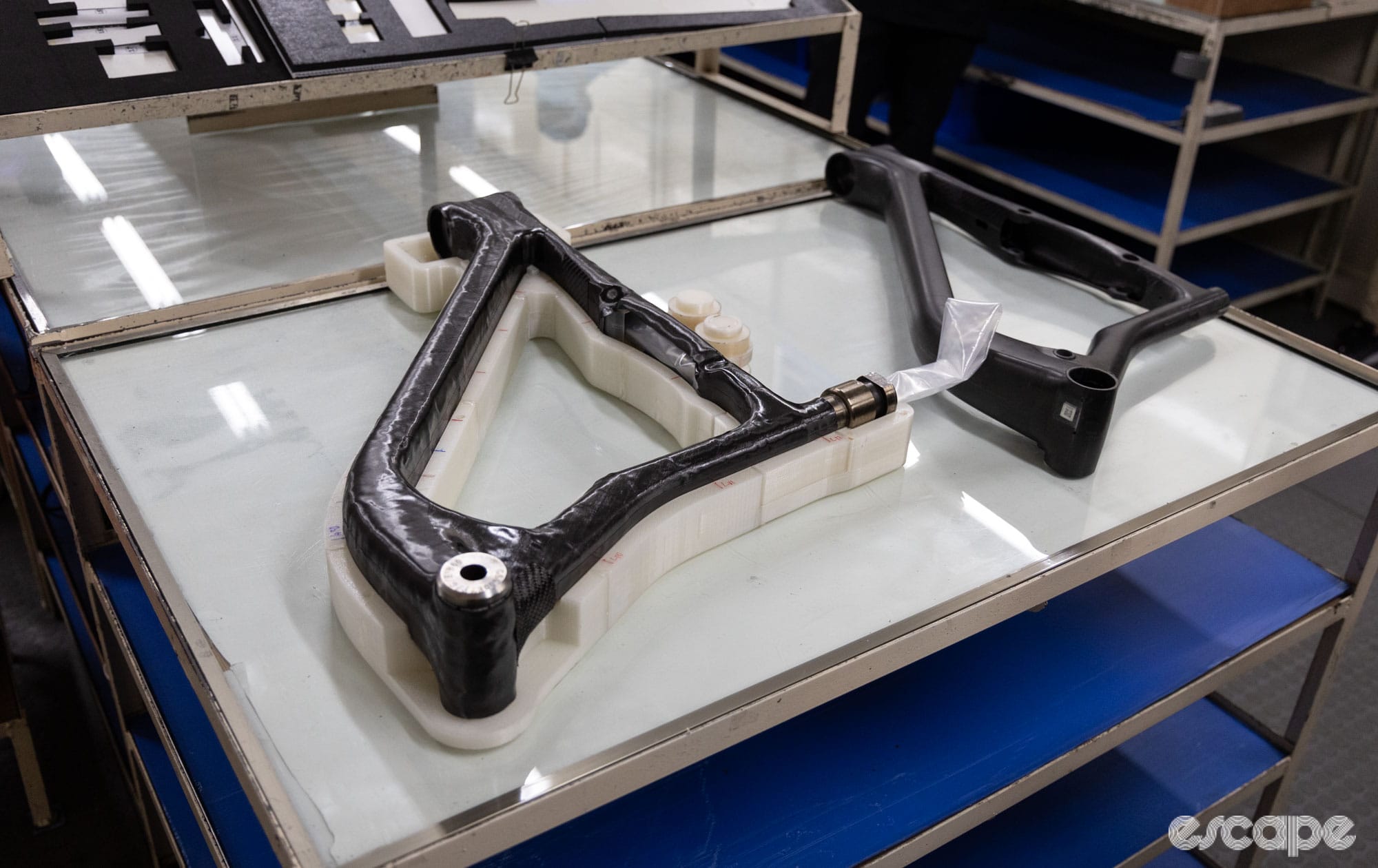
The end result is a frame that Giant claims beats the Specialized S-Works Epic 8 in both weight and stiffness. A medium-sized and painted Giant Anthem Advanced SL frame is claimed to weigh just 1,530 g in a bare state, which is 89 g less than the outgoing Anthem Advanced 29 and 194 g less than the current Specialized S-Works Epic 8. That figure increases to 1,746 g once you add hardware and headset (excluding rear shock), with the S-Works Epic 8 then just 98 g more.
Now Giant does use a larger, and therefore heavier rear shock than many, so expect the final figures to further even out. While not apples-to-apples, a Cannondale Scalpel Lab-71 frame is quoted to weigh 1,770 g with hardware (no rear shock or headset). A bare Yeti ASR Turq frame is claimed to weigh 1,552 g (no rear shock, hardware, or headset). And the recently reviewed Lauf Elja has a frame weight of 2,032 g including hardware (no rear shock or headset). Either way, the new Anthem Advanced SL is right in the mix with the lightest among the most premium options.
The weights are higher for the Anthem X due its down tube storage hatch that is then reinforced to provide equal levels of stiffness through the down tube. According to Giant, the X version of the frame is 40-80 g heavier than the race model, depending on size. The storage hatch cover adds approximately 75 grams further.
Weight is one element, but Giant bangs its own drum about its “low-latency speed concept,” which is a fancy way of saying no wasted energy through a lack of stiffness or suspension losses. Here, Giant claims the S-Works Epic 8 is about 6% less stiff in combined steering and pedalling rigidity.

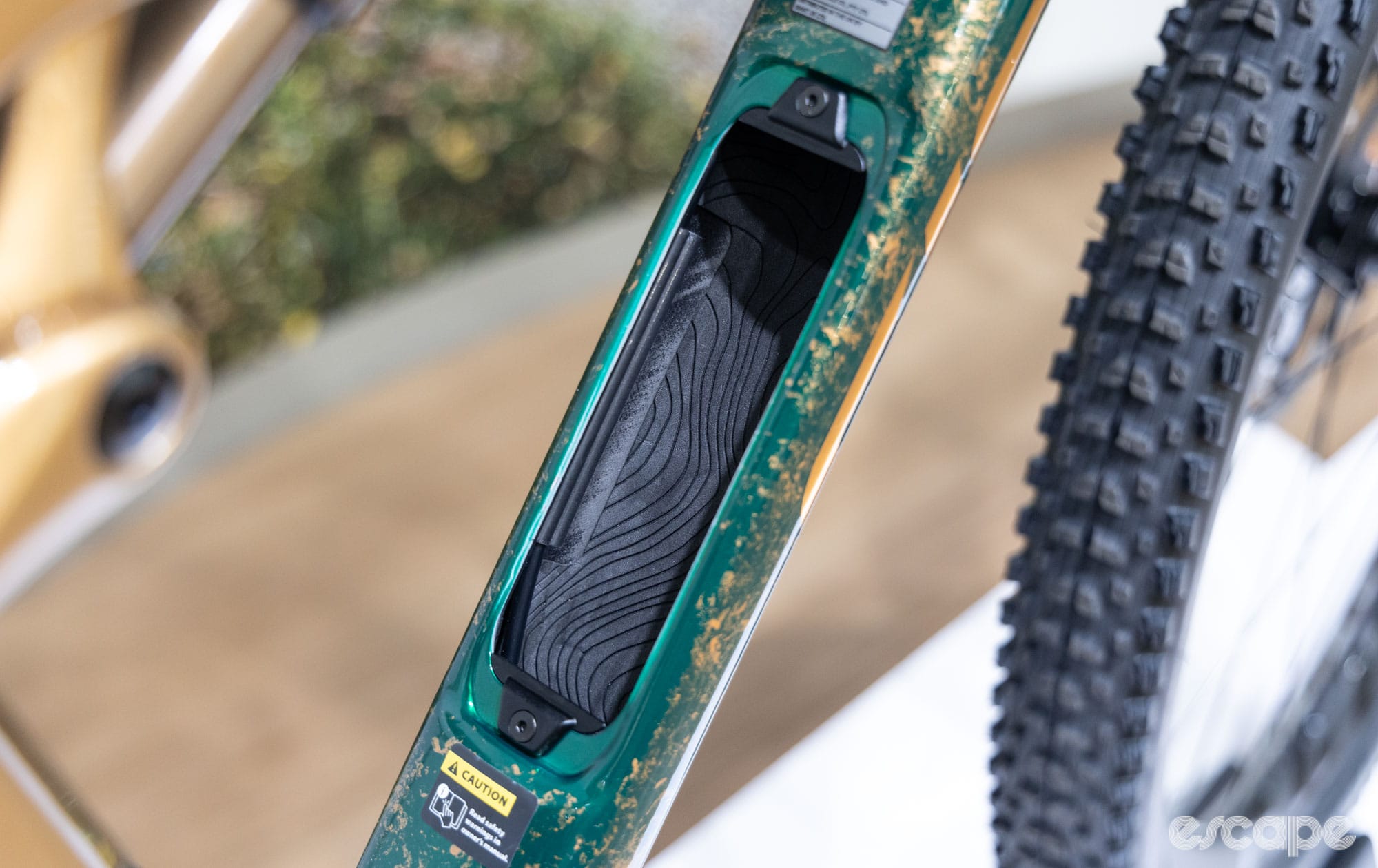
The Anthem X gets down tube storage. Meanwhile all frames feature a PF92 press-fit bottom bracket.
A few other details in the frames are right in line with the previous-generation Anthem. There’s officially room for 29 x 2.4" rubber (you can squeeze in a little more if needed). A 34T chainring is the recommended maximum, although as is often the case, the pros manage to use larger. Giant is sticking with its PF92 press-fit bottom bracket, something it claims is still the best way to achieve the pedalling efficiency provided by a wider down tube. And lastly, there are tabs for a chainguide, with bikes coming fitted with a MRP SL TR2.
Suspension things
Many cross-country bikes now use a flexstay design in place of a heavier dropout-based pivot point. Indeed, the Anthem has settled on a familiar rocker-driven flexstay suspension layout, but Giant claims its kinematic curves and suspension design are quite different from the competition's. Here, the company’s patented ‘Flexpoint Pro’, first introduced with its Stance bikes, is a flexstay that is designed to be less flexy, or at least, more controlled than most.

A number of flexstay bikes on the market feature progressive flex, meaning the frame stiffens throughout its travel range and can lead to unwanted springback, complicating the shock’s role. By contrast, Giant’s design aims to keep the flex to a minimum in the initial and end parts of the stroke, and rather do much of its flexing in the mid-stroke. With the rear shock removed, the frame feels unexpectedly smooth and controlled as it moves through its travel range, and, in turn, the shock's role is simplified.
To achieve better suspension performance, Giant also sought to reduce the high leverage rates common to many cross-country bikes. Here, the Anthem (similar to the Canyon Lux) uses a longer 210 x 50 mm rear shock, which is larger than the more commonly used 190 x 45 mm size in this category. That longer shock allows a larger-volume air spring to deliver a more supple, linear-feeling suspension action through the 120 mm of rear wheel travel. The Fox and RockShox shocks equipped on the Anthems are not proprietary to Giant, but there are subtle customisations that influence air volume.

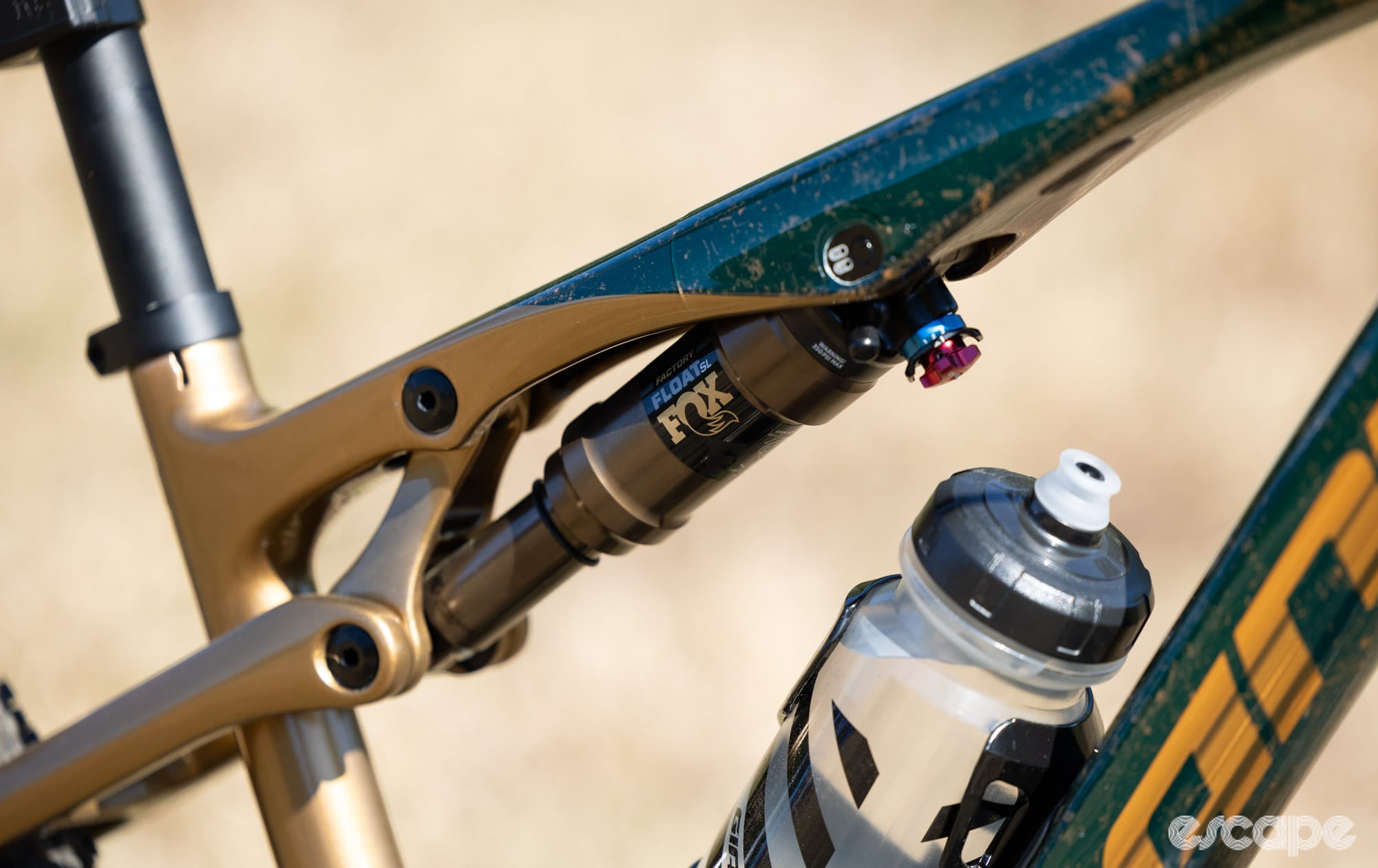
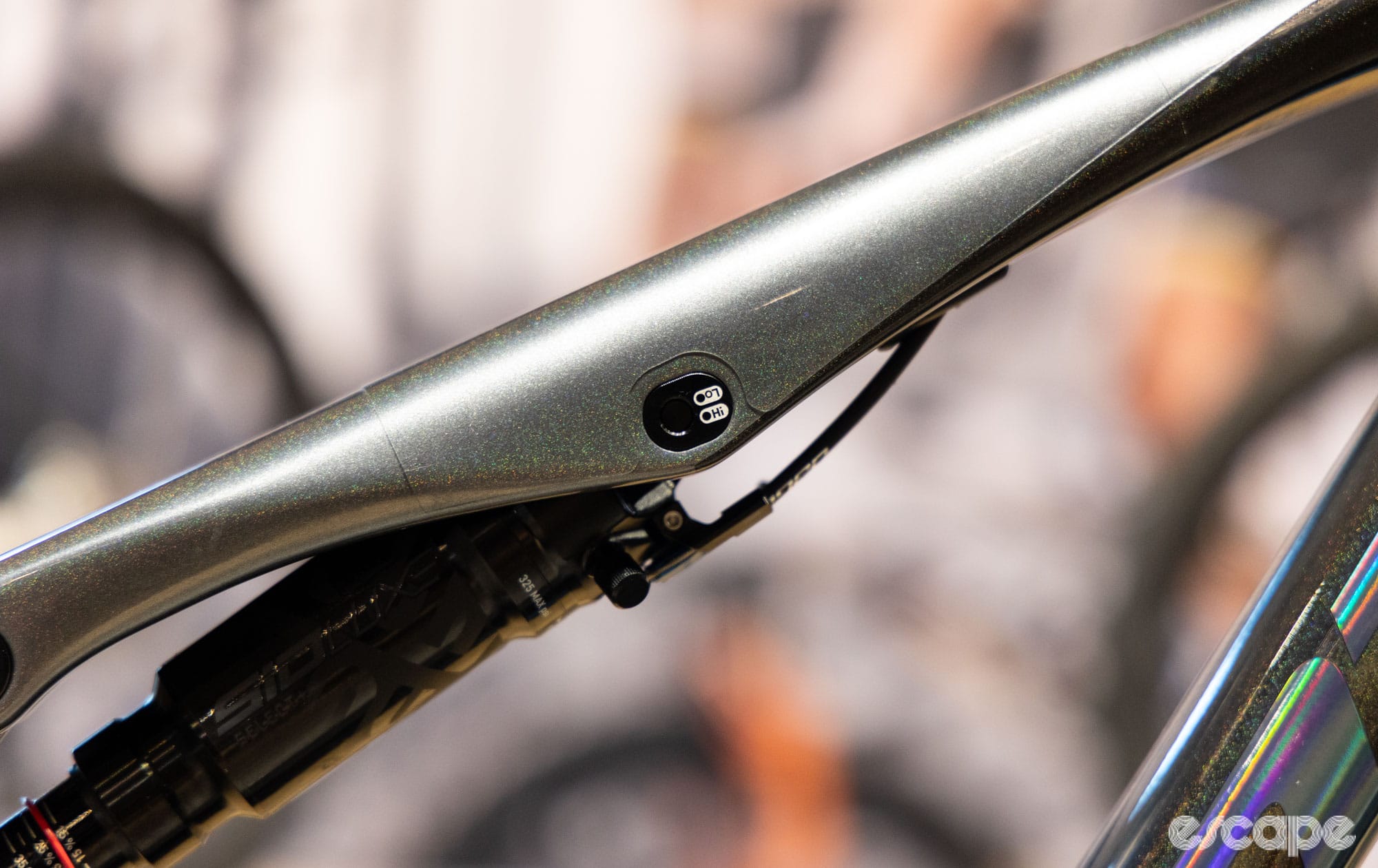
The Anthem largely features RockShox SIDLuxe shocks, while the Anthem X gets Float SL with a larger volume air can.
Giant recommends using the Anthem with 25% (XC) or 30% (Trail) sag to achieve that small-bump compliance. All of the race-leaning Anthem Advanced SL models feature some form of remote lockout control, while the more trail-oriented Anthem X models feature a different suspension tune and manual lockouts.
The other intended benefit to the lower leverage ratio is that the lockout becomes more effective. As Staub explained in the Geek Warning bonus episode, having a shorter-length shock required the maximum available low-speed compression tuning for the shock lock-out. The longer shock allowed Giant to achieve a firmer lockout.
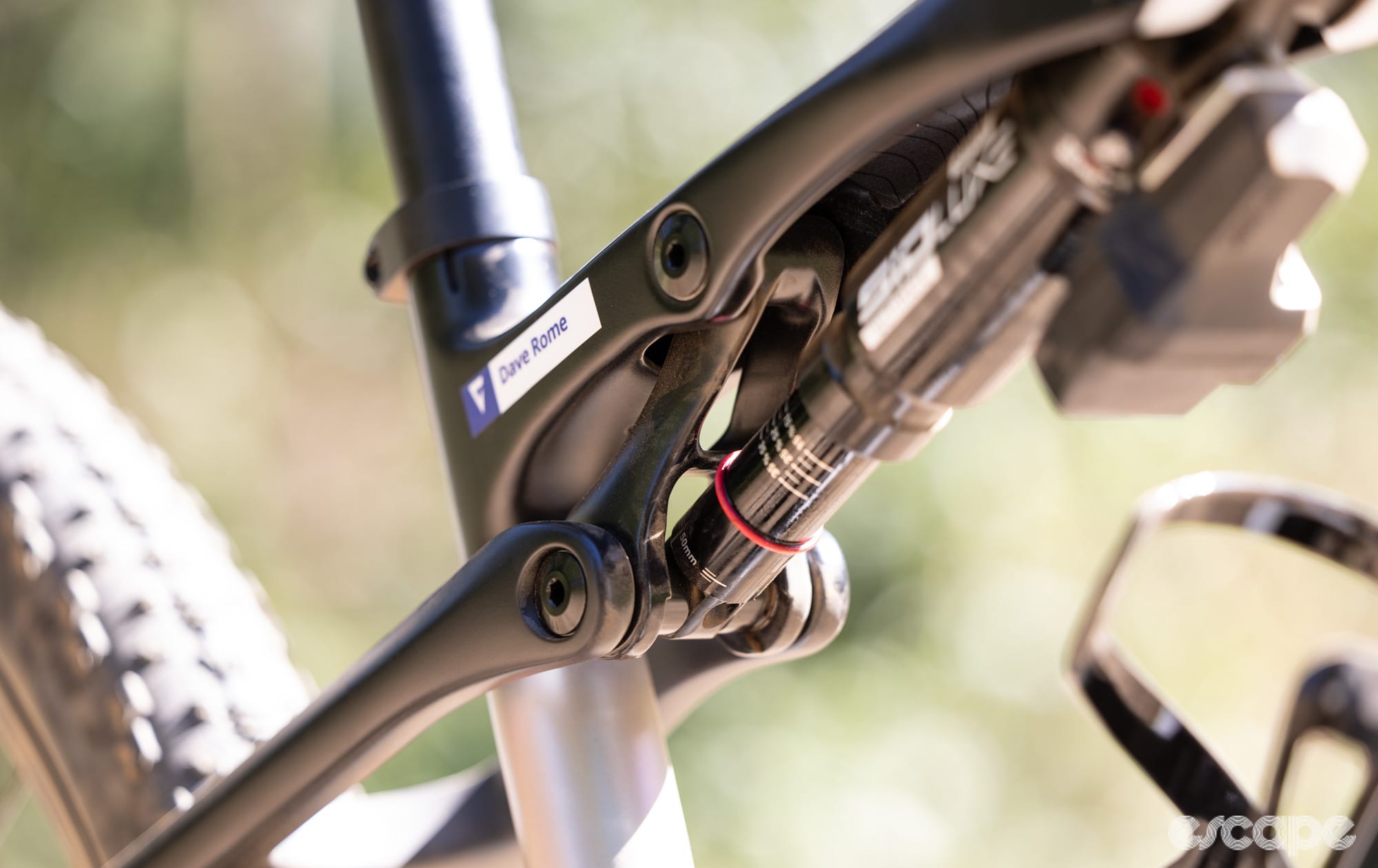
While Giant doesn’t mention it as a feature, the side perk to a lower leverage ratio is that the shock is arguably less stressed. The larger shock provides more air and oil to better handle heat. Meanwhile, it also requires less air pressure, which should, in theory, make for a more durable system.
Geometry figures
Giant has historically been rather conservative in the geometry of its cross-country bikes, and while the new Anthem doesn’t break new ground, it does feel wholly modern. It’s worth noting that both the Anthem and Anthem X feature identical geometry, with the only measured differences being related to the 10 mm change in fork height.
One feature I’ll be experimenting with for the full review is the two-position geometry flip chip located at the front shock bolt. With a 120 mm fork up front, this offers a choice of 66.5° or 67° head angle, with bottom bracket drop of 51 or 45 mm, respectively. Yes, that’s rather low and to me makes perfect sense given the current trends to shorter crank lengths. With a longer 130 mm fork up front (Anthem X), the head tube can be as slack as 66°.
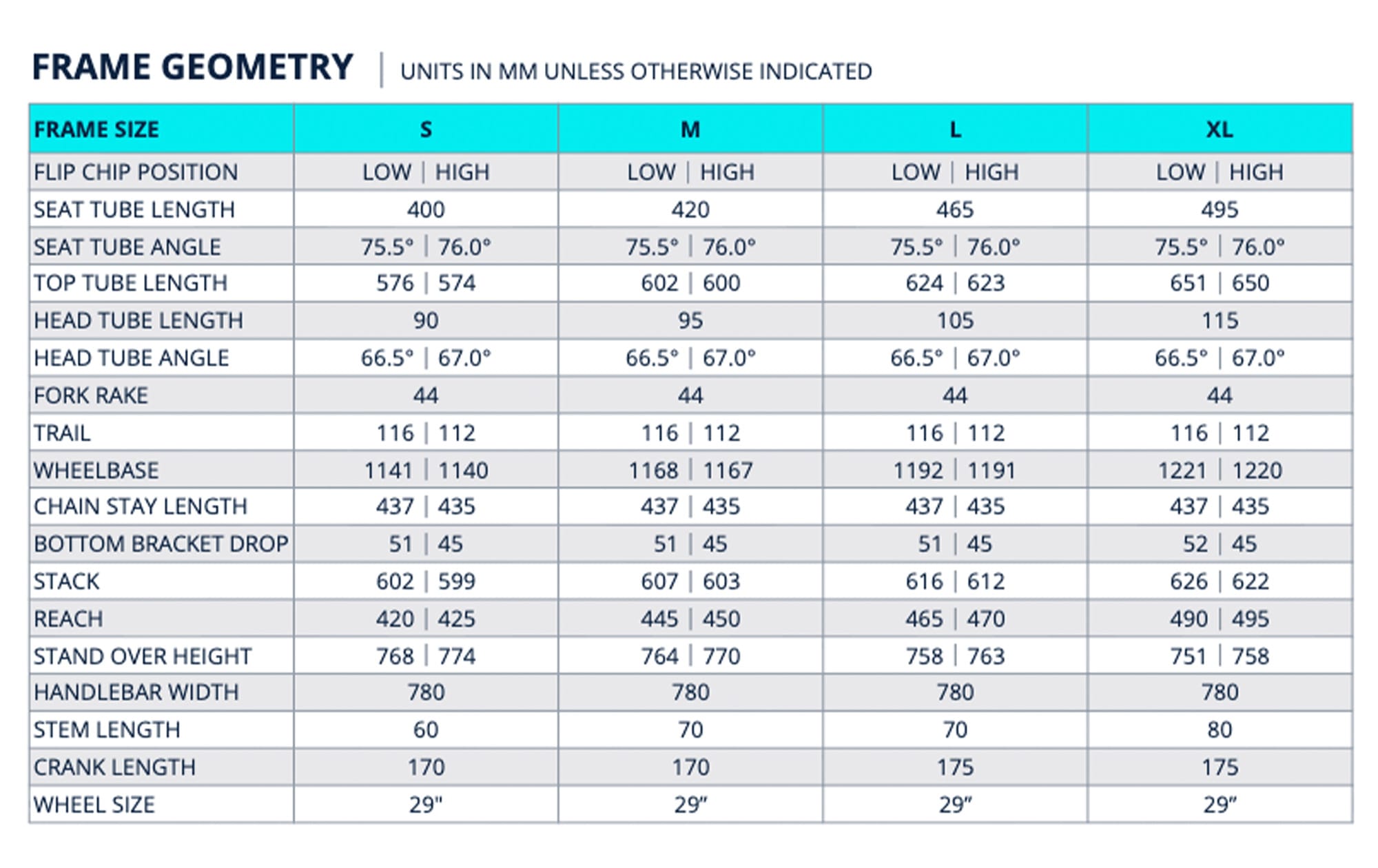
Fit-wise, the new Anthem is only available in four sizes, ranging from small to extra-large (the Liv Pique introduces smaller options). The reach figures are closely aligned with those of many other bikes in the category and show a progression of 20-25 mm across the sizes. Meanwhile, stack heights are a smidge taller than the likes of Specialized or Cannondale’s race offerings.
All models feature the same chainstay length of 435 mm (or 437 mm in the slack and low geometry position).
Integrated influence from the road
As we’ve seen happen to all upper-tier road bikes, Giant is taking a more integrated approach to this bike. All new Anthems feature a one-piece handlebar and stem that tucks most of the cables beneath it. According to Giant, this integrated aesthetic is now just customer expectation in a premium bike – it saddens me to admit that they’re probably right in playing the numbers game.

Of course, this means the cables are going through the top headset bearing, and while I’ve been very vocal against this trend on mountain bikes, it’s clear the majority of the market would rather the clean look than have simpler servicing – even though the front brake hose remains external. Thankfully, Giant has put effort into the system, sealing the headset at the top and bottom, along with fitting a more durable stainless steel bearing on the top (the bottom headset bearing isn't captured by the cables).
In chatting with Joe Staub, who in a past life was a race mechanic with Giant Off-Road Factory, it became clear that this hidden cabling was no afterthought. The designers followed SRAM’s relatively new cable-radius recommendations, introduced with its T90/T70 components. And the system is designed to provide smooth cable transitions no matter how many spacers are used (compared to some systems that can pinch cables when the stem is slammed).
Did we do a good job with this story?