
I was recently on a press trip for a bike launching next year. As is often the case, the reveal came via a high-production marketing video. All the buzzwords, beauty shots, and chiselled pros made their expected appearances. But in amongst the panning shots, one line stood out: the brand claimed almost every tube shape had been redesigned to improve aerodynamics and ride quality. The bike, however, looked nearly identical to its predecessor.
That raised a question: if brands can change everything, yet the bike still looks the same, what’s really evolving? The answer lies not in big visual leaps but in invisible, data-driven refinement. Iterative design might not be sexy, but given the constraints engineers face, it's the path well-traveled.
Computing power and refined design processes
Modern bike development is increasingly defined by the interplay between computational analysis and hands-on experimentation. Trek and Canyon are just two examples of this approach to design, but even these two exemplify different philosophies in frame optimisation and aerodynamics. Even with these diverging approaches, both rely heavily on increasing technological capabilities to sharpen performance.
When a new design cycle comes around, the first thing is to work out the targets the new platform has to achieve. For a performance race bike, there is likely some demand for aero improvements, along with adapting to changes in rider position trends and equipment and integration trends. Also, depending on the specific product, making the next generation lighter than the last could be a top priority as well. Once these targets have been solidified, the design team has an idea of how to approach updating a platform.
Trek’s frame development starts with computational modeling. The team uses a vast 2D shape library, a digital catalogue of tube cross-sections built through HEEDS, a design-optimisation platform that automates thousands of simulations. Each shape is analysed using computational fluid dynamics (CFD) and finite element modeling (FEM) to assess aerodynamics, stiffness, and weight simultaneously.
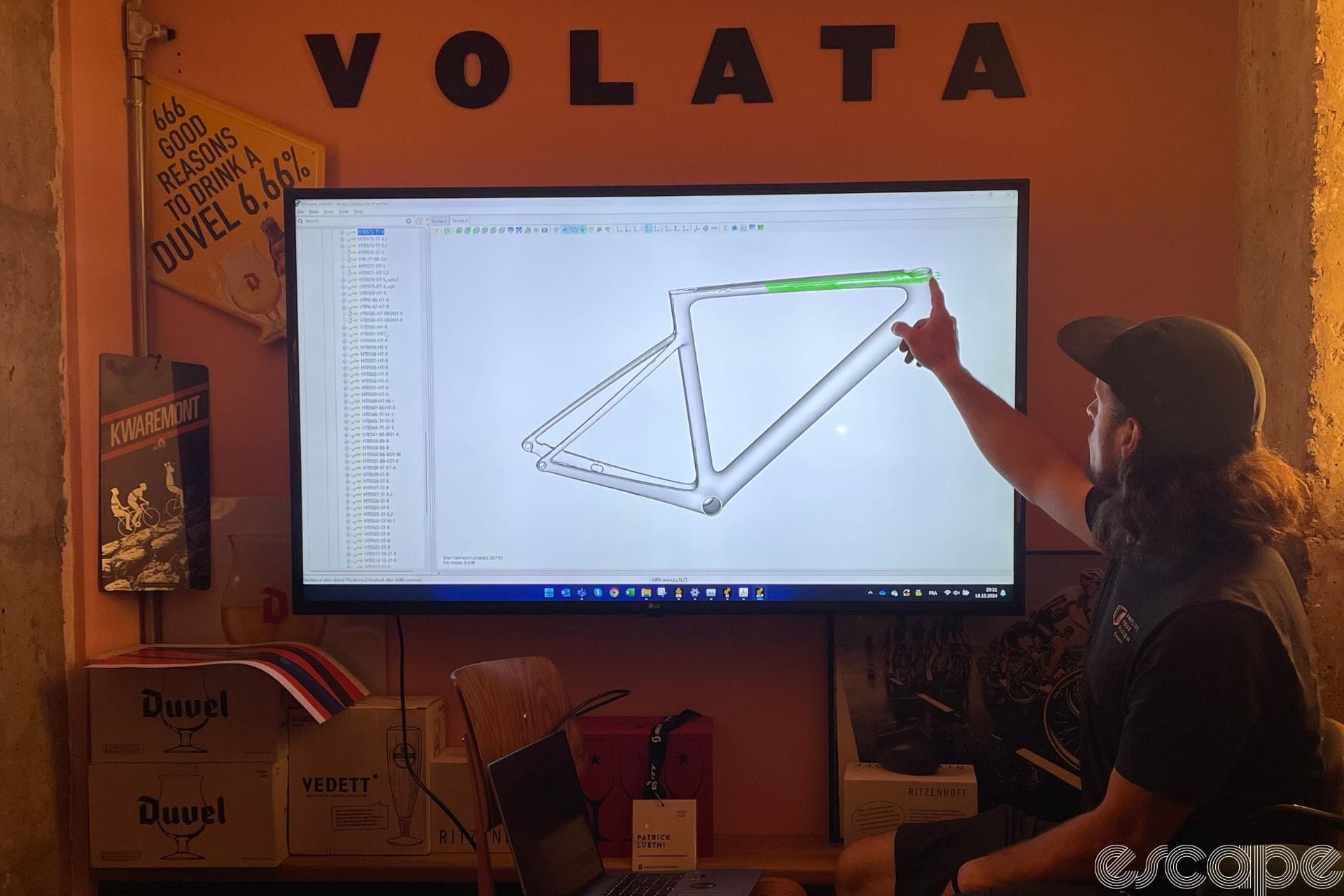
Earlier libraries used just a few variables, making them faster to compute but less precise. Greater computing power has since made the process far more sophisticated. Today’s libraries allow for greater flexibility and detail, enabling engineers to refine each tube profile at a finer resolution. The result isn’t radical reinvention, but a higher-definition version of what came before, improving on what already exists.
This computational approach also integrates multiple performance factors at once. Rather than focusing purely on drag, the system now models structural loads in real time. As Adam Bird, design engineer of the Trek's eighth-generation Madone, explained, “We can impart loads through different locations on the bike, and a finite element model for structural analysis is built in real time for each iteration.”
 Dave Rome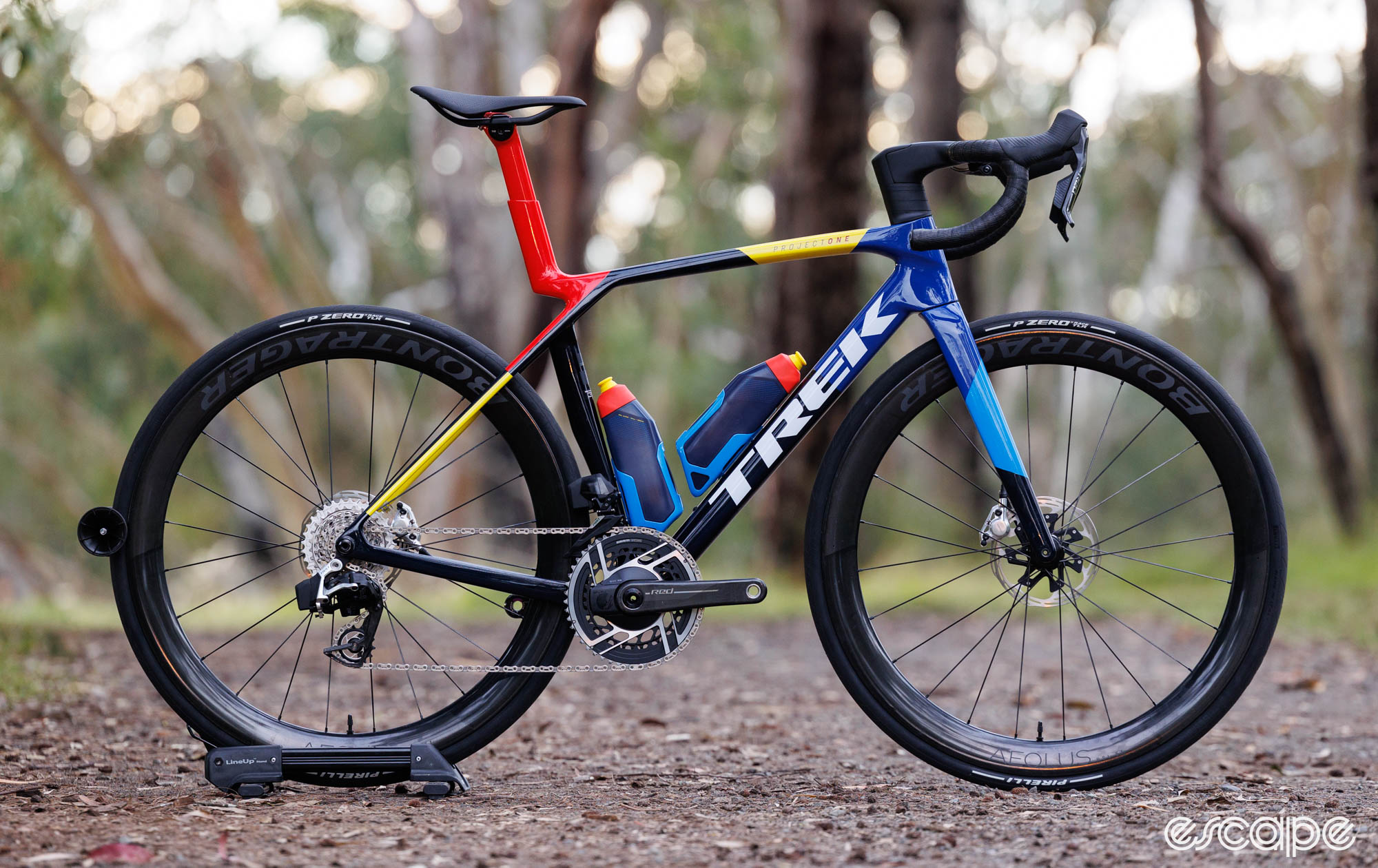
That kind of multi-parameter optimisation explains why each new Madone or Émonda looked evolved rather than transformed. The real changes happen beneath the surface, in the data and its precision. As the software grows more powerful, so too does Trek’s ability to squeeze more performance out of every gram and contour.
Canyon’s design process has evolved dramatically in recent years. Once reliant on scattered teams and external consultants, Canyon now prioritises close collaboration and hands-on testing, blending modeling with real-world validation.
Did we do a good job with this story?