
For the longest time, it seems we've had only two choices when it comes to performance road helmets: ventilated or aero. There are, of course, aero-optimised ventilated helmets, and attempts to improve aerodynamics with smoother aero helmets, but the laws of physics seem to dictate there is always a trade-off to balance with aero or cooling.


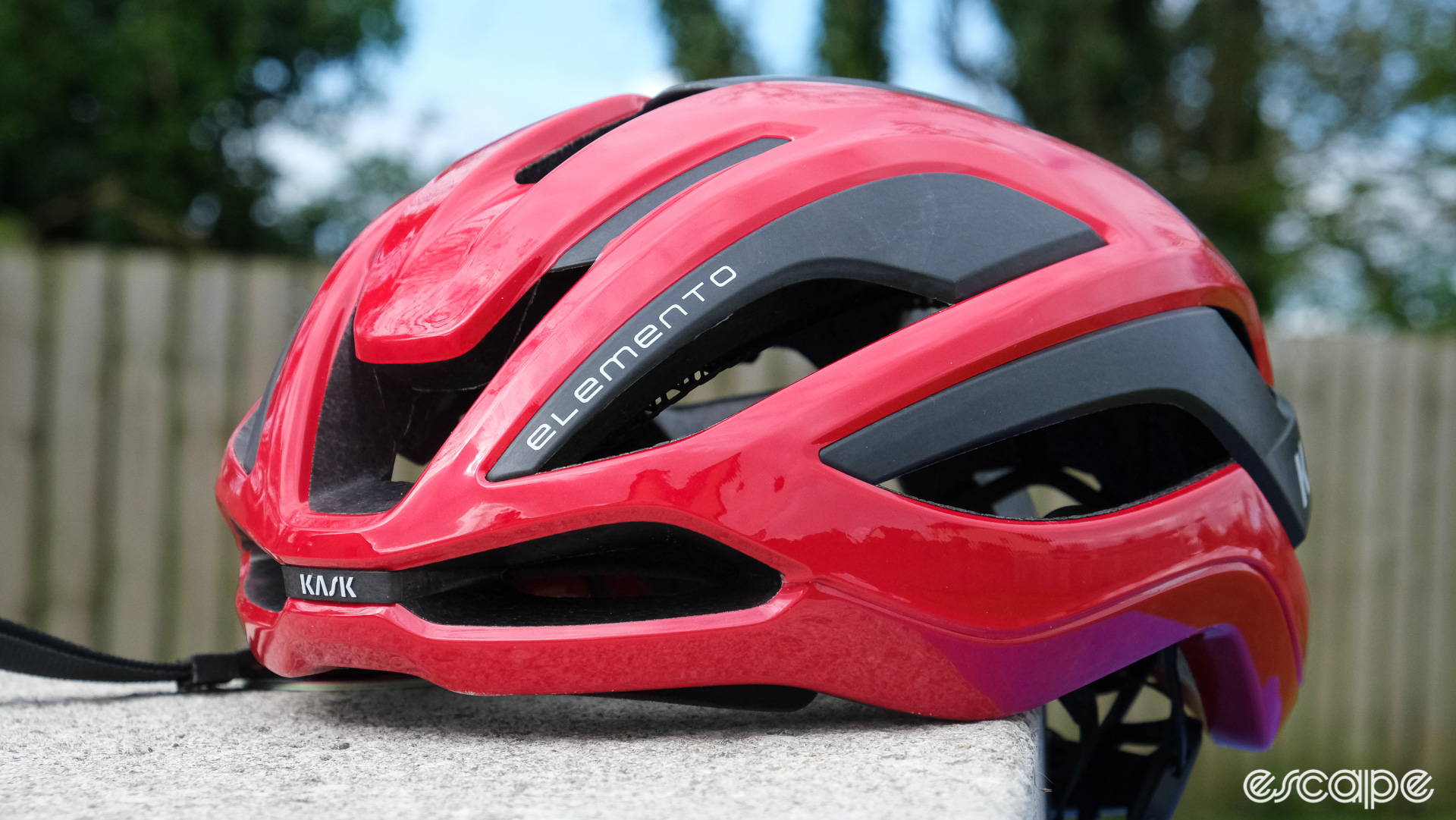
But Kask reckons they've bridged that seemingly impossible gap with its Elemento helmet, a helmet promising the "best possible ventilation" and thermal comfort combined with "super-aerodynamics." Oh, and it's said to offer the "very best safety," in a lightweight and comfortable package surpassing the usual safety standards. Those are some luft-y claims for a single helmet, and if true, might leave you wondering why you'd choose any other helmet, until you see the price tag. , so is it worth it? We've raced, trained, and tested in the Elemento for a year now to find out.
All that performance comes with an eye-watering, staggering, mind-boggling, insert-your-own-adjective £335 price tag, so why so costly?
Citations, please
There are a few answers to that question. There are, of course, the usual claims: the helmet was developed in partnership with the Ineos Grenadiers, and the aero / light / safe performance claims listed above. But, most of all, that price is also directly attributed to some of the new technologies Kask has employed to achieve those lofty aerodynamic combined with thermo-control gain claims.
Citing multiple published researched papers* (listed below) looking into the effects of thermal comfort and aerodynamics, Kask concluded that, when it comes to performance, an athlete's thermal comfort is just as important as a helmet's weight and aerodynamics. Those studies indicated, as you might expect, that more vented helmets offer better evaporative and convective heat transfer, while smoother helmets offer better aerodynamics. Luckily, though, those same laws of physics jurisdiction are diminished inside the helmet, and it's here that Kask claims it's cracked the code.
One of those studies listed found "overall cooling efficiency of (a) closed helmet with prominent internal channels and outlets was better than the closed helmets with inlets and outlets depicting the influence of internal channels on heat transfer" and that "global heat transfer characteristics and zonal heat transfer characteristics differed significantly," with those differences "influenced by zone position with respect to incoming air flow and helmet design features." With that in mind, Kask claims it can now improve heat transfer while simultaneously tackling aerodynamic drag by utilising specific channels inside the helmet designed to better harness a reduced airflow for the same cooling end result.
It's one thing knowing bigger channels can aid with cooling, but the challenge is integrating more empty space inside the helmet without diminishing safety and impact performance. Key to the new helmet is what Kask is calling "Fluid Carbon 12" (FC12), a composite technopolymer adopted from the aerospace industry and used in the helmet's safety cage.

Kask claims FC12 is capable of absorbing more energy and better-distributing forces upon impact than traditional helmet materials. The upshot of that improved force control is that Kask designers now had the freedom to reduce the foam required inside the helmet, opening using deeper and wider internal channels Kask calls "Hyvent" to promote airflow while still passing impact tests.
Did we do a good job with this story?