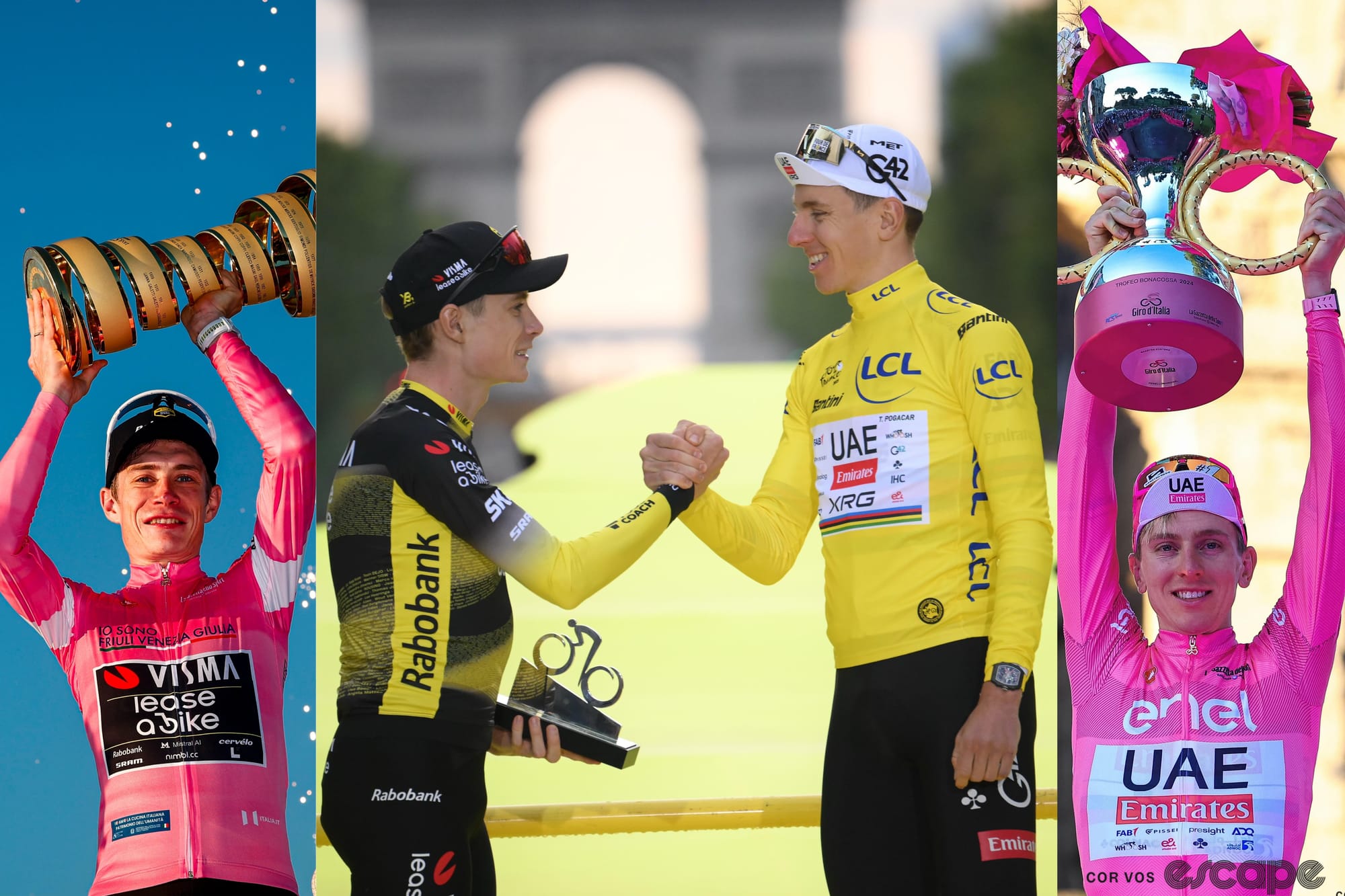

In 2024, with his talent for making record-breaking performances look routine, Tadej Pogačar pulled off yet another feat. By winning the Giro d'Italia and Tour de France in the same season, Tadej joined a club undisturbed since 1998, when Marco Pantani last donned pink and yellow in the same year. Before Pantani, only six other men in history had done “the double,” and aside from Pogačar’s incredible performance, a winning streak like that was generally seen as impossible in the modern era. And yet, Jonas Vingegaard is now attempting to do the same, and his attempt will undergo a critical challenge Thursday on stage 6 of the Tour.
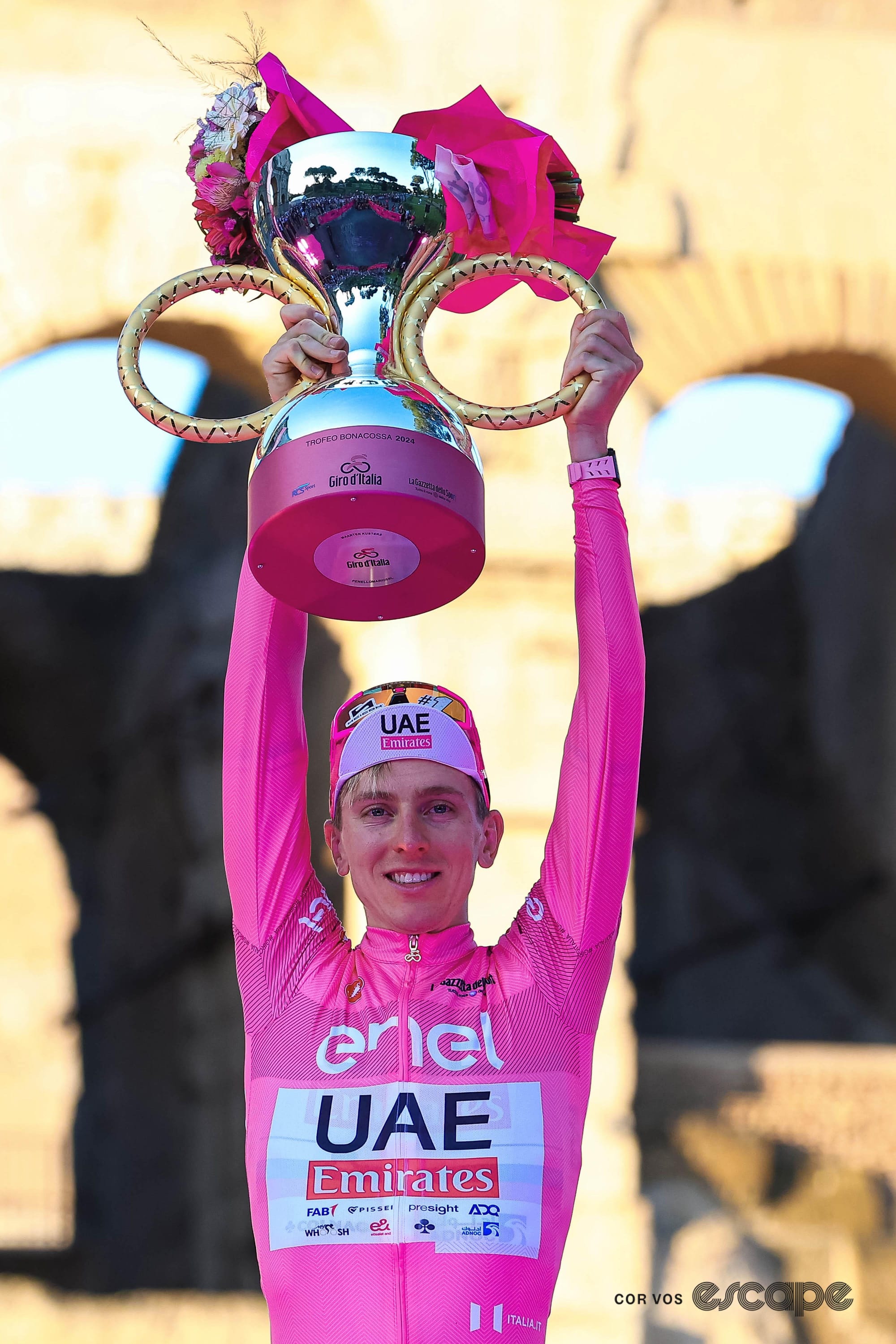
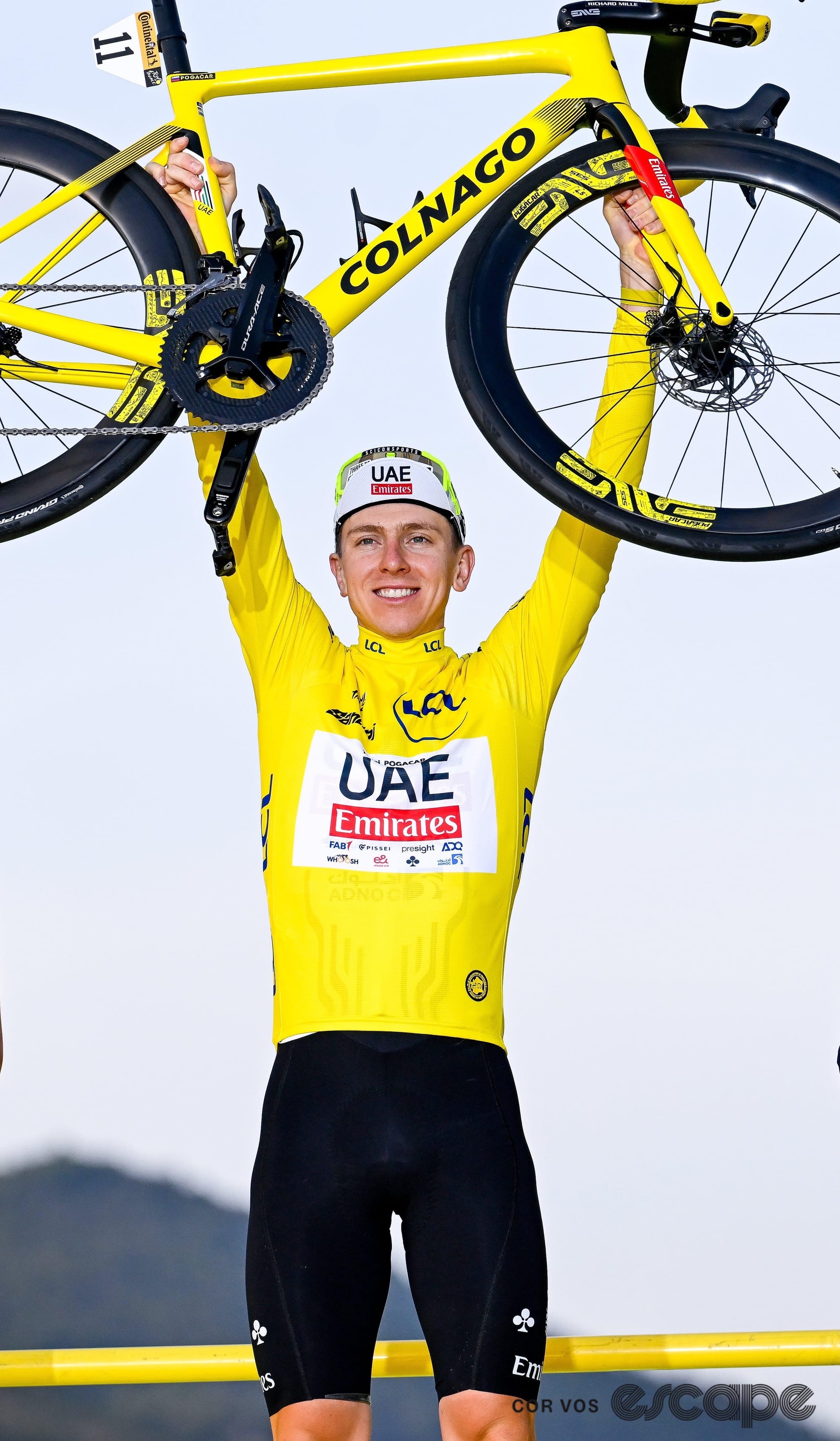
Pogačar's 2024 final podiums at the Giro d'Italia and Tour de France
We all know a Grand Tour double is a tremendous physiological feat; just three men's cyclists ever have won the Tour and Vuelta a España in the same season (this number is probably artificially low because until 1995 the Vuelta was held in spring, which made it impossible to ride the Giro). But – pre-Pogačar and Vingegaard, anyway – any number of riders won Grand Tours. Why does it take such a super-talent to pull off back-to-back titles? Is there anything about modern training and racing that is making it more possible – beyond Tadej’s exceptional abilities? And, ultimately, after winning the Giro this year, will Vingegaard be fatigued and flat at the Tour or could we see his best form in years?
Per Sebastian Weber, coach and founder of physiological analysis platform INSCYD, which is used by WorldTour teams, the key obstacle is about time and recovery. “It’s not only about doing two Grand Tours, it’s also about how much time you have in between," he said.
Jack Haig of Netcompany-Ineos, who has raced in 16 Grand Tours including several back-to-back campaigns, knows what those challenges look like from a rider’s perspective. "You're away for a total of four weeks by the time you arrive a little bit earlier, you do all the [team] presentation and everything, you live this kind of weird life being looked after," he said, noting that the shift between being at a Grand Tour and being home can be particularly difficult.
Did we do a good job with this story?