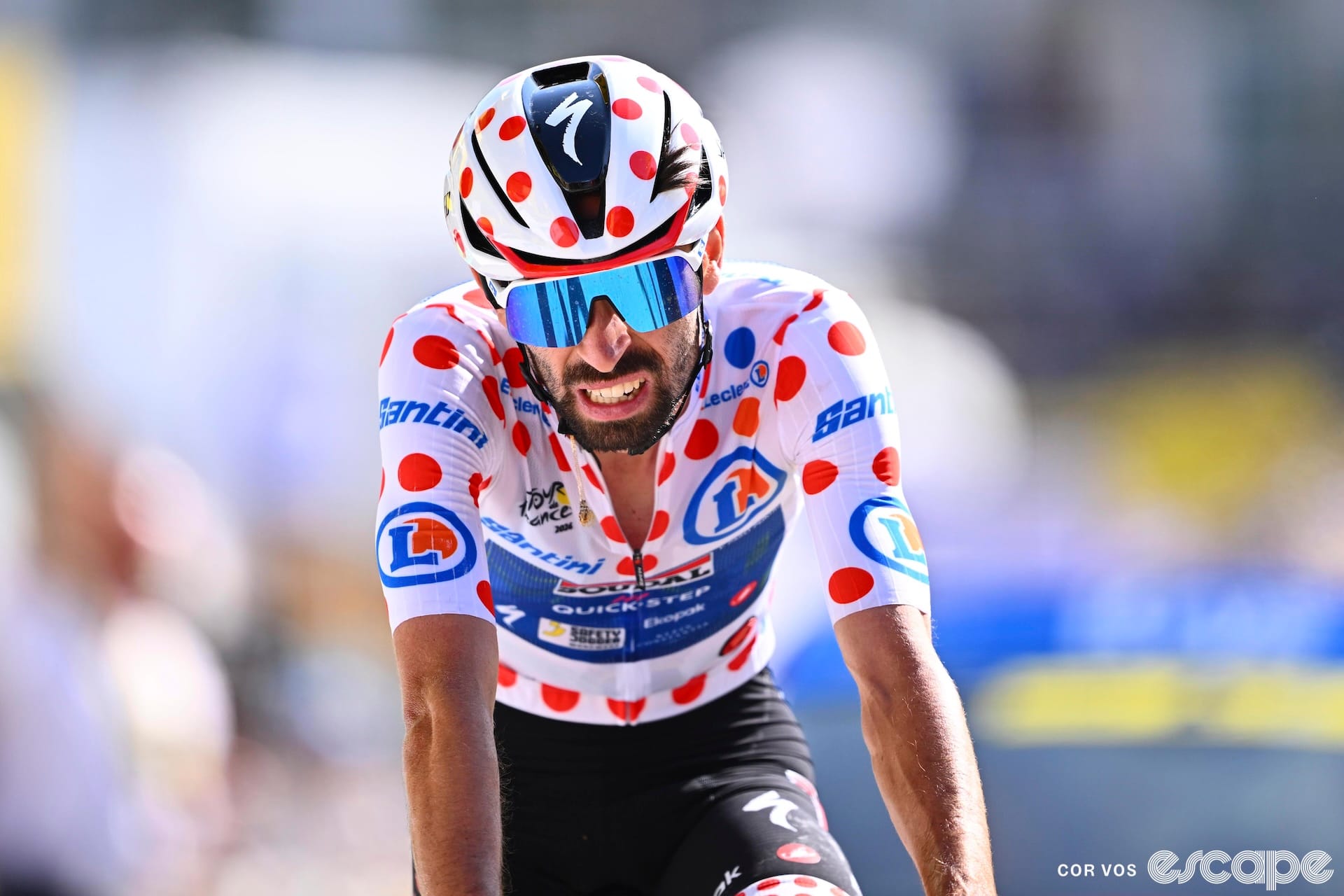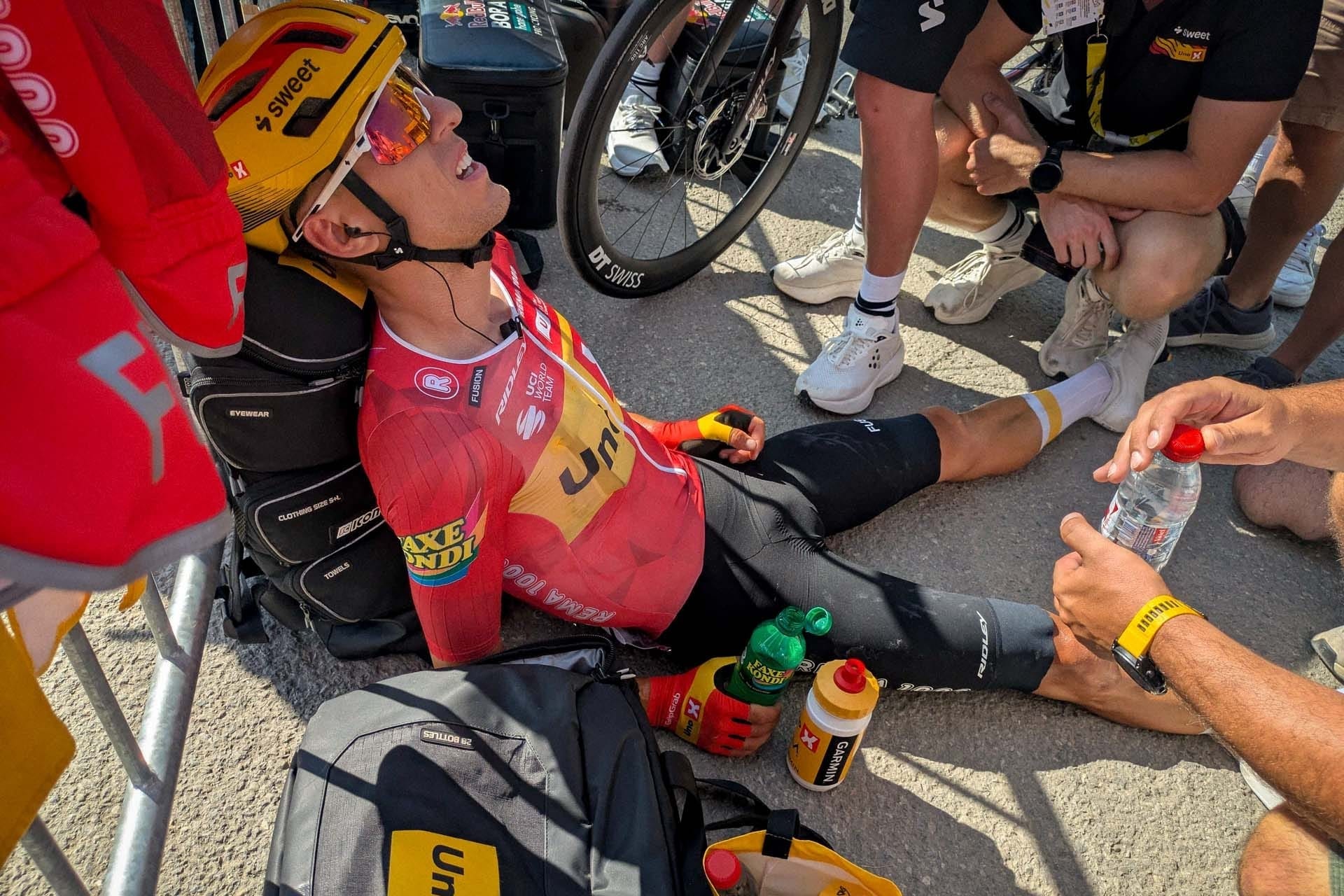


ORCIÈRES, France — Tobias Johannessen, fifth on stage 18, crosses the line in visible discomfort, pressing on his stomach. He’s been in the break the whole day, and he slumps to the ground against the barrier surrounded by a crowd of Norwegian media and soigneurs. For the end of a chaotic day’s racing full of raucous fans, the stillness of the moment is striking. For several minutes among the cacophony, Johannessen just lies there propped up against a bag of clothing, his chest and stomach heaving up and down as he tries to catch his breath.
This is what the Tour de France does to a rider.
It’s Johannessen’s second time this Tour in the mix for a stage win, and the second time it hasn’t panned out. That’s disappointing for him and disappointing for the team, obviously, but in this immediate moment, that seems some way from the top of the list of priorities. He can barely talk, can barely respond to gentle questions from Uno-X’s nice press officer. He is just trying to let his soul catch up with his body after the two parted some way down the road.
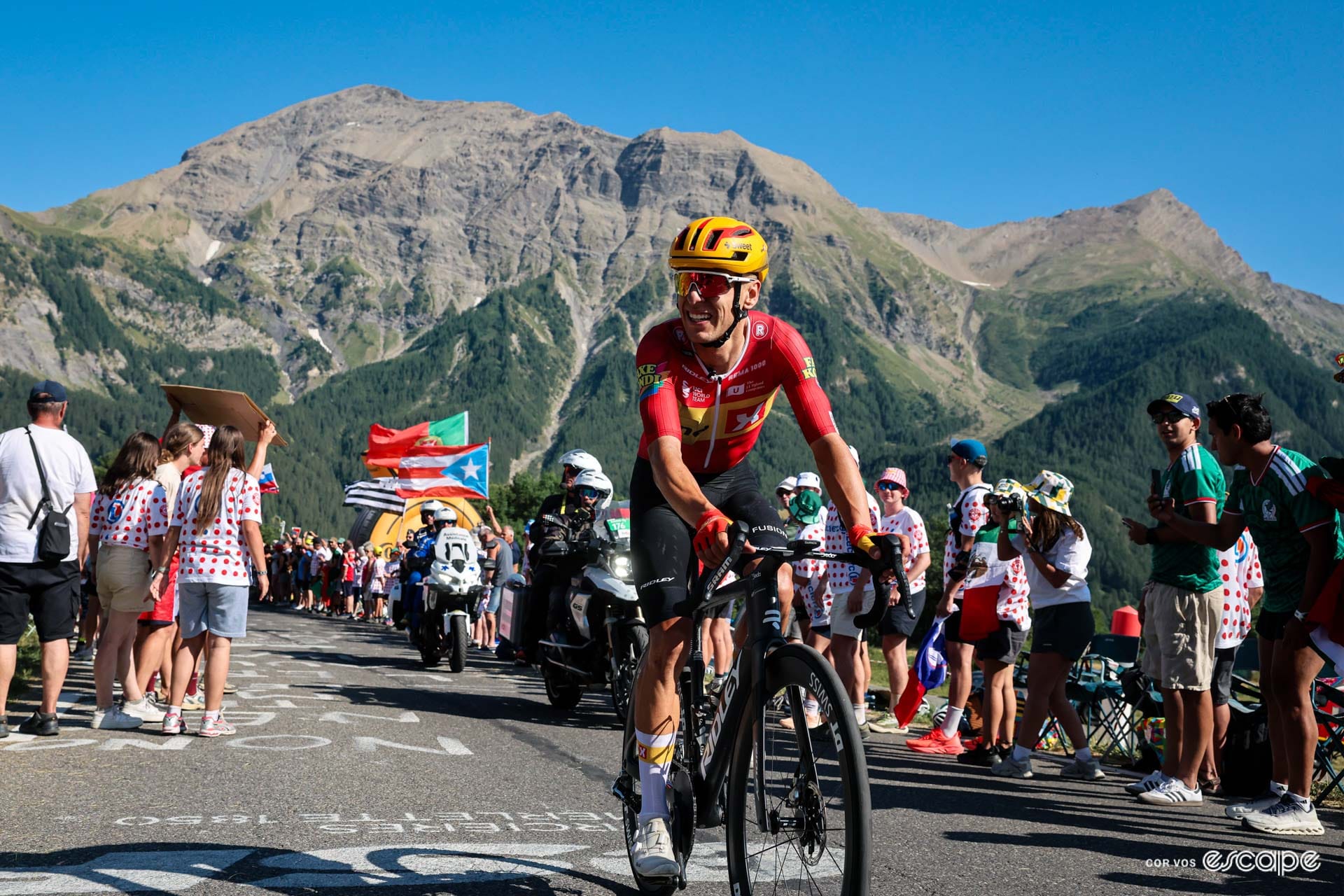
I stand there, watching and waiting for him to recover enough to provide comments to the media. Eventually, a few remarks: describing it as one of his hardest days ever on the bike, saying that he was just too tired to follow stage winner Richard Carapaz, before taking two goes at standing up and then cramping painfully in his leg. Meanwhile, riders keep rolling over the line, finding their way to their various soigneurs, and I get to thinking about whether it might be possible to assess, on this stage, what the Tour de France does to a whole team.
Did we do a good job with this story?