Welcome to Escape Collective. Please select your language.
Please note that this is an automated translation and it will not be perfect. All articles have been written in English and if anything appears to not make sense, please double check in English.
New Shimano and Bontrager wheels and weight-saving hacks: TdF road tech gallery
As the riders head for the Alps in the final few stages of this year's Tour de France, we take a look back at the tech that's popped up over the past couple of weeks.
The Tour de France is deep into its final week, as the riders head towards the Alps and eventually on to Paris. With that, and so much TT tech already covered, it's high time we take a look at some of the road tech on show at the biggest race of the season.
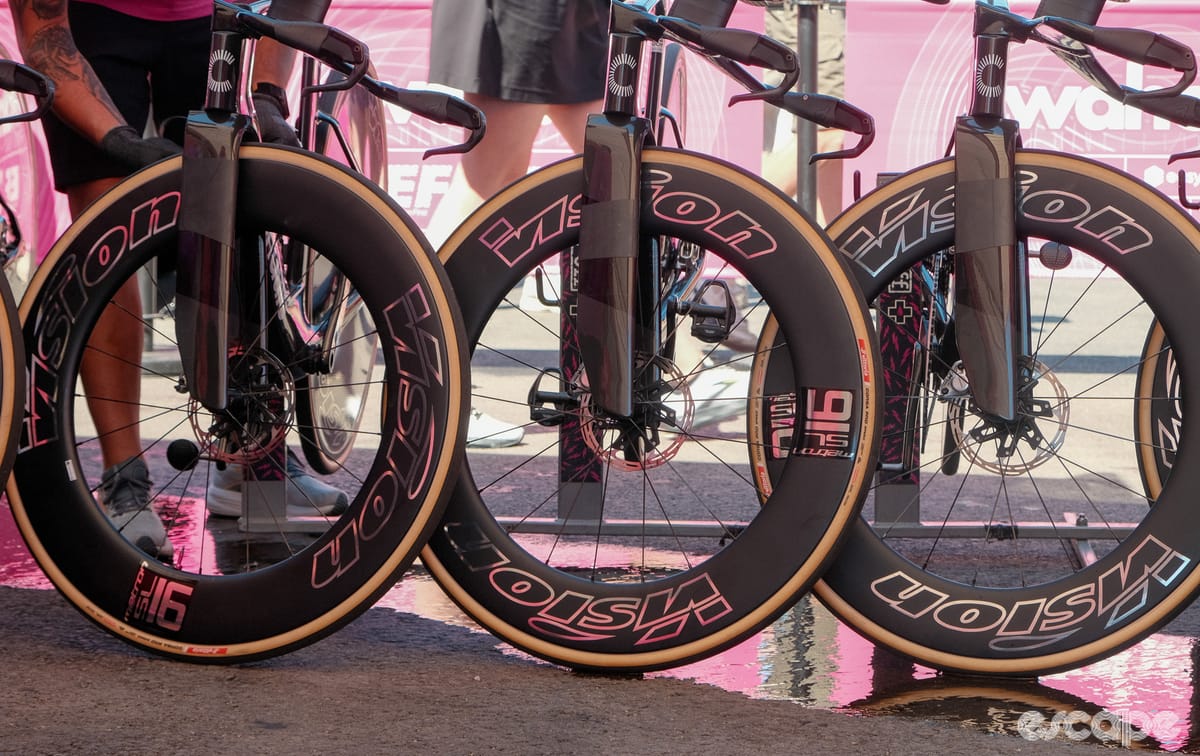
In this gallery, we are going to jump back to stages one and two in Spain and pick through the various bits of bling that caught our eye early in the race, before we take a look at some of the tech we spotted at the stage 17 start later this week.
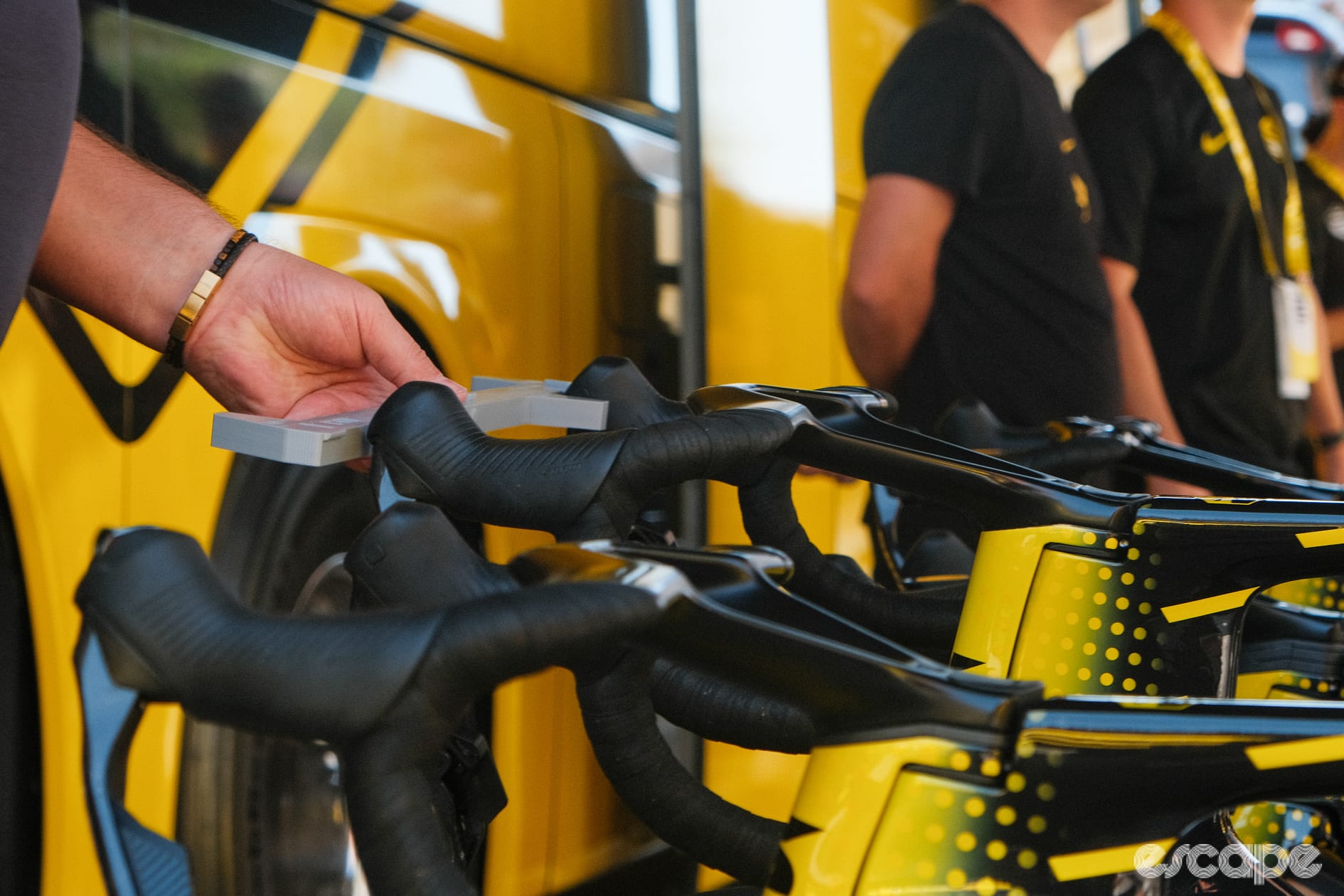
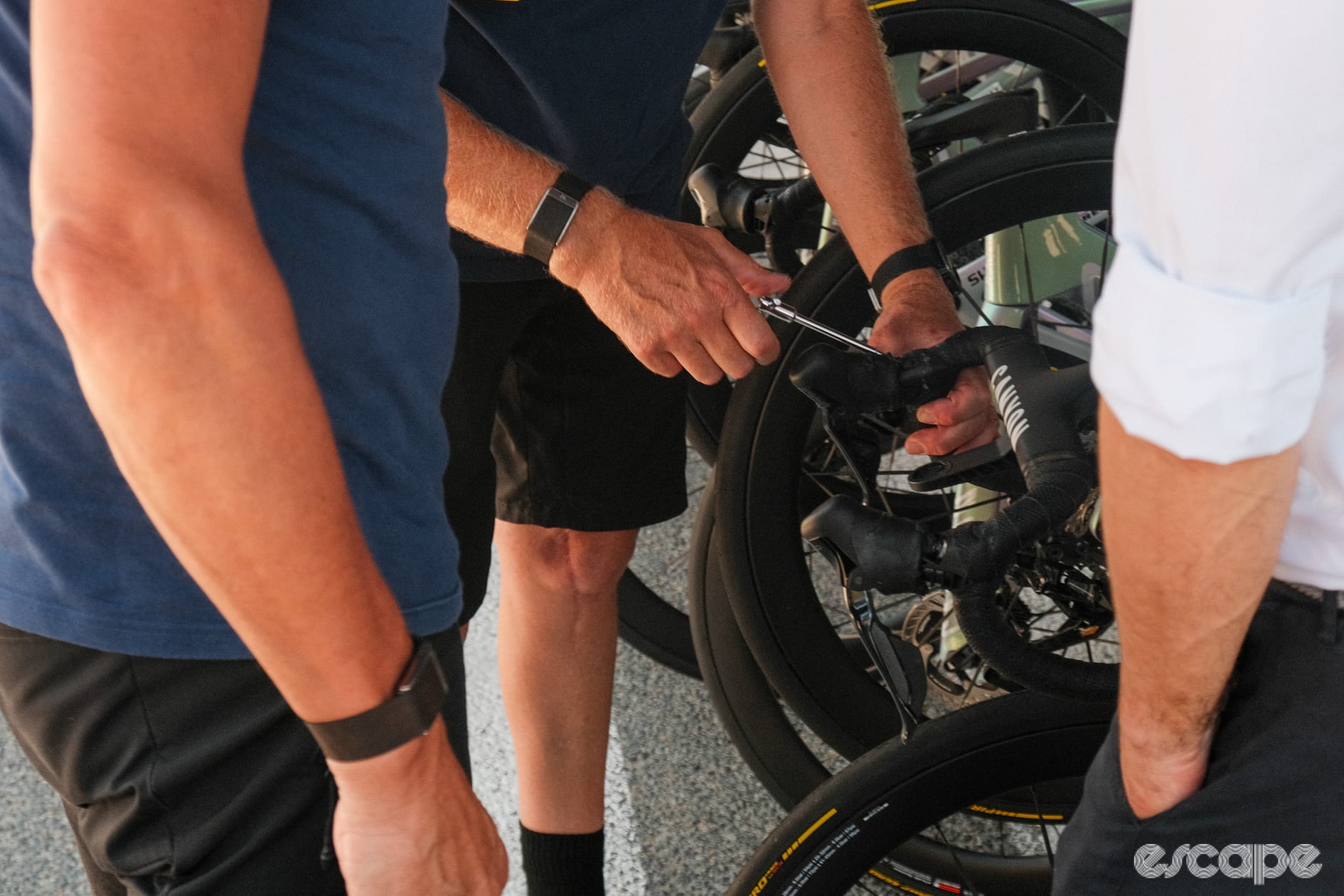
The UCI was out checking lever width before the start of stage 2.Several bikes were found to have the levers too narrow, forcing mechanics to make last-minute adjustments.
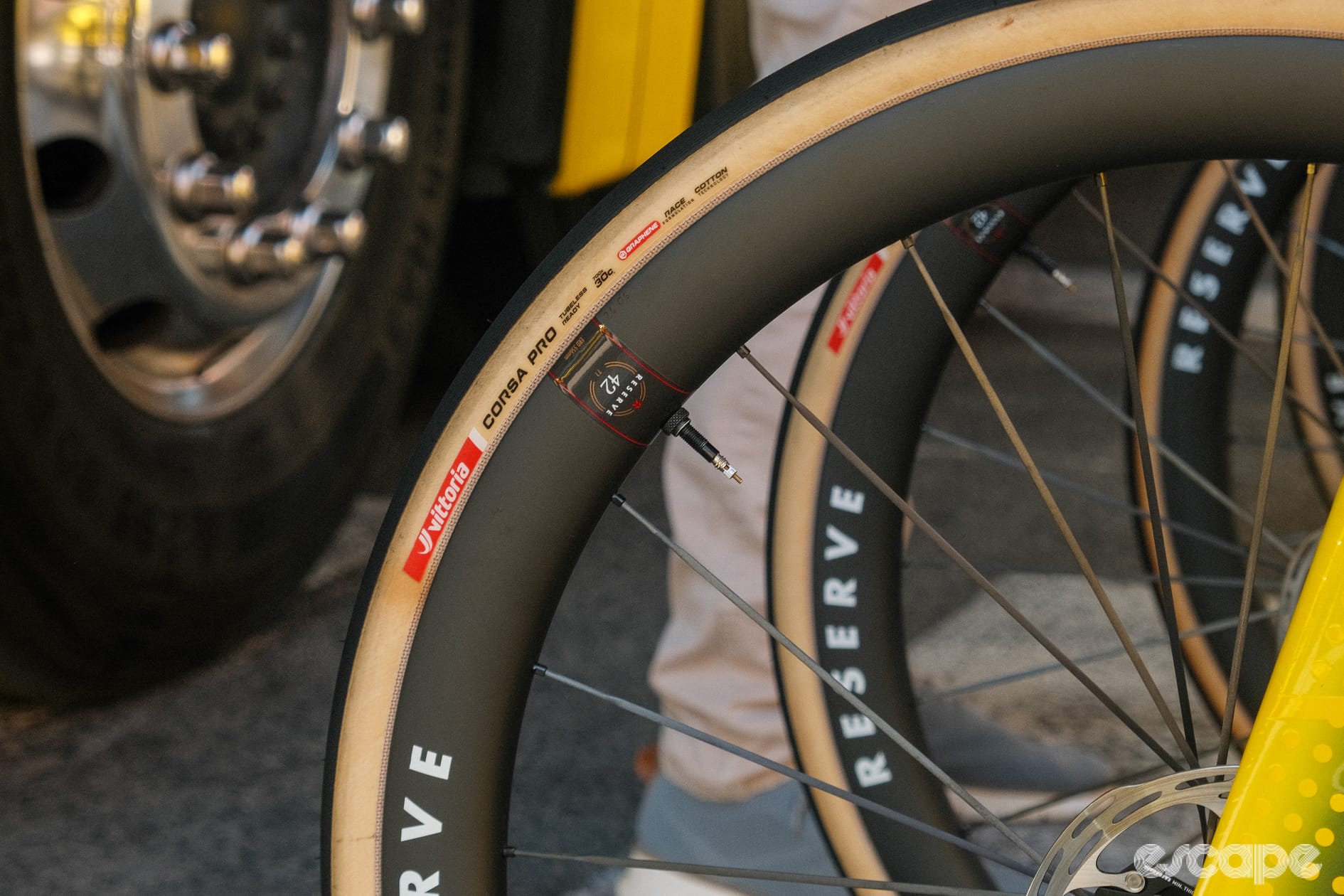
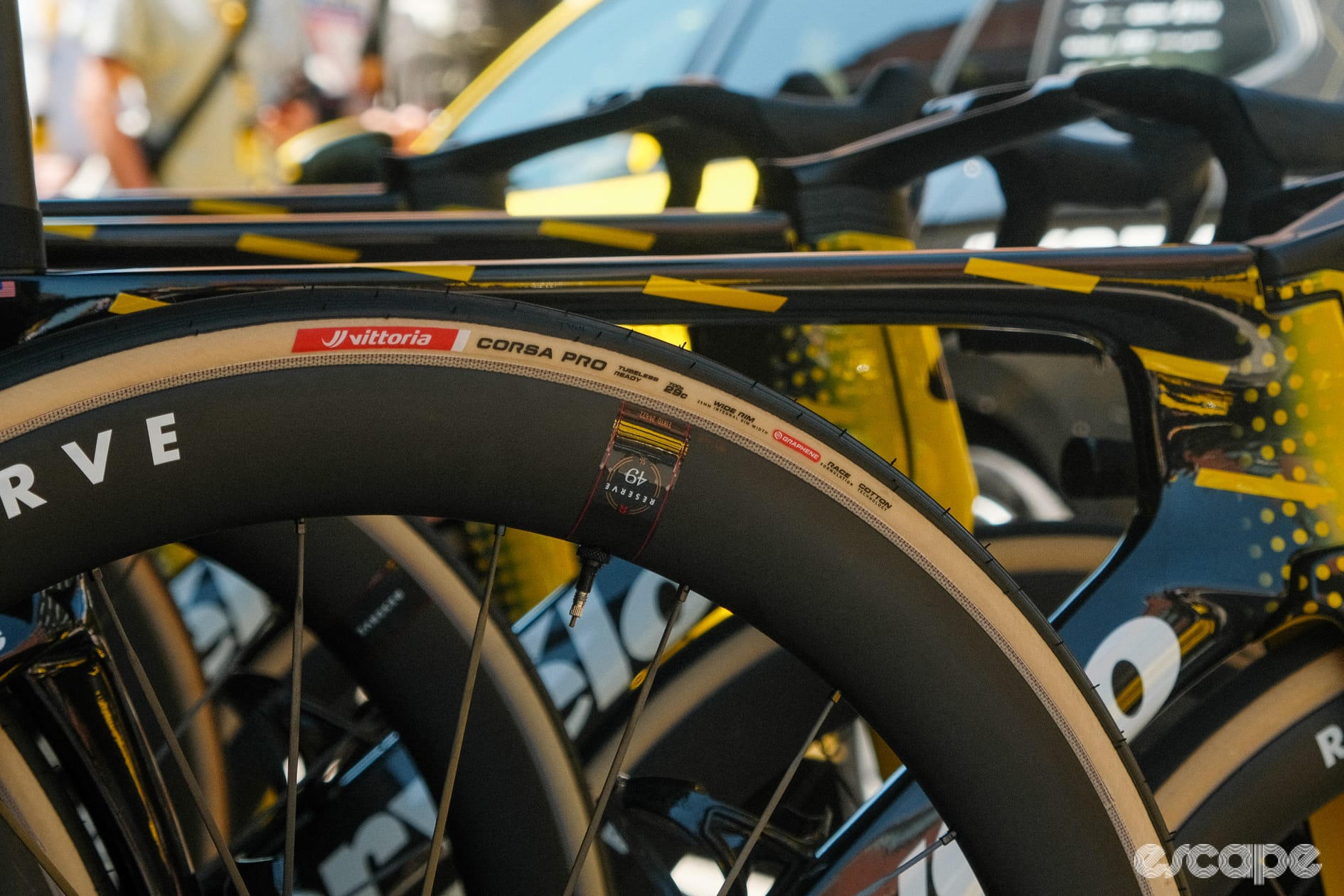
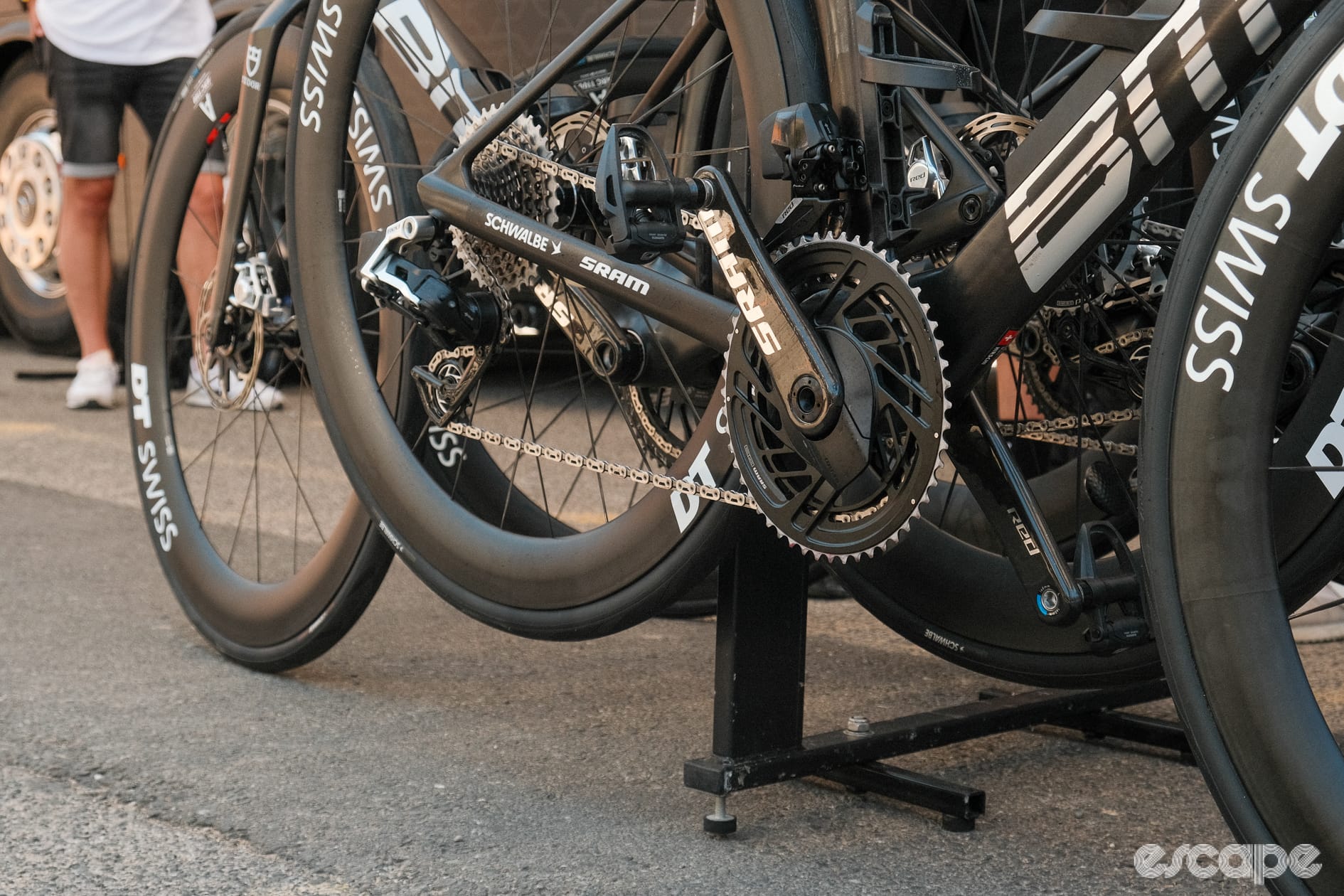
Much of the talk around stage 1 was UAE Team Emirates-XRG's decision to run 25 mm tyres in the TTT (and subsequently in the individual time trial on stage 16). Perhaps more interestingly, though, Visma-Lease a Bike was running a wider 30 mm front tyre paired to a narrower 29 mm at the rear. While it's not unusual to see a wider tyre on the rear, it's not very often we see the wider up front. The UCI is now mandating tyre and rim combinations must be compliant with the ISO recommendation, but with a 25.4 mm inner rim width on the Reserve 42 front rim and 24.8 mm inner rim width on the rear Reserve 49 rim, the 29 mm tyre is compliant with ISO's minimum recommendation on both rims.
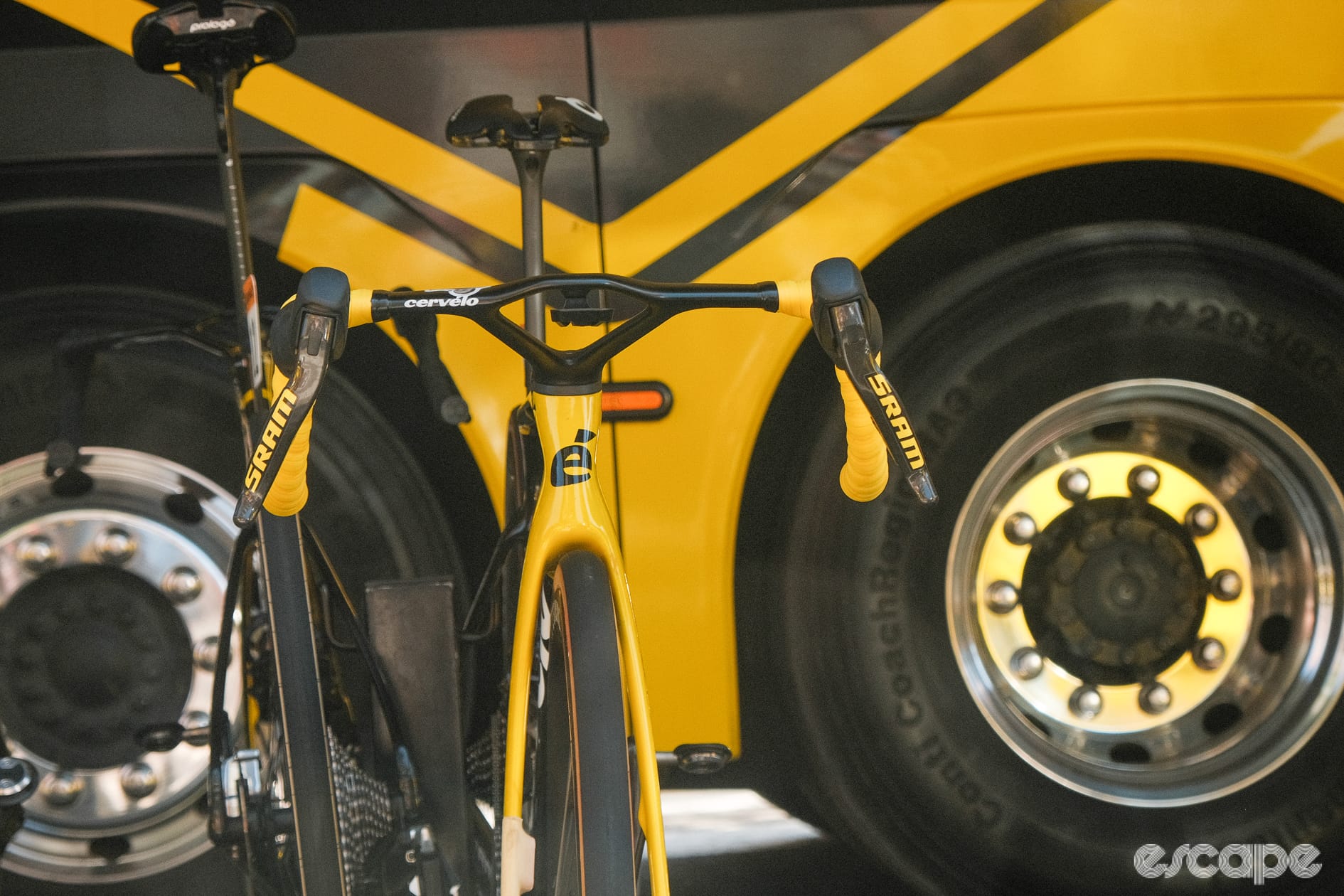
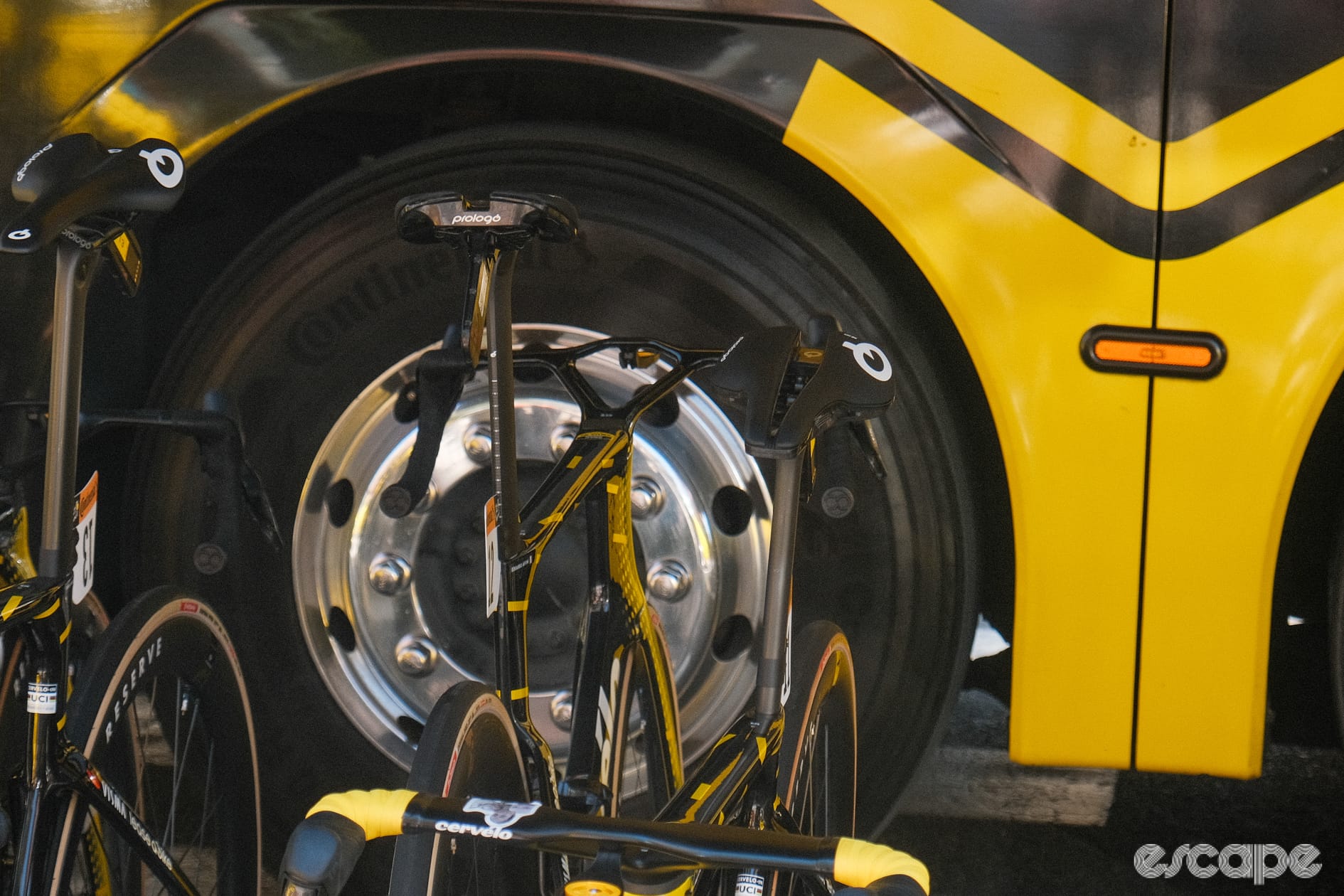
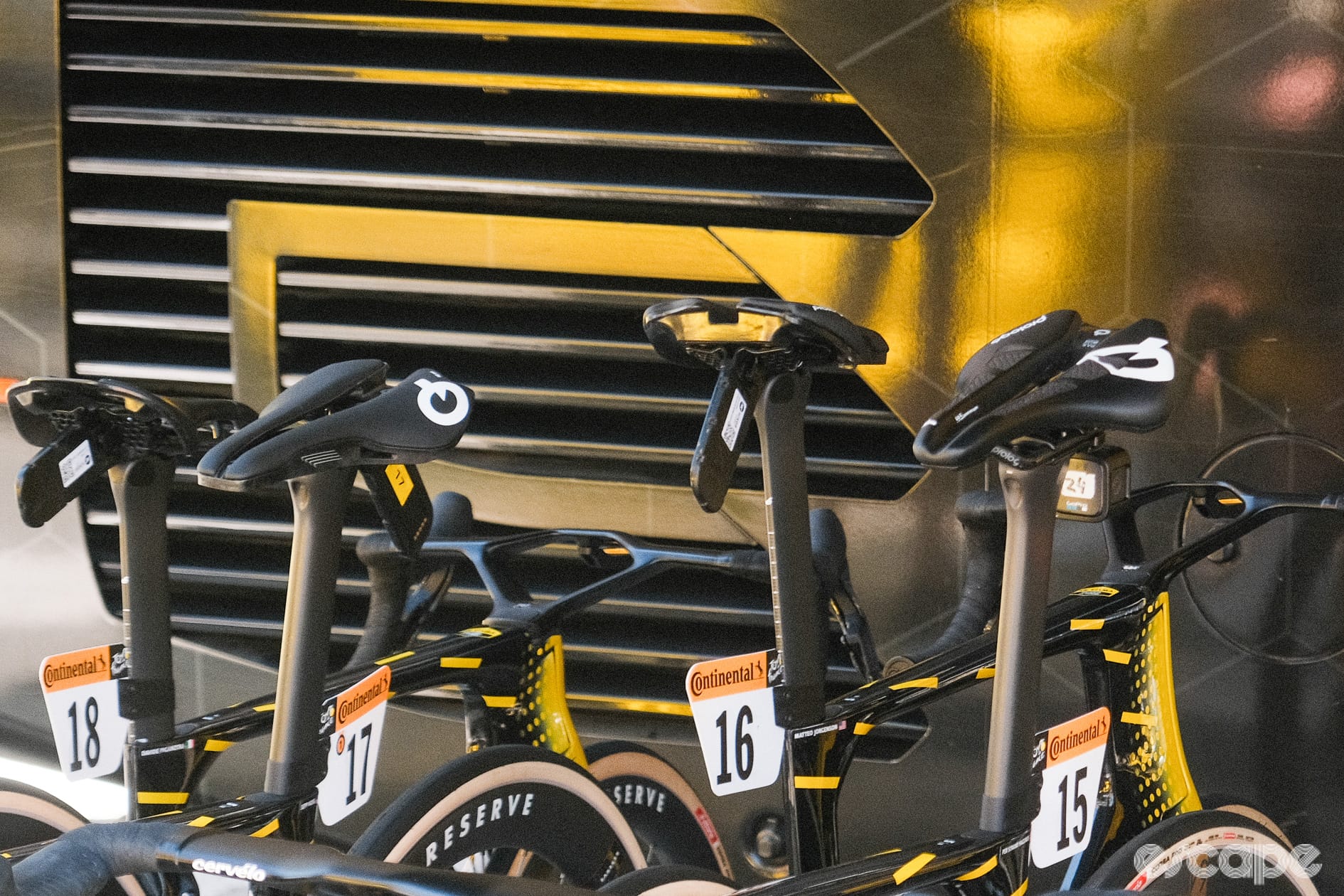
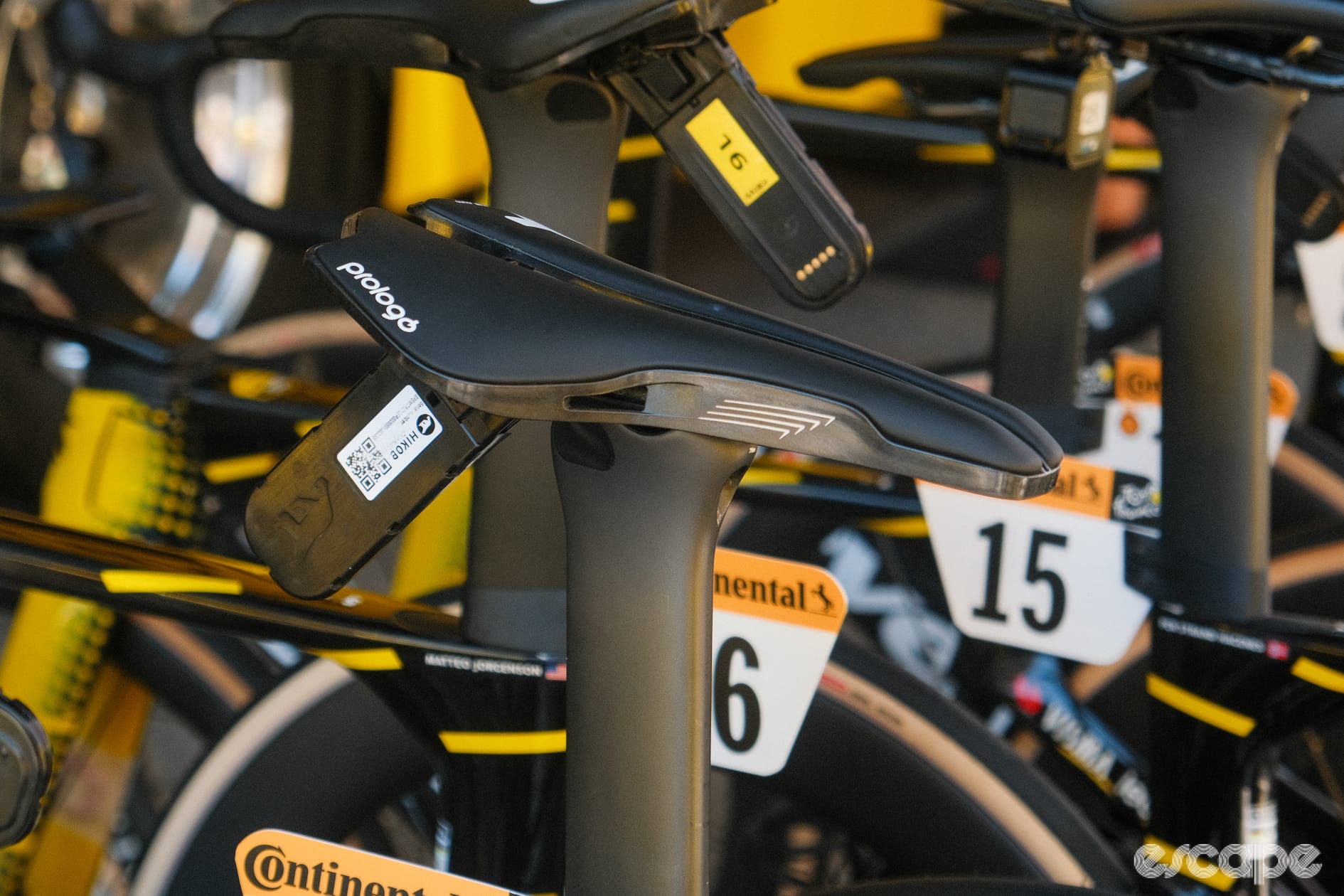
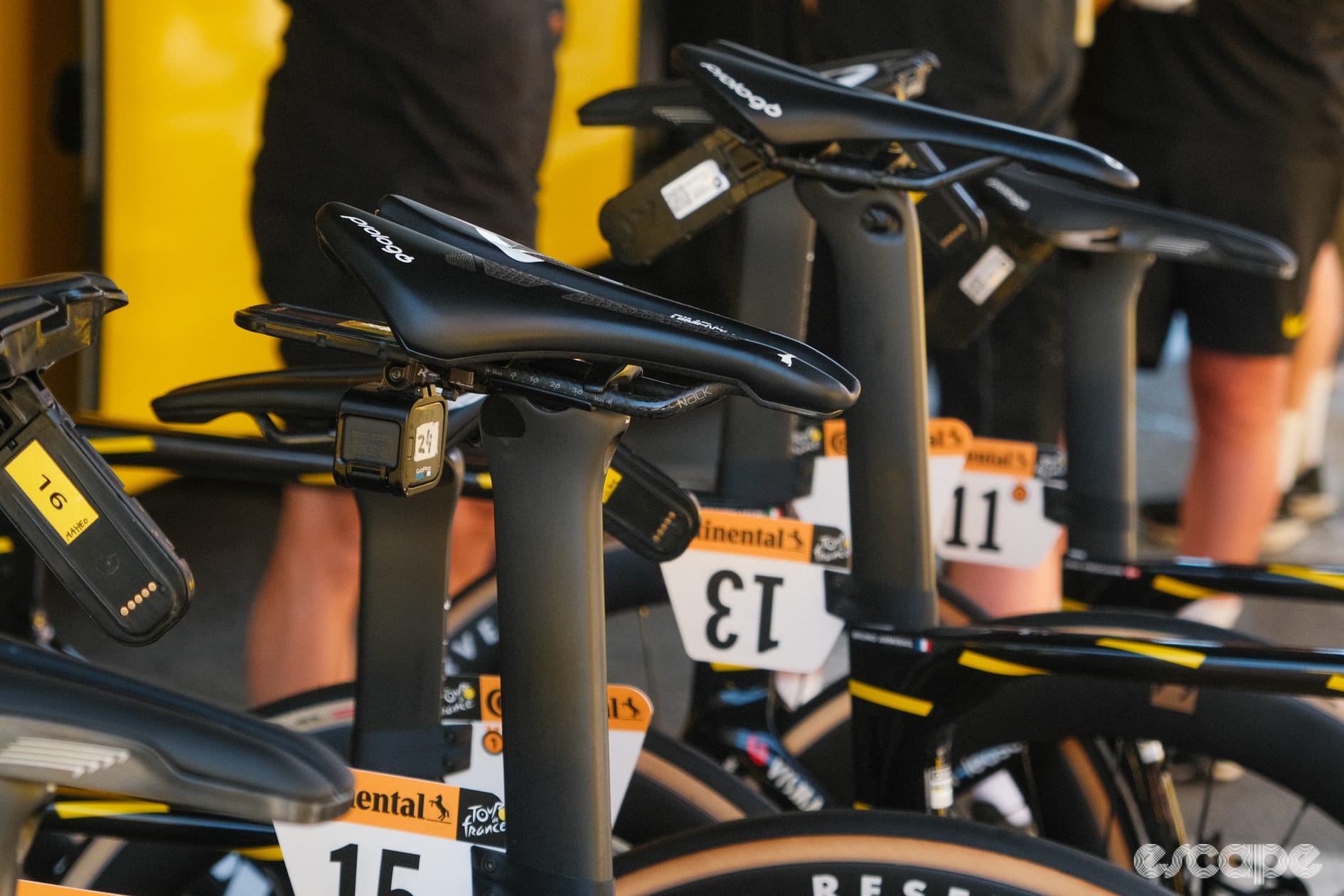
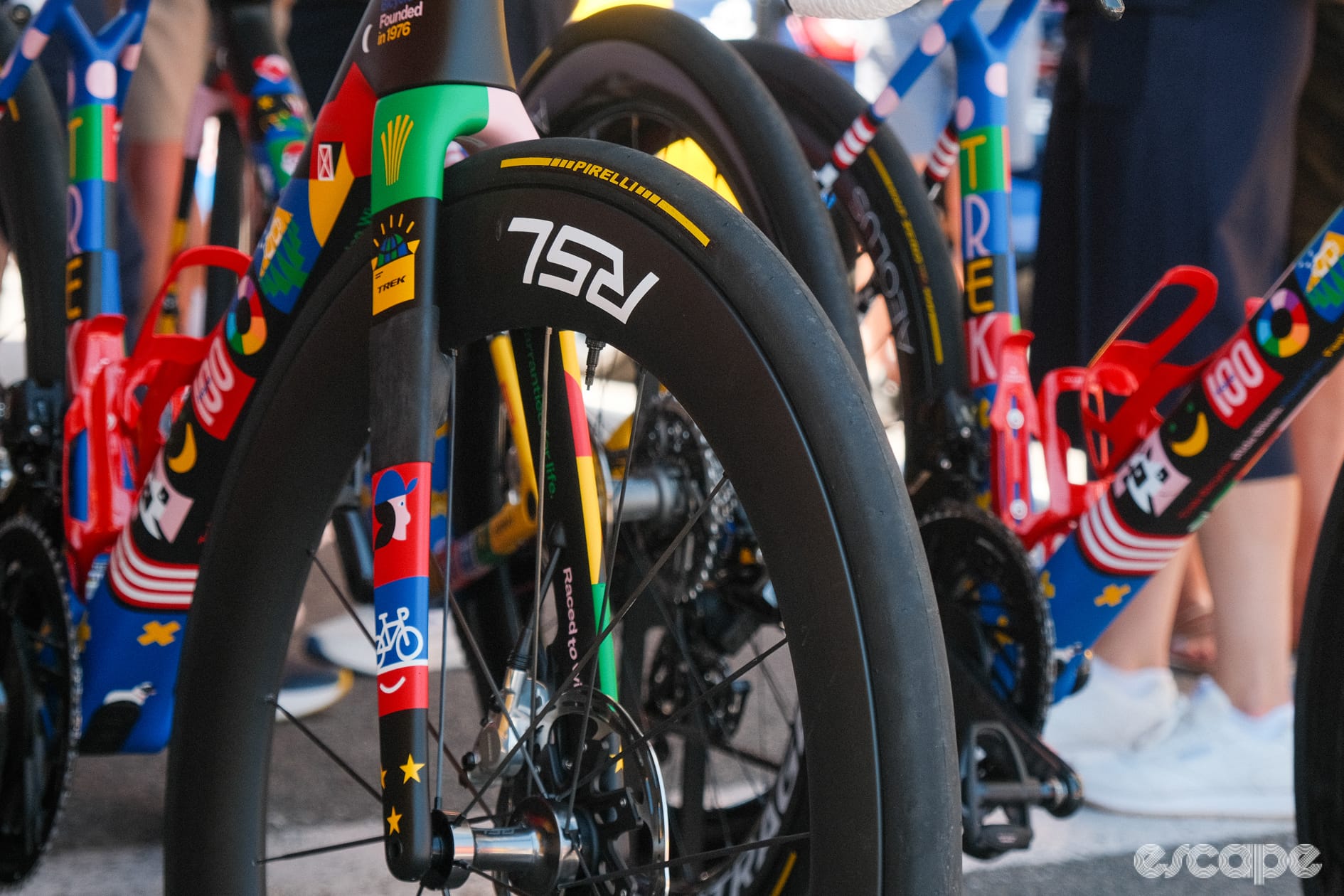
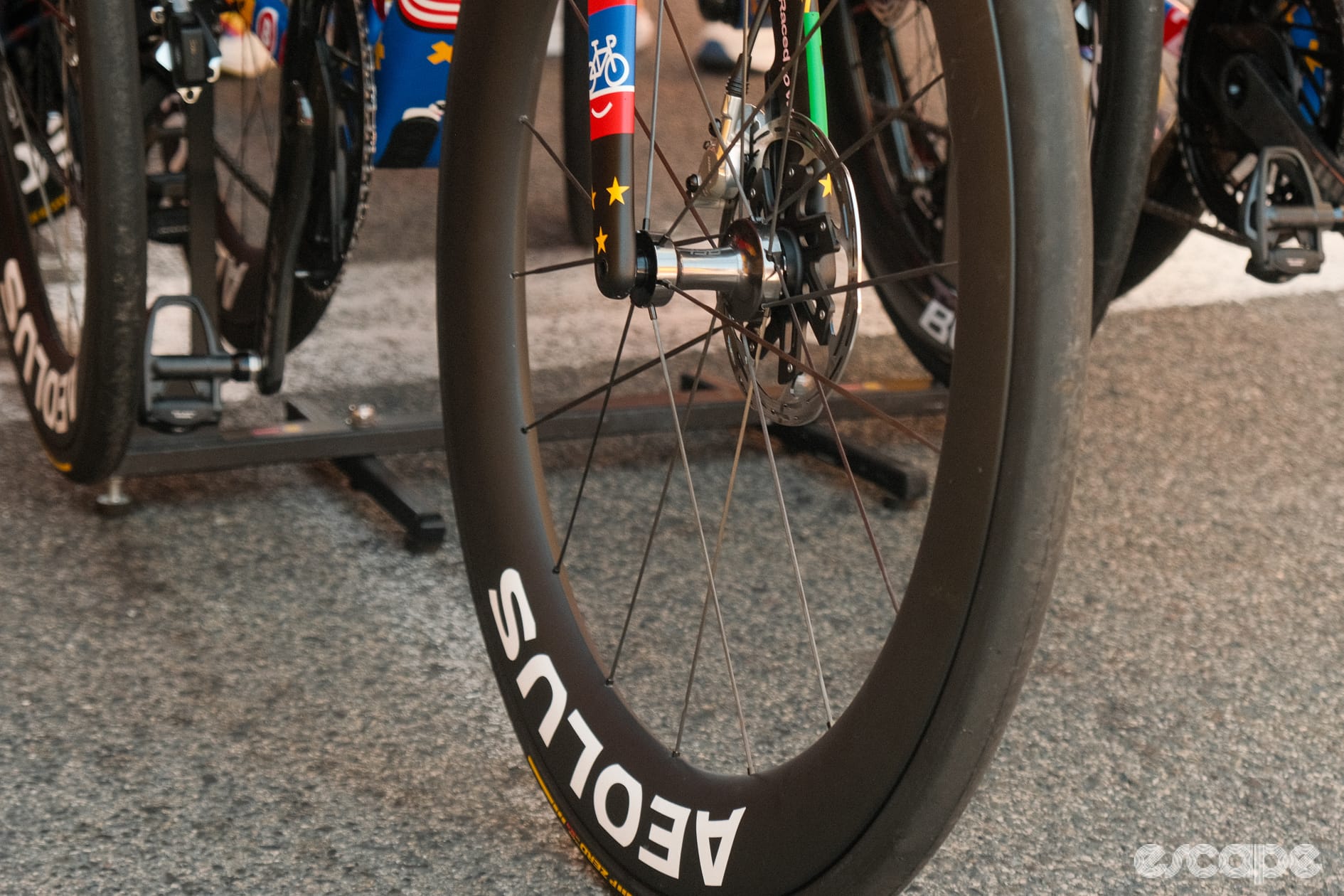
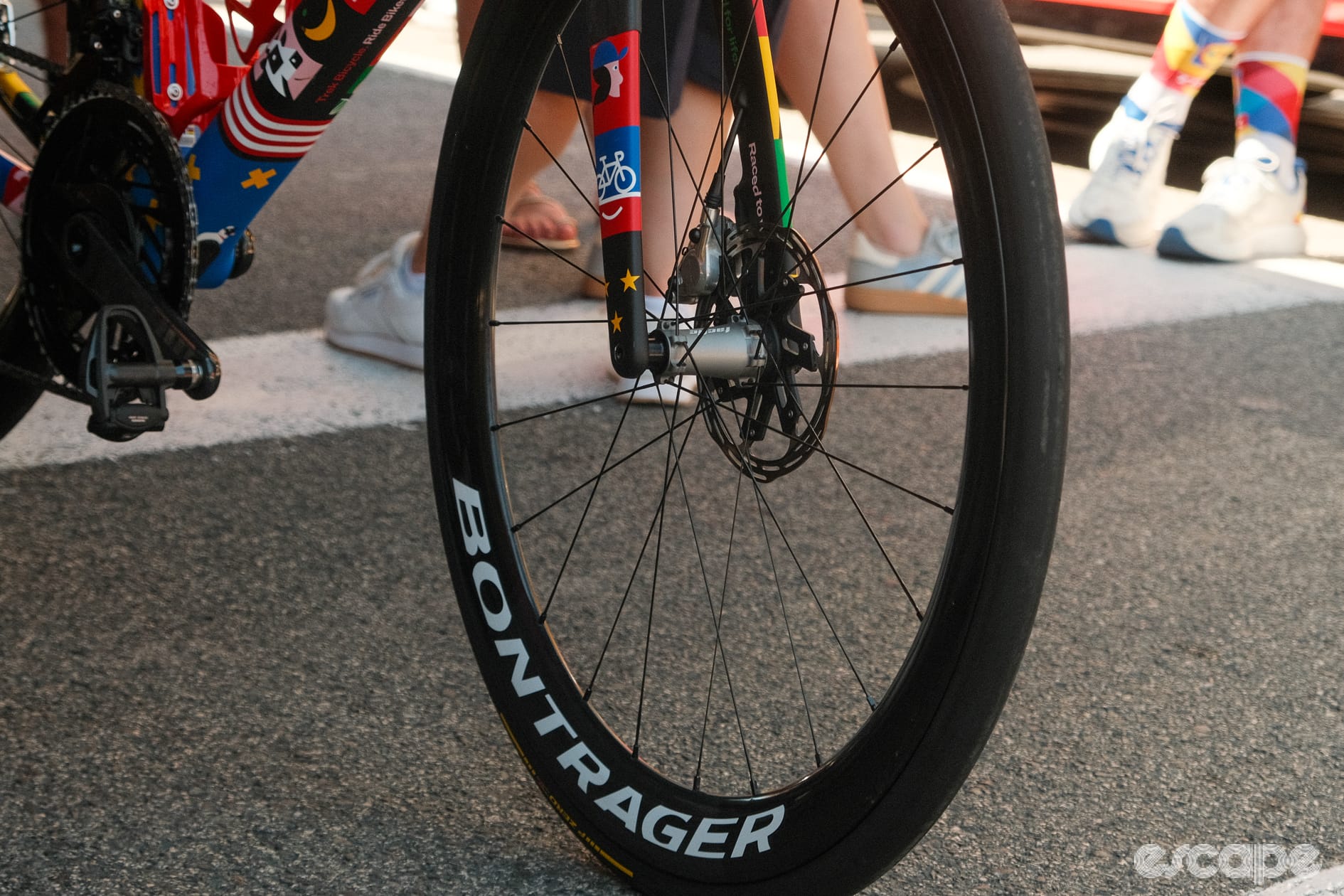
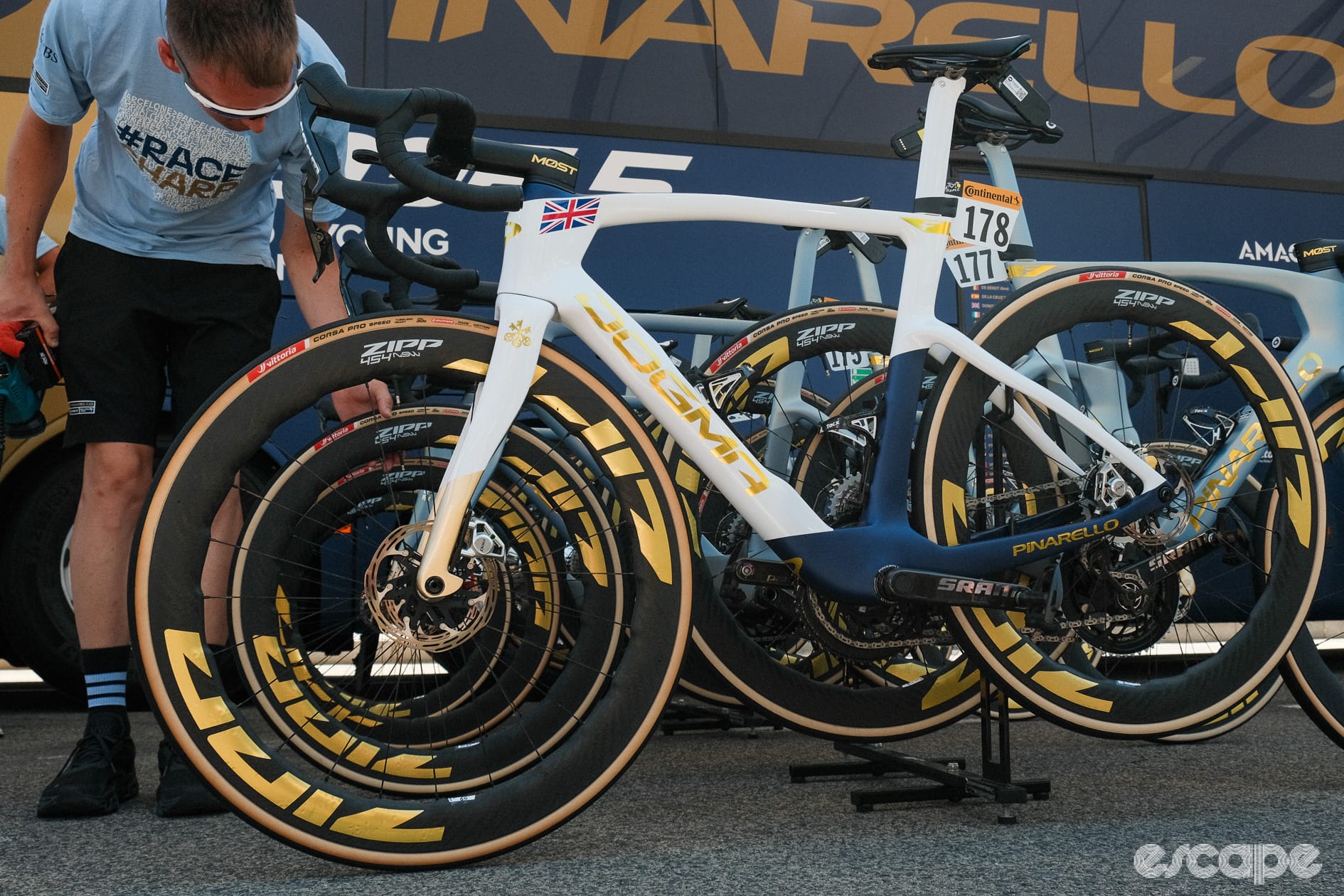
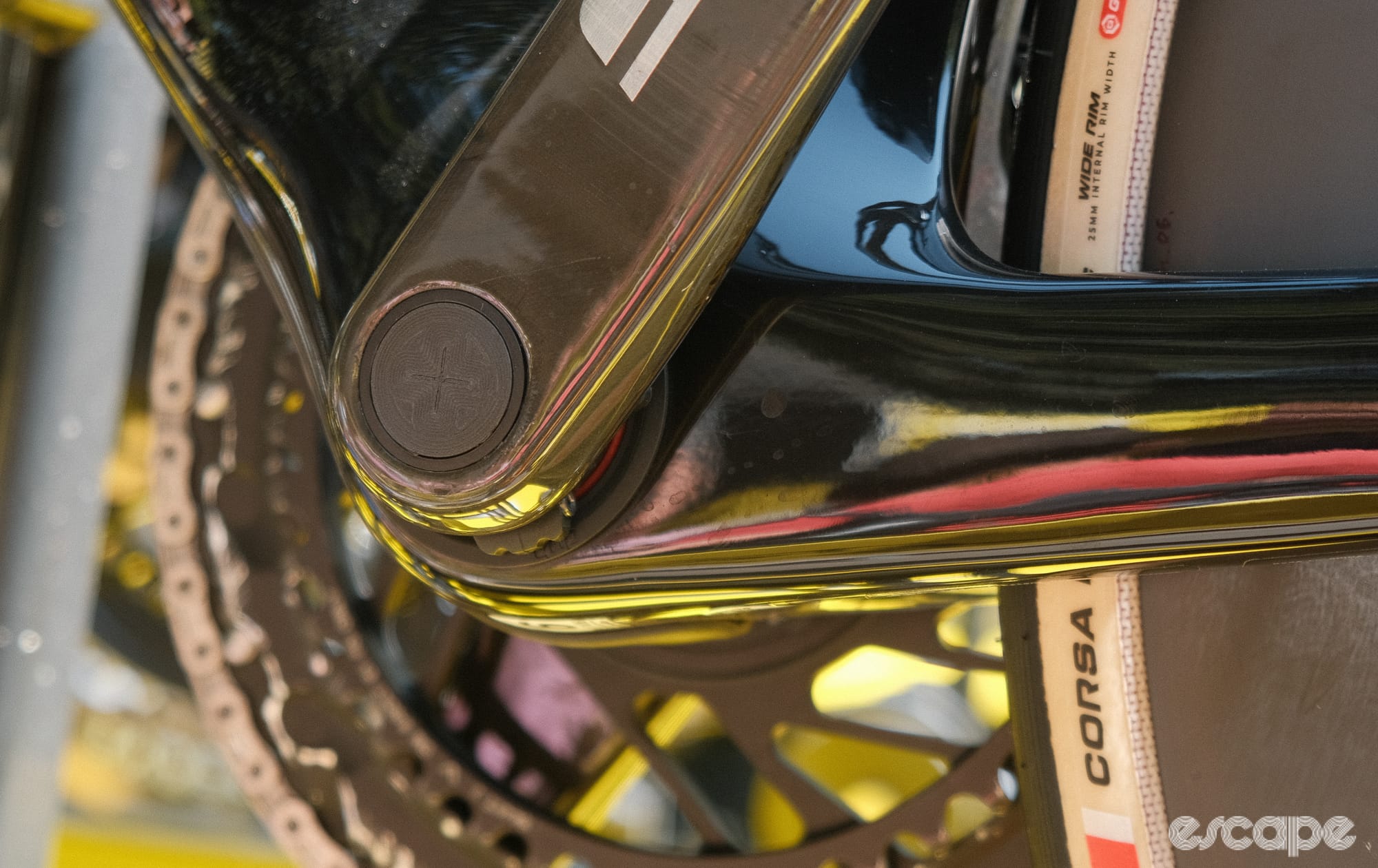
Jonas Vingegaard started stage two in the yellow jersey and had bar tape and SRAM brake lever decals to match. Visma's saddle choice is increasingly fascinating with many, including Vingegaard, choosing the new Prologo Choice and others on the Dimension Tri TT/triathlon saddle. Prologo says the Choice is designed around aerodynamics, with the carbon rails enclosed by sculpted side wings to smooth airflow over the saddle developed using CFD and wind tunnel testing. It combines a compact shape, variable-density foam, and a central pressure-relief channel through the nose. While I don't believe the claimed aero properties do much, if anything, that nose should help riders maintain aggressive aero positions for longer, which can be a powerful aero hack. The claimed weight is 152 g, and it also includes a modular design for replacing parts independently if damaged, which, with a £420 price tag on the Choice, could be quite a useful feature.The Dimension Tri is a bit more conventional than the Choice, but at half the price (with Nack carbon rails) and offering a similar shape and pressure relief channel, it could offer similar benefits at a more affordable price. Lidl-Trek also has new Bontrager RSL wheels at this Tour with what appears to be a deeper rim paired to carbon spokes and a new RSL hub.The new rim features a revised profile and will presumably replace the existing Bontrager Aeolus RSL 62 wheelset. But some riders are still opting for the shallower Bontrager Aeolus 51 rims with Tactic Racing TR01V2 hubs. With a claimed weight of 207 g for the pair of hubs, presumably their inclusion here is a weight-saving measure. With 56-tooth chainrings now much more common and even 58T chainrings popping up on some road bikes at the Tour, Tudor rider Marc Hirschi's 52/39 combination is very much an outlier these days. New British road champion Fred Wright (Pinarello-Q36.5) has a fancy new Pinarello Dogma F to celebrate his nationals win. Note the cover sticker on the crank spindle; while we've seen more and more teams opt to cover up this opening, some are keeping it simple with stickers, others... ... Including Q36.5 as seen above, and Visma as seen here, are using 3D-printed caps. Visma is using Leap Components' 3D-printed SRAM Red Aero Crankset Caps. The aero gain must be exceptionally marginal, as Leap doesn't even offer a claimed CdA reduction; I did buy these for a recent record attempt, but opted not to use them, having not had time to check if they are actually UCI-legal. While the UCI does permit covering such gaps so long as the overall shape isn't altered, I wasn't going to take any chances without double-checking for myself. With Visma using these at the biggest race of the year, it seems that the legality question has been answered.




 Ronan Mc Laughlin