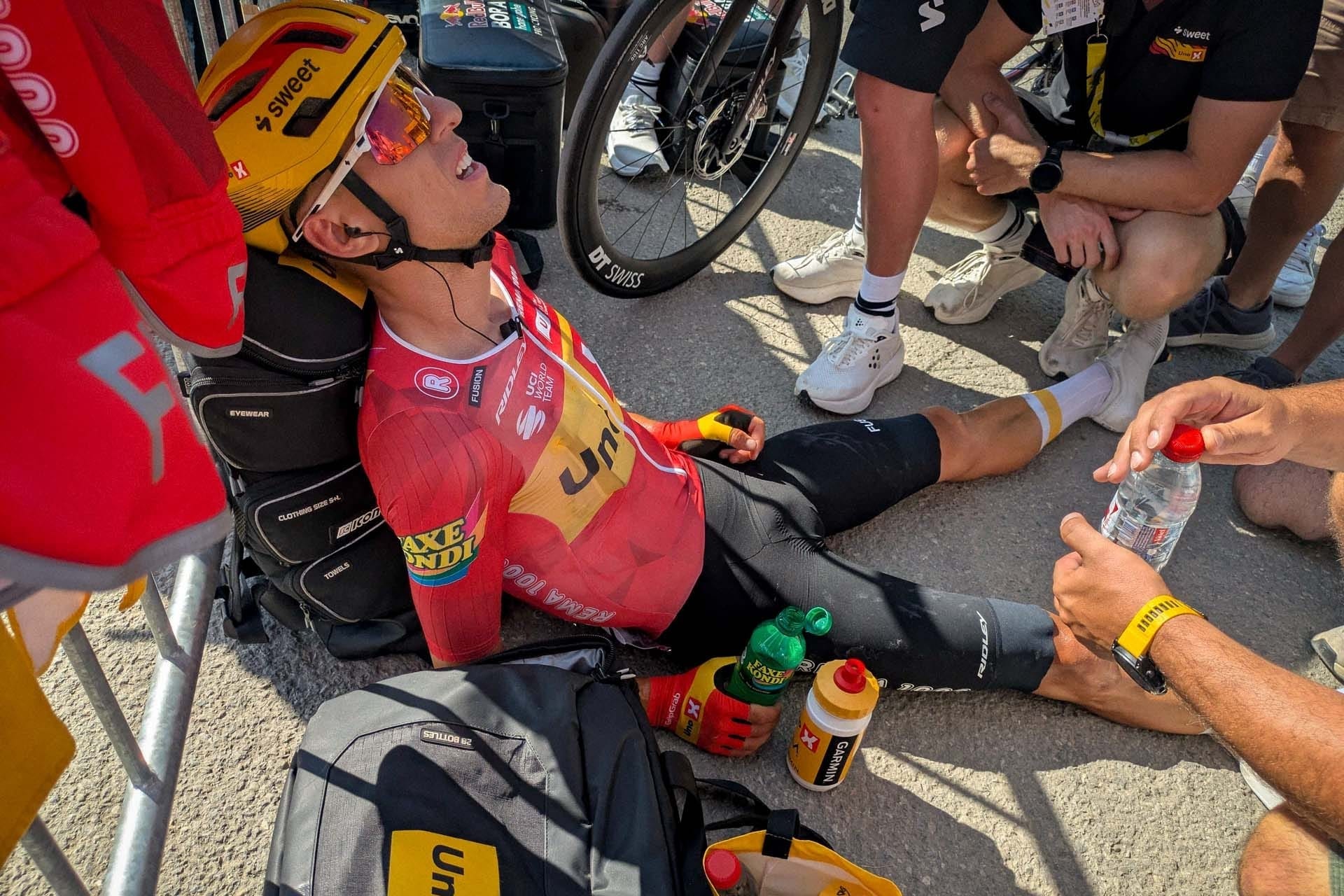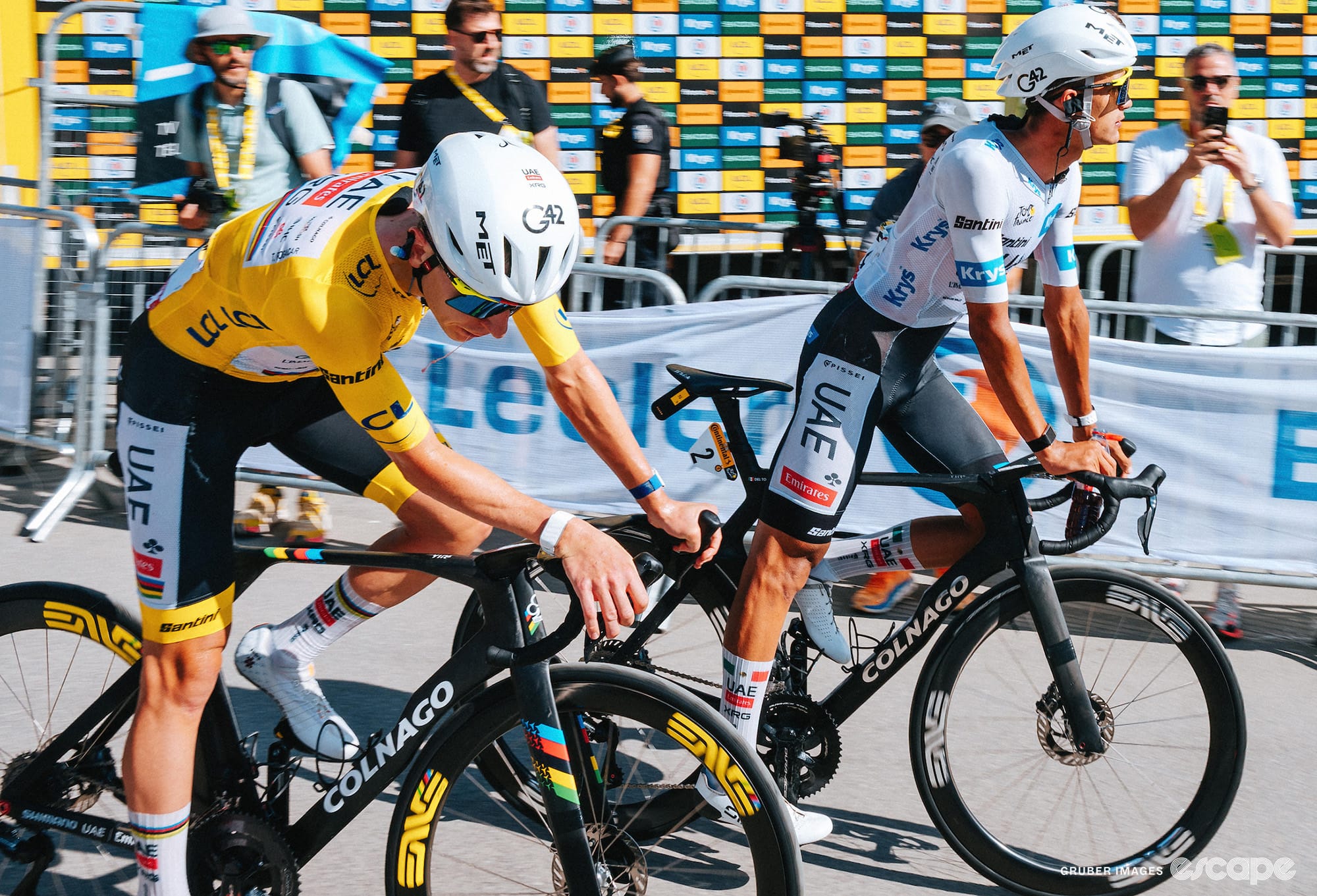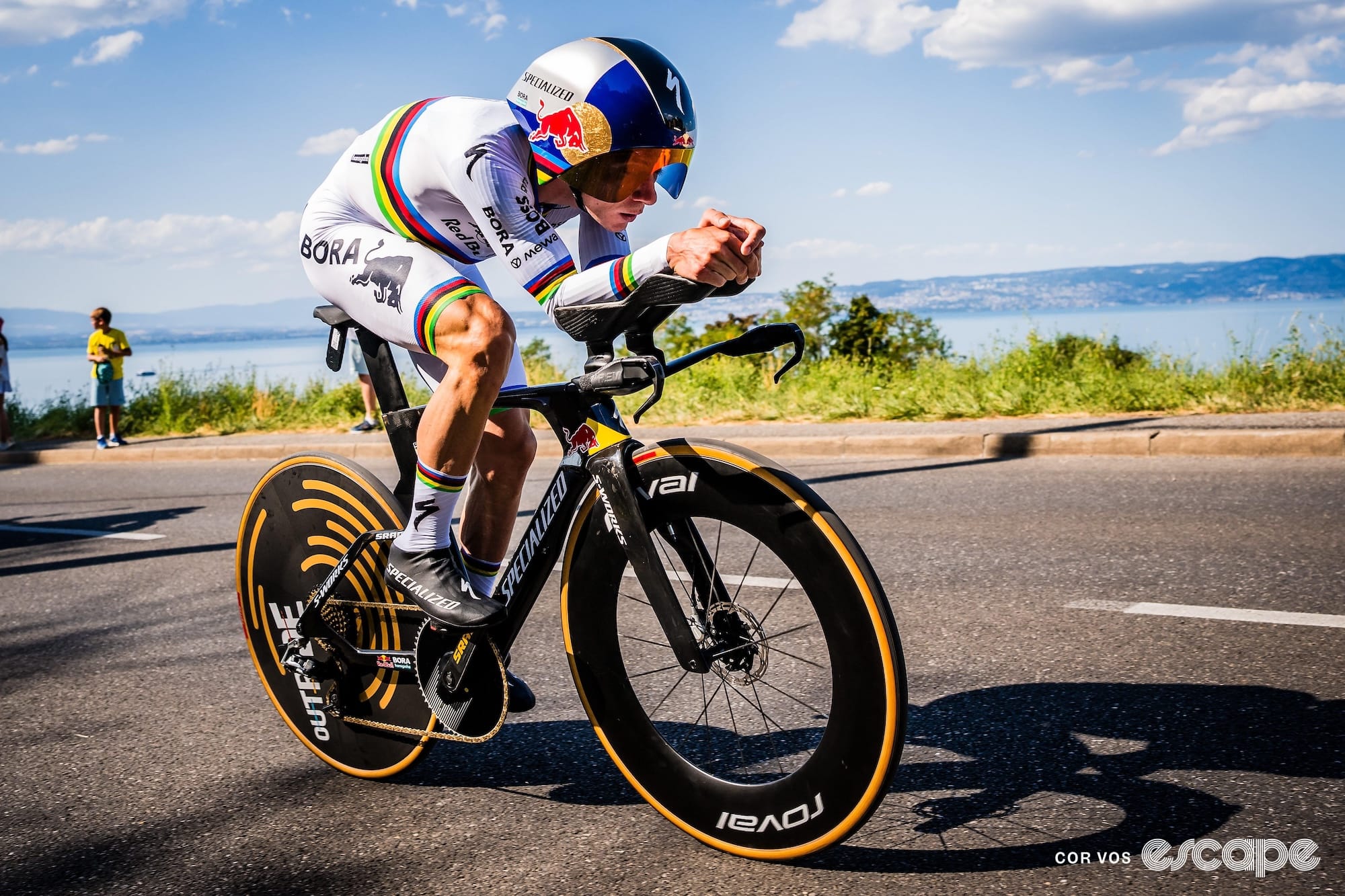


If you look past the sign-on ceremony and team buses at the start of professional road races, you will find at least a handful of riders doing something that is more and more commonplace: working through resistance band exercises like they are in a gym or clinic, rather than about to race their bikes. A few years ago, it was occasional. Now, it’s everywhere.
For a while, resistance band workouts were heavily associated with social media fitness culture — marketed as "booty bands" and aimed at anyone too busy to make it to the gym. Easy to dismiss, in other words. But like many clinicians working in sport, I've seen how useful a performance tool they can be. I've handed out bands, cued the movements, watched riders go through routines I prescribed. And for a long time, I found it hard to sound convincing when I told people they needed to "activate" their glutes. But once you unpick the science behind the bands, you realise they are one piece of equipment every cyclist should carry in their kit bag.
Did we do a good job with this story?