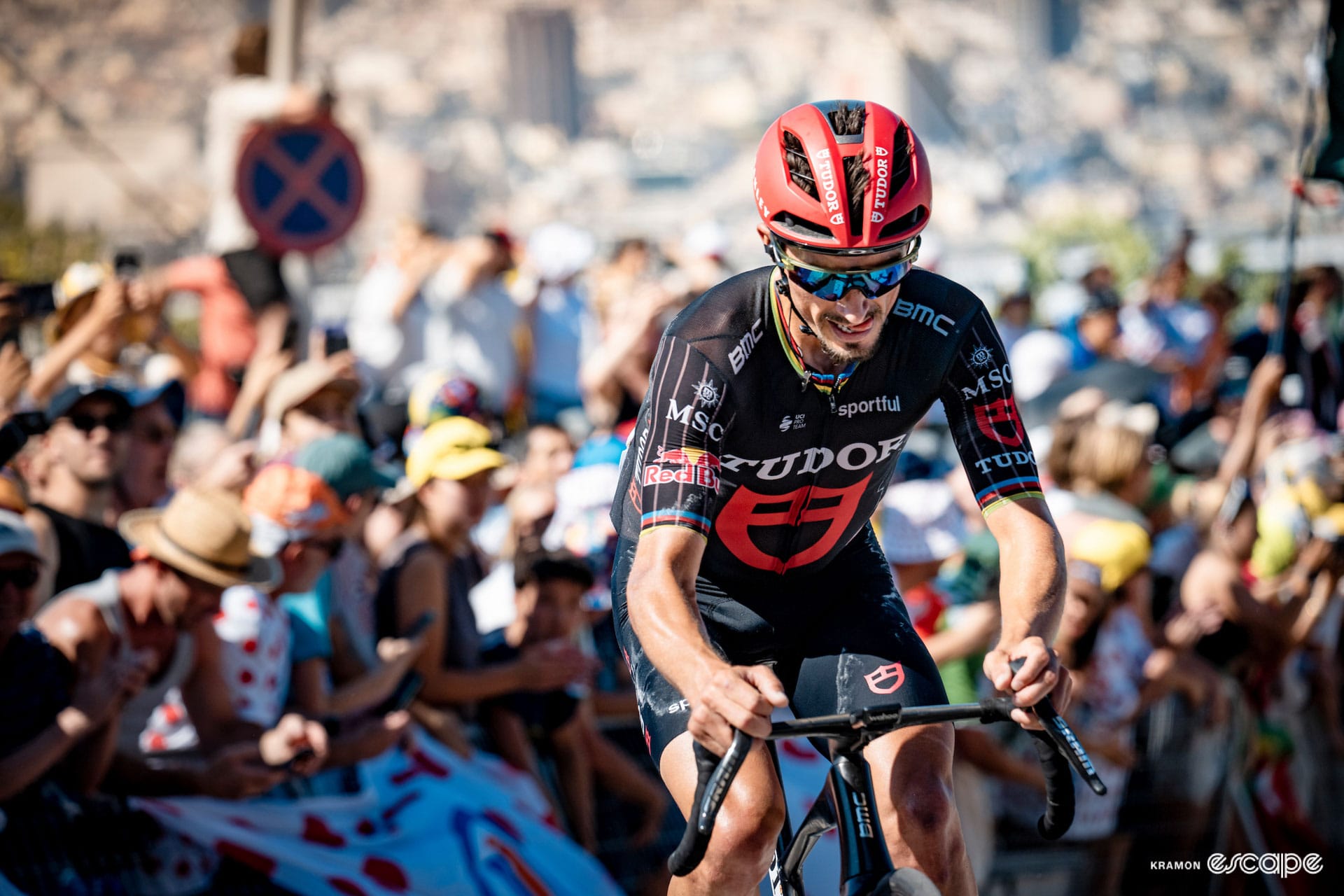


BELFORT, France — On any given stage of the 2026 Tour de France, the fans are at the Tudor team bus long before Julian Alaphilippe arrives at the finish. They crowd the barriers, three or more people deep, hushed and reverent. Through the post-stage maelstrom Alaphilippe eventually appears, weaving through cars and pedestrians, a quizzical half-smile on his face, and the crowd takes a collective gasp of awe before they press in for autographs. It's crazy, chaotic, and truly lovely. One of those interactions that blurs lines between sport and religion.
In 2019, Julian Alaphilippe was the story of the Tour de France. After winning two stages and the KOM jersey the year before, he was a known high-performer. Even so, his 2019 campaign confounded expectations, winning two more stages – including, amazingly, beating defending Tour champ Geraint Thomas in a time trial – and wearing the yellow jersey for a combined 14 stages. He lost yellow on that fateful, chaotic stage 19 when storm-caused mudslides forced a neutralisation and eventually faded to fifth overall, simultaneously breaking a nation's hearts with the near-miss and healing them with how close he came. He’d win more stages and wear yellow the next two years, in which he also went back-to-back as world champion.
As this year’s Tour has shown, Julian Alaphilippe is not that rider any more. His best stage finish has been 78th; more often he’s in the 100s, and on stage 11 he was dead last. On GC, he’s in 144th, almost three hours off the pace.
Did we do a good job with this story?