

New bicycles are expensive. There’s no way around it. And there is no sign of reprieve in our futures. From global supply chain woes that persist years after pandemic-induced complexities to politically motivated taxation, customers often bear the brunt of a fiscally strained industry.
And then there is the complexity of new frames and components. The entire e-bike sector notwithstanding, even non-motorized mountain bikes are becoming increasingly complex. With electronics in everything from suspension to drivetrains, tech has evolved at a lightning-fast pace, often leaving home mechanics and retrogrouches in its wake. The top-tier build kit on the Ari Signal Peak I reviewed earlier this year had seven batteries. Seven batteries.
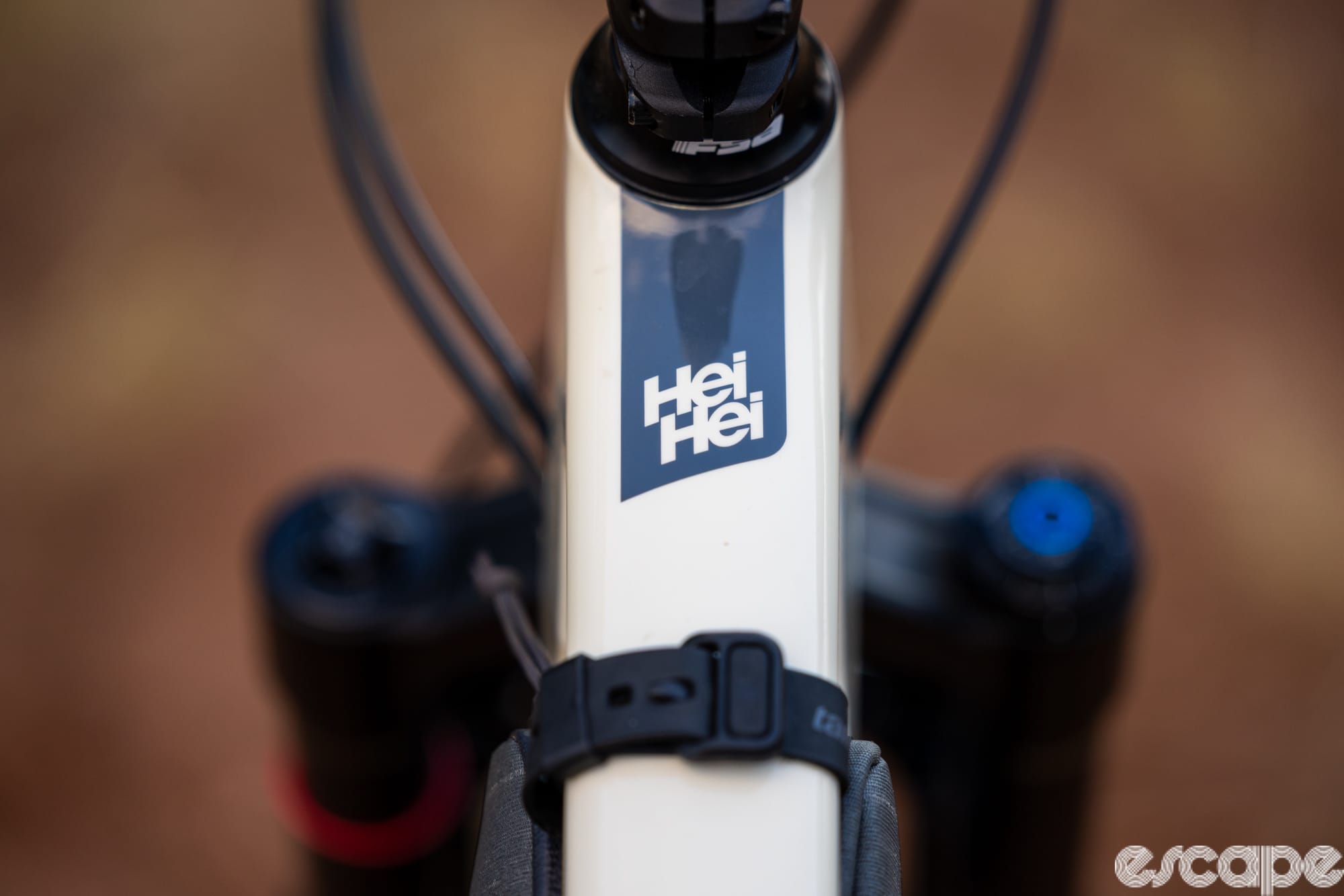
In this environment, I found Kona’s announcement of the revised Hei Hei CR to be refreshing. It’s 130/120 mm of suspension travel and 29x2.5" tire clearance appeared to fit with my goal of reviewing many of the “capable” XC (er, downcountry?) bikes hitting the market this year. And it is the only model I know of that is spec'd with only mechanical build kits, effectively keeping even the spendiest option thousands of dollars below high-end alternatives from competitive brands.
The bike itself turned out to be a bit of an anomaly. Where the Hei Hei lineage was firmly planted in XC legacy, the current iteration is more of a light-duty trail bike. And that’s as much about the component spec as it is in the geometry and fit. Still, there’s a lot going for the US-based brand’s shortest-travel option, making it a good choice for riders seeking a versatile machine.
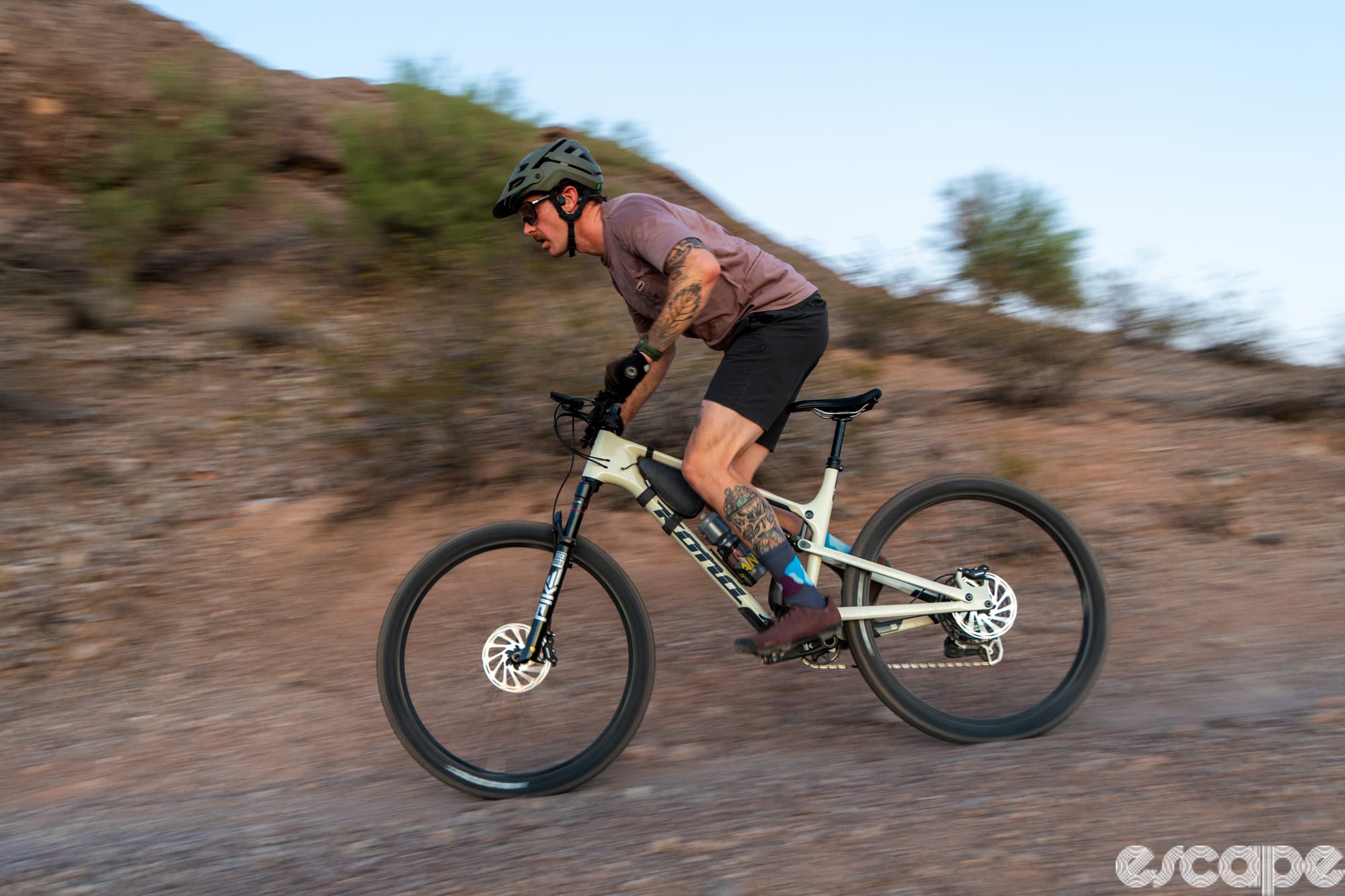
Highs: Simple and straightforward build spec, supportive suspension for all-day riding, Plenty of bottle and gear mounting points, robust and attractive frame with quality components, lifetime warranty.
Lows: Too tall for ideal XC position, range could benefit from a fifth size, press-fit bottom bracket might turn off some riders, heavy.
Price: Hei Hei CR complete – US$6,300, CA$7,500, €6,500, £5,300. Hei Hei CR frame and shock (RockShox Deluxe Ultimate) – US$2,950, CA$3,749, €2,700, £2,400
NOTE: Kona does not list suggested retail for Australia


As a bike reviewer, I often find that it's the fanciest models that brands want to send out for evaluation. They represent the peak of what’s available, often with the lightest weight and the best-working parts that remove peripheral distractions and let the bike shine. There are substantial costs associated with top-of-the-line components, both at the time of purchase and in the long term if repairs or replacements are needed years later.
Such upper-end builds are not always what I, nor the team at Escape Collective, want to bring in. Rather, middle-tier or even lower-tier options are more in line with what most customers are buying, so it would make more sense to review those and assess how a commonly desired bike performs in real-world conditions.
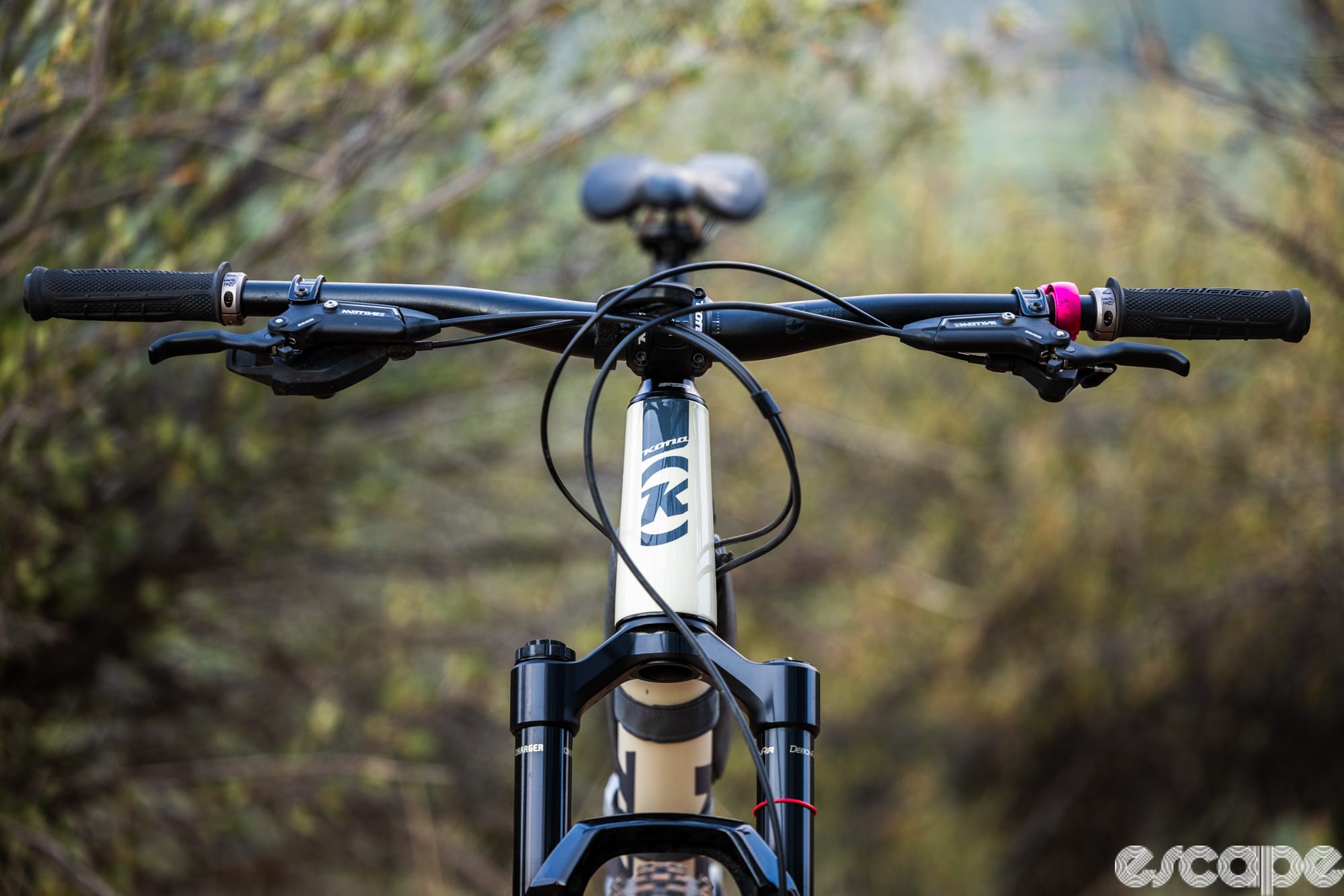
Don’t take my little diatribe as admission that I am the aforementioned retrogrouch. While I take great joy in using bicycles and their associated tech in its simplest form – mechanical derailleurs, rim brakes, rigid seatposts, etc – I also enjoy the comfort and performance afforded by the culmination of modern advancements in materials, geometry, and kinematics.
With the Hei Hei CR, Kona made it easy. At the time of its release, there was only one build kit option available, which included SRAM’s recently released Eagle 90 mechanical Transmission. And just last week, Kona launched an alloy version, still with only one build kit, at a lower price point of $4,000. (The Hei Hei CR is also available as frame and shock, if you want to build your own.)
Hei Hei history
The Hei Hei has always been Kona’s XC platform. Named after the Hawaiian word for “race,” the first edition was introduced in 1991 with a lightweight titanium frame and rigid steel unicrown fork. Designed by the renowned Joe Murray, the Hei Hei helped popularize the sloping top tube, among other features.
It evolved over the years, first with the option for a suspension fork as they became more prolific. By 2007, the Hei Hei was reintroduced as a scandium-framed full-suspension rolling on 26" wheels with 63 mm of rear travel. Still competitively lightweight, the model retained its racing pedigree.

2016 was the first time Kona offered the Hei Hei in carbon fiber. It was also the year the model progressed from a dedicated XC machine to one that more closely resembled a downcountry bike. Almost 10 years later, as all mountain bike categories have grown longer, slacker, and generally more capable, the new Hei Hei continues the trajectory.
Still referred to as an XC bike by Kona, it features elements that would have seemed right at home on a proper trail bike of just a few years ago. In moving away from its original XC purpose, the new wider tire clearance, 130 mm fork fitment, and long slack geometry are pushing beyond the downcountry category and into light trail.
Frame details
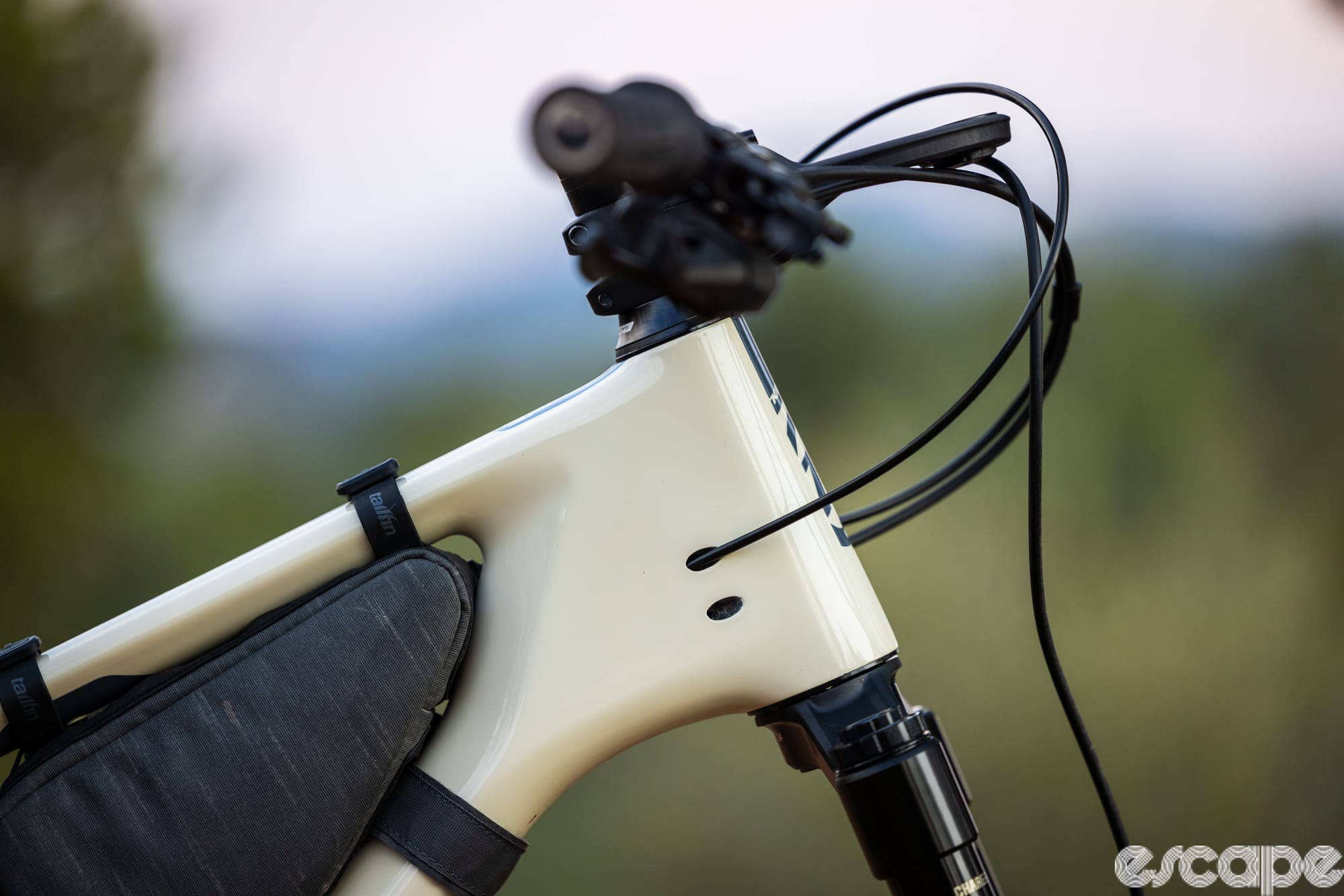
Speaking of the platform, there’s a lot to like about the G10 frame design. First off, no cables or hoses are running through the headset. I can’t imagine Kona ever designing a bike with it, but you never know. There are entry points into the frame; however, each features internal guide tubes that make housing and hose installation easier.
Did we do a good job with this story?