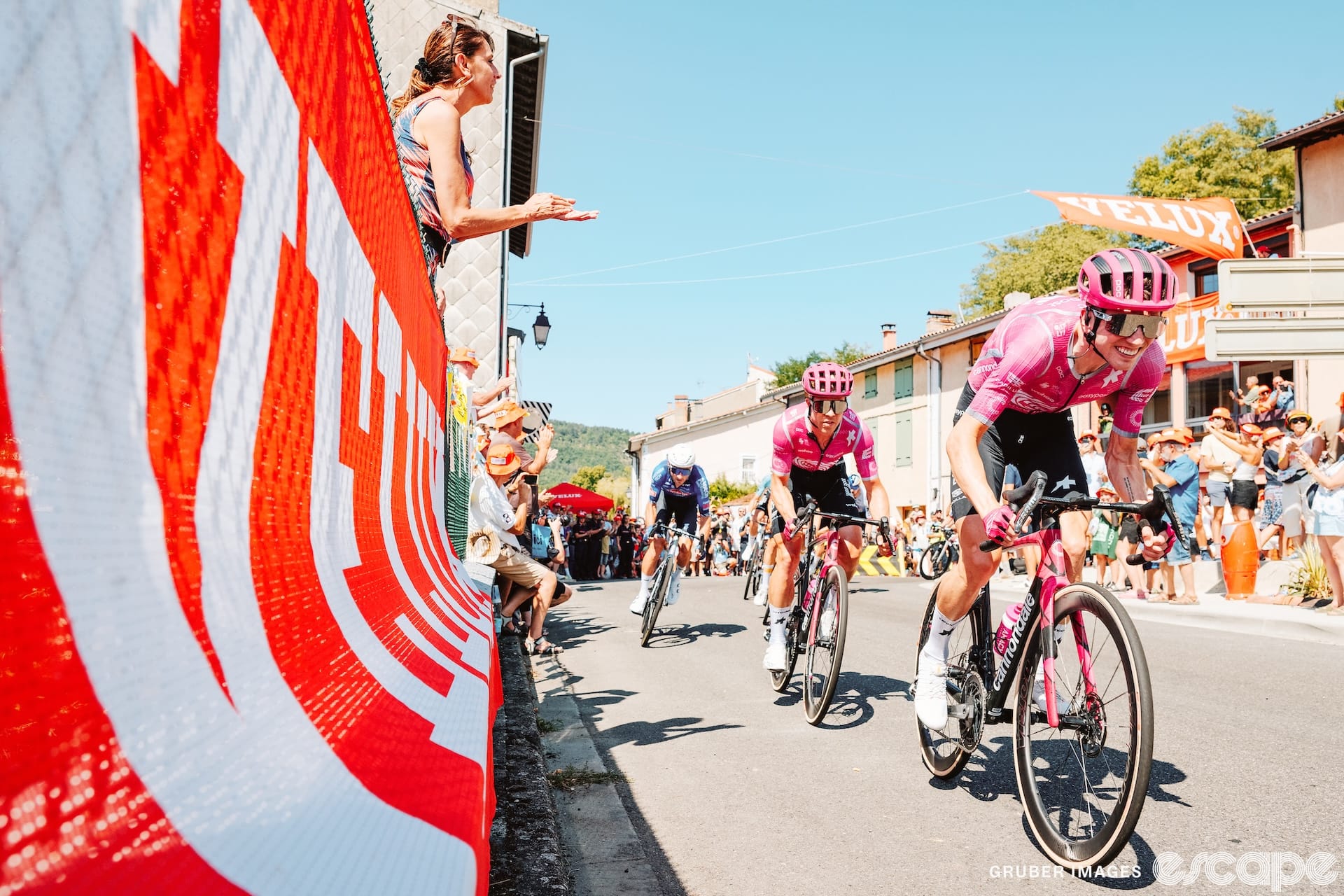


The script said Stage 3 belonged to the breakaway until UAE Team Emirates-XRG decided otherwise. While there were grumbles surrounding UAE’s tactics to take the race on and shut the break down for Pogačar’s first stage win of this year's Tour, 24 hours later, those looking for a shot at breakaway glory got their time in the sun.
Rolling out of Carcassonne, the riders faced 182 km and 2,700 metres of climbing amid infernal conditions where roadside temps soared to 38° C/ 100° F. After two road stages controlled by UAE, nobody dreaming of the chance to contest a breakaway win wanted to miss the move.
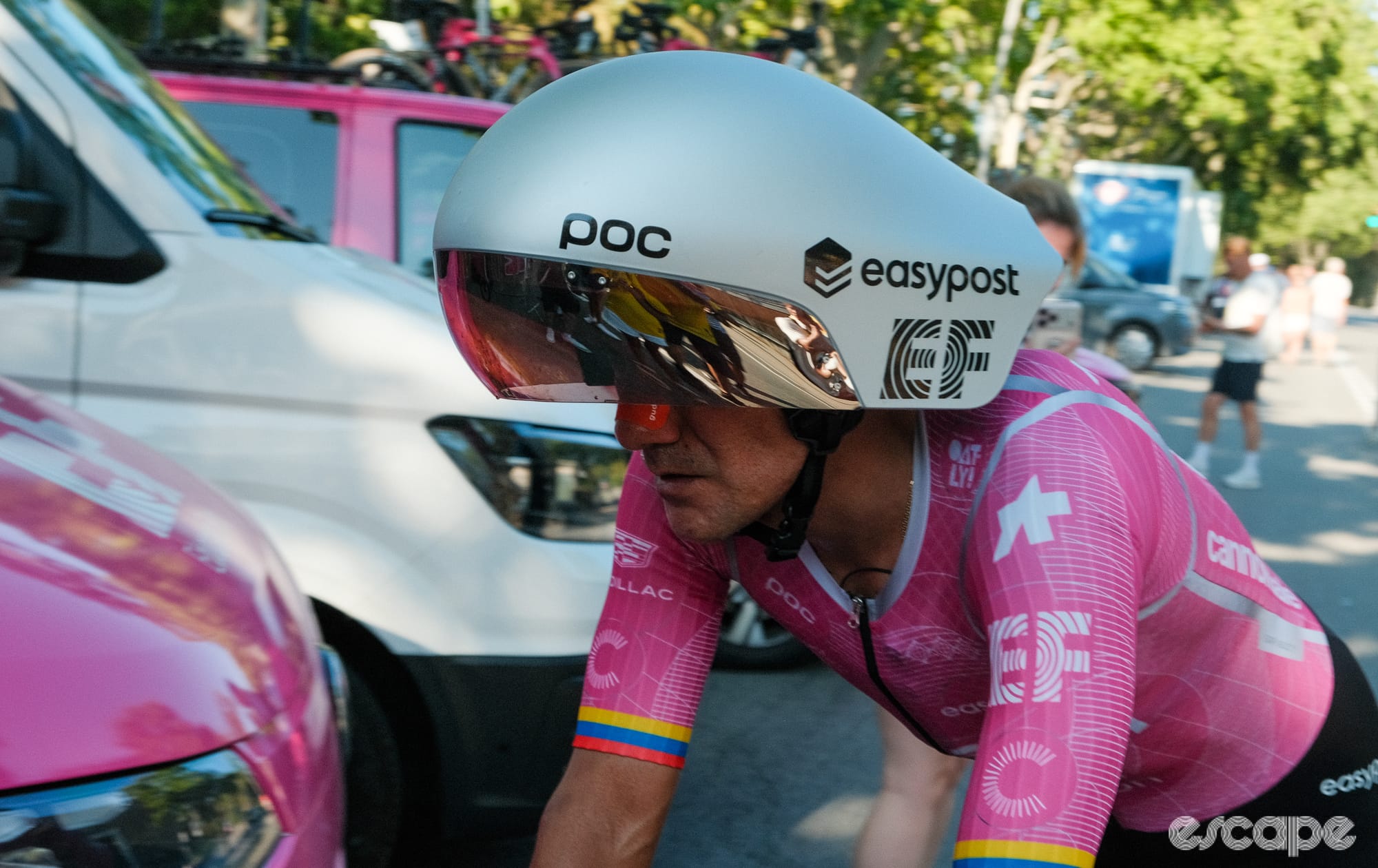
Among them was EF Education-EasyPost's Sean Quinn, racing his second Tour de France, who not only made it into the break alongside teammate Michael Valgren but also held on as the group splintered on the day's final climb to claim seventh place on the day.
Thanks to the power data Quinn shared on Strava, we can see exactly what it took to be part of the Tour's first successful breakaway. Looking through Quinn's file, one pattern emerges: Rather than riding at the limit all day, the break spent almost three hours at a surprisingly controlled pace before exploding on the day's final categorised ascent.
Establishing the breakaway
The battle for the break wasn’t as drawn-out as we have become accustomed to, partly because most teams that wanted to be in the break managed to field at least one rider up the road; 18 of the 23 teams in the race had at least one rider present while EF, Movistar and eventual stage winner Lidl-Trek had three each. By the time a 34-strong group had officially become the day's breakaway, just under 15 minutes of racing had taken place.
| What happened | Duration | Speed | Power | Normalised Power |
|---|---|---|---|---|
| Km 0 - break established | 14:48 | 47.2 km/h | 307 W (4.58 W/kg) | 336 W (5.02 W/kg) |
| Final 1.6 km as the break established | 02:15 | 43.0 km/h | 464 W (6.93 W/kg) | N/A |
That's unusual. In recent years, we've become accustomed to 45-minute to hour-long battles to establish the breakaway, with riders averaging well over 350 watts, yet Quinn only needed 307 W for the opening 15 minutes. Even the decisive move required just 464 W for a little over two minutes, although that probably tells us less about Quinn's strength than it does about the peloton's willingness to let a large group go.
Did we do a good job with this story?