Welcome to Escape Collective. Please select your language.
Please note that this is an automated translation and it will not be perfect. All articles have been written in English and if anything appears to not make sense, please double check in English.
That prologue, effectively an individual time trial sprint where the margin of victory between first and second was just .59 seconds, saw those with GC ambitions and those with stage aspirations look for all the help they could get. The TDU overall win is typically decided by just a handful of seconds, making even the 10 seconds separating the top 30 finishers crucial in deciding the final podium.
As was the case in 2023, race director Stuart O’Grady confirmed that to keep things reasonable for the long and expensive international travels, the rules are simply no time trial bikes and no handlebar extensions. The UCI commissaires were at the start to confirm handlebar widths stayed within the new regulations, but the rest was seemingly fair game. And with that, the tech got really interesting.
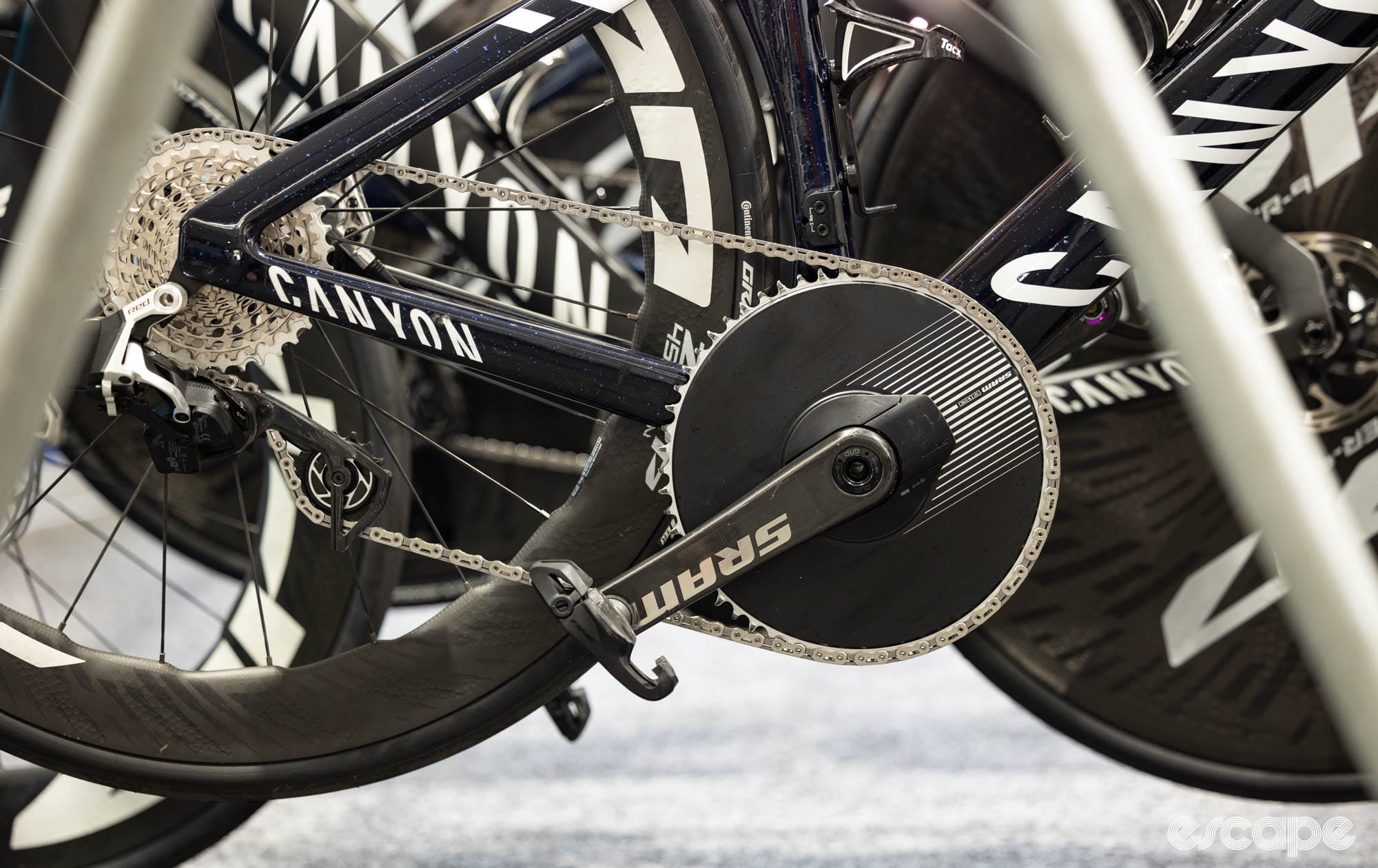
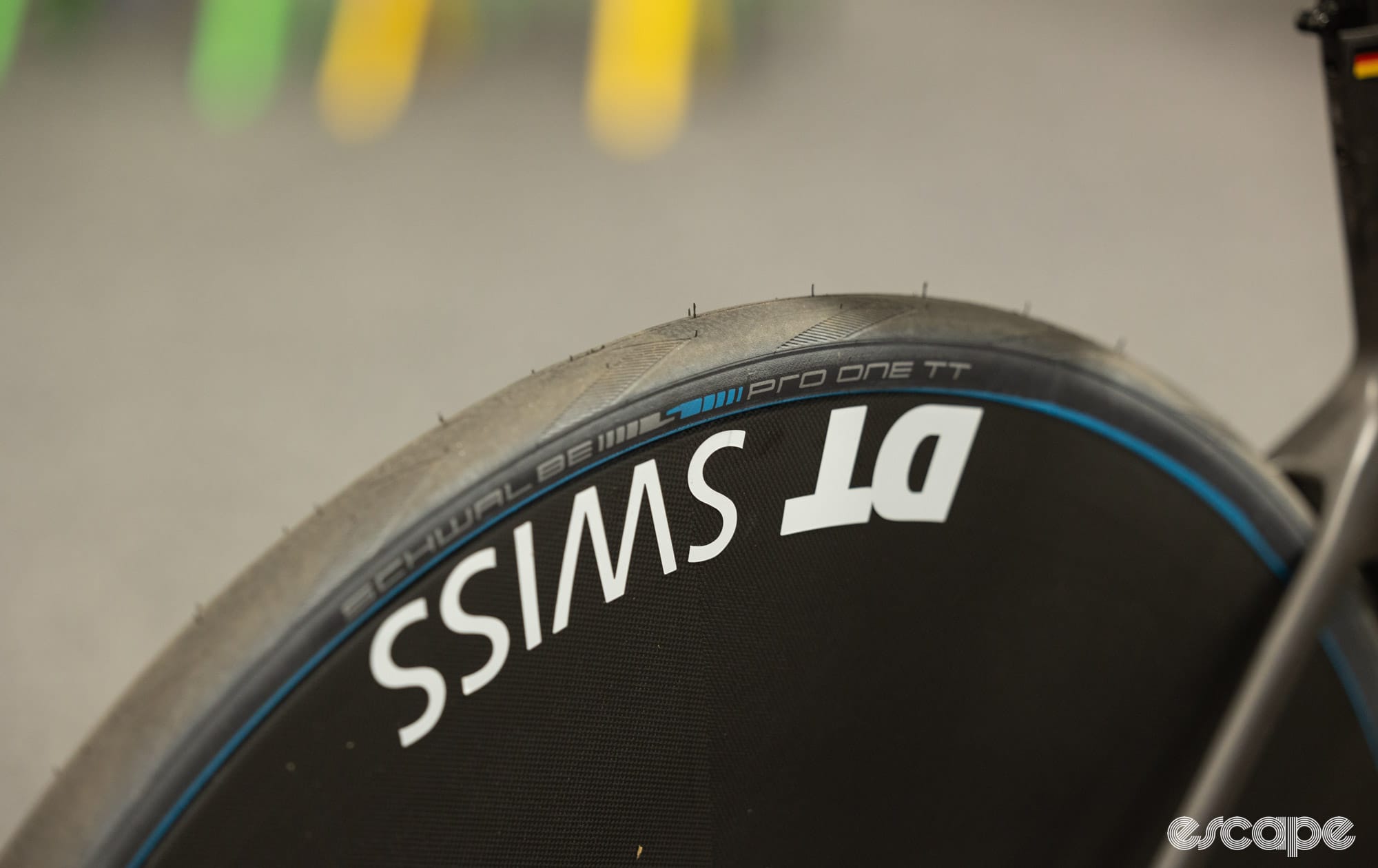
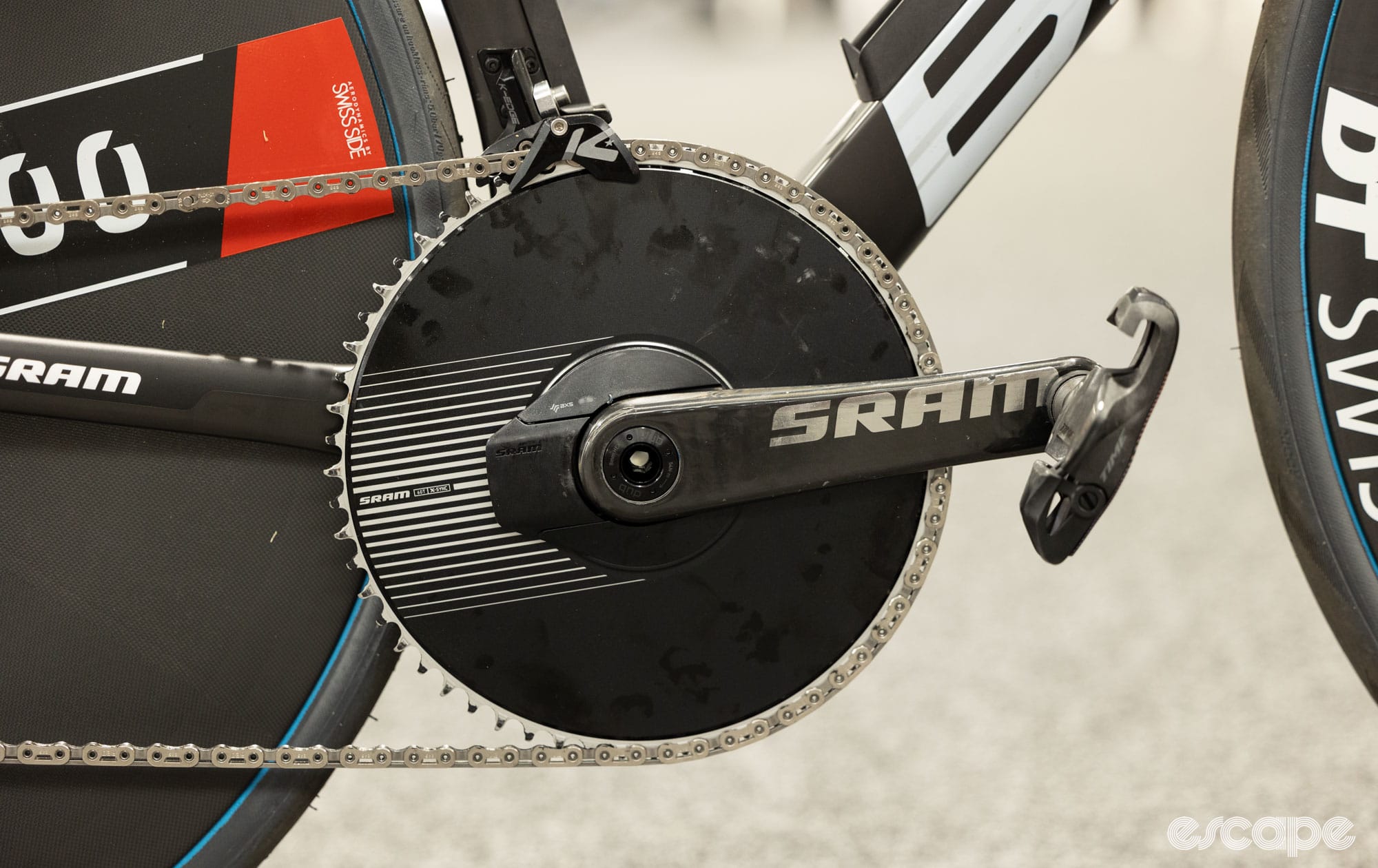
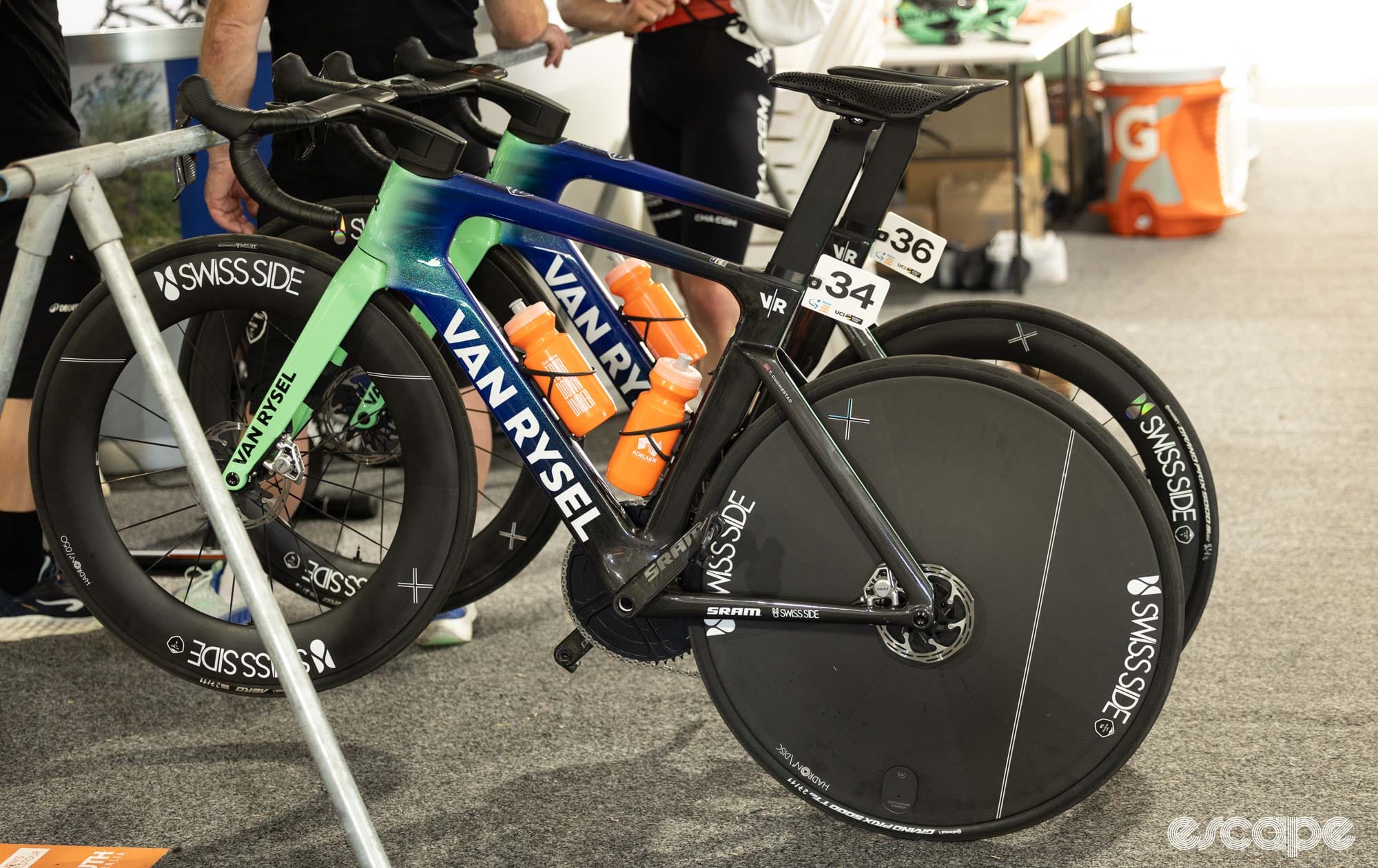
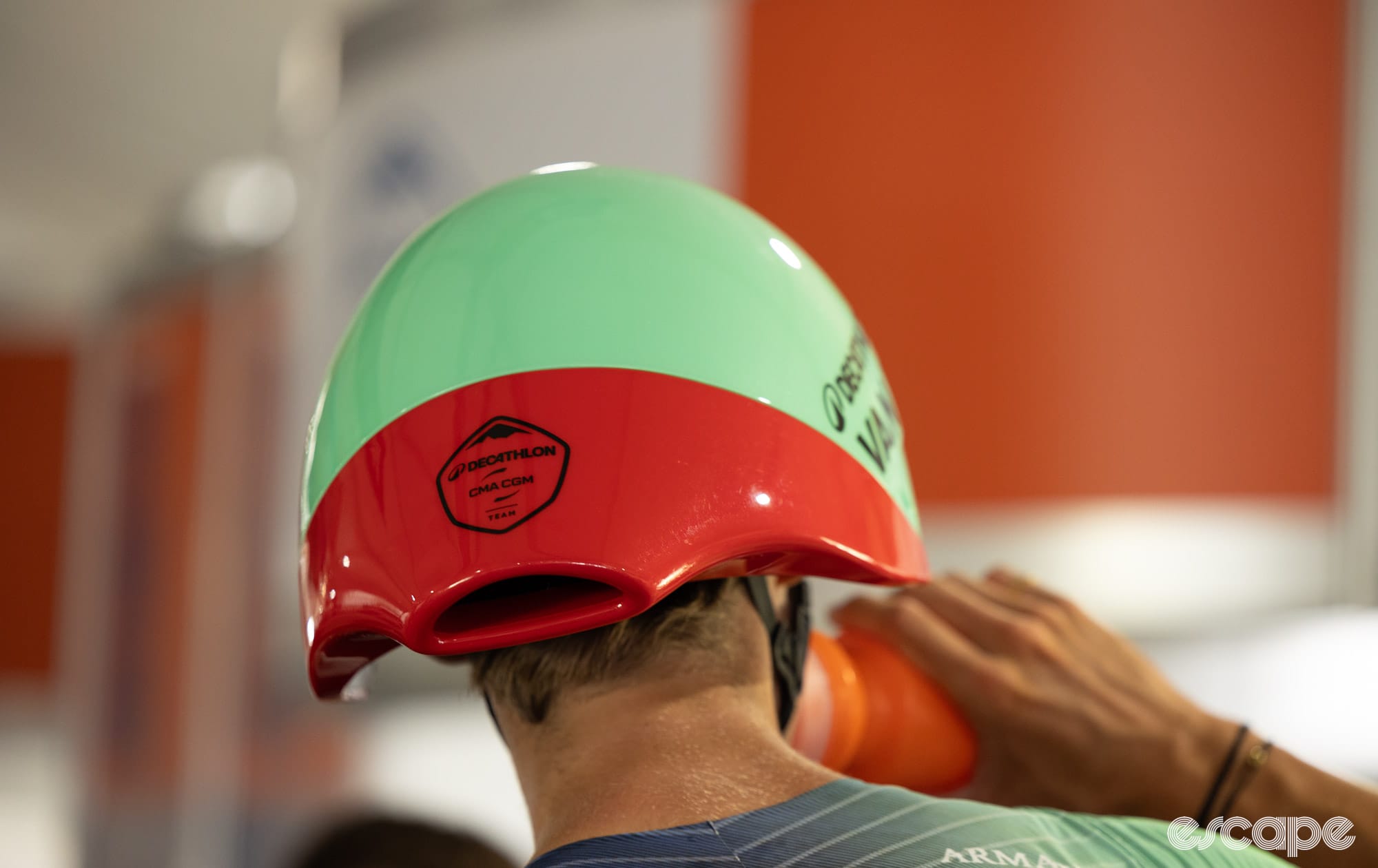
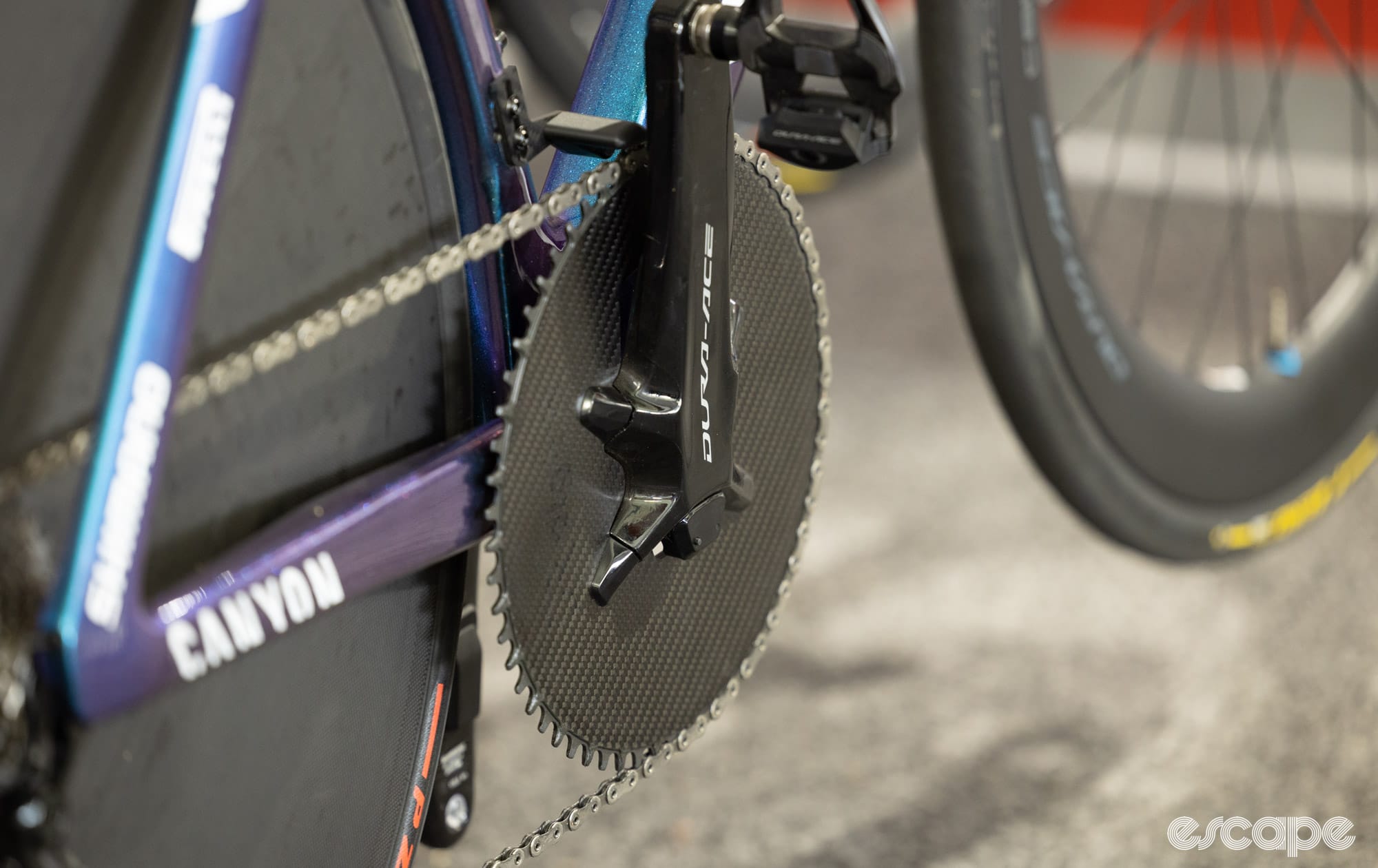
Despite the logistical challenge of bringing the race to the Southern Hemisphere, there wasn't a single team that ran its usual road setup. Throughout the rider paddock, most teams hustled to make modifications for a few quick minutes of racing. Many front derailleurs were replaced with single-chainring setups with massive chainrings and chain catchers, disc wheels were everywhere, funny-looking helmets adorned the heads of a few favourites, and skinsuits were plentiful. A rare few, including the stage winner, took it a few steps further than that, too. Let’s take a look.
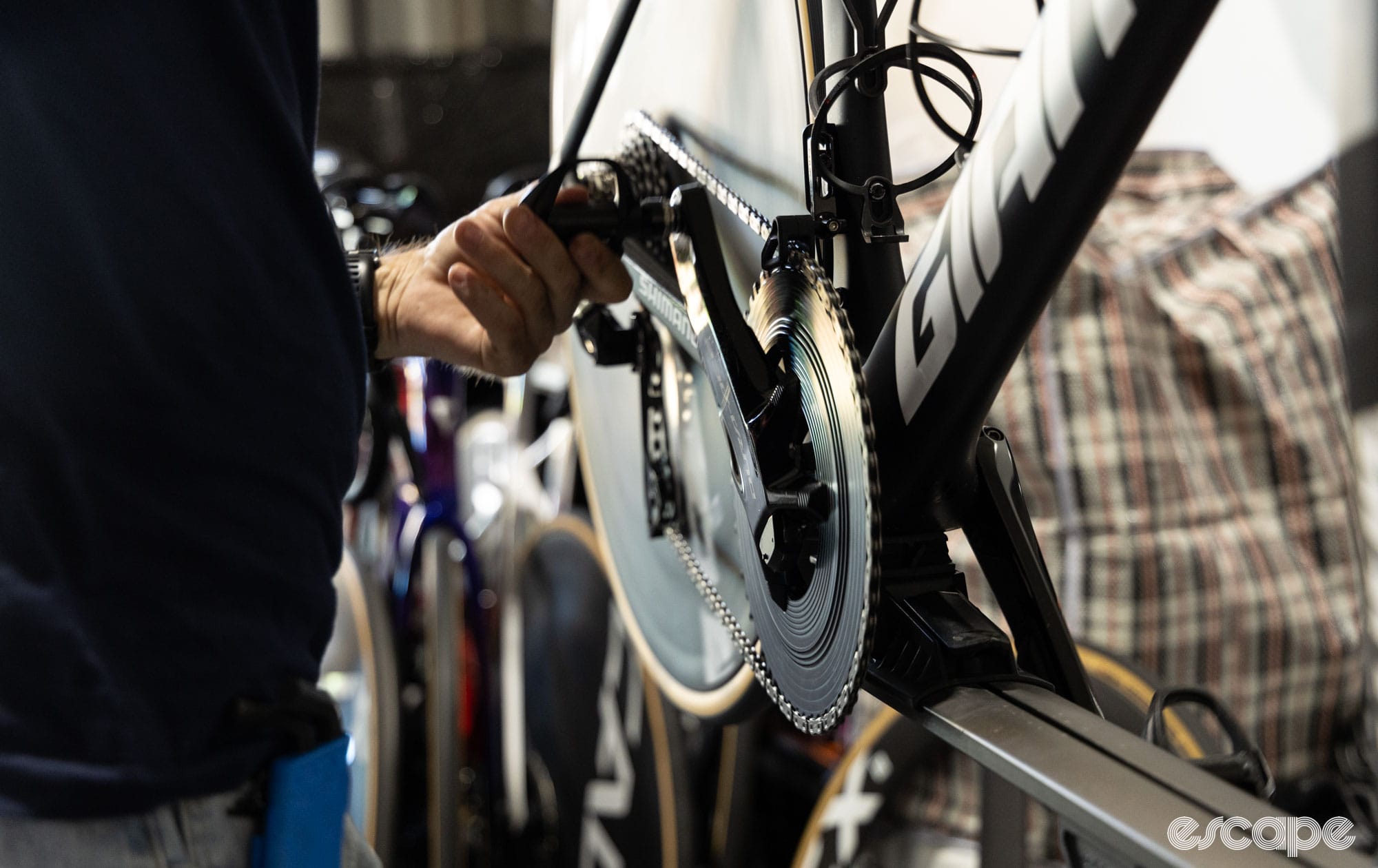
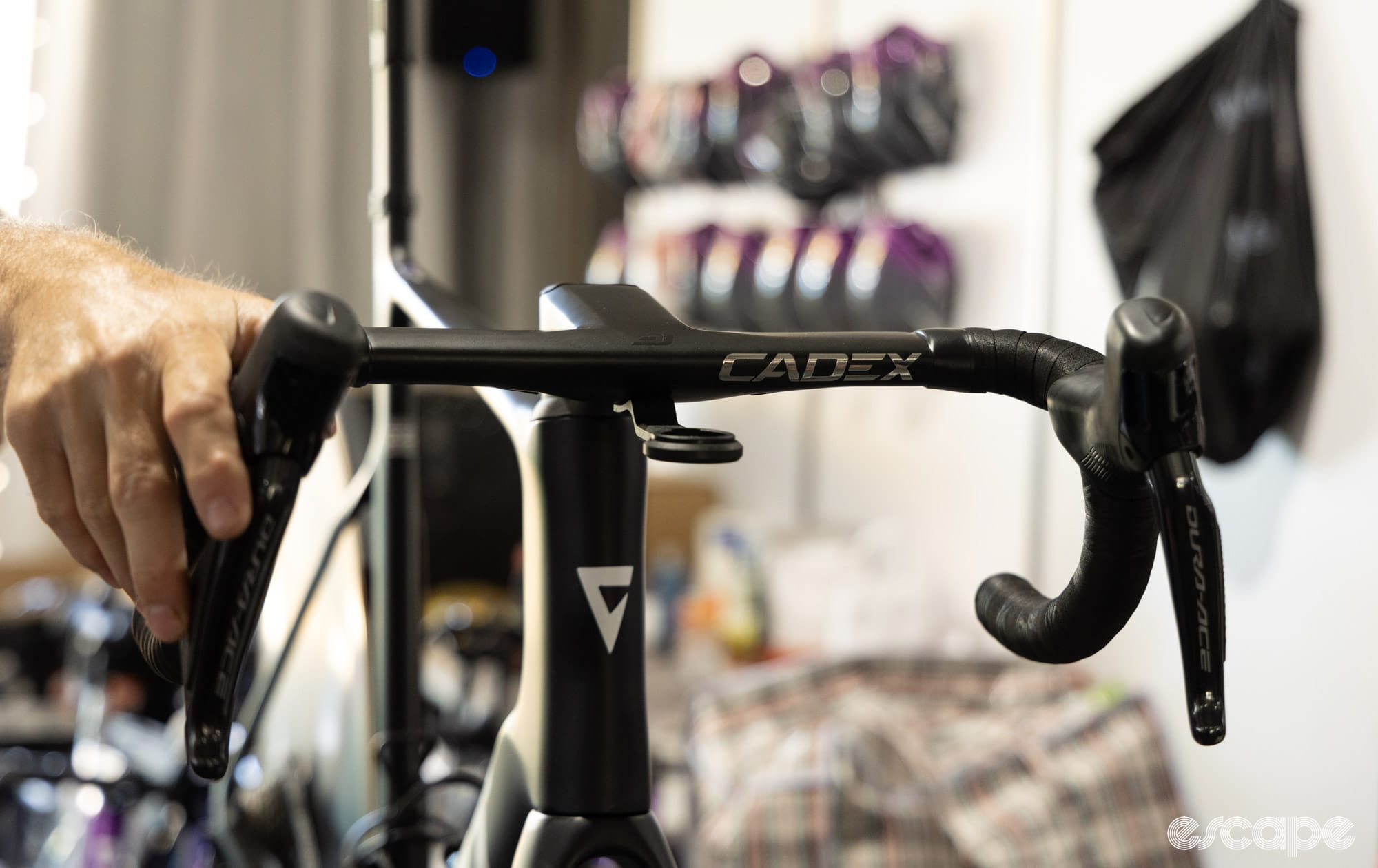
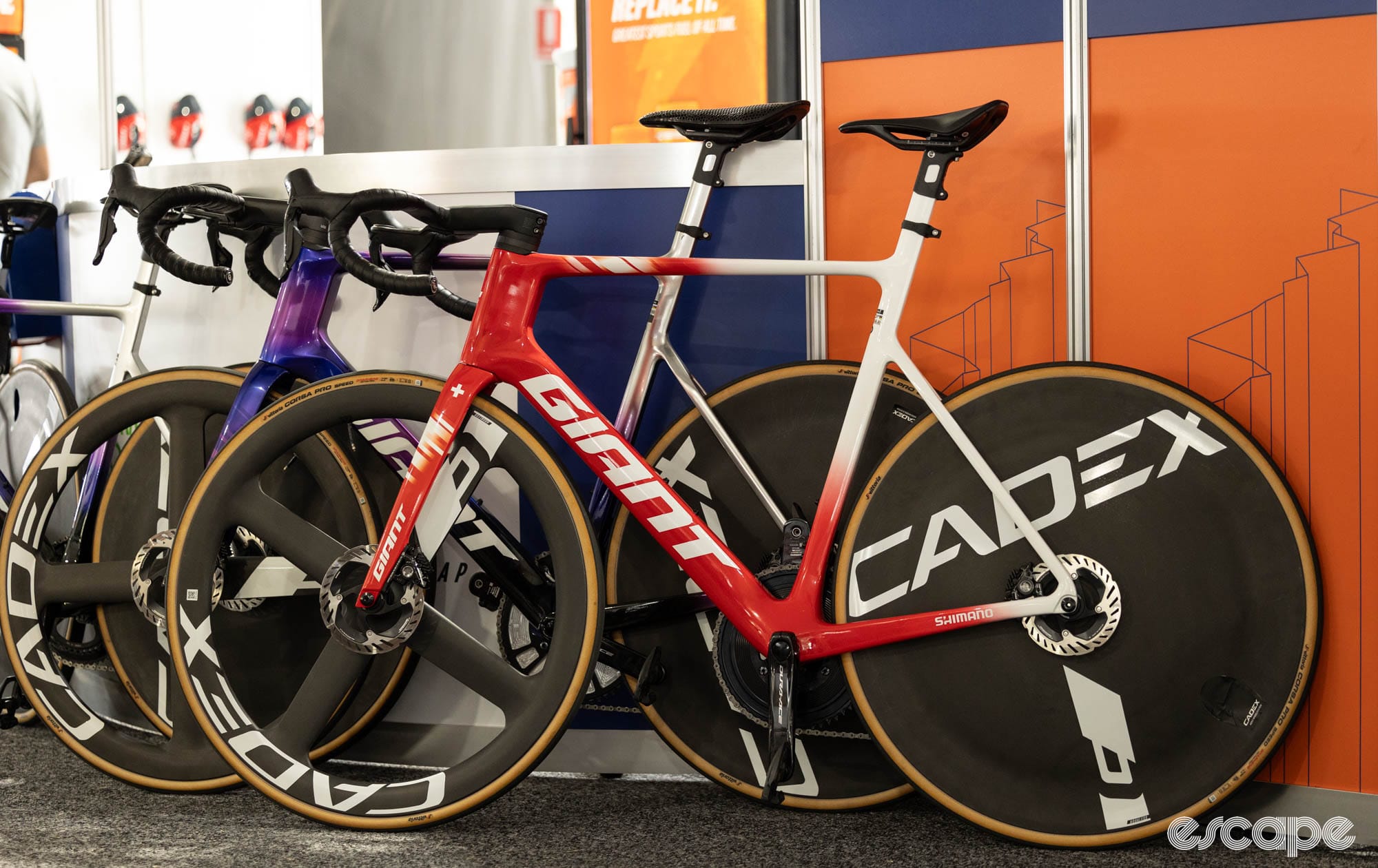
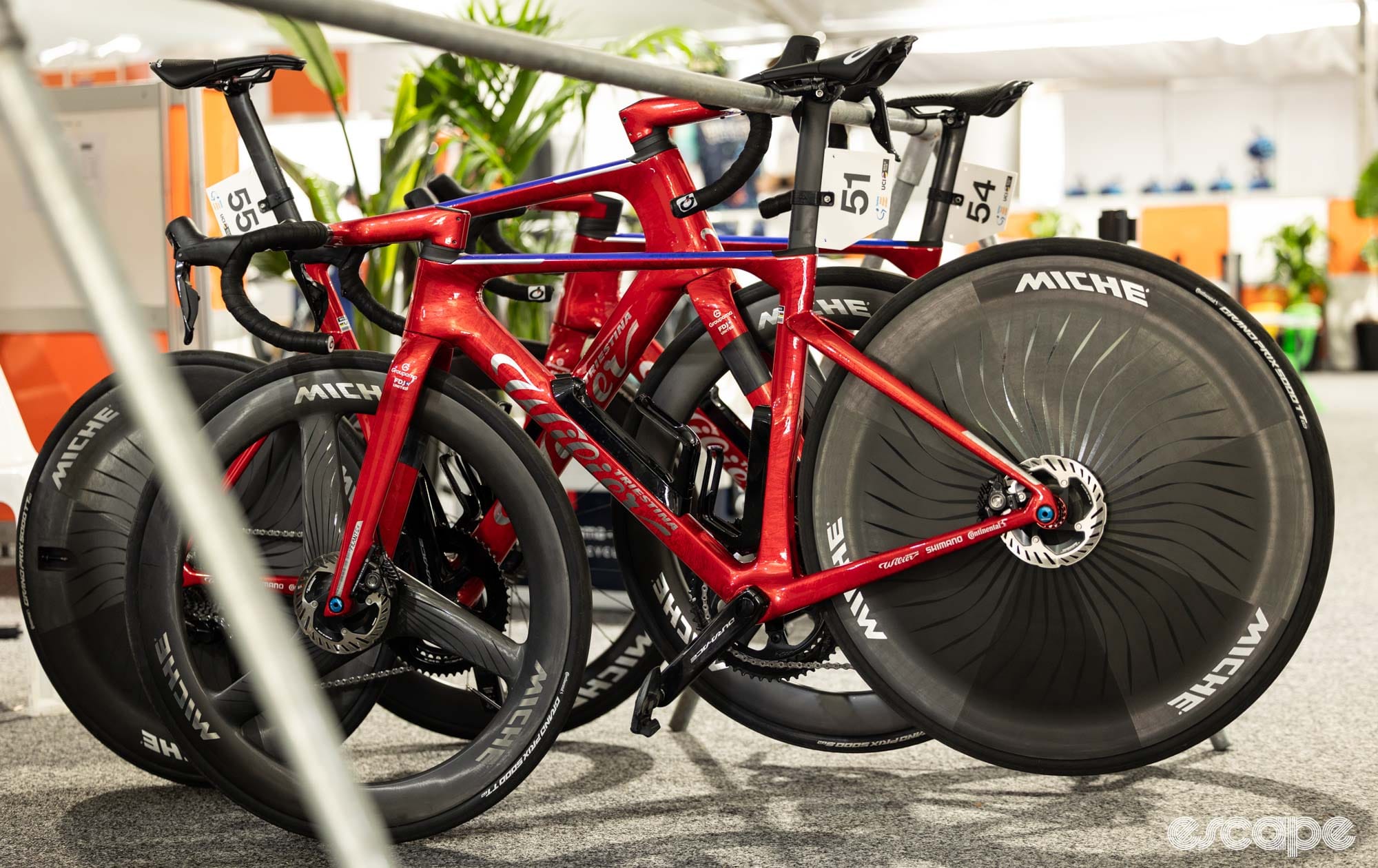
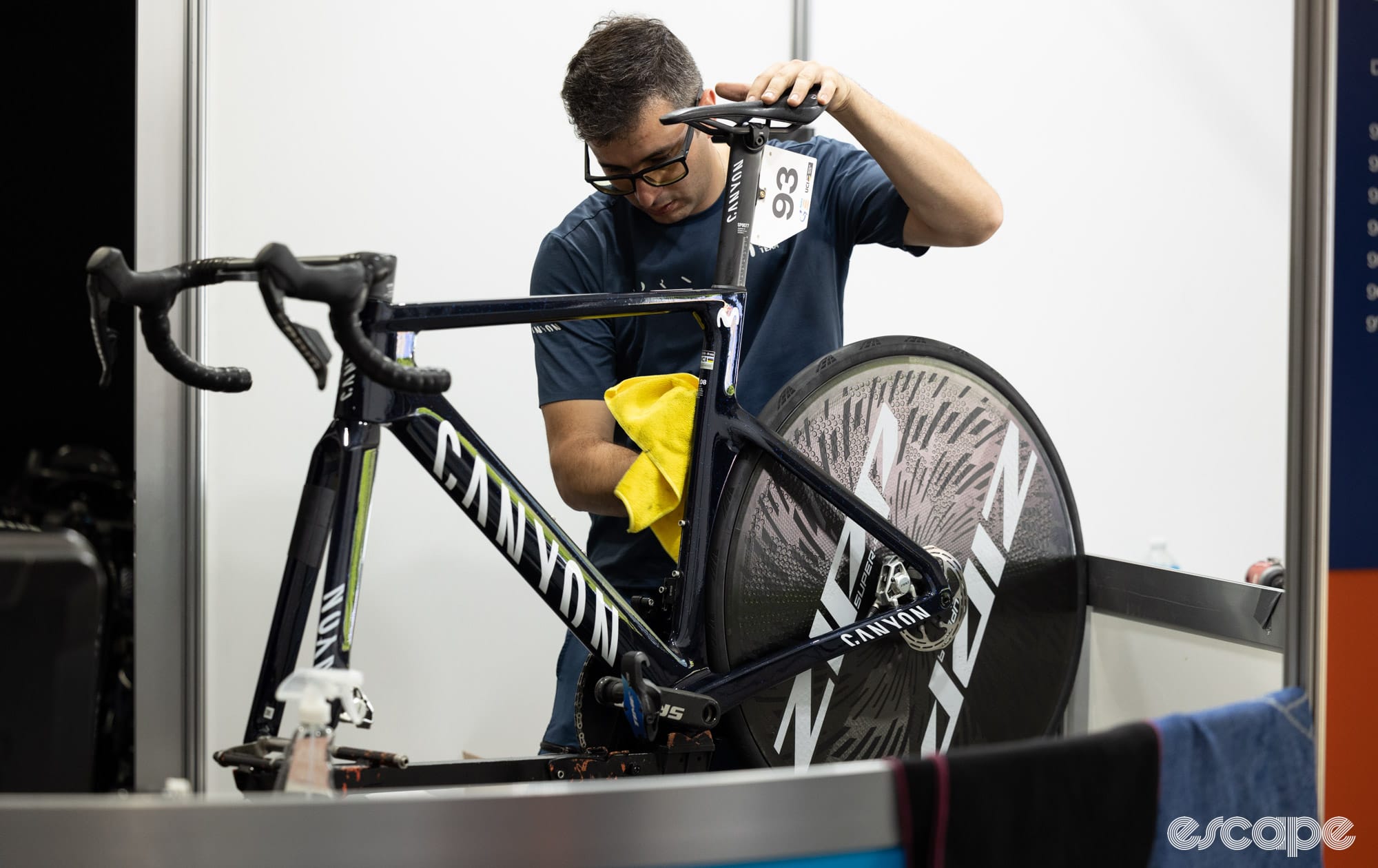
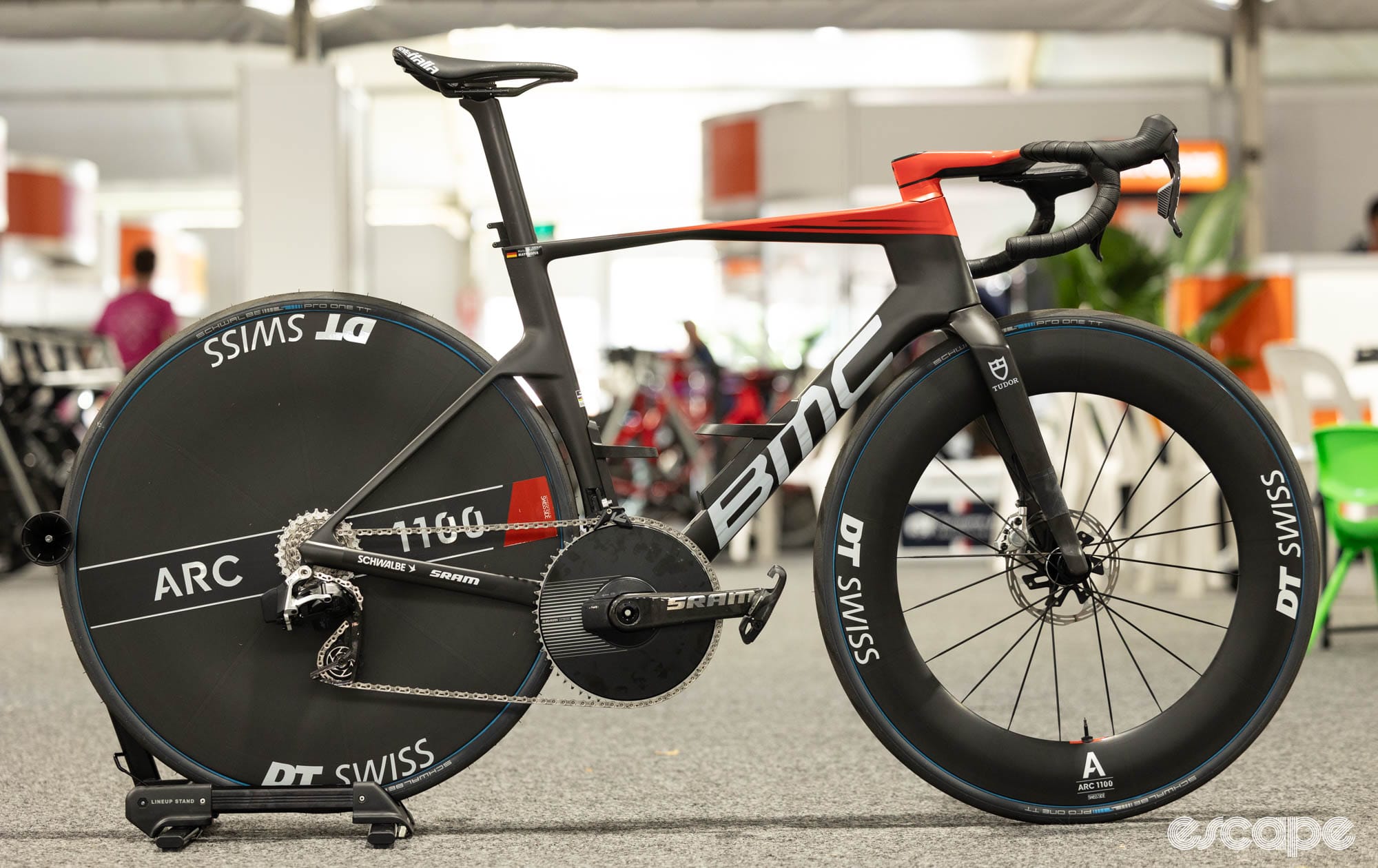
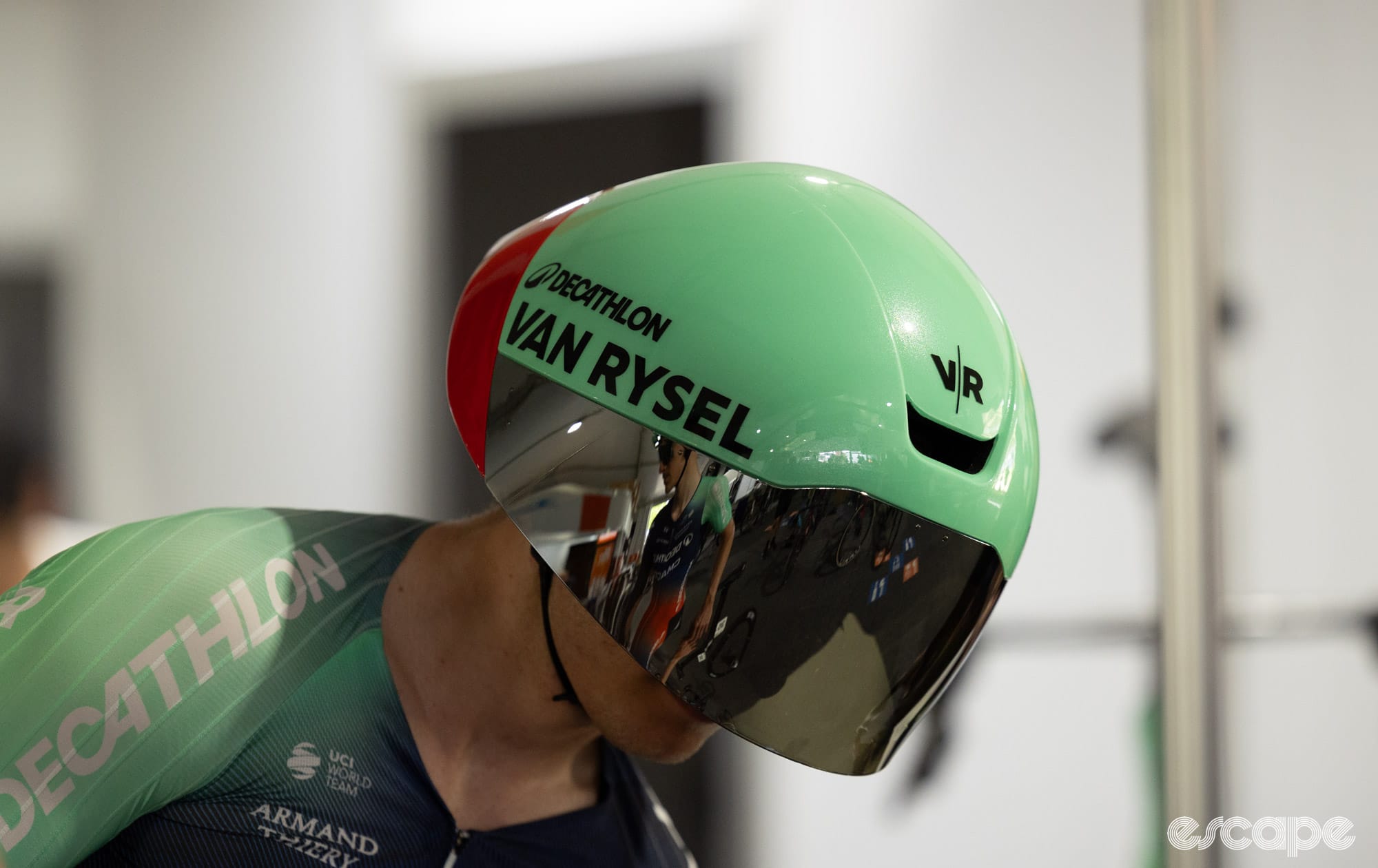
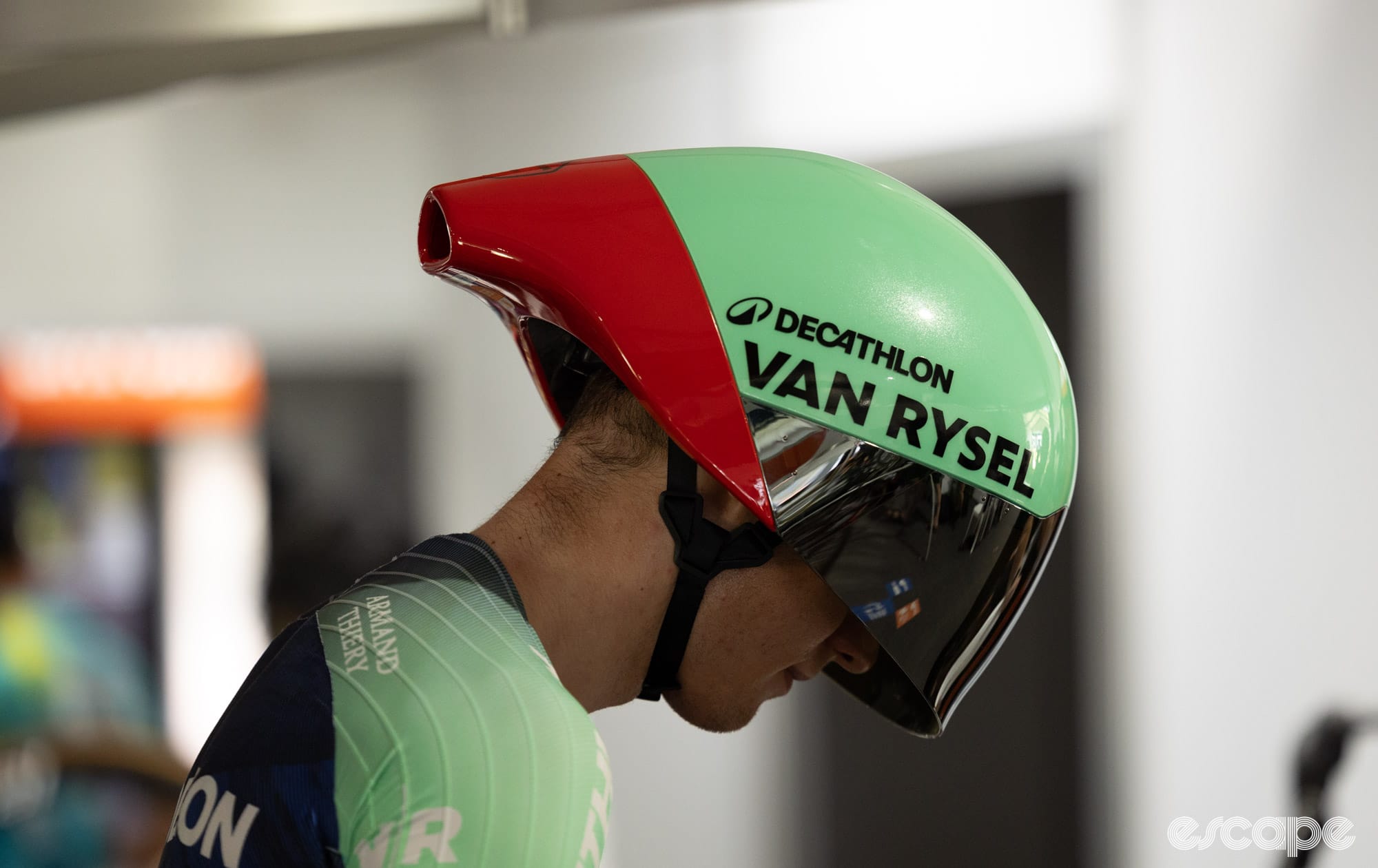
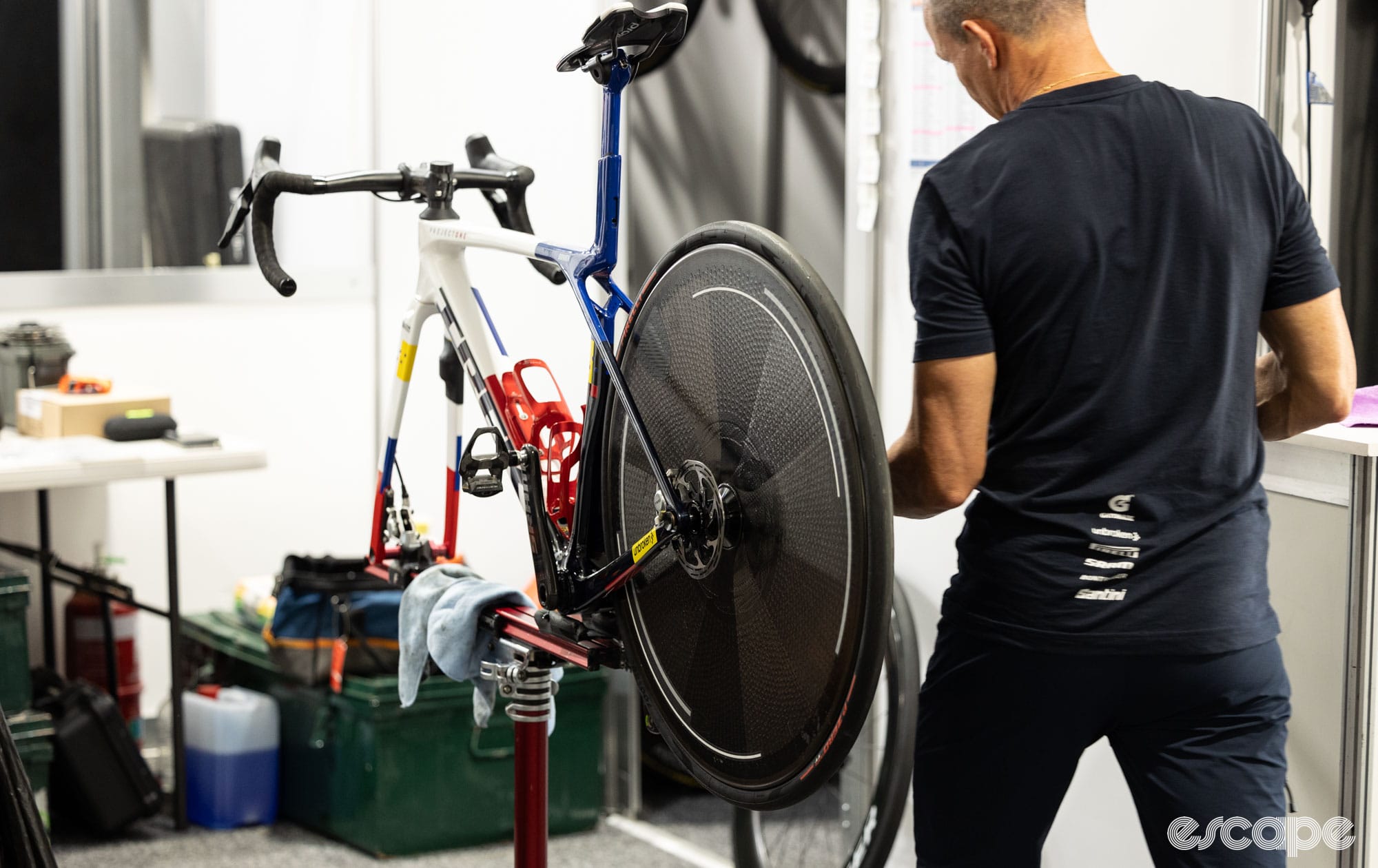
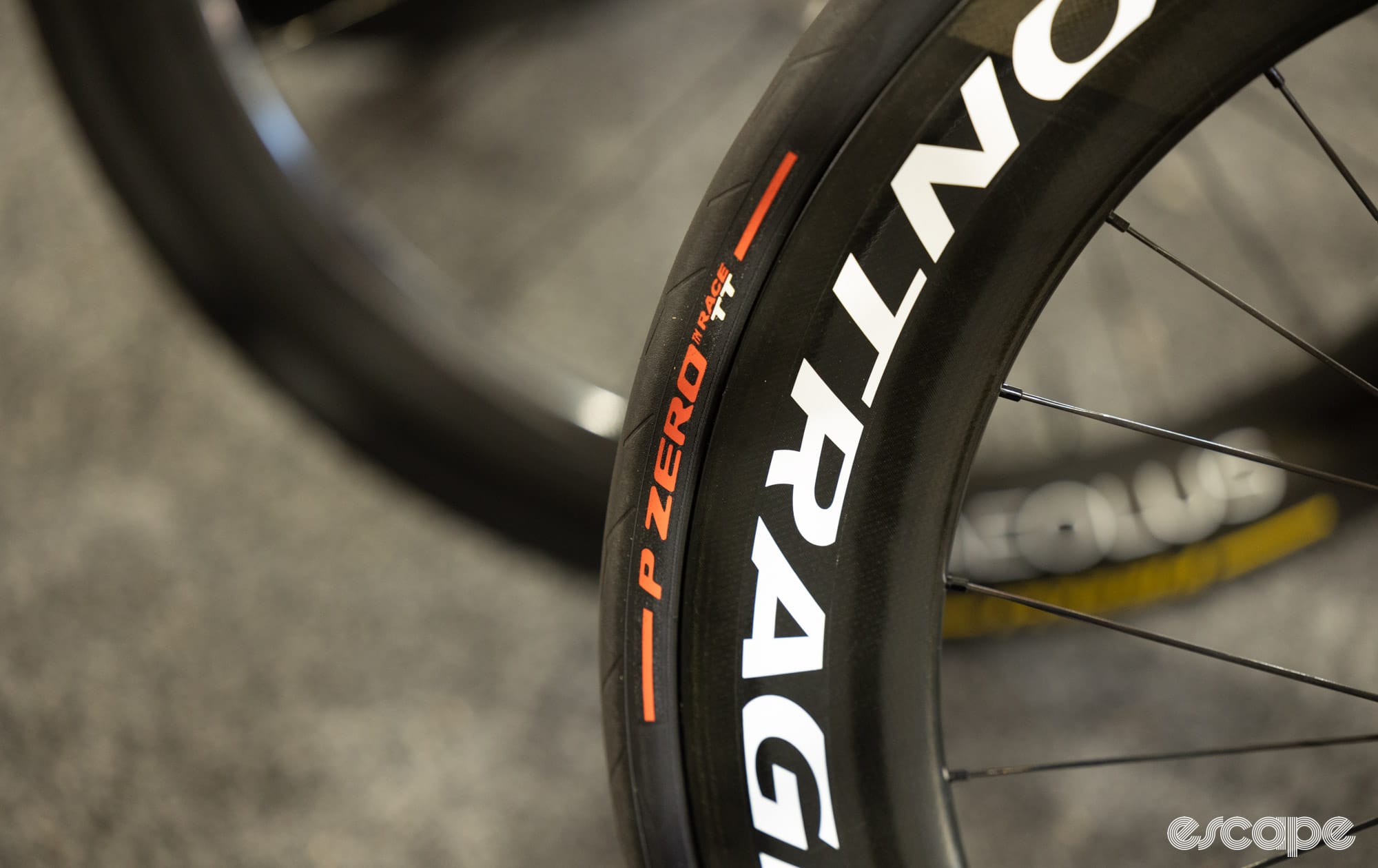
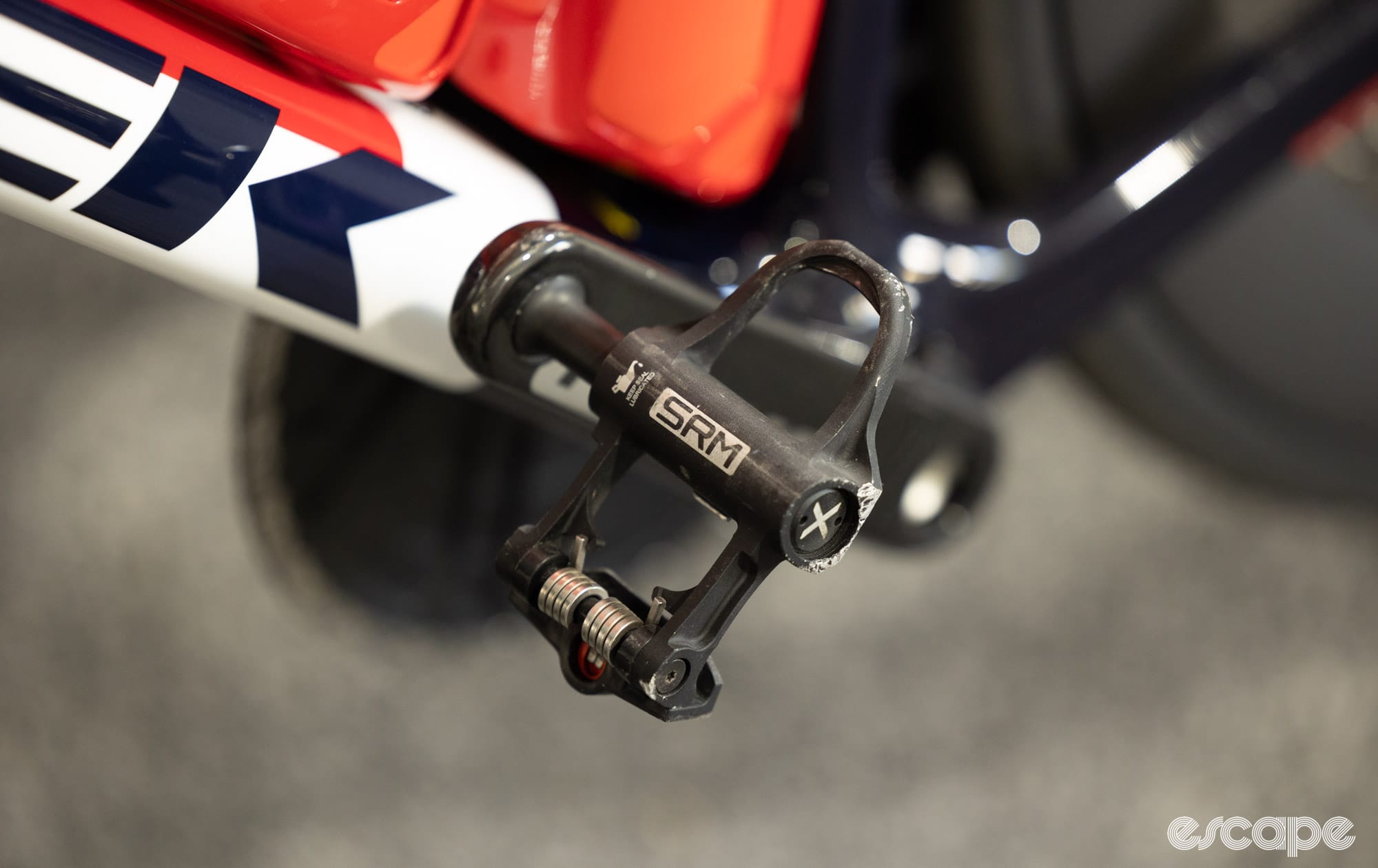
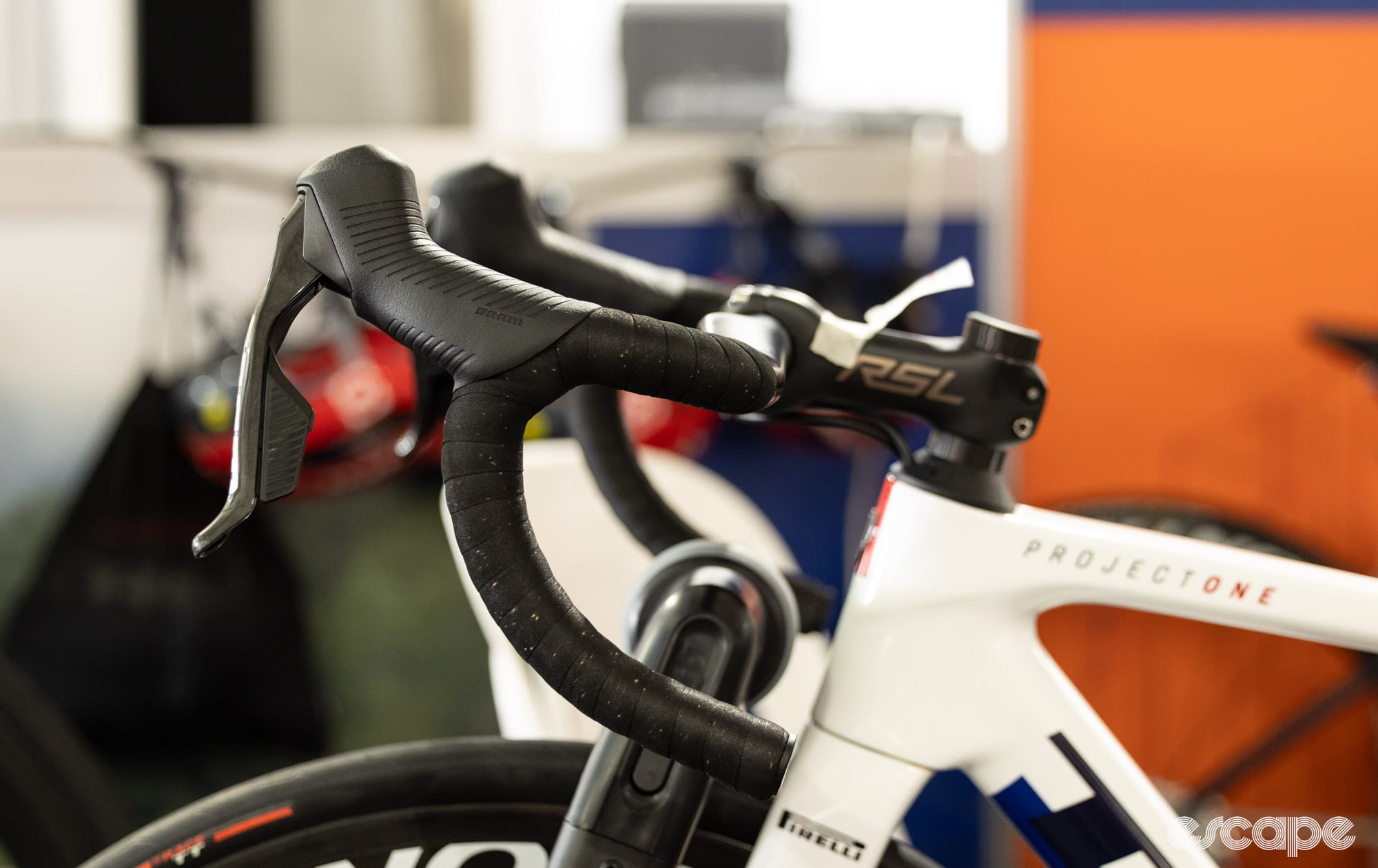
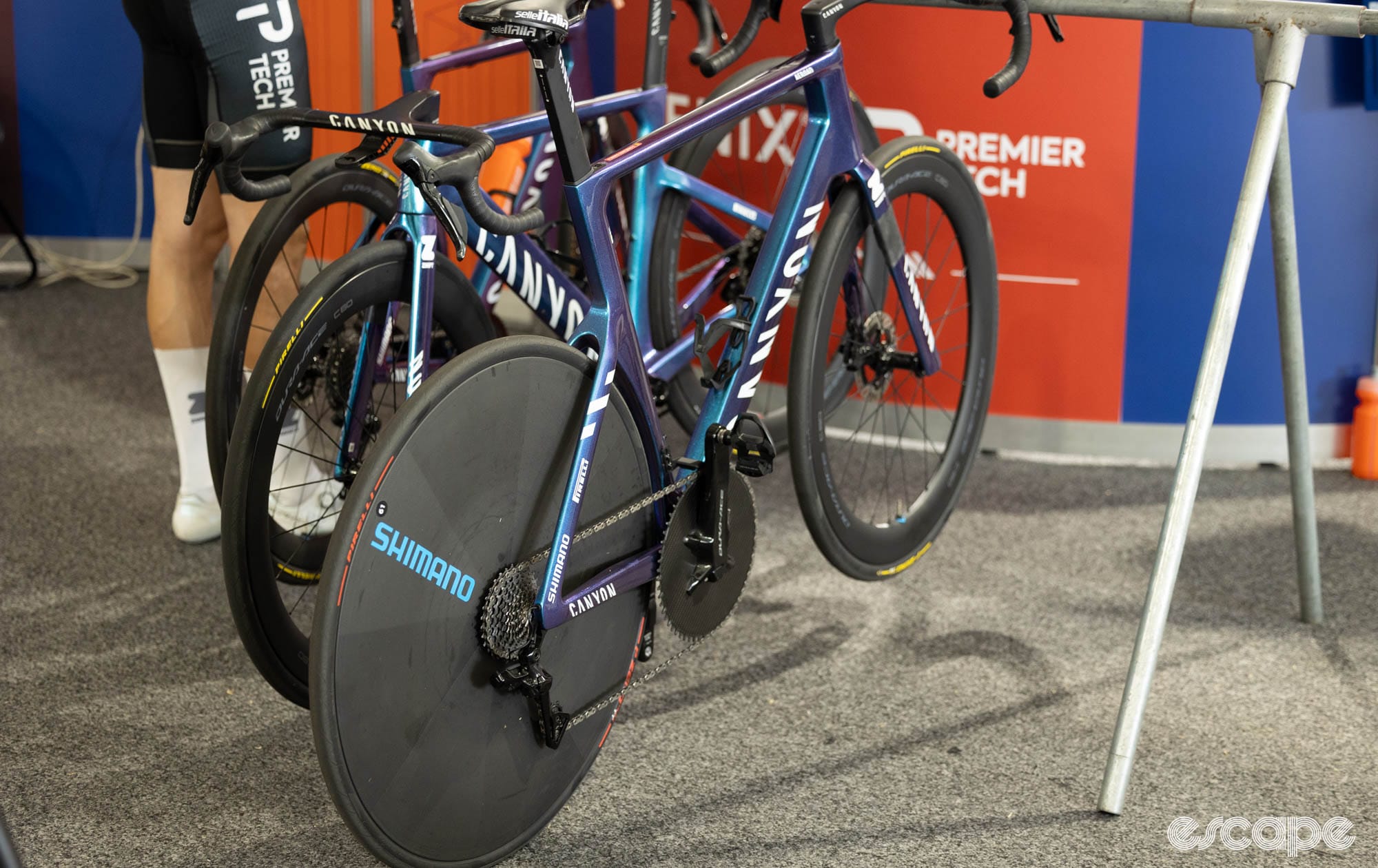
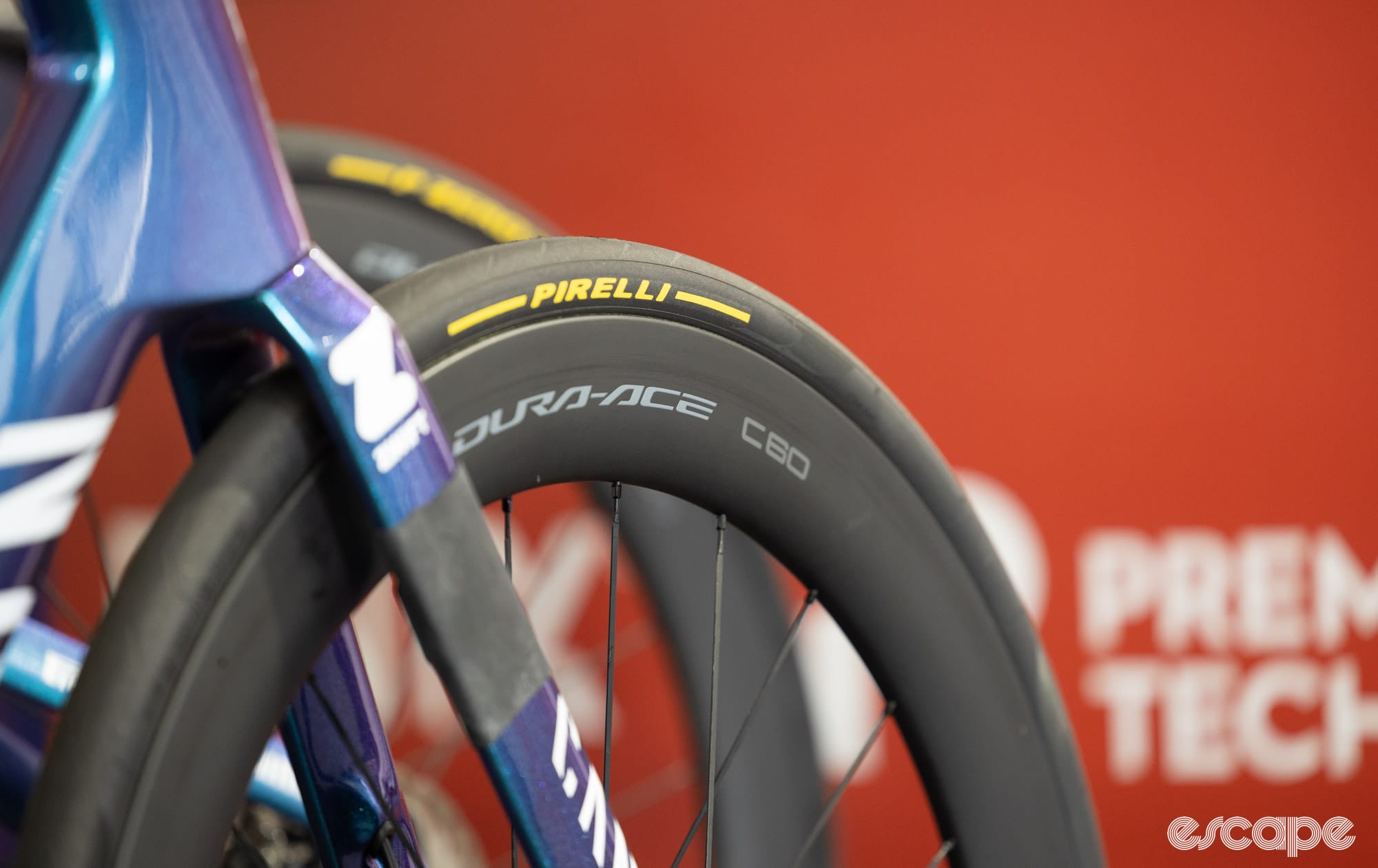
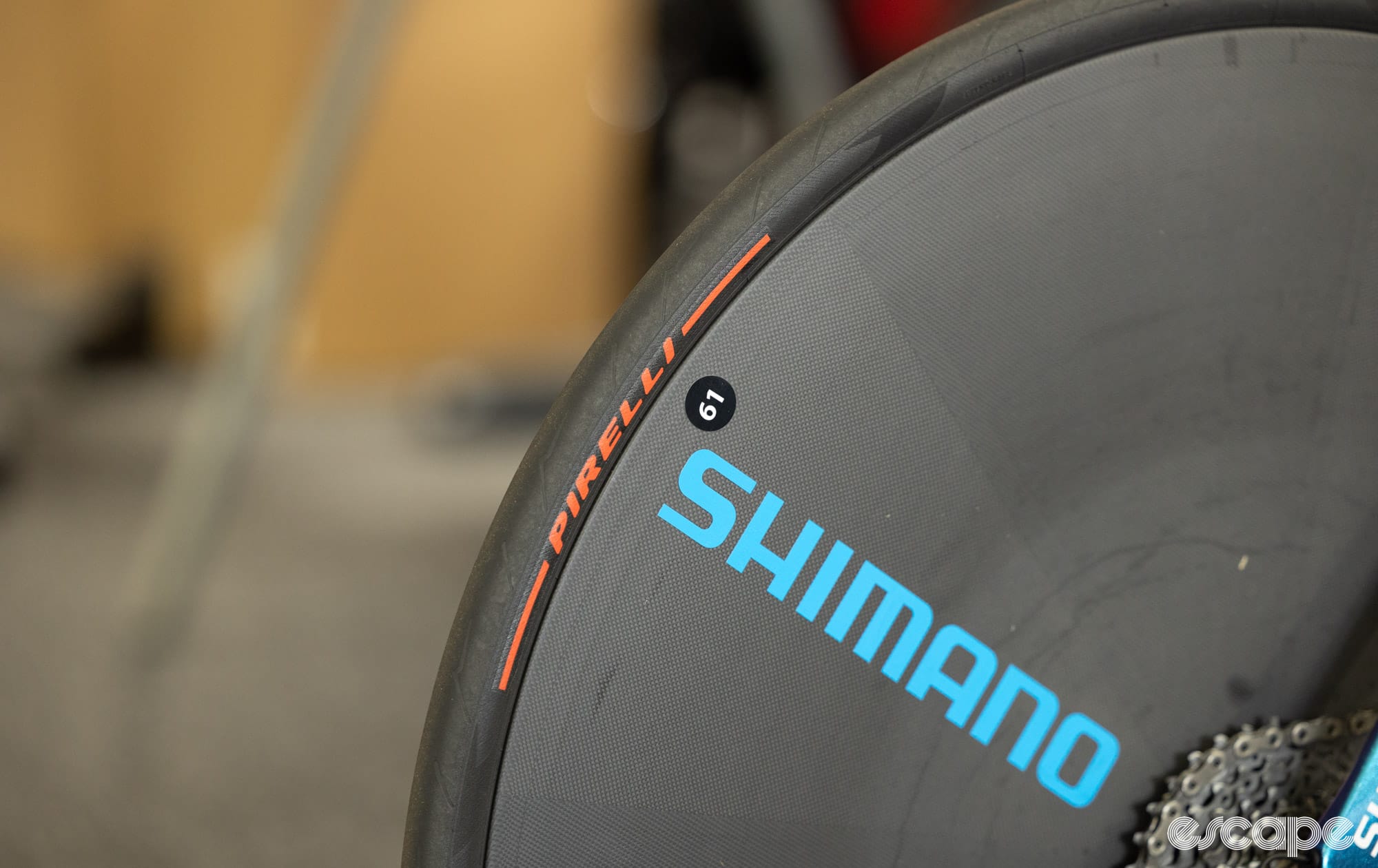
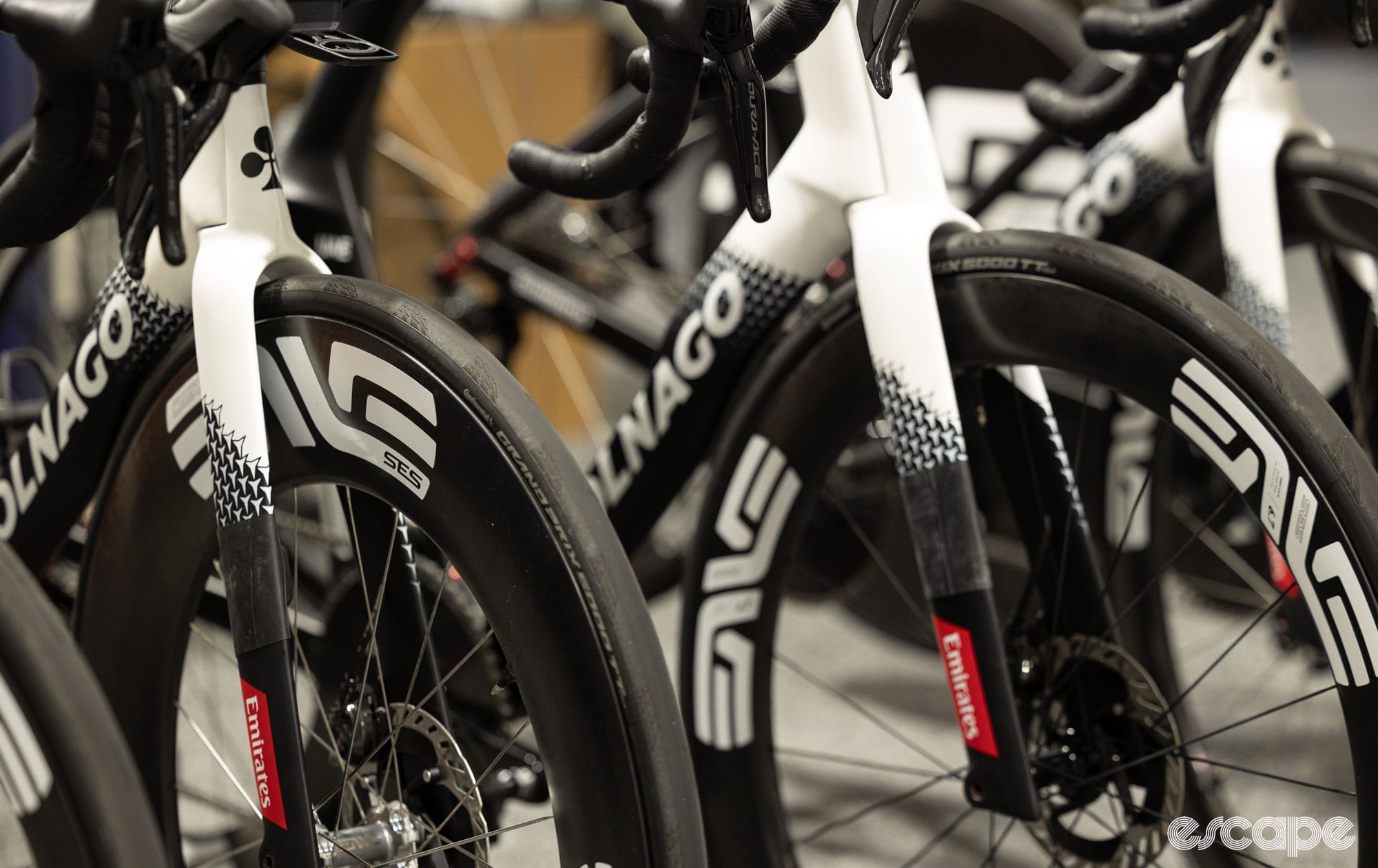
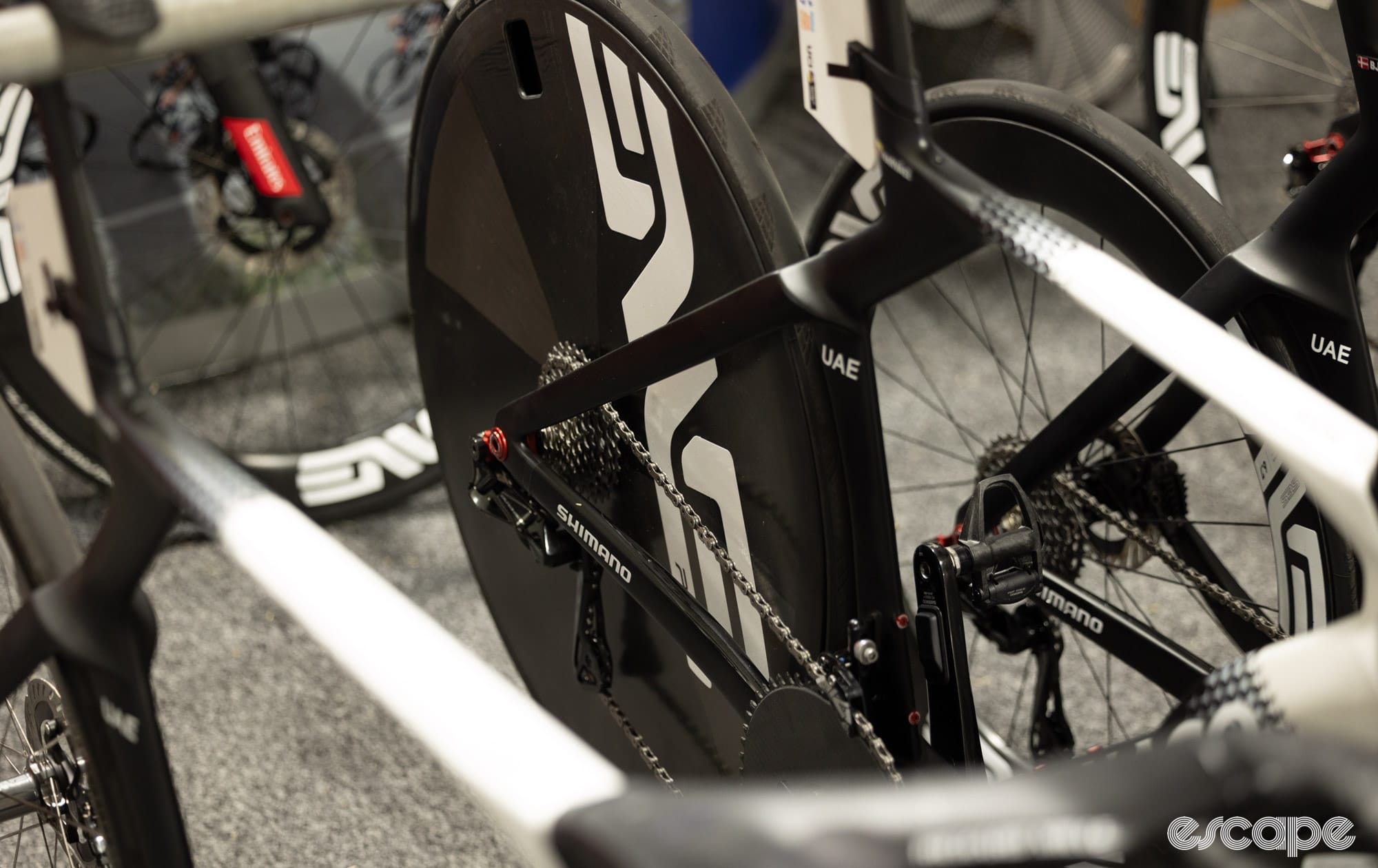
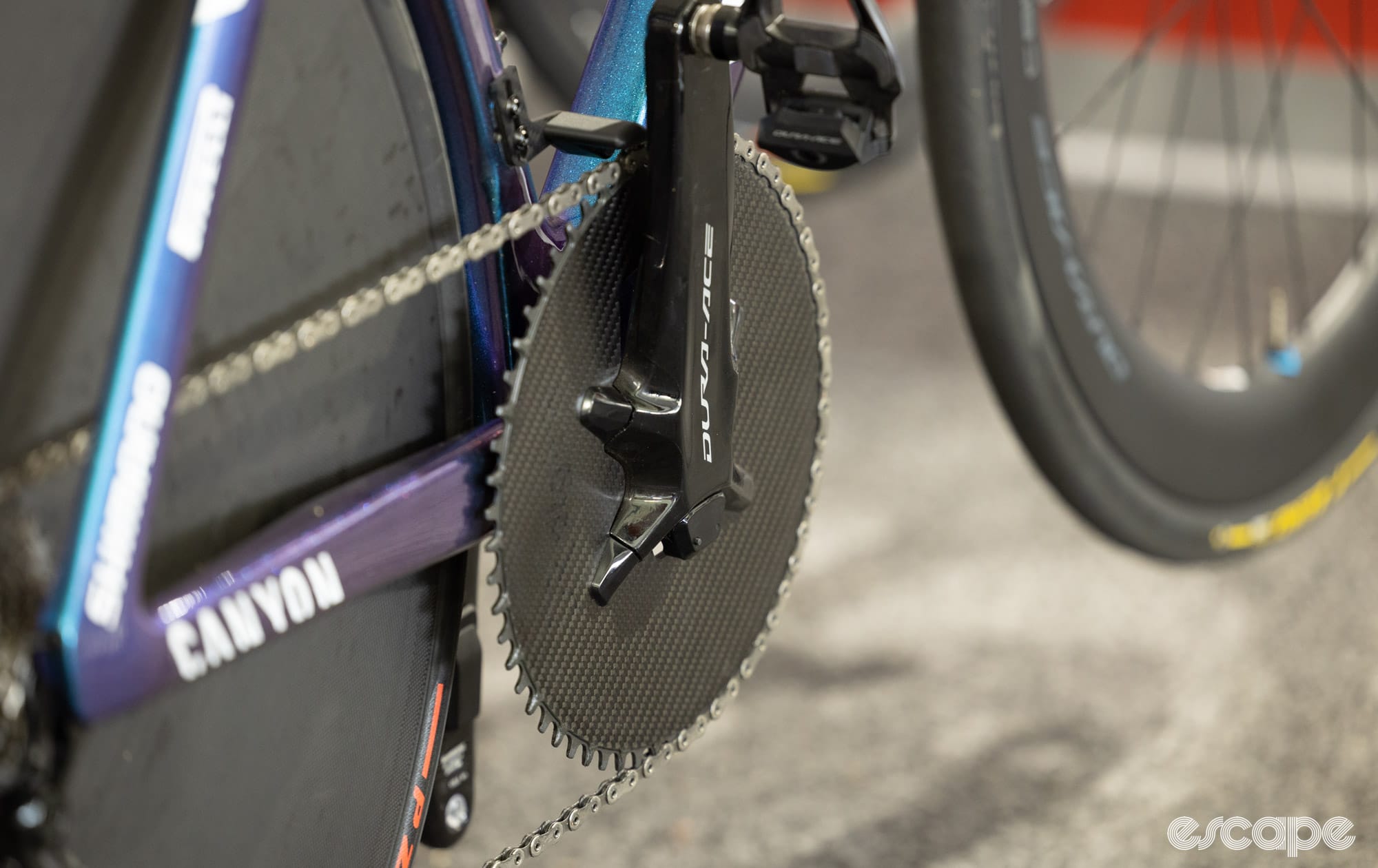
The shared mechanic zone was a buzz the afternoon before the prologue, and then chaos the day of. Here's Ben O'Connor's bike getting dialed in with a massive CSixx single-ring chainring. Meanwhile the bars were business as usual, being the Cadex Aero one-piece. Prologues are not O'Connor's strength and he finished a relatively distant 52nd, 13 seconds down.Sixth-place finisher Mauro Schmid's bike was converted to 1x, and given Cadex's four-spoke front wheel and rear disc. The rest was business as usual. Groupama-FDJ had Miche's Kleos RD SPX3 tri-spoke (front) and the Kleos RD Crono Disc (rear) on select riders' bikes.Like many teams, Movistar was switching many of its riders over to 1x drivetrains with aero chainrings.The Zipp Super-9 rear disc wheel made an appearance on some of Movistar's riders, such as for Pavel Novak. Tudor, the token ProTour team of this year's Tour Down Under, was not messing around. They'd travelled out with rear disc wheels and 85 mm-depth front wheels for all riders.Bikes were converted to 1x with chainrings up to 62T. Bottle cages were then removed - unnecessary in a stage that took less than five minutes. As expected, Decathlon-CMA CGM brought all the aero goodies. First spotted at the 2025 Tour de France, Van Rysel has a new time trial helmet in the works. It appears to push the size limits allowed by the UCI's regulations. One vent in. And a clear duct out back. Like a few teams, Lidl-Trek had just a few discs to give its most likely contenders. Bontrager doesn't make a disc, so the team was running re-stickered Zipp Super-9s.Pirelli's P Zero Race TT tyres appeared across a number of wheels. Lidl-Trek is no longer on Time pedals. While the majority of the team are on Shimano Dura-Ace pedals, there was one rider with SRM's new X-Power Direct Road pedal. Lidl-Trek's Sam Oomen was the one rider on the team to obviously make positional changes. There may have been restrictions around bar width, but there were no such rules around going higher. Alpecin-Premier Tech was one of several Shimano teams to ditch the front derailleur and sponsor-correct chainrings. Most chainrings seemed to range between 58 to 62T, while the cassettes out back were kept small. Whether it was SRAM or Shimano, the use of a top chain guide was pretty standard across any bike coverted to 1x. Shimano Dura-Ace C60 was the front wheel pick for Alpecin-Premier Tech. Alpecin had some bikes set up with Dura-Ace C60 rear wheels, while others got a Shimano disc and Pirelli TT tyre. Not all teams brought endless supplies for the whole team. Looking at the bikes of Ineos Grenadiers and UAE Team Emirates-XRG, it was clear which riders they rated the chances of, or at least, which riders they wanted to protect in the general classification. Australian UAE rider Jay Vine, one of the favourites to win this year's Tour Down Under, was given an Enve disc for the effort. Vine finished fourth.




 Ronan Mc Laughlin