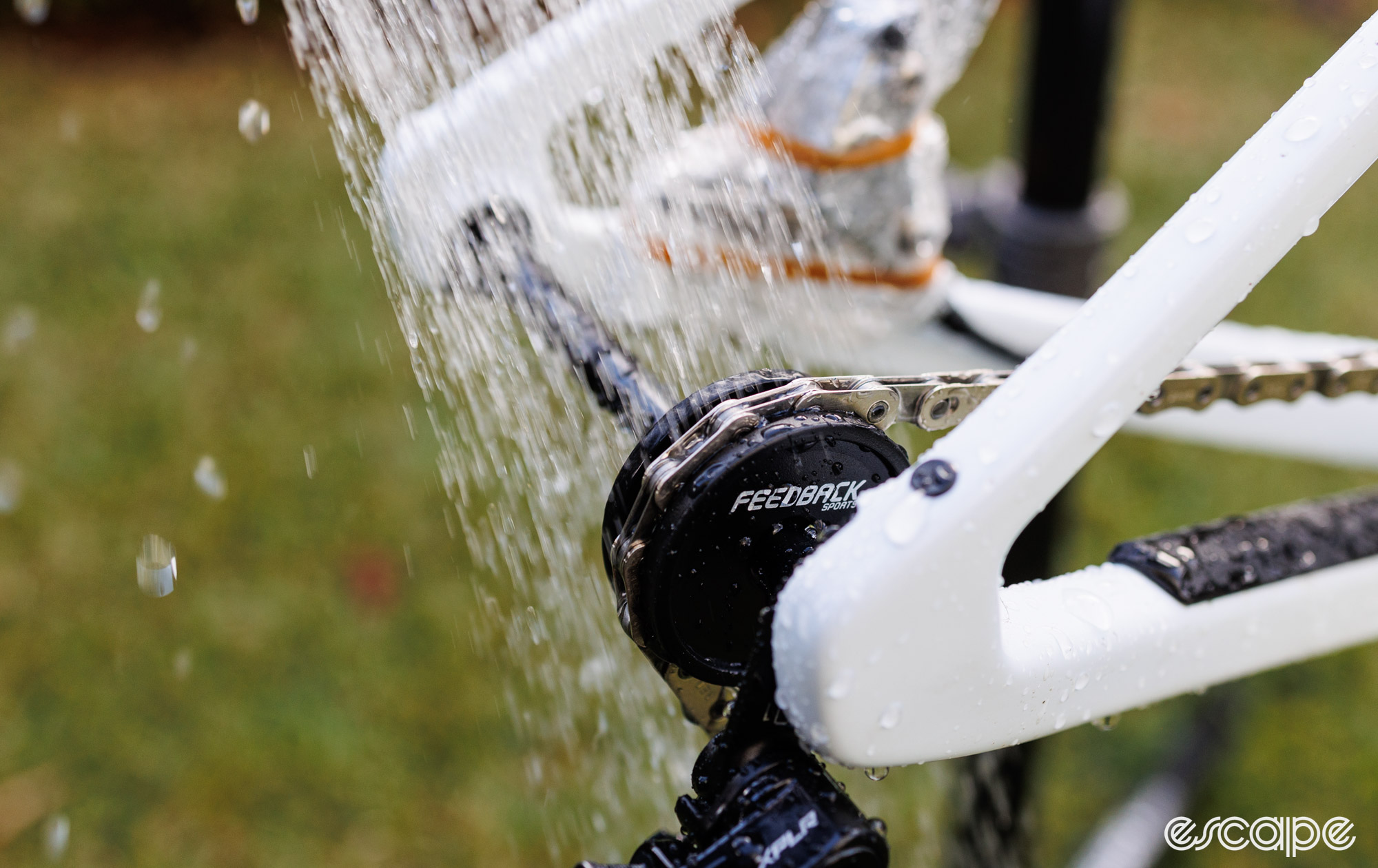

Welcome back to Threaded. I’ve just spent the past few weeks obsessing over every detail of SRAM’s latest gravel groupset, which got me thinking about the long-term cost of bike ownership. Many drivetrain components have been expensive for a long time, but we’re now in the age of US$600 cassettes and $100 chains, which gets all the more ridiculous if you’re causing wear with each pedal stroke. The fact is, how you maintain such a drivetrain can result in wildly different running costs.
Chain maintenance is one of the few tech topics on which nearly every cyclist has an opinion. Your choice of chain lube, riding style, geographical location, attitude to maintenance, and general fussiness all play a significant role in which methods may or may not work.
I personally live in a region that’s more often dry than not (although not lately). For my riding, I’ve found submersion chain waxing (aka, hot melt wax) to be the pinnacle, and topping it off with a quality (most aren’t) drip-on dry chain wax lube to be a wonderful compromise that keeps the chain on the bike and related maintenance to a minimum.
Chain waxing may be great, but most cyclists are still cleaning and lubing the chain on their bikes. This edition of Threaded is a departure from the usual deep workshop nerdery and offers a few simple tools and tricks you may not have considered for on-bike chain cleaning that could help you save time, improve the longevity of your drivetrain, save your bearings (and brakes!), and just generally make your bike run smoother.
The bulk of this article assumes you have access to an outdoor area that allows you to wash a bike when needed. If this isn’t you, or you prefer a quicker option, then I’ve included a few thoughts for apartment dwellers and the like.
What’s wrong with a dirty chain?
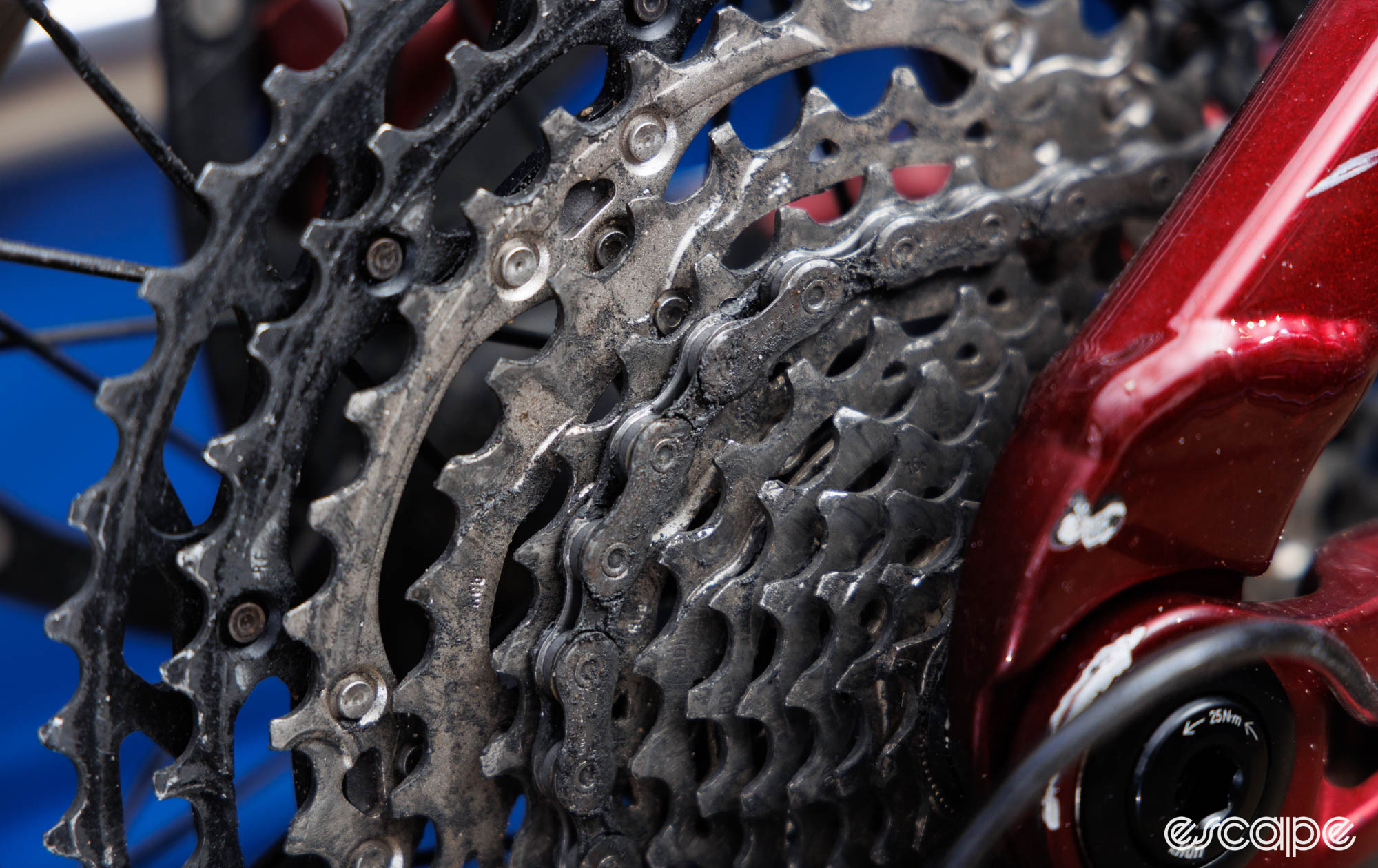
Whether you do your own bike servicing or not, basic and regular chain maintenance is one of the easiest ways to reduce your bike’s running costs. A low-quality chain lube combined with a bit of grit will create a grinding paste that can wear out a drivetrain in as little as 500 km. By contrast, chains regularly recoated in wax have been known to go for 15,000 to 20,000 km, and with the matching cassette and chainring/s still accepting of a new chain. And then we have the middle ground where a good drip-on chain lube that’s kept relatively (but not obsessively) clean should last in the vicinity of 5,000-10,000 km.
There's also the efficiency element. Previous testing done by the now-defunct Friction Facts showed that a chain with less than an hour of dirty riding on it would cost a rider somewhere between 2-6 watts of losses (at 250 W, with the variance being in the chain lube). Meanwhile, a chain run without lubricant would have losses in the range of 13-20 W.
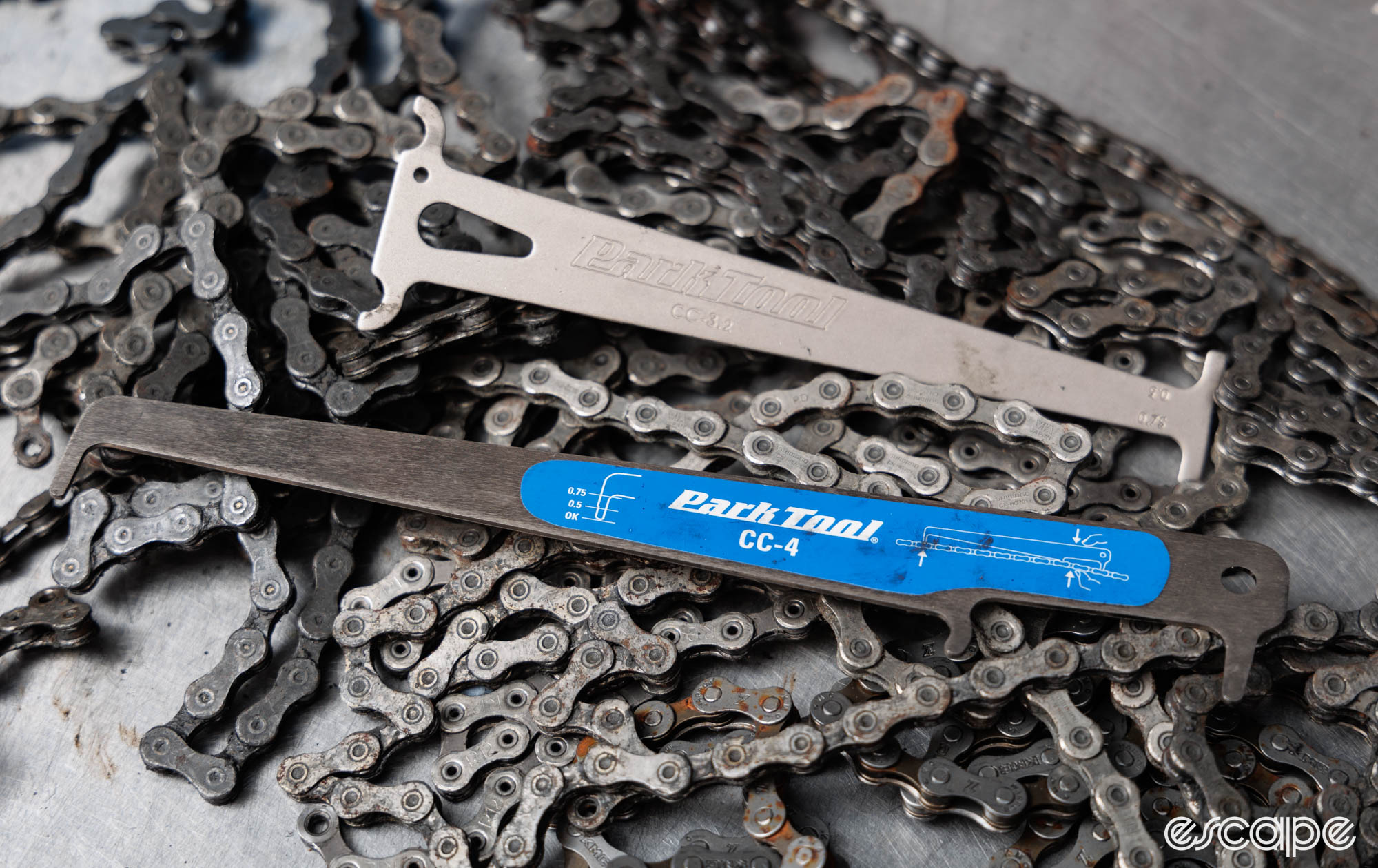
I won’t make this article about wax versus oil, or what the best chain lube is – a good resource for such information is Zero Friction Cycling. Just know that no matter how good a lube is claimed to be, neglect will still result in excessive and avoidable wear.
Some basic pointers when shopping for chain lube. Avoid chain lubes that claim to double as a degreaser or cleaner. Perfumes are not a lubricant, so seriously question chain lubes that smell like berries or candy. Know that all oil-based lubes are technically “wet” lubes; they can be great, but they’ll naturally attract more dirt than a true dry lube (there are very few truly dry lubes on the market). And if you’re scared to rub your chain against your leg after a single ride, then you can probably do better in your lube choice.
In addition to occasional hot-melt waxing, I use CeramicSpeed UFO Drip All-Conditions or Silca Super Secret Drip Wax on my own bikes, and most commonly put Smoove (yep, these are all wax-based lubes) on the bikes of friends, family, or others I may repair – unless they specifically tell me they’re using an oil. However, just because one chain lube works for someone on the internet, doesn’t make it the perfect choice for your riding needs, conditions or maintenance preferences.
The basics of on-bike chain cleaning
Whether you do it after every big ride, once a week, or whenever your chain looks and feels grotty, your bike will thank you if you get into the rhythm of keeping the running components clean.
Did we do a good job with this story?