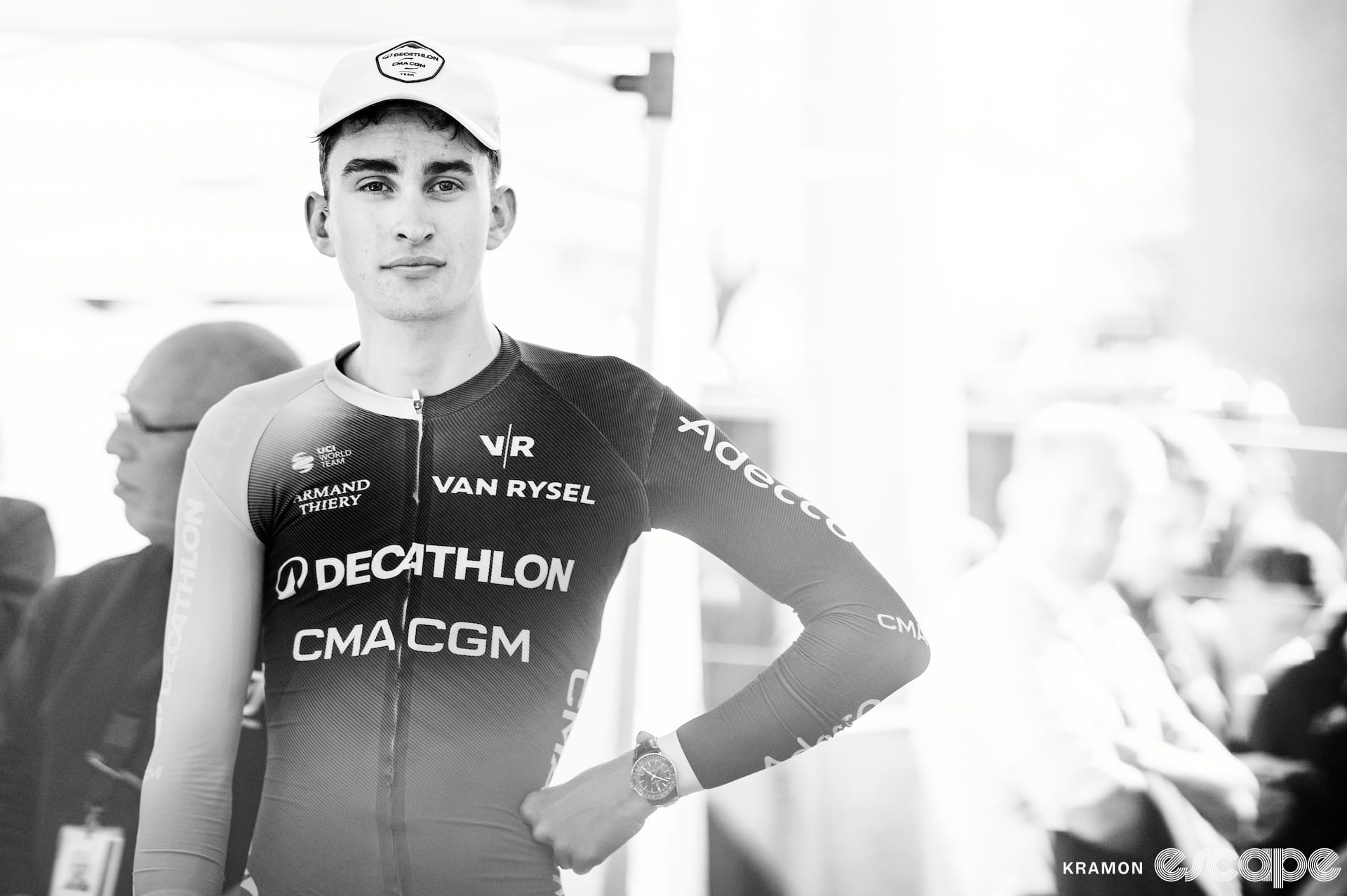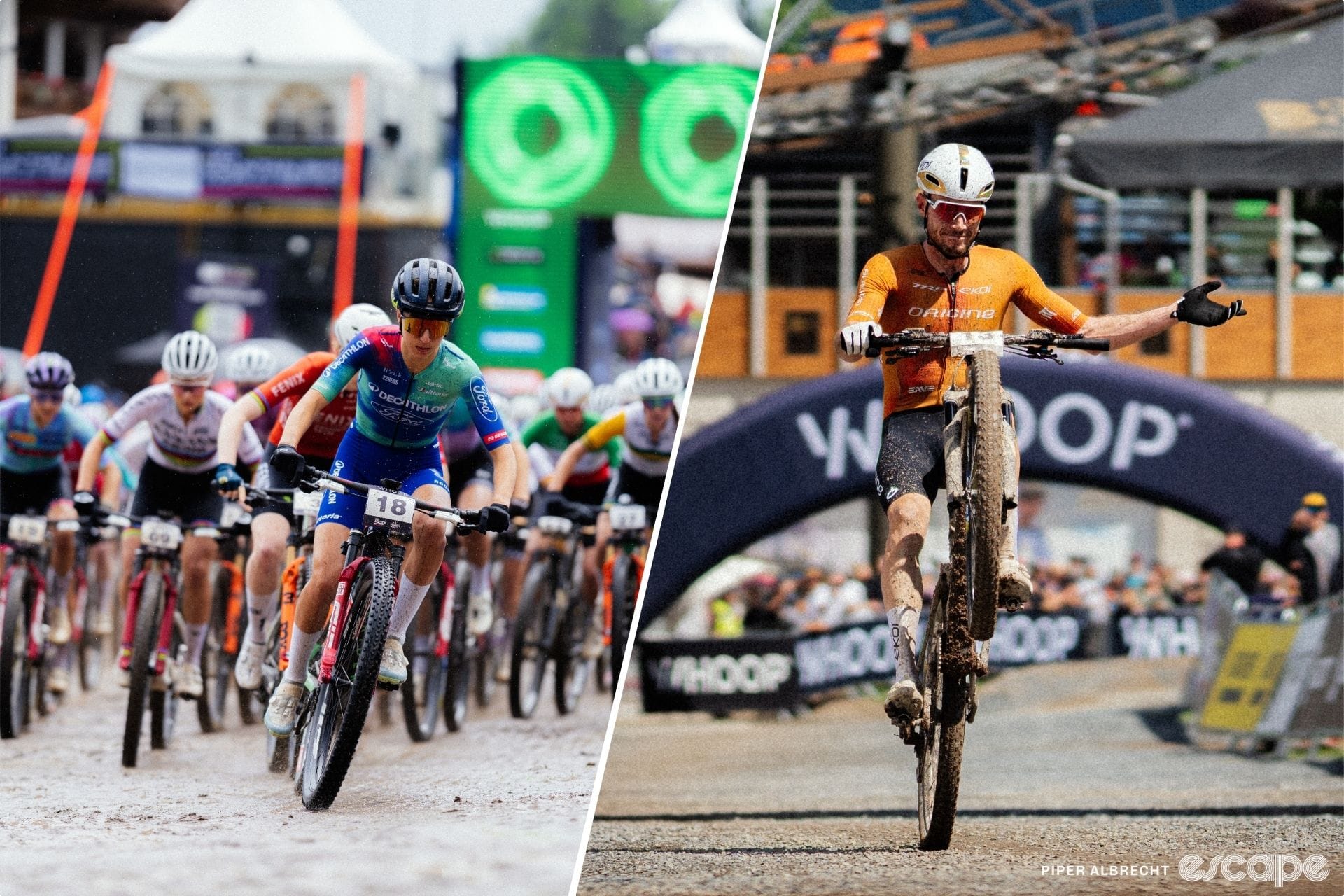

It was a pleasant morning, by north-western France standards.
Too warm for jackets, we’d brought umbrellas, but could just as easily have left them behind. Riders rolled to sign-on in their skin-tight race suits, textured sleeves glinting under a dry if somewhat overcast sky. Then, without much warning, the heavens opened.
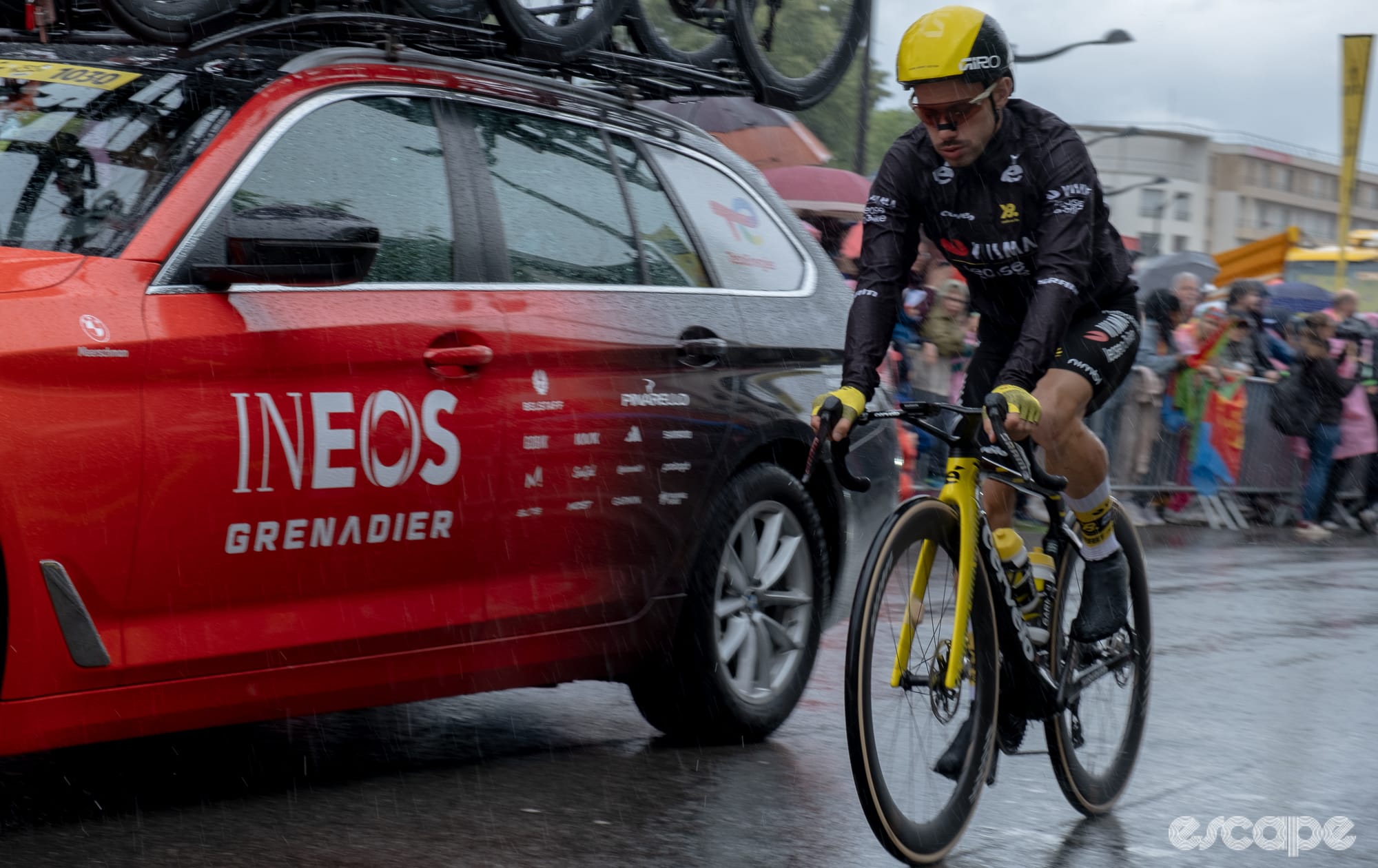
Spectators scattered for cover in hospitality tents. Riders disappeared into their team buses, and team staff were left outside. When they emerged for the start, the slick race suits were still there, but now hidden beneath puffed-up rain jackets. These wind tunnel-tested and sometimes customised suits are reduced to nothing more than a multi-coloured onesie. Hours of wind tunnel testing undone in an instant. Or was it?
It was while standing outside one of those team buses, watching a mechanic poke pooled water off an awning, as they do anytime it rains, that a question started to form. Does rain affect aero?
We obsess over the minutiae of aerodynamics: suit textures, fit, sock lengths, wheels, tyres, frames, even water bottles. But what happens when the weather changes? Does rain, falling from above, sticking to the skin, beading on frames, and just generally being in the air affect aerodynamic drag? What about spray from the roads or the increased humidity when it rains? And if it does have an effect, is anyone actually accounting for it?
That’s the question we set out to answer. What follows is what we found - or, perhaps more interestingly, didn’t - and the real reason some teams fall even further behind the aero leaders on rainy days.
Slow when wet?
Did we do a good job with this story?