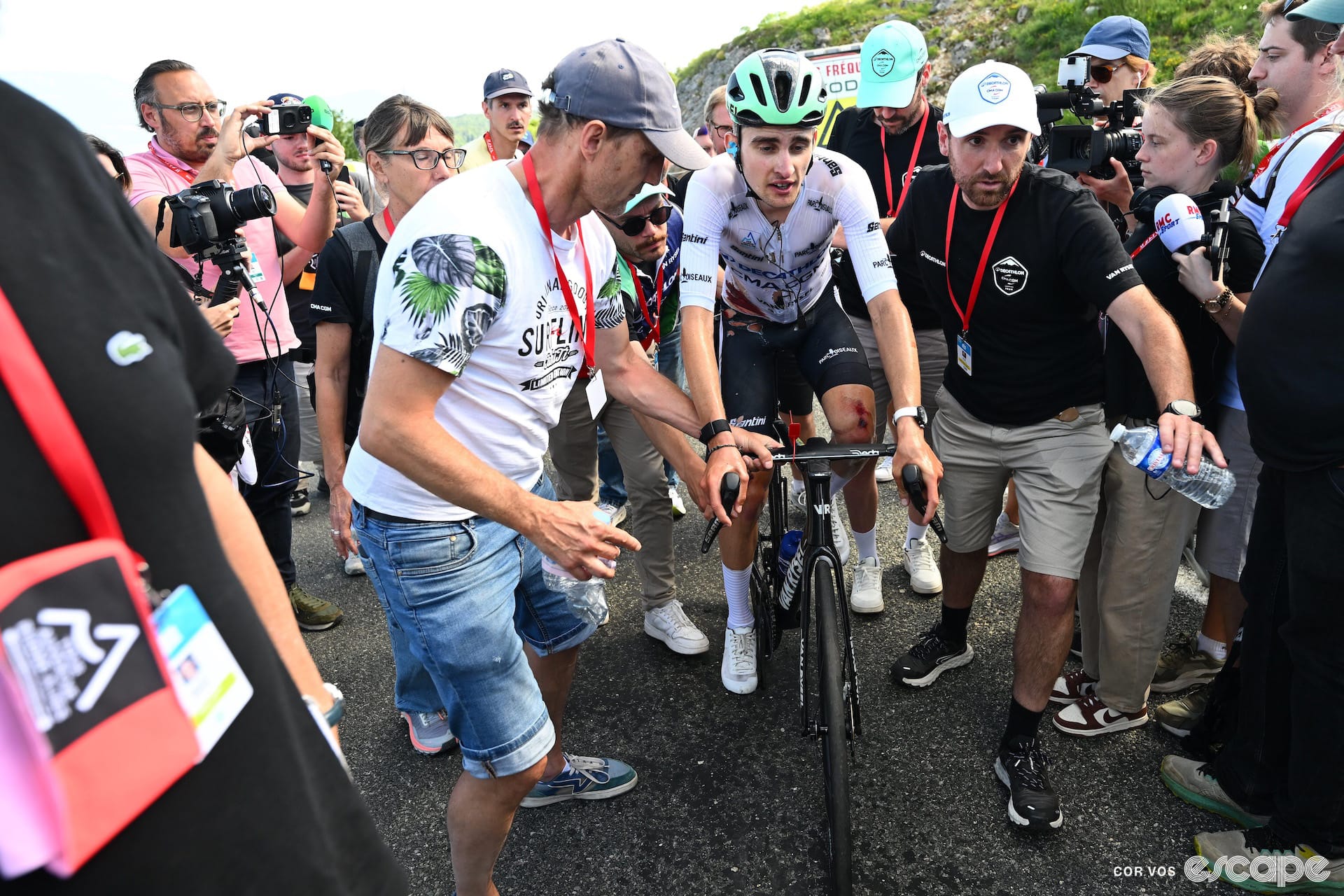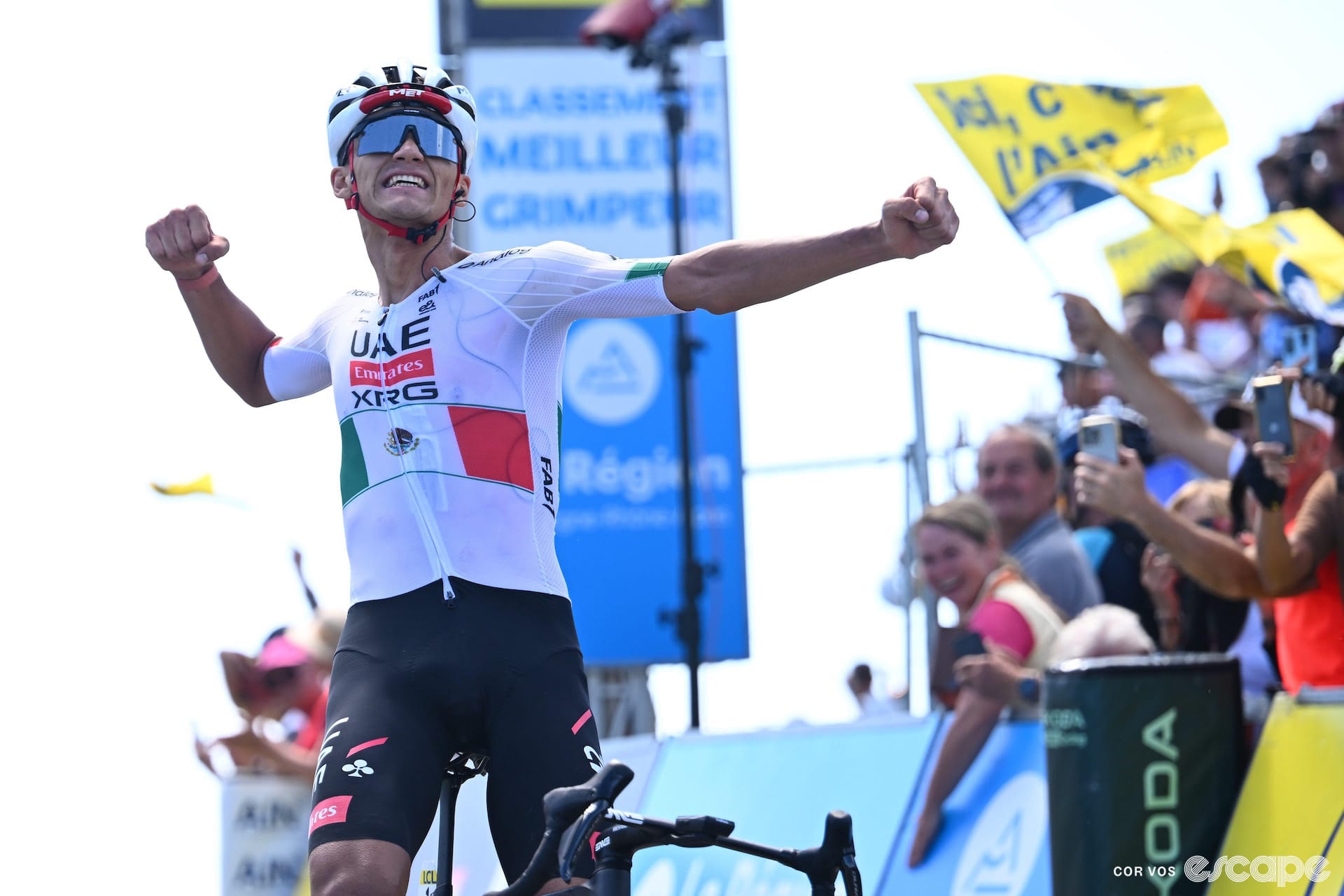

Let’s get the big yellow elephant in the room out of the way right now: barring disaster, in a little more than a week, Tadej Pogačar (UAE Team Emirates-XRG) will roll into Paris as the victor of the 2025 Tour de France, joining Chris Froome as a four-time winner of the world's biggest bike race.
But the genius of the Tour is that it’s the turducken of sports, with competitions inside competitions inside competitions (and, yes, possibly that Pogačar has de-boned the competition). Past yellow and the fight for stages, there are also the other jersey standings, and while the white jersey for best young rider is the closest in the race, the green jersey, or points competition, is shaping up to be equally intriguing. That’s because it’s likely to come down to one of three riders, who are each very distinct and different kinds of racers, and have three very different paths to possible victory.
 Dane Cash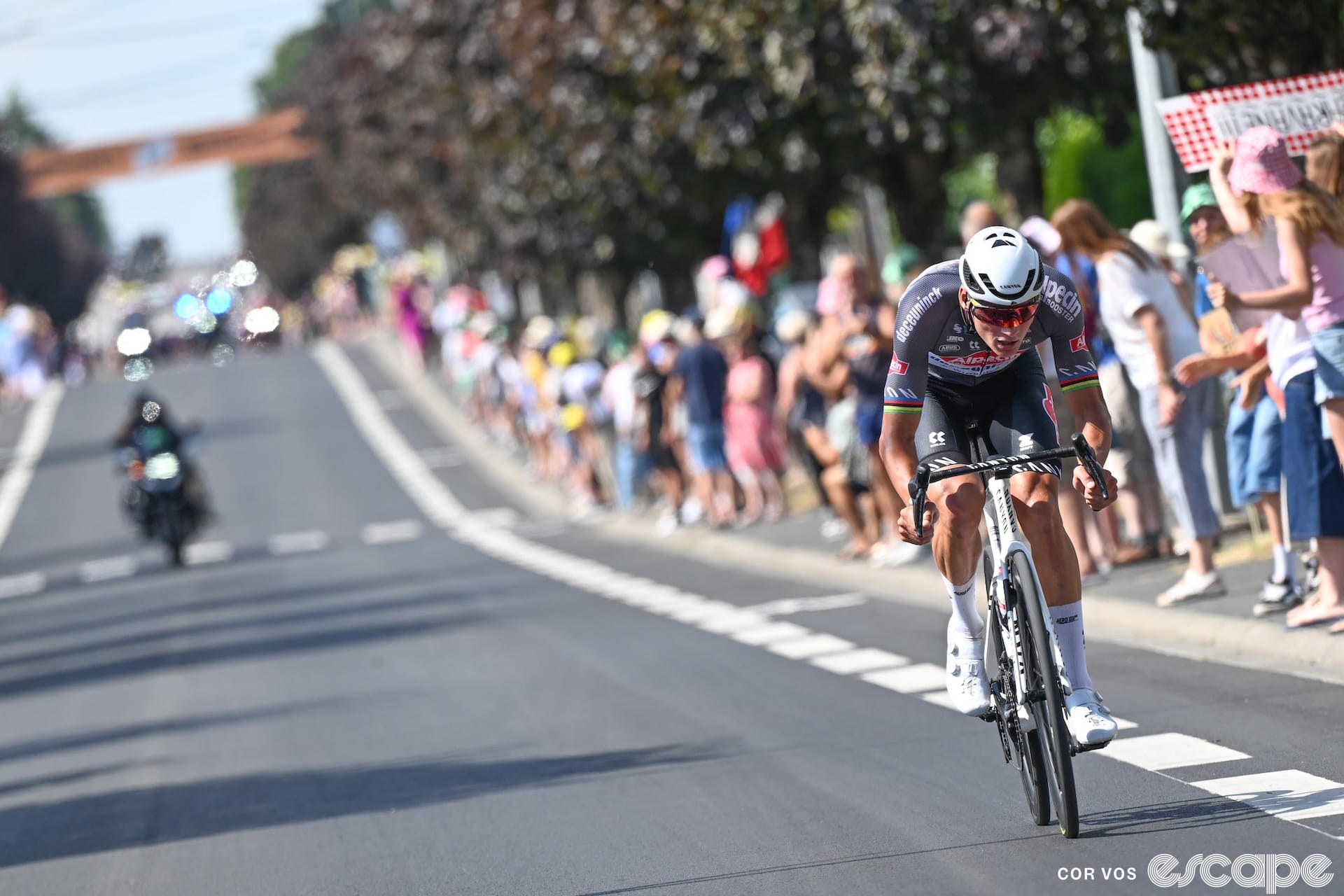
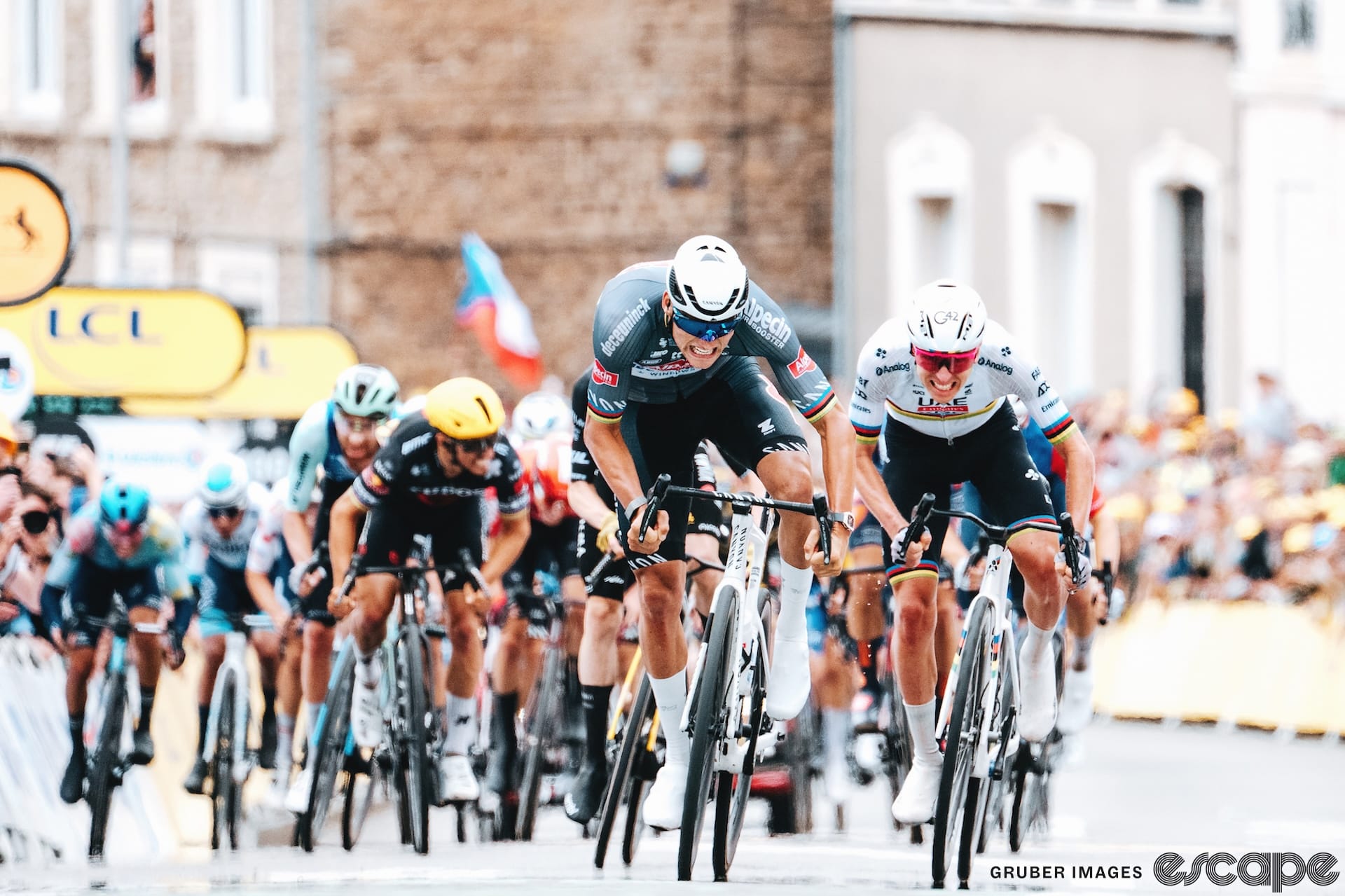
Right now, Jonathan Milan (Lidl-Trek) has the lead, with 231 points, but Pogačar is not far behind at 203. Mathieu van der Poel didn't set out to target the points competition but he's been in the mix the whole time, particularly after his Alpecin-Deceuninck teammate, sprinter Jasper Philipsen, crashed out on stage 3. Van der Poel is currently third in the points standings, with 173 points.
Pogačar, of course, is the best men’s road racer in perhaps 50 years, capable of winning on almost any day on almost any course. Milan is a top field sprinter but at nearly two meters (6’ 5”) tall and 87 kg (191 lb) he’s not a threat on anything resembling a real uphill. Van der Poel, meanwhile, is the best Classics rider of his generation – not a climber, exactly, but one of the best in the world on punchy terrain.
Two other riders, Biniam Girmay and Tim Merlier, are also mathematically in the hunt, but face steeper paths to the jersey. Merlier has won two stages but hasn't been as large a factor in the intermediate sprints as Milan, and Girmay simply hasn't had the explosiveness he showed in winning three stages and the green jersey last year.
Math that maths
But for the leading trio, the eight stages left feature plenty of points on offer for each of them. Tour organizers tweak the points matrix awarded on various stages on a nearly annual basis, mostly to try to liven things up. Points are awarded at all stage finishes and an intermediate sprint, which happens somewhere along the day’s route. While the points breakdown for intermediate sprints doesn’t change, the amount on offer for a stage finish does, and the more difficult the stage, the fewer the maximum points.
The Tour classifies stages according to a coefficient of difficulty: 1-2 is for flatter stages; 3 is for rolling terrain; 4-5 is for difficult mountain stages, and 6 is for time trials. Here’s the points matrix, which goes 15 finishers deep, but which I've truncated here at 10 deep:
| Stage difficulty | 1st | 2nd | 3rd | 4th | 5th | 6th | 7th | 8th | 9th | 10th |
|---|---|---|---|---|---|---|---|---|---|---|
| Coefficient 1-2 | 50 | 30 | 20 | 18 | 16 | 14 | 12 | 10 | 8 | 7 |
| Coefficient 3 | 30 | 25 | 22 | 19 | 17 | 15 | 13 | 11 | 9 | 7 |
| Coefficient 4-6 | 20 | 17 | 15 | 13 | 11 | 10 | 9 | 8 | 7 | 6 |
| Intermediate | 20 | 17 | 15 | 13 | 11 | 10 | 9 | 8 | 7 | 6 |
Of the eight stages left, stages 15, 17 and 21 are rated as flatter, stages 16 and 20 are rolling, and stages 14, 18 and 19 are classed as difficult. As a pure math exercise, that means that there are a maximum of 270 points left at stage finishes: 150 for the three flatter stages, 60 points for the two rolling stages, and 60 for the three difficult ones. There are also a max of 160 points left at the intermediate sprint spots. In each of the last five Tours, the eventual green jersey winner has scored between 337-480 points, which suggests somewhere around 400 points total should be the magic number.
Did we do a good job with this story?