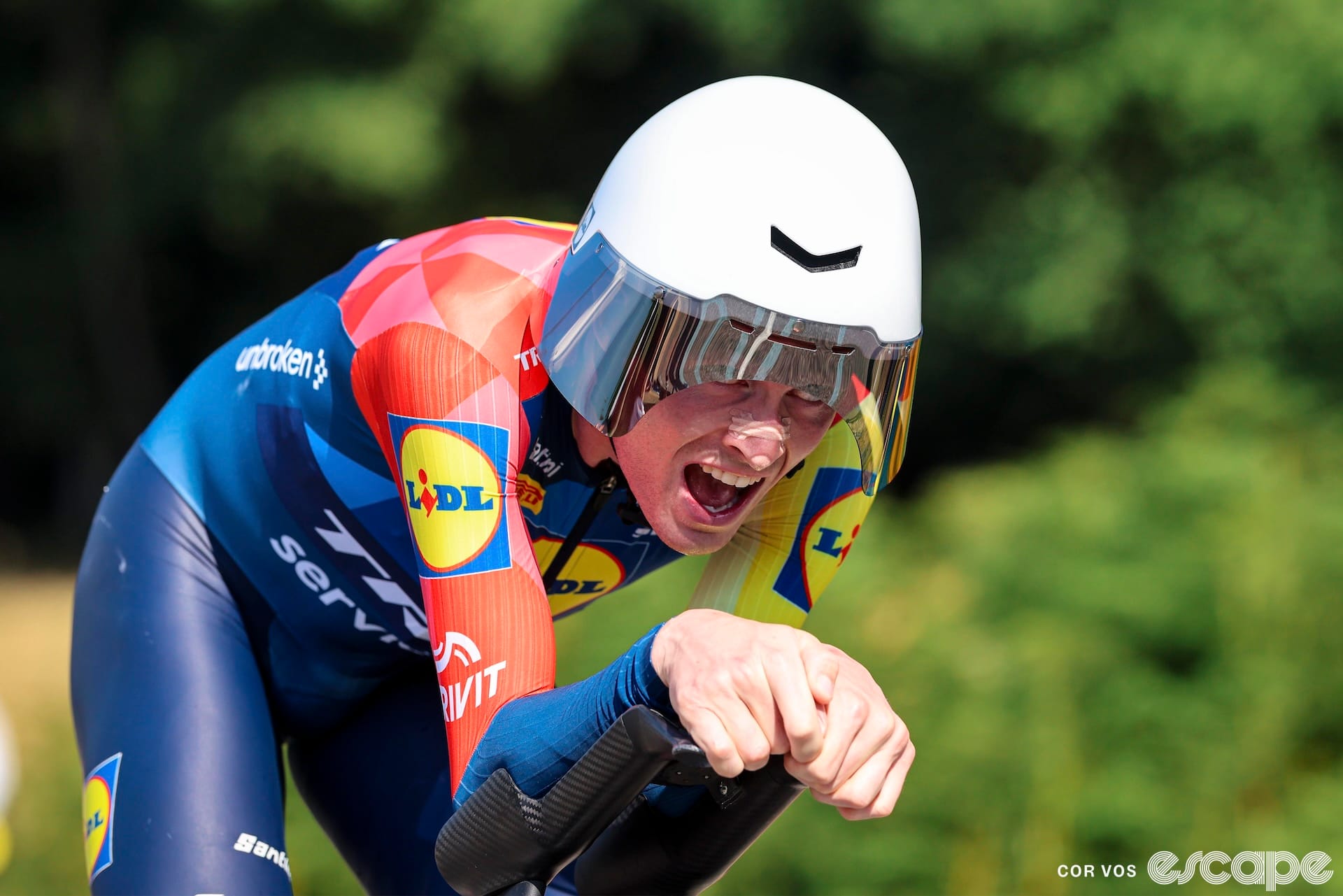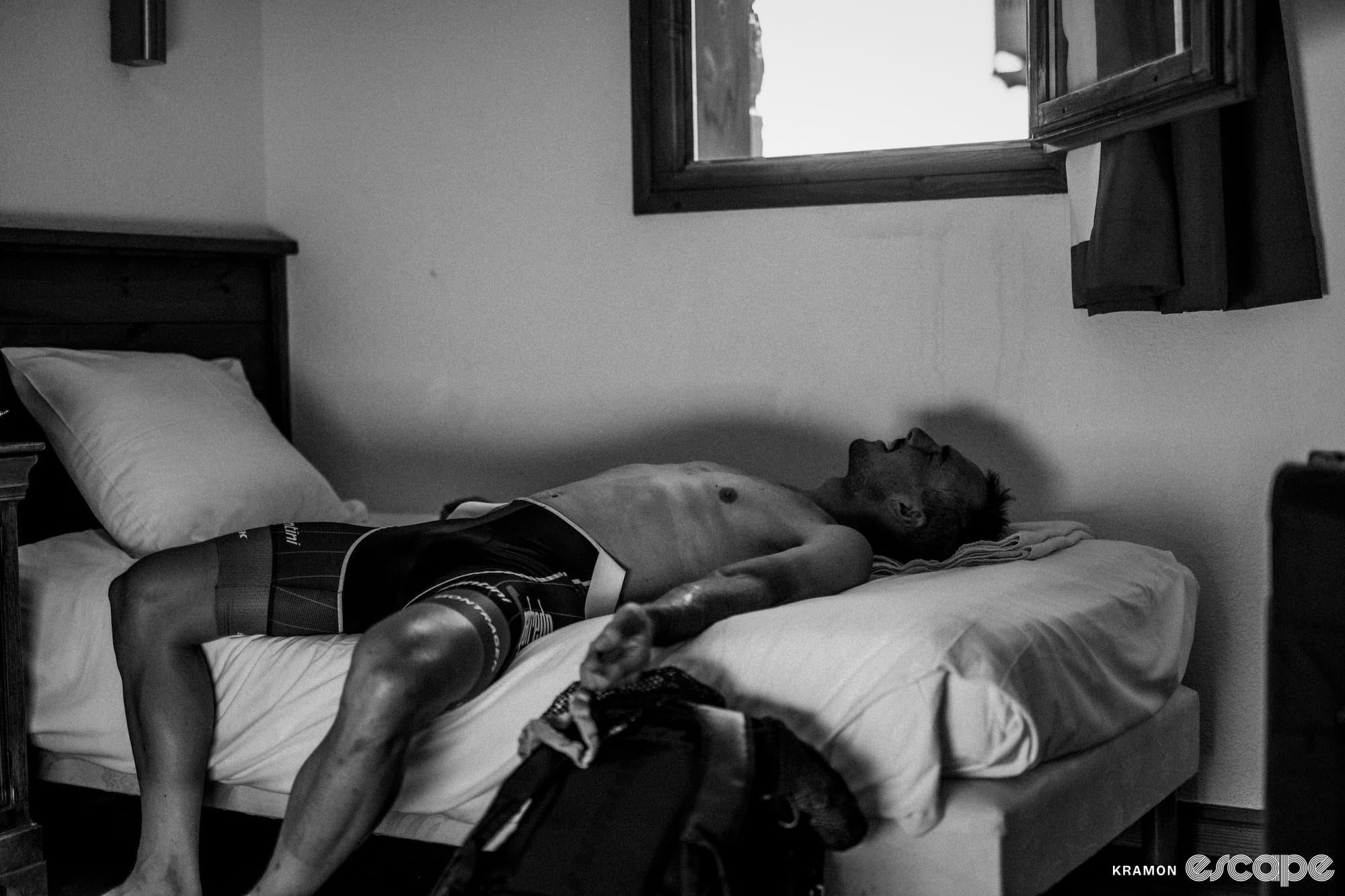


Spend enough time watching the Tour de France and you eventually become desensitised to the phenomenal feats of endurance on display. As you get absorbed in the sporting contest, it’s easy to forget the sheer metabolic cost of riding thousands of kilometres over three weeks, burning thousands of calories every single day just to finish the race, let alone achieve success of any sort. Even finishing the Tour is a physical feat most onlookers can scarcely conceptualise, let alone manage themselves.
But if we want to truly understand the limits of human endurance and exertion, we need to look beyond a single three-week block.
In recent years researchers have been building an ever-clearer picture of where the limits of human energy expenditure might actually lie. Escape spoke with two of those researchers, to learn about the speed-limiter that seems to be innate to all humans, regardless of whether you’re a Tour de France champion or you’ve never even ridden a bike.
Finding the limits
To understand the ceiling on human exertion we first need to understand a fundamental concept in the biological sciences: basal metabolic rate (BMR).
Your BMR is the minimum amount of energy your body needs to simply keep the lights on – to pump blood around your body and maintain organ health. Your BMR accounts for between 60-75% of all the energy you expend on a daily basis and doesn’t factor in the energy required for any movement, digestion, or anything besides simply lying down while your body keeps you alive.
For context, a 30-year-old male who’s 180 cm tall and weighs 78 kg has a BMR around 1,740 calories (7,280 kJ) per day. For a 30-year-old female, at 165 cm and 68 kg, that figure is more like 1,330 calories (5,565 kJ) per day.
Sidebar: Estimate your BMR
The Harris-Benedict equation factors in an individual’s weight, height, and age to provide an estimate of their BMR. For males, the equation reads:
BMR = 88.362 + (13.397 x weight in kg) + (4.799 x height in cm) – (5.677 x age in years)
For females the equation is:
BMR = 47.593 + (9.247 x weight in kg) + (3.098 x height in cm) – (4.330 x age in years)
So how does BMR apply to the limits of human endurance? Well, in recent years, researchers have become increasingly convinced that it’s possible to quantify the human ‘metabolic ceiling’ – the maximum rate of energy expenditure over a prolonged period – using BMR as a comparative tool. More specifically, several papers in the past eight years have shown that humans aren’t able to sustain a daily average energy expenditure of more than 2.5 times their BMR, for periods of around 28 weeks or greater.
For shorter efforts, exceeding 2.5 x BMR is easy for even amateur athletes, and short-term energy expenditures can reach much higher than that. Some Ironman triathletes and ultramarathon runners, for instance, seem able to burn a staggering 9-10 times their BMR (around 17,000 calories or 72,000 kJ) over the course of a single day, but the longer the effort, the lower the average daily energy expenditure a person can sustain.
Tour de France riders, for example, are known to burn around 4-5 times their BMR, daily, over three weeks of racing. Polar explorers have shown comparable energy expenditures for more than twice as long (contrast the dialled nutrition of today’s Tour riders with the literal sticks of butter that men like Robert Falcon Scott and Ernest Shackleton would eat during an expedition, in order to maximise calorie intake).
But when we zoom out to longer time scales, the metabolic ceiling seems to converge on a specific point – that ceiling of 2.5 x BMR, for periods of 28 weeks or more. That’s roughly 4,350 calories (18,200 kJ) per day for the average active male, or 3,325 calories (13,920 kJ) for the average active female. Try to burn more than that on average per day indefinitely, and the body’s natural defences will step in (more on that in a moment).
Did we do a good job with this story?