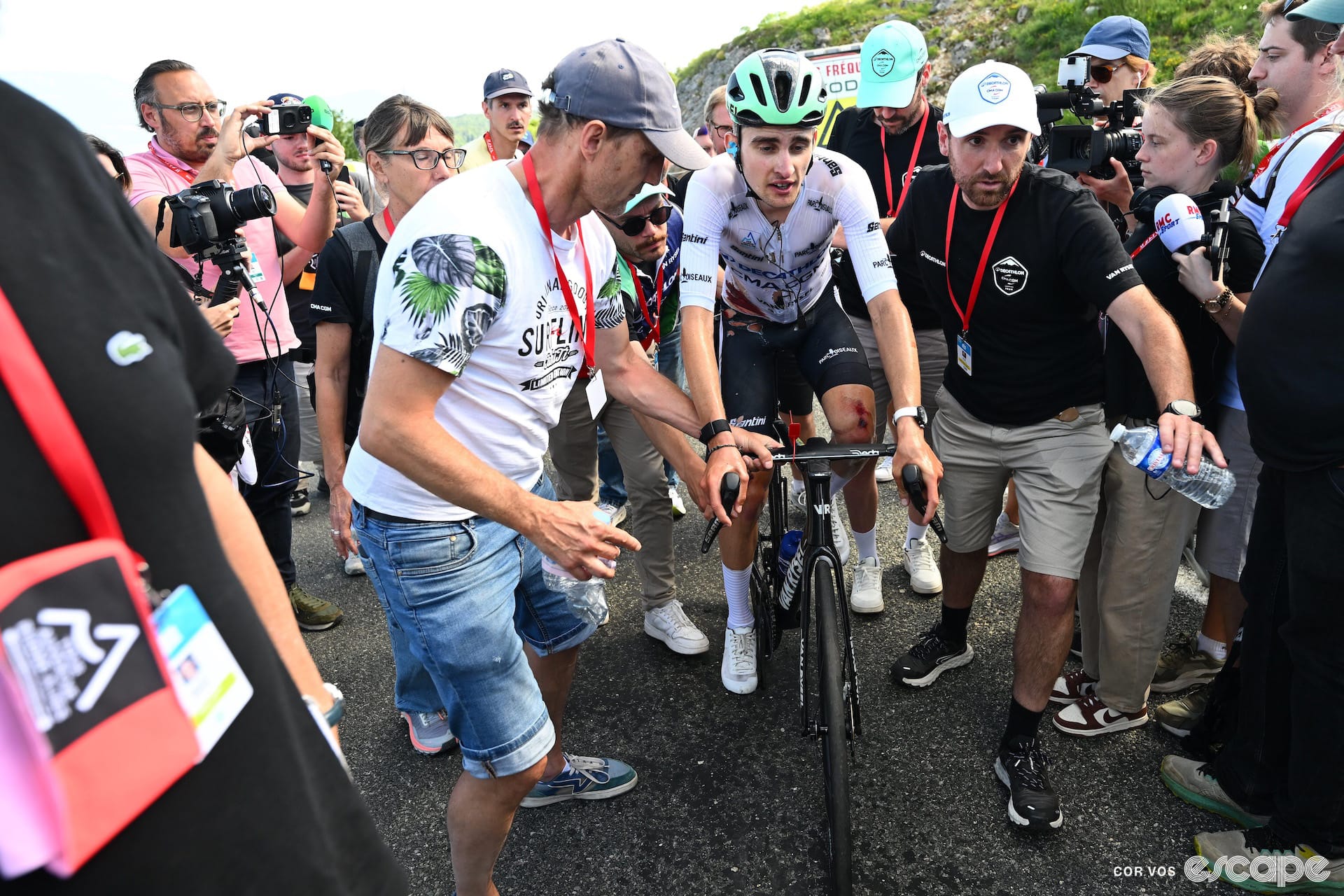

It wasn’t so long ago that there were calls for a grey jersey that would denote Best Veteran Rider in place of the repeatedly irrelevant white jersey. But that’s all about to change. And Florian Lipowitz is indicative of exactly that.
"I never believed that I could be up there when I came to the Tour,” Florian Lipowitz said at the end of stage 14, newly resplendent in the white jersey of the Tour de France. “It’s only my second Grand Tour and I’ve only been cycling for five and a half years. If someone would have told me this five years ago, I wouldn’t have believed it, so for sure this is a big dream come true."
Before the era of Egan Bernal, Tadej Pogačar and Remco Evenepoel, the white jersey meant something. For young whippersnappers facing three weeks of racing the best in the world, it was realistic, tangible, something even to build a season around, not just a consolation prize for a podium or top-10 finish. An indicator of potential not an accident of good form.
It was a relief of sorts when Pogačar was relegated to second by Jonas Vingegaard in 2022, not just breaking what had looked like an unimpeachable dominance, but also ensuring the white jersey had at least a figment of meaning to it, even if it was the third of a four-year streak for the Slovenian. Better still was 2023 when the polka-dot jersey went to Giulio Ciccone and thus all four classifications were represented by an individual rider on the final podium in Paris. The last time that happened was in 2018.
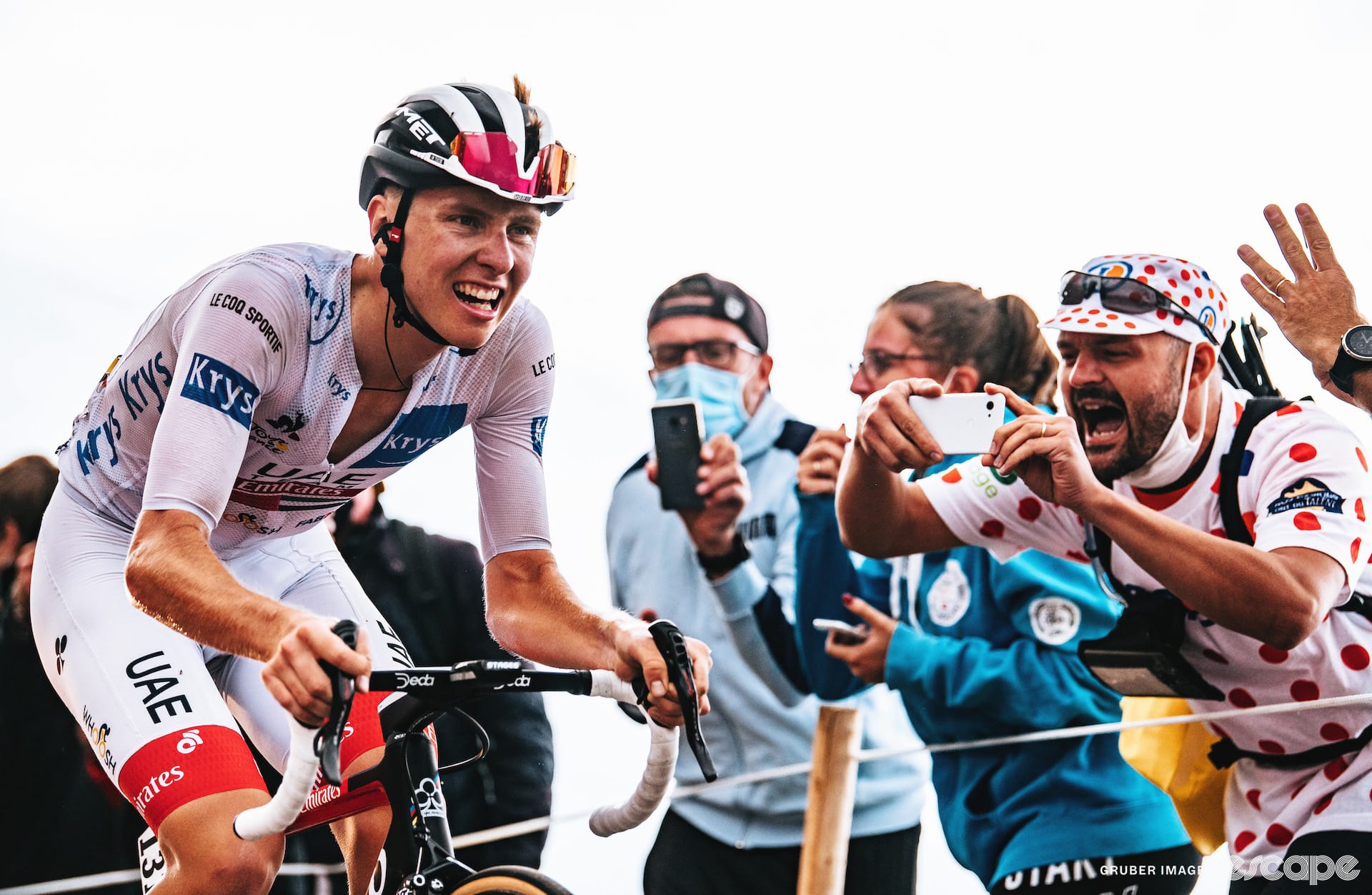
That said, it still felt like a slightly embarrassing footnote, as it has done since 2019 when Egan Bernal won the yellow jersey at just 22 years of age, the youngest rider to win the Tour de France since François Faber in 1909 (by a matter of days). It was a new record that stood for just one year; Pogačar was six months younger when he completed the feat in 2020 – that race was conducted two months later than usual due to the pandemic.
In short, 2018 was the last time the white jersey was won by someone who was not also the outright winner, or already a Grand Tour champion.
A bit of (recent) history
There was a white jersey awarded at the Tour de France from 1968 as the combined classification, only becoming the youth classification in 1975 – a technicolour combination jersey took a hiatus before returning for a decade-long stint throughout the ’80s. The rules for eligibility have over time included only for first-time competitors, but since 1987 has been awarded to the best-placed rider on GC who is under 26 (eligible up until the year of their 26th birthday).
Did we do a good job with this story?