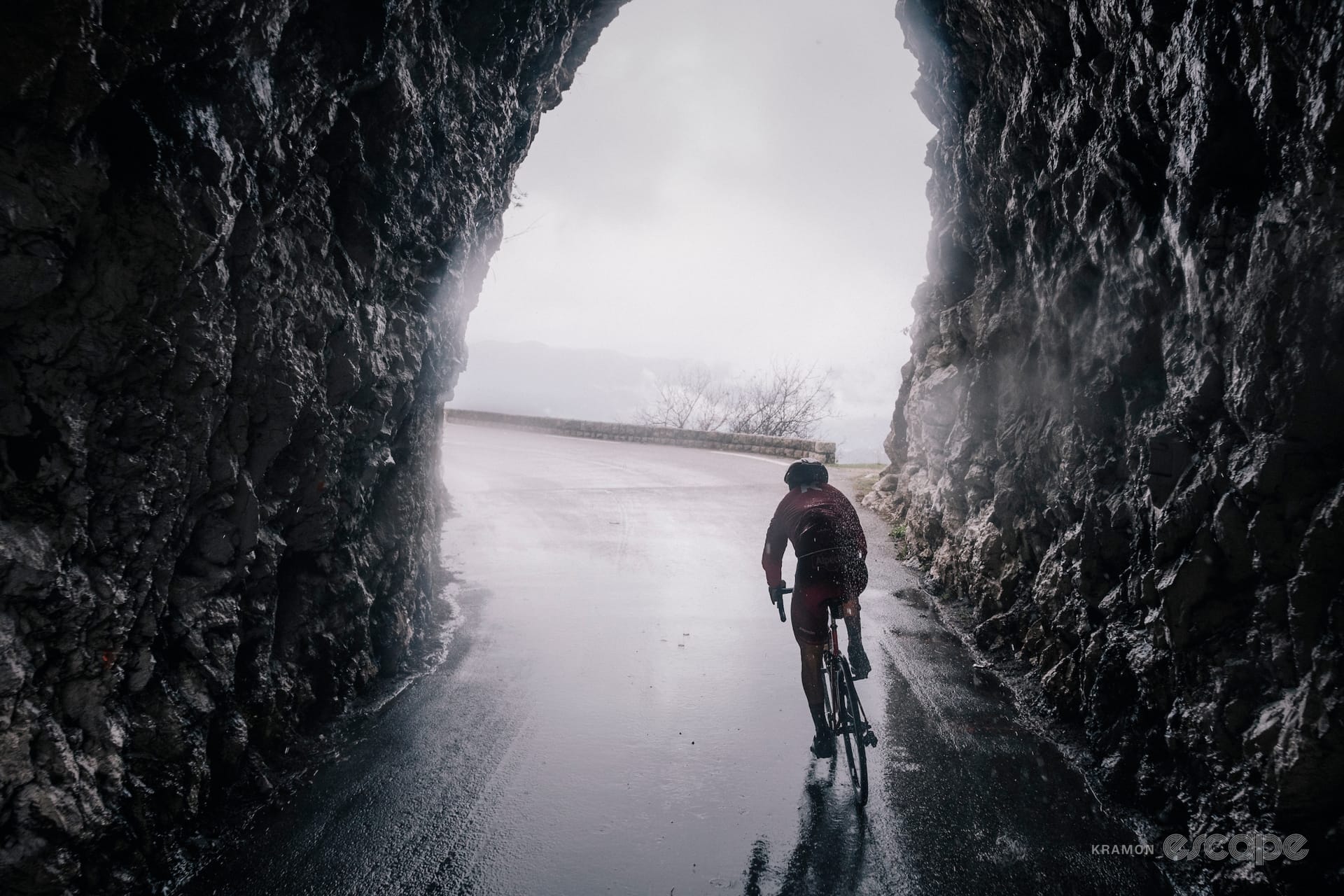


On a wet day, the sort that turns chain oil to black and cafe floor into an ice rink, a familiar comment often drifts out as people get their rain jackets on and off: "My new rain jacket sucks, it just leaves me soaked despite all the big claims." The gripe is nothing new; this issue predates the phase-out of the PFAS chemicals that for decades helped keep riders dry, and has only become more common as PFAS-free rainwear has started to become the norm. To the rider, the obvious villain in the equation is the brand and the product. But often, the actual conditions and our neglect of the care of the garment is the real culprit.
 Suvi Loponen
This is not to say companies get a free pass. After years of producing waterproof garments, many ship their products with care labels that are, at best, vague; and few brands provide concrete care instructions on their websites. And while the companies making garment care products are better, they often offer guidance that conflicts with garment care labels. The result is as described above: a lot of disappointment that could often have been avoided with proper maintenance.
British apparel brand Albion's product designer, Graeme Raeburn, suggests a change in mindset to looking at our kit the same way as we look at our bikes. "You’re cleaning, refreshing, relubing, you keep things going," he said of how we care for our bikes. "People do need to think about the clothing now in that way, too; they don't have this miraculous chemical that they once had for a good reason, and they need to be cared for."
This guide pulls together what to do with your apparel and why, with insight from care specialists and apparel makers. And no, you do not need a brand-new PFAS-free shell for any of this to matter – most of what follows applies equally to older, PFAS-treated gear. Throwing away a jacket that still works only shifts the problem to someone else; extending the lifespan of what you already own is the first, best step.
Why does the waterproof stuff leak?
Nine times out of 10, the story of the "leaking" jacket reads the same: after a few hard rides, suddenly the outer fabric soaks up moisture rather than beads. Mid-ride, the interior gets sticky and clammy-feeling, and the user is left with a creeping sense that the tech was not what it said on the label.
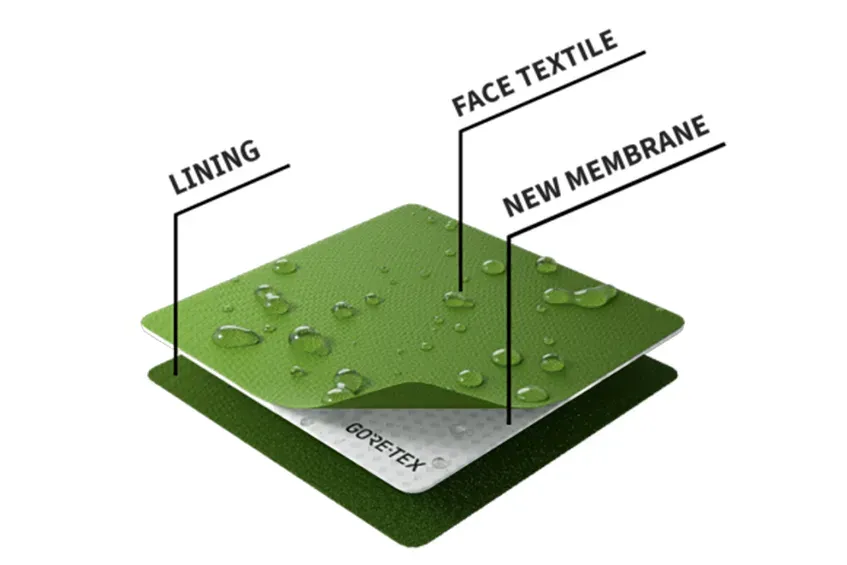
It's important to understand that waterproof-breathable garments are systems of laminated layers. The membrane is the waterproof barrier and sits beneath a face fabric that's been treated with DWR (durable water repellent) chemical finish – and none of these would work in isolation. Membranes are extremely thin films and engineered to have a very high resistance to liquid water penetration, but simultaneously allow the passage of smaller molecules of water vapour – in other words, breathe. A typical membrane is only 10 micrometers (.01 mm) thick and is laminated to a conventional textile fabric to provide the necessary mechanical strength.
But despite the many layers, it's the shell's DWR that most people think of when they envision how a waterproof-breathable garment works – when a DWR is working, any water forms neat, round droplets and rolls off – but the DWR in itself isn't waterproof, it's only water resistant.

The face is often made out of nylon because of its durability, but it also has a downside. "Nylon, of all the synthetics, probably absorbs the most moisture," Raeburn explained. Polyester does better at wicking, and polypropylene "barely absorbs anything, but cycling shells typically lead with nylon because it lasts." In practice, that means you're starting off on a bad foot; the material is going to absorb moisture and wet out the quickest – unless the surface treatment prevents it.
Did we do a good job with this story?