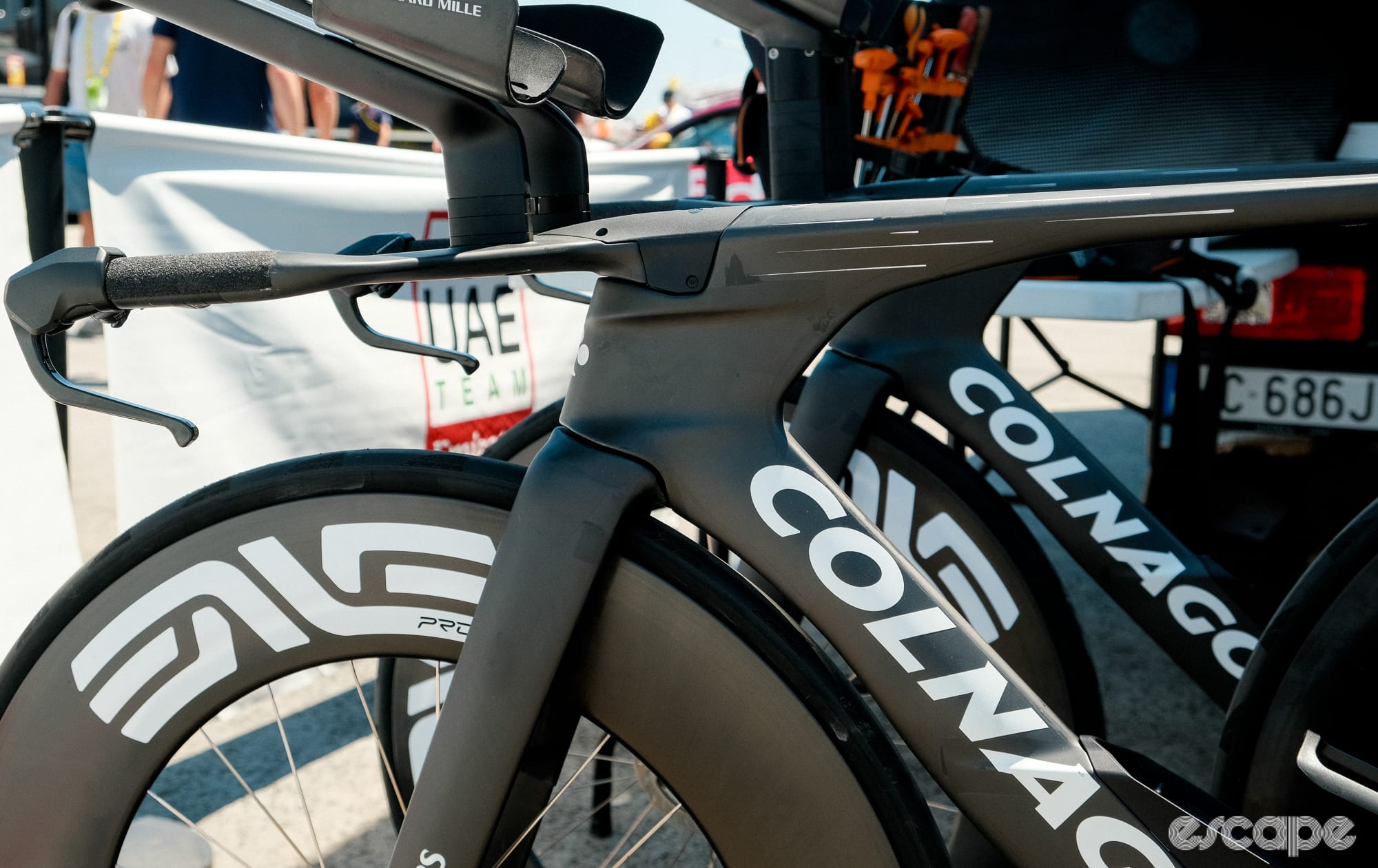


Ever notice how the design philosophy and individual aero elements manufacturers adopt in pursuit of the optimal time trial bike seem to flip back and forth with each new generation bike? While the basics remain – extensions, deep front wheel and a disc at the back – there’s little to no consistency on the ideal frame concept.
Bayonet fork or normal forks, a cut out on the down tube with the wheel tucked tight underneath it, or a gap between down tube and front wheel. A mono riser or dual riser extension mount and horizontal seat stays, more regular stays that follow a straight line from rear hub axle to the seat tube, or even wide stance stays, and let's not even get started on the fork stance width conversation. There seems to be no consensus on the best approach, not just from brand to brand, but from one generation of TT frame to the next, even with the same name on the downtube.
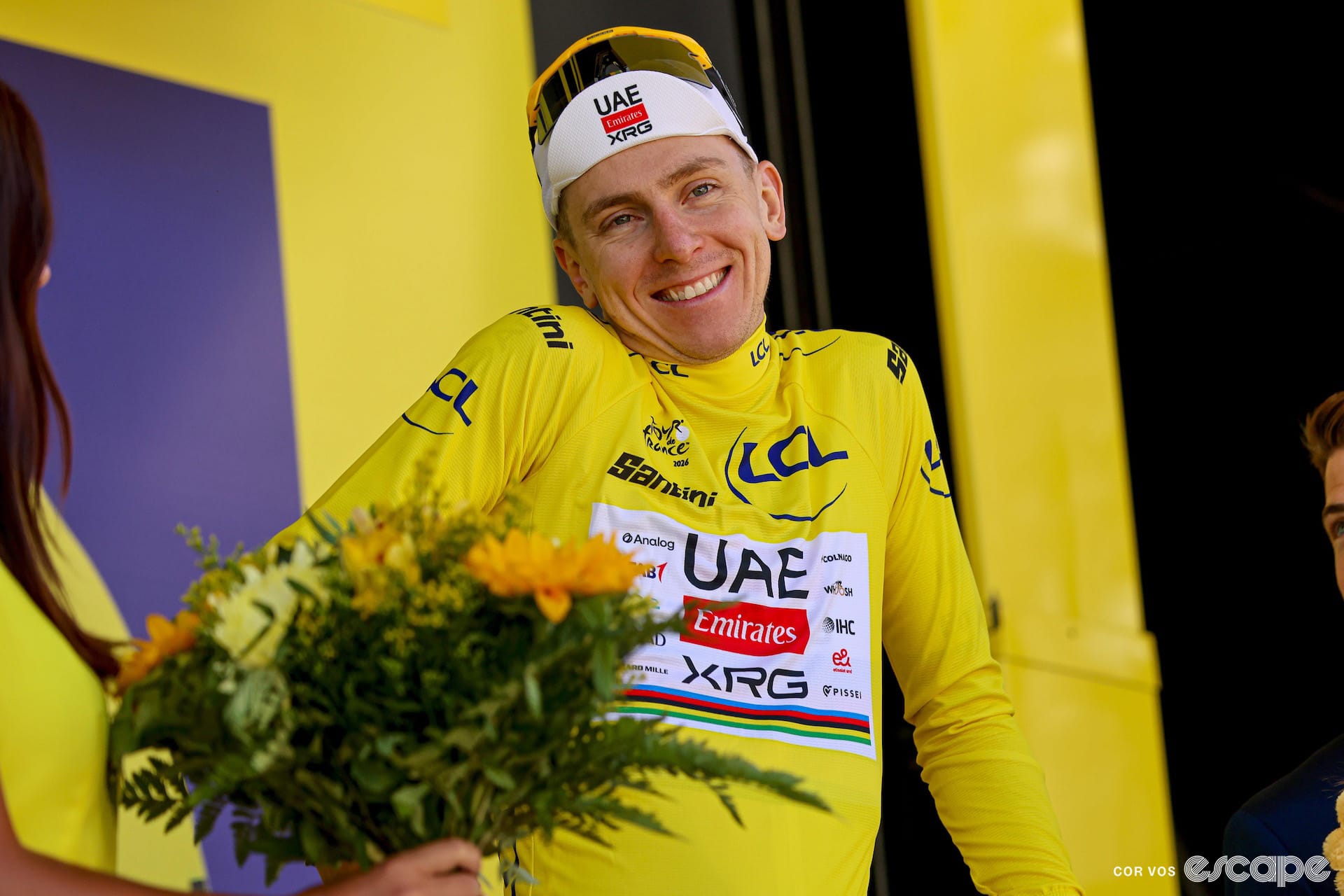
While the laws of physics don’t change our understanding, the base assumptions and the goals a brand is targeting with a new bike do. Arguably nowhere is this more evident than with the new Colnago TT2 time trial bike that Tadej Pogačar and his UAE Team Emirates-XRG teammates are racing at this year’s Tour de France.
Speaking to Escape Collective ahead of the start of the team time trial, Colnago’s Filippo Galli, lead engineer on the TT2 development, explained how the team was happy with the aero performance of the outgoing TT1, but had requested a much lighter, better-handling, and improved fit range from Colnago’s next-generation time trial bike. Here is the result.
Did we do a good job with this story?