
The Tour de France – or any of cycling’s Grand Tours for that matter – is unlike any other annual sporting event in the world. While Formula 1 returns to many of the same circuits year after year, and the marathon majors follow largely the same route every edition, the Tour barely uses the same stretch of tarmac in any two consecutive years (with the exception of the finishing circuit in Paris).
That constant reinvention is part of what makes the race so compelling for fans. Each edition brings different roads, climbs, weather, and fresh opportunities for riders to shape the race. But it also makes comparing Tours across the years an almost impossible task, whichever way you approach it.
Not only are the conditions highly variable, but the tactical differences between editions also throw in an additional curveball. Yet despite those differences, every Tour has a moment where the eventual winner breaks free of their nearest rival for good.
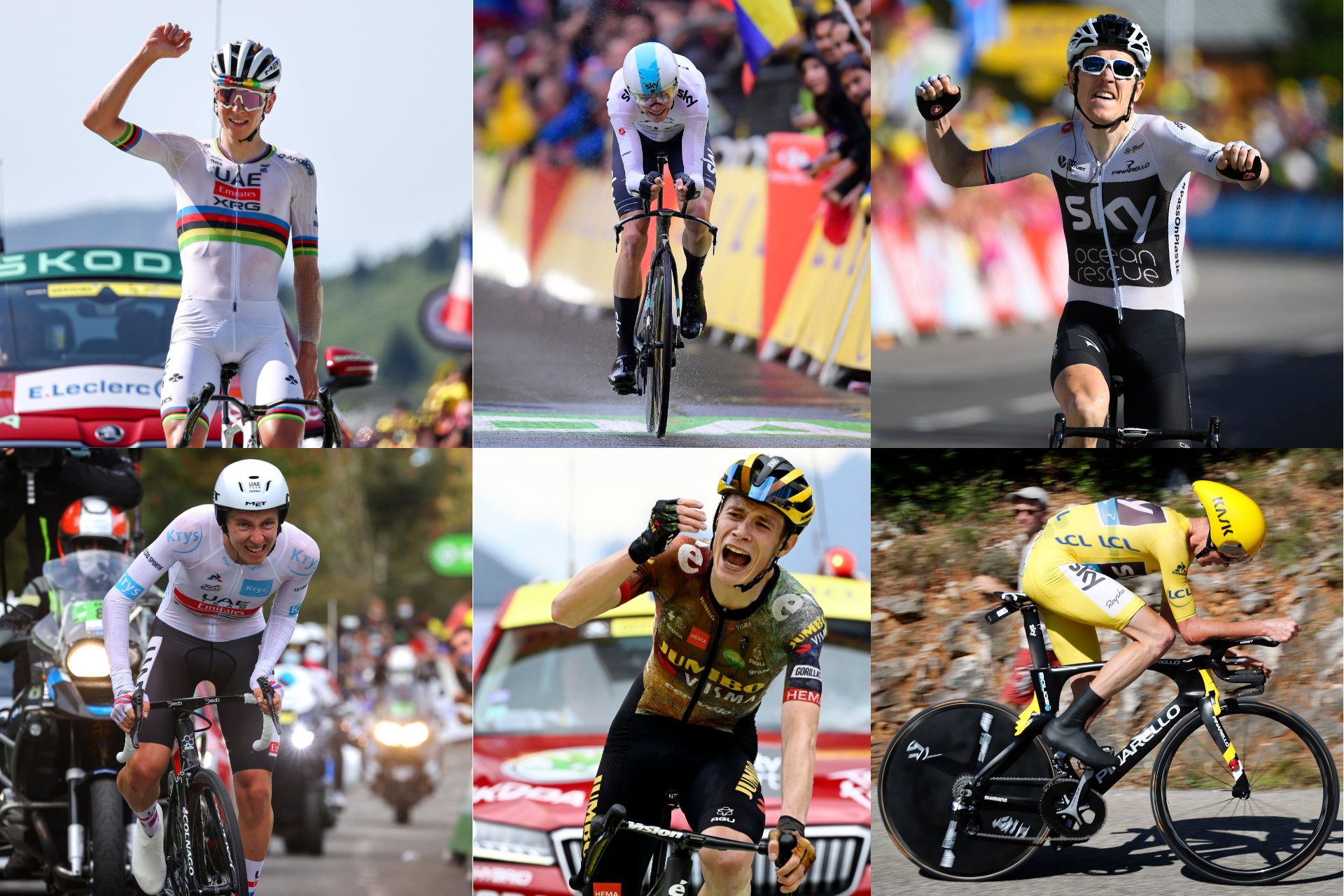
For Tadej Pogačar in 2025, it was Hautacam, while for Jonas Vingegaard in 2023, it was the Col de la Loze – Pogačar's famous "I'm gone, I'm dead" moment and perhaps not coincidentally the last stage race he has lost. But what about in the years before then?
Sitting in a team meeting ahead of the Tour, spitballing ideas, I found myself wondering where each of the past 10 Tours de France was actually won, where the single biggest time gain was made. Surprisingly, it is frequently not the stage everyone remembers; equally, it is rarely the stage that delivered the yellow jersey to the shoulders of the eventual winner.
The result offers an interesting snapshot of how racing has changed, from the measured, incremental gains of the Team Sky era, to the long-range attacks and decisive blows of the Pogačar-Vingegaard generation.
Determining the key stage
The problem with the Tour de France is that it is incredibly dynamic. Races form within races, battles for the podium coexist with battles for the stage win, riders outside the top 10 go on audacious stage-long escapades to climb into the top five, teammates sacrifice their own GC ambitions to support a leader, and so on.
What this means is that GC time gaps are rarely linear. Unless you are Pogačar, perhaps, riders don't tend to take their biggest chunk of time out of all their rivals on the same day. Quite often, the biggest gap to some riders comes on an entirely different stage than the biggest gap for another.
Because of that, identifying a single stage where the Tour was unequivocally won is always going to be a slight oversimplification. So, rather than looking at every rider in the top 10, I identified the stage where the eventual winner took their biggest single gain over the rider who ended up finishing second overall.
It isn't a perfect measure, but it provides a useful way of identifying the moment when the race winner gained the most ground on their closest challenger and, in many cases, where the Tour itself began to tip decisively in their favour.
2016 - Stage 13 ITT: Bourg-Saint-Andeol - La Caverne de Pont-d'Arc
By the time 2016 rolled around, the 50+ km TTs of the 2000s and early 2010s had disappeared, with the 37.5 rolling kilometres of stage 13 proving to be the best opportunity for the TT specialists to capitalise on their advantage over the pure climbers.
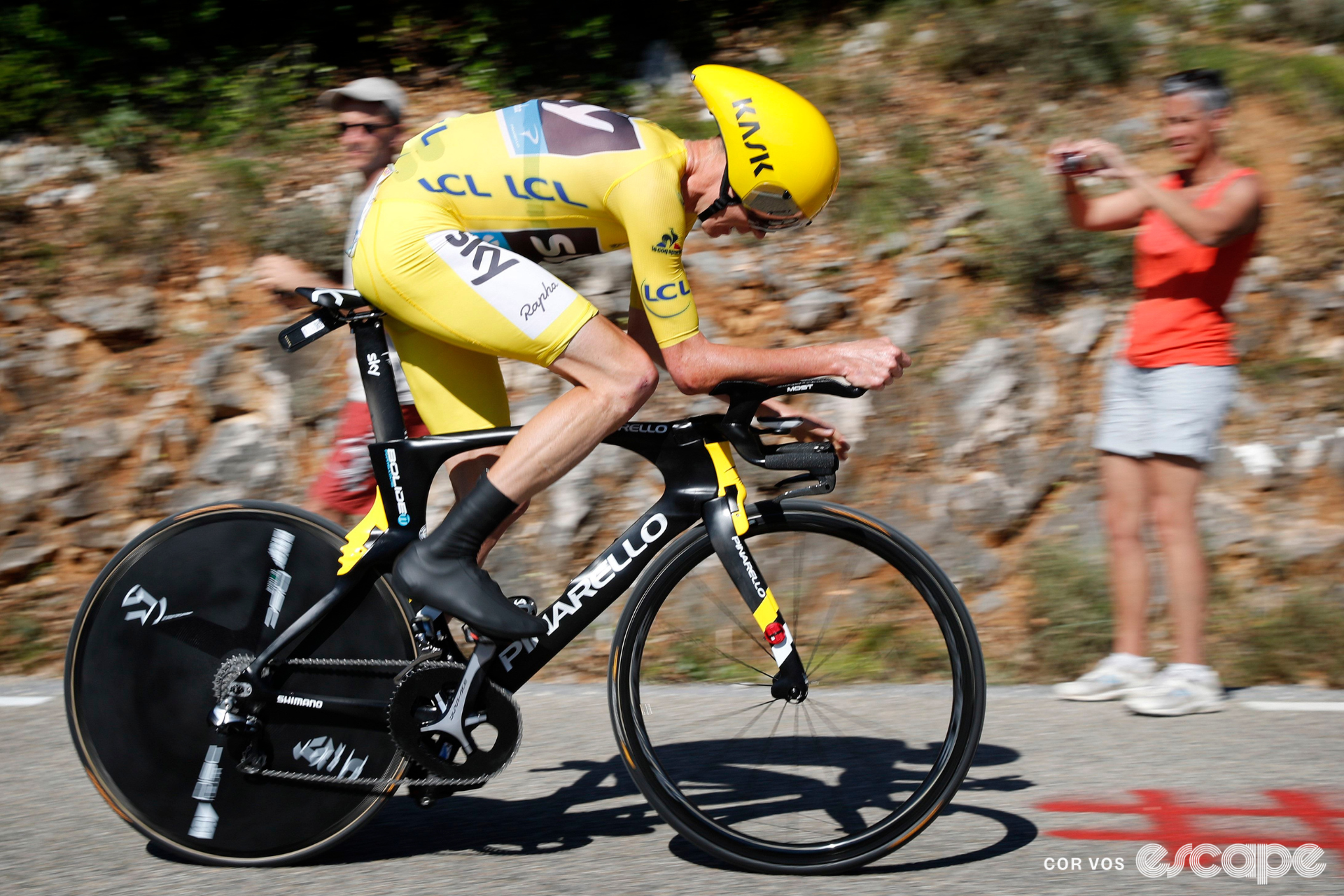
Chris Froome didn’t end up winning the stage – that honour would go to Tom Dumoulin. Nonetheless, over his adversaries, Froome did all the damage he needed to, allowing him to switch into a defensive position for the second half of the race, gaining only one further second over Romain Bardet across the following stages.
| Final GC rank | Rider | Stage finish position | Stage time gap | Delta to Froome on stage |
|---|---|---|---|---|
| 1 | Chris Froome | 2 | +1:03 | 0:00 |
| 2 | Romain Bardet | 30 | +3:52 | +2:49 |
| 3 | Nairo Quintana | 20 | +3:08 | +2:05 |
| 4 | Adam Yates | 18 | +3:01 | +1:58 |
| 5 | Richie Porte | 21 | +3:08 | +2:05 |
| 6 | Alejandro Valverde | 15 | +2:48 | +1:45 |
| 7 | Joaquim Rodríguez | 42 | +4:46 | +3:43 |
| 8 | Louis Meintjes | 35 | +4:22 | +3:19 |
| 9 | Dan Martin | 33 | +4:10 | +3:07 |
| 10 | Roman Kreuziger | 22 | +3:13 | +2:10 |
2017 - Stage 1 (ITT): Düsseldorf - Düsseldorf
2017 would deliver Froome’s fourth and final Tour de France win, but unlike in 2013 and 2015, where the biggest gaps came on the mountain slopes, 2017 was a repeat of 2016, in the sense that the largest gain he made came on the TT bike. This time – and perhaps surprisingly – the defending champion made his biggest strides towards securing yellow on the rain-soaked streets of the opening stage in Düsseldorf.
Did we do a good job with this story?