

For a year and a half, Trek’s internal daily sales performance dashboards have been “all red” – down year on year every day as the tail of the bicycle industry bust proves much longer than the boom that preceded it. Then, on Monday, January 12th, those dashboards turned green; but any celebration or sense that there is light at the end of the tunnel was put on hold. Staff had already been asked to work from home on Tuesday and Wednesday of that week, with a significant round of layoffs on the way.
As Trek prepares to mark its 50th anniversary, the company is simultaneously grappling with layoffs, excess inventory, and a business model built for a market that no longer exists.
 Caley Fretz
This behemoth of the bike industry is in trouble. It’s no secret within the industry that Trek is crippled by enormous overstock and debt servicing costs on that inventory. But a former Trek employee at the managerial level told Escape Collective that Trek's situation is particularly dire. “It’s been a solid year and a half of just all red on the daily sales reports. Just down versus prior year, things are moving slowly.”
Much of that pressure traces back to decisions made during the pandemic-era bike boom, when demand appeared insatiable and supply chains were the primary constraint. According to the former employee, Trek had to expand warehousing capacity to hold this additional stock and borrowed to finance leases on those spaces. That is not unique, but it becomes especially punishing when coupled with a downturn.
Furthermore, during the boom, Trek acquired numerous independent retail stores to complement its existing network of directly owned stores. Trek's direct-owned retail strategy has been in place for some time, but in 2020-2021 it accelerated its acquisitions, buying up chains of a dozen or two dozen shops at a clip. It was a move that seemed smart at the time, setting the company up to “control its own destiny," said our source, but one that is now proving a significant burden as customer footfall drops and Trek faces the difficulty of owning many bike shops where their bikes aren’t selling. One former shop employee told Escape Collective that their former store, an independent shop turned Trek store in the Oceania region, is now doing 20% of its pre-acquisition turnover.
 Suvi Loponen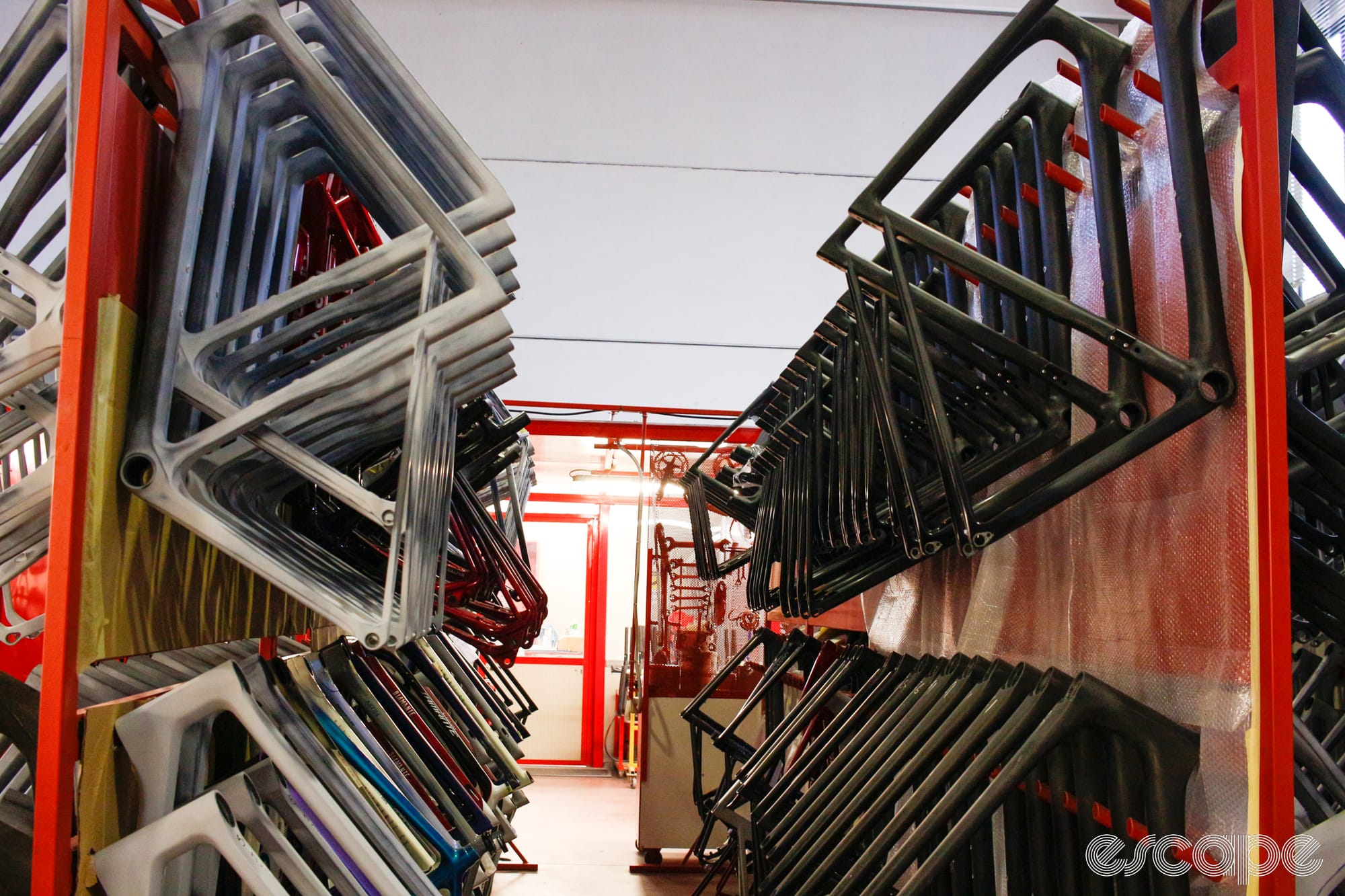
The company is restructuring now due to these challenges, which are coupled with rising debt servicing costs, international tariffs, and sustained weaknesses, pricing pressures and an erosion of prestige brand name value in key product categories.
The primary source for this story worked at Trek until this month's layoffs and spoke on condition of anonymity. Escape Collective also put a detailed list of questions to Trek covering layoffs, inventory, retail strategy, and financial pressures. Trek declined to comment on most of those points, instead providing a brief statement addressing only its approach to dealer commissions.
But the source's account is consistent with what multiple industry sources have been telling Escape for months about the industry's struggles: surplus inventory and a general downturn are still the central problem, and the amount of capital invested in that inventory is what, for Trek in this case, is turning that downturn into a crisis. “We had so many warehouses opened two years ago to hold that extra stock and then had to borrow significantly to finance the leases of those,” our source explained.

How did Trek get here?
This month's sale bump offered a glimmer of hope, but many of those relieved to see green across the board on Monday had lost their jobs the next morning. Our source said, “Those greens weren’t a blip, they were across the board,” but more likely due to comparisons to a weak prior-year performance than a stellar start to 2026. Thus, after major layoffs in Q3 2024 and more in September 2025 – which at the time were framed as a “significant transformation” that saw some 15% of its workforce let go – Trek faced the inevitability of more cuts in January.
Did we do a good job with this story?