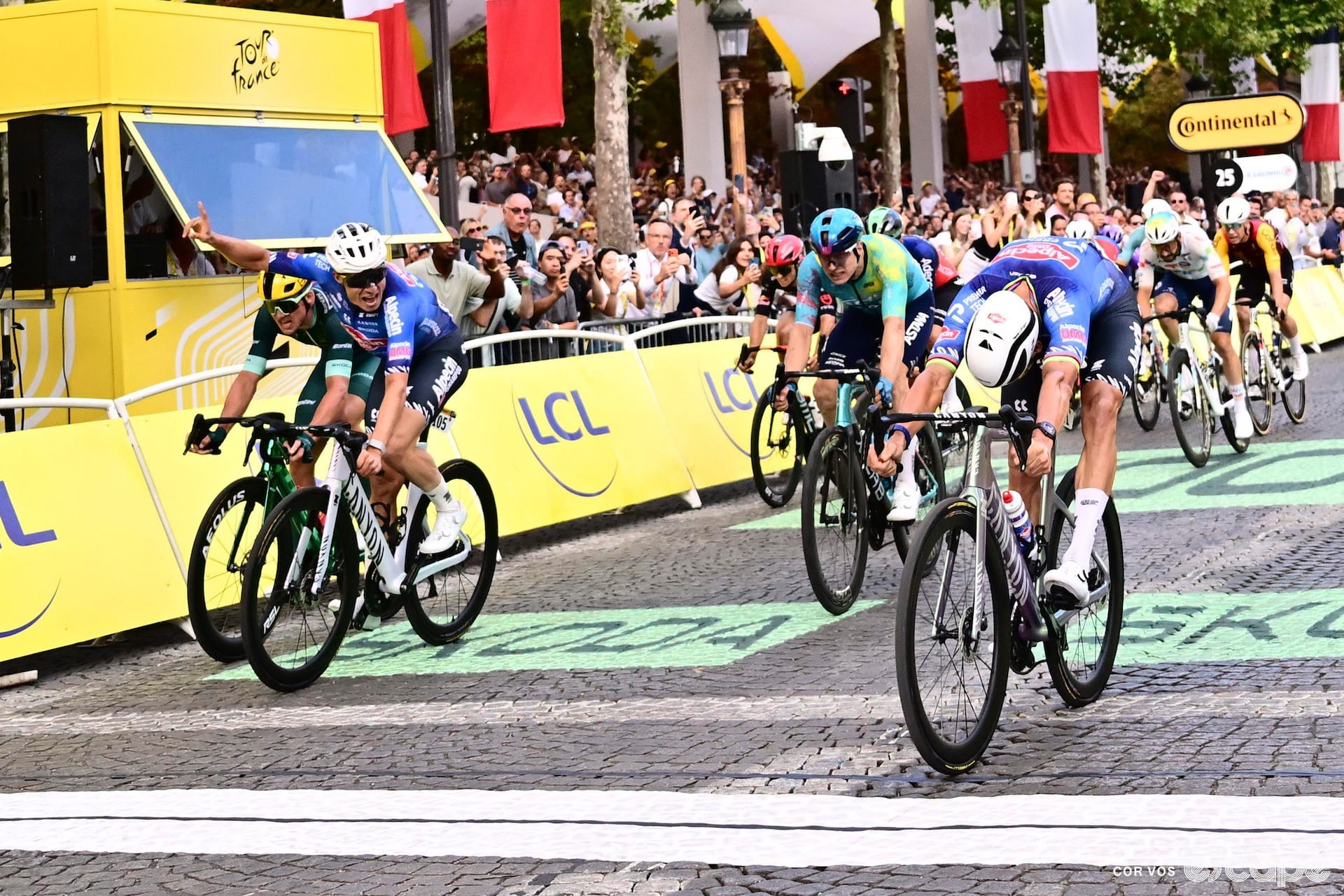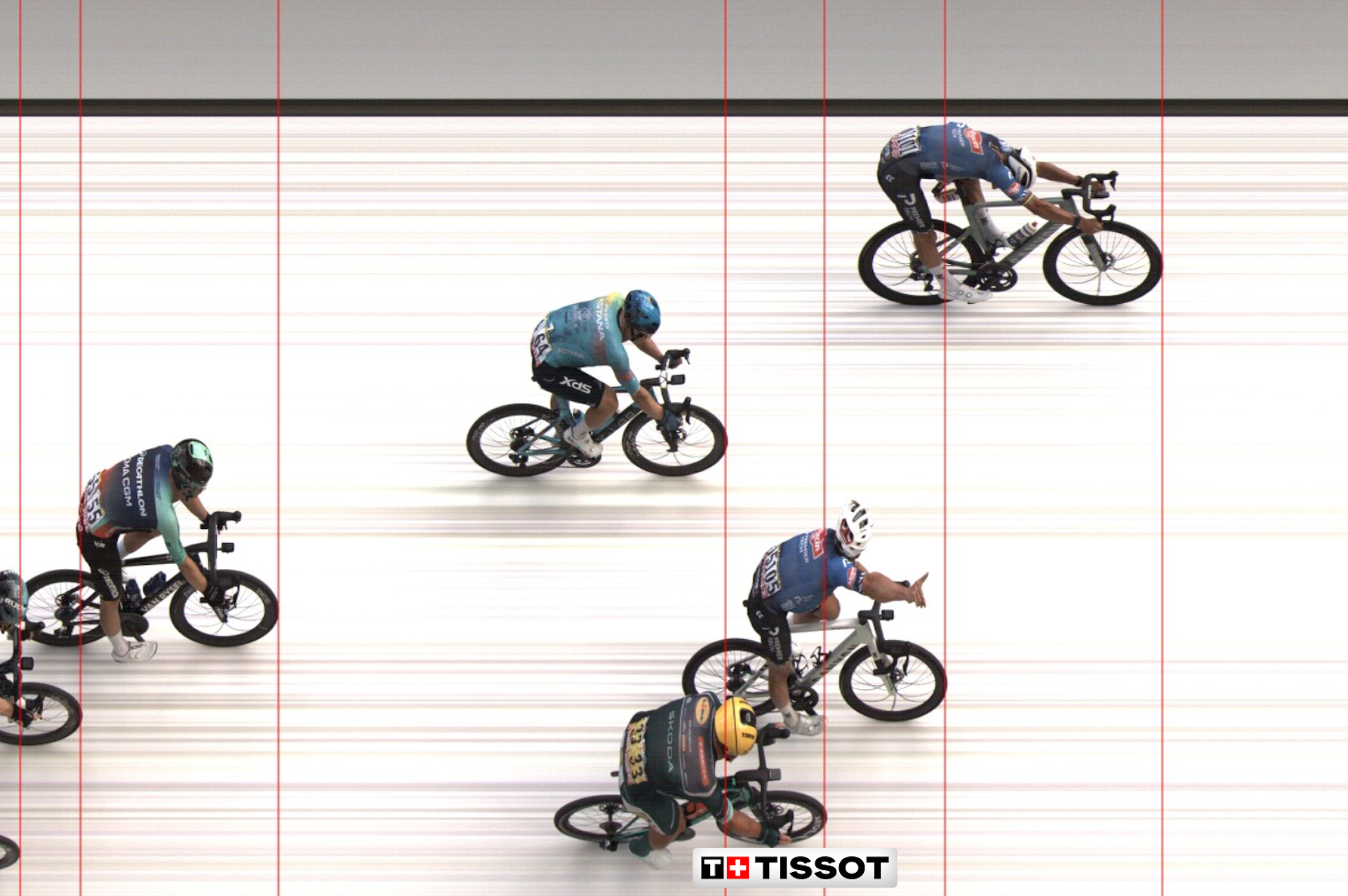


It had to be this. The pure class of Mathieu van der Poel winning on the Champs-Elysées. Yet it isn’t an image of him posting up for the cameras, arms skyward in triumph, that we’ll have to remember it by. No, it’s the edge-of-our-seat stuff we witnessed as we gasped, seemingly at the very same moment Van der Poel might have expelled his own last breath, folded himself around the back of the saddle and threw his bike toward the line and the win.
It seemed he had nothing left, as if the peloton might just get him, and yet he reached out, somehow, and grabbed the win. As Van der Poel said after finally catching his breath, "We have a saying in Dutch that it has to come from your toes. I don't know where this came from, but not from my toes."
Given the sheer number of sprint finishes in a season, a true, race-winning bike throw is surprisingly rare, and so all the more impressive when it manifests its full glory as it did tonight on the Champs-Elysées.
Even at the pinnacle of the sport, there are only a handful of riders in any given era who have been entirely masterful in their craft, from pure athletic power to tactical positioning to formidable bike handling ability. At the intersection of all these traits and a preternatural sense of timing sits the bike throw. And with it, Van der Poel.
Though these tight finishes are uncommon, I'd bet that he's well aware that a well-honed bike throw can be the crucial difference that wins a stage of the Tour de France, a Milan-San Remo, a Tour of Flanders (Van der Poel won his first in this fashion), an Amstel Gold Race, or even the Amgen Tour of California—all races where a particularly picturesque bike throw has made the difference between glory and a consolation prize.
As a young amateur, I was first enthralled by the art of the bike throw when I witnessed Peter Sagan, another true master of the art, do it with a deft hand and deadly effect. Stage 16 of the 2016 Tour de France. Bern, Switzerland. The victim: Alexander Kristoff, no slouch himself in a pure drag race to the line. On this occasion, he misjudged the line and fell to a perfectly poised and statuesque Sagan.
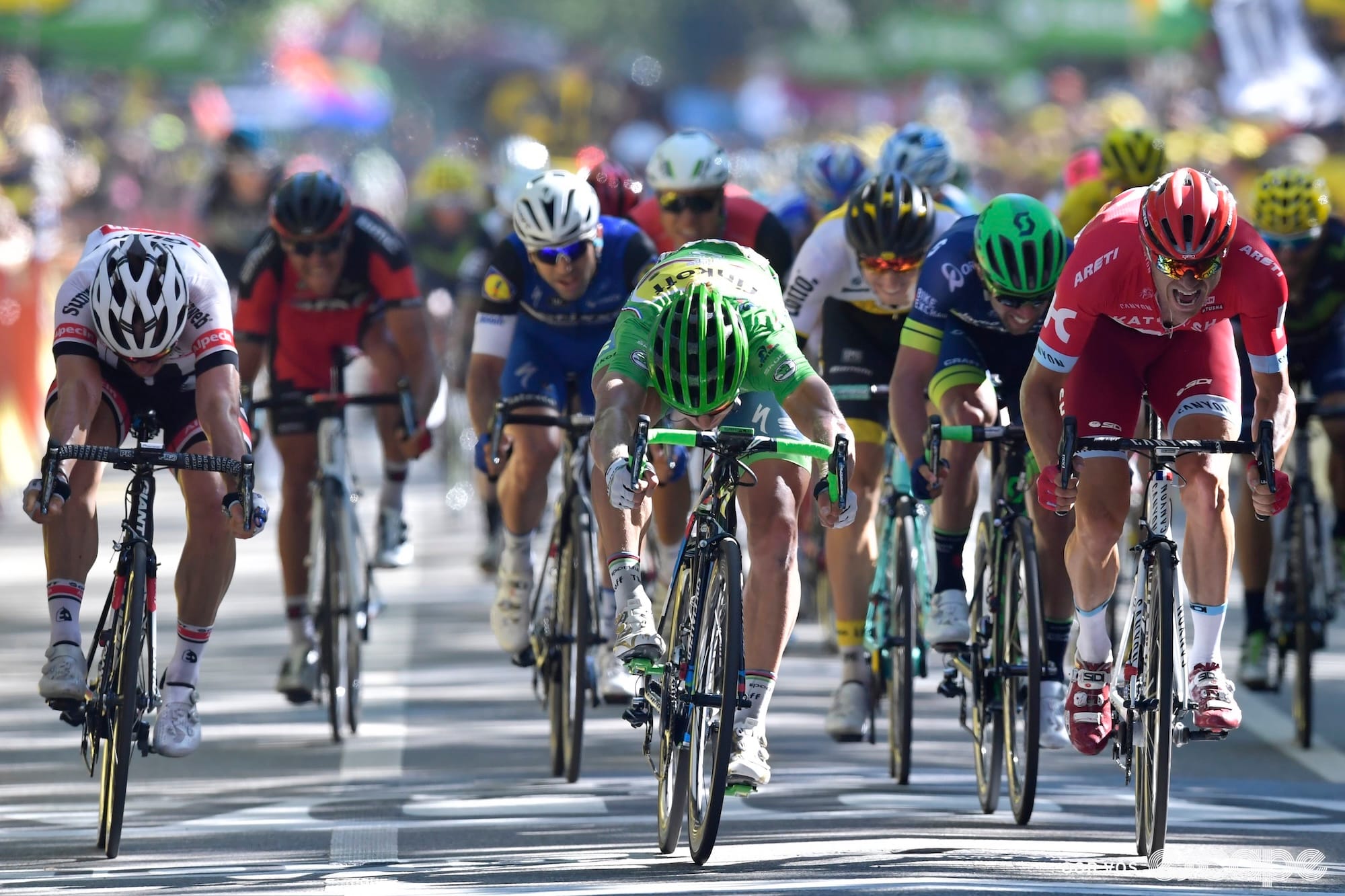
There is something poetic in the fact that you can be within touch of the win, and even a fraction less likely a victor than your opponent, say a wheel behind, or with a hungry peloton nipping at your heels, and still come out on top by virtue of a graceful swoop towards the line.
Sagan inspired many a training session that finished in a lunge for a lamp post or town sign, as I trumped my training companions and they looked on in bewilderment. Not only must a rider train their body to lunge with nimbleness from ankles to wrists, they must train their minds to always, always finish with a lunge if there is any doubt about the result. It must become automatic; you never know what may come from it. It’s an art, after all, not a science. I doubt the timing can be taught. It must be experienced through the sort of tantalising failure Kristoff suffered on that finish in 2016. Here’s what I learnt about the art of the lunge, gleaning what I could from Sagan’s great bike-throw belle époque of 2016.
Did we do a good job with this story?