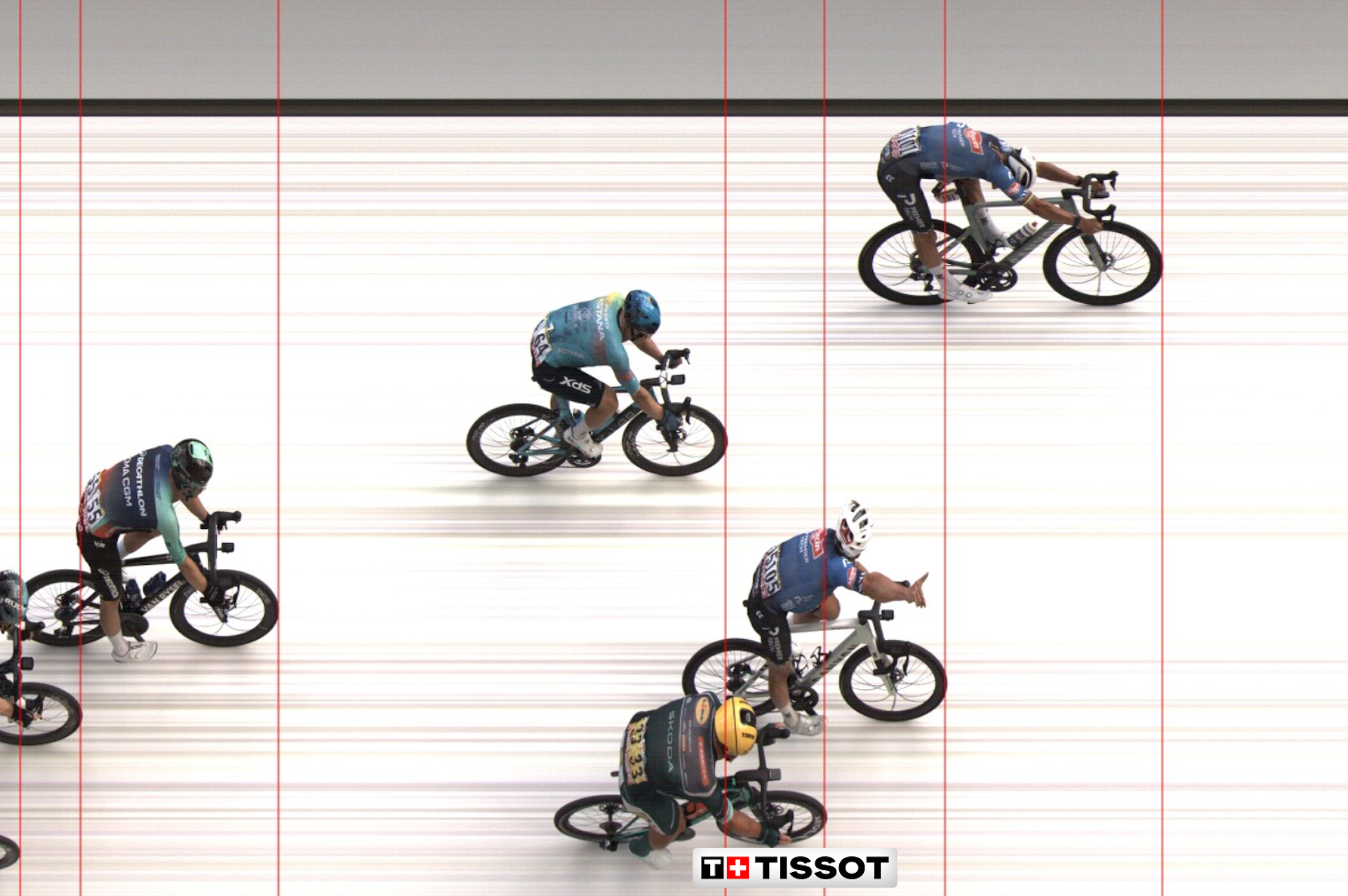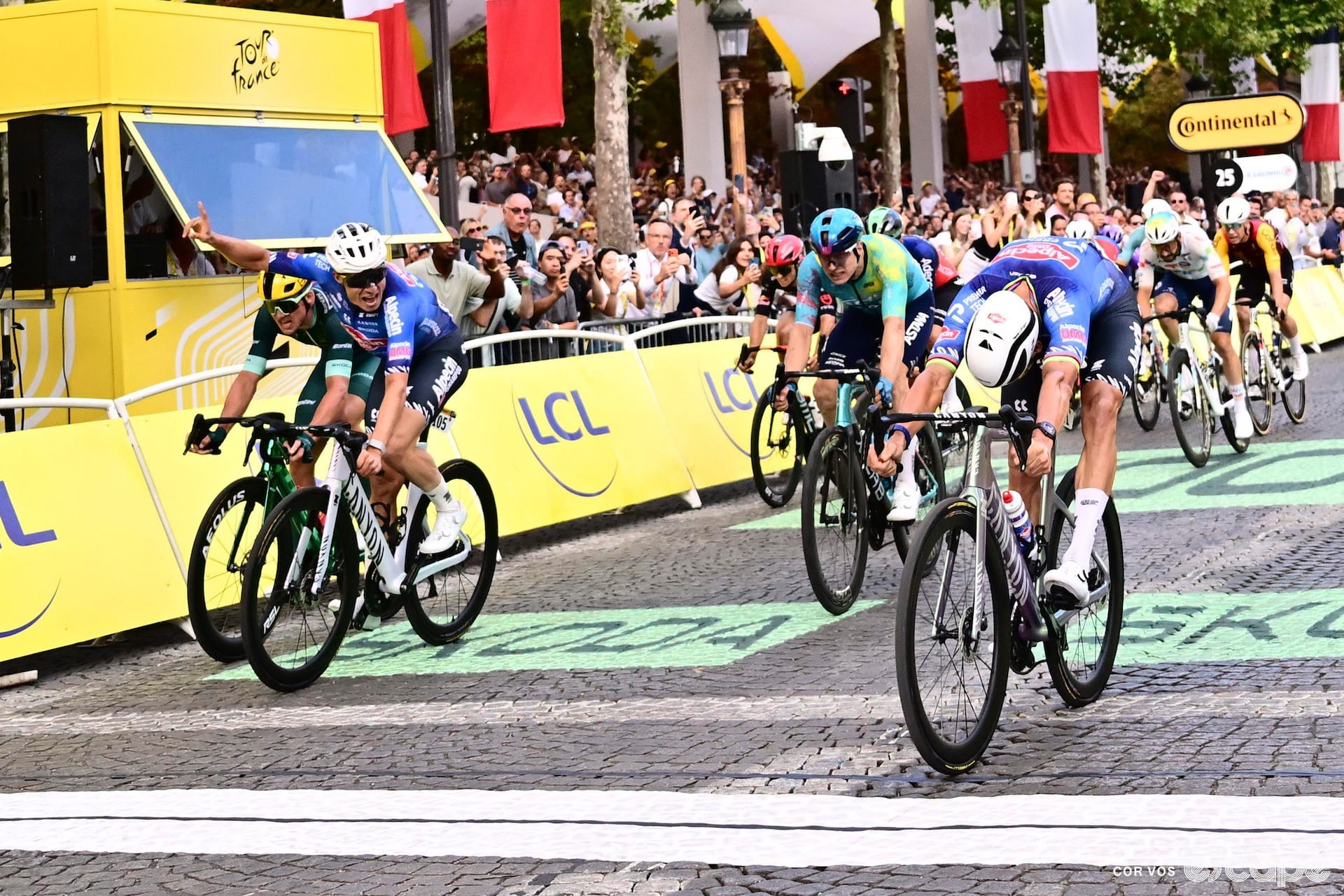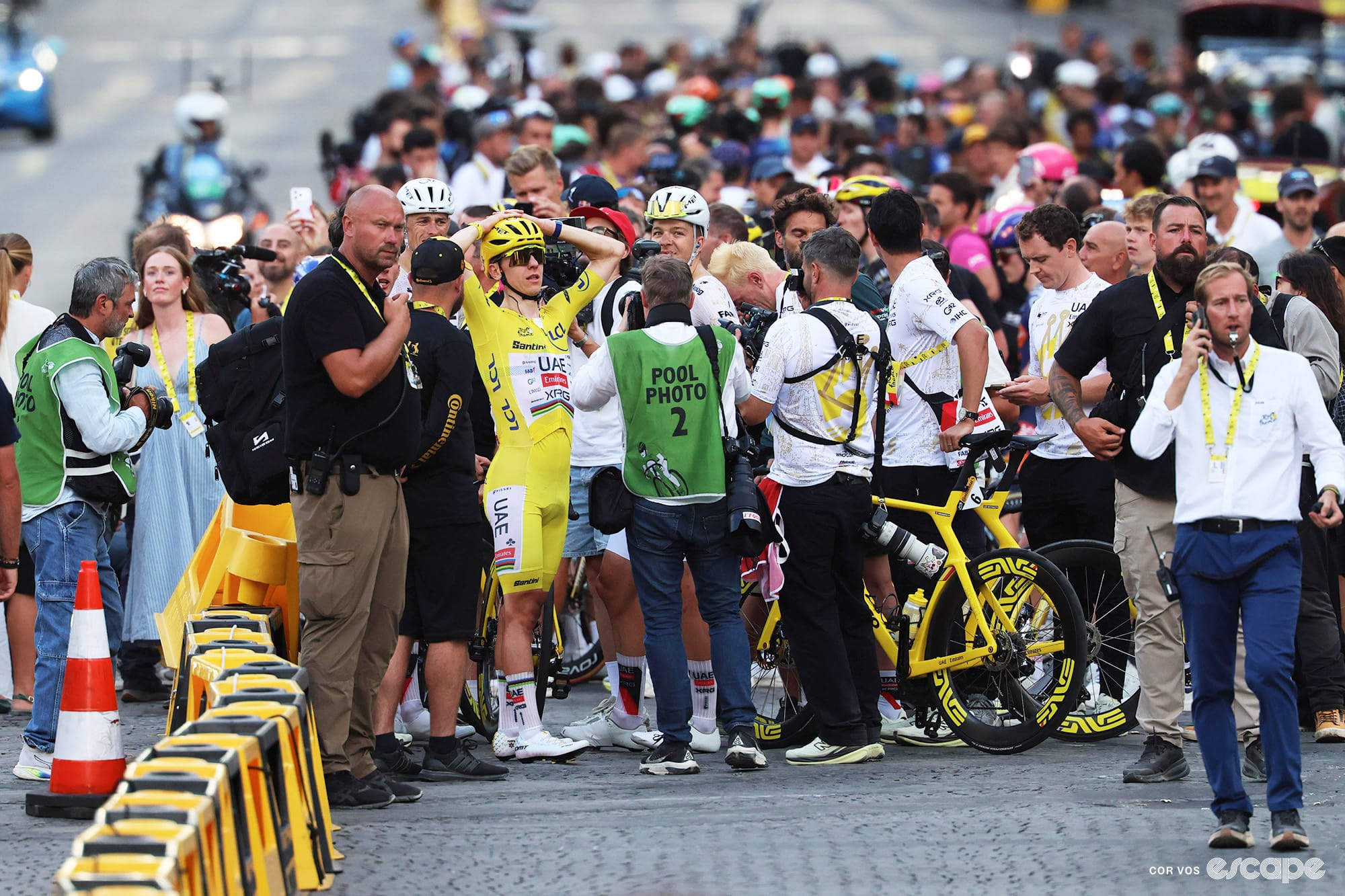


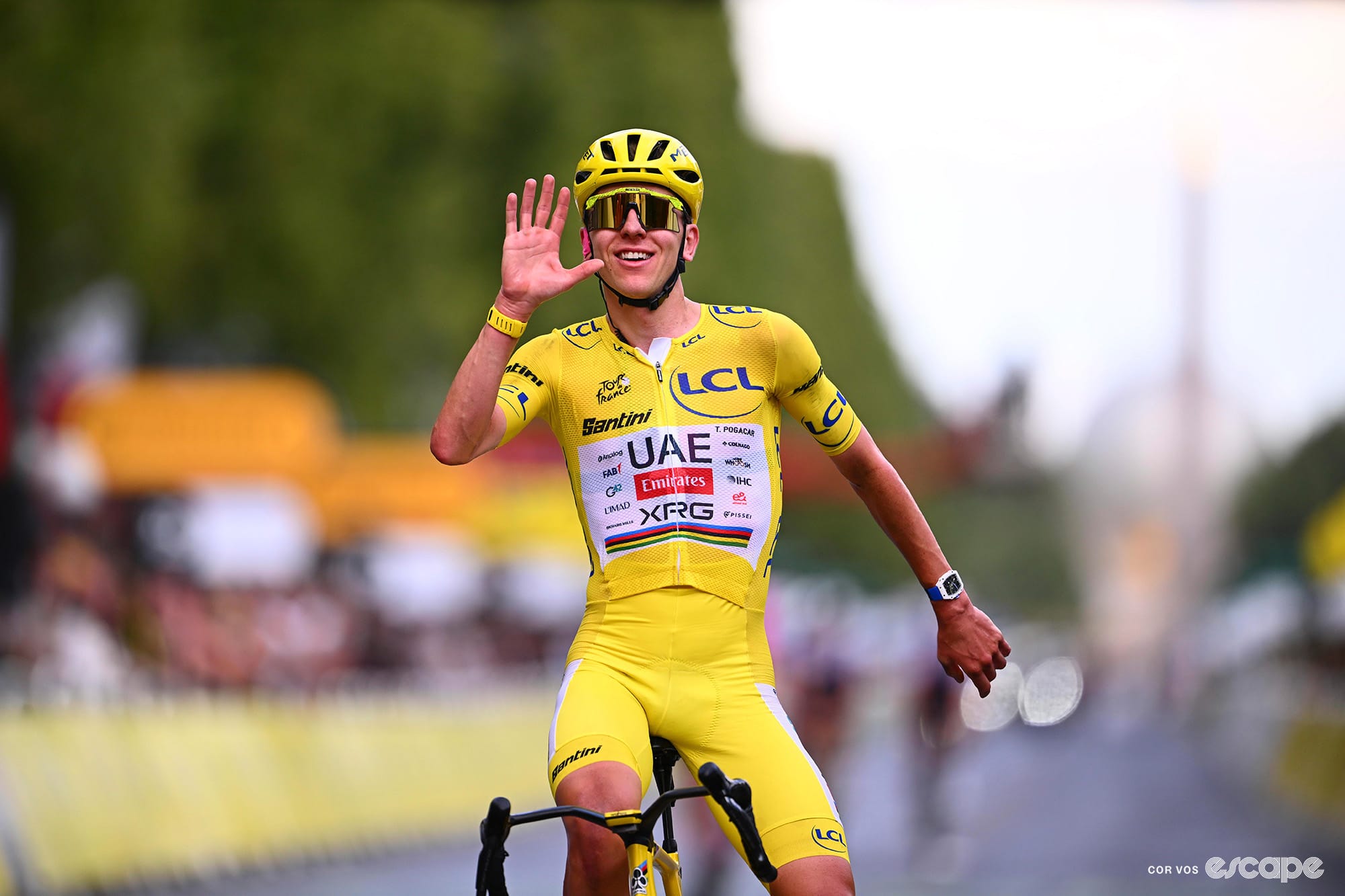
PARIS – It was a blockbuster finish on the Champs-Élysées to send off Tadej Pogačar's record-equalling yellow jersey: his attacks so explosive, his daring almost childlike for a GC rider, his strength undeniable, that his prowess is often accused of dulling the edge of the Tour de France.
This is the magic of the Tour, that the spectacle, sometimes captured only in brief moments, is what lasts. It builds from the seeming inertia of vast kilometres where nothing happens when all of a sudden everything does. In the blink of an eye Jonas Vingegaard is on the ground and out of the race. Another day the camera snaps back into place and Pogačar is off the front again.
Those watching on TV at home will have to tell me their perspective of the race, whether the undercurrents of the B-side stories made up for the inevitability of the main show. But away from the racing on the ground, the Tour felt slightly off-kilter. Like its sands are shifting underneath.
 Dane Cash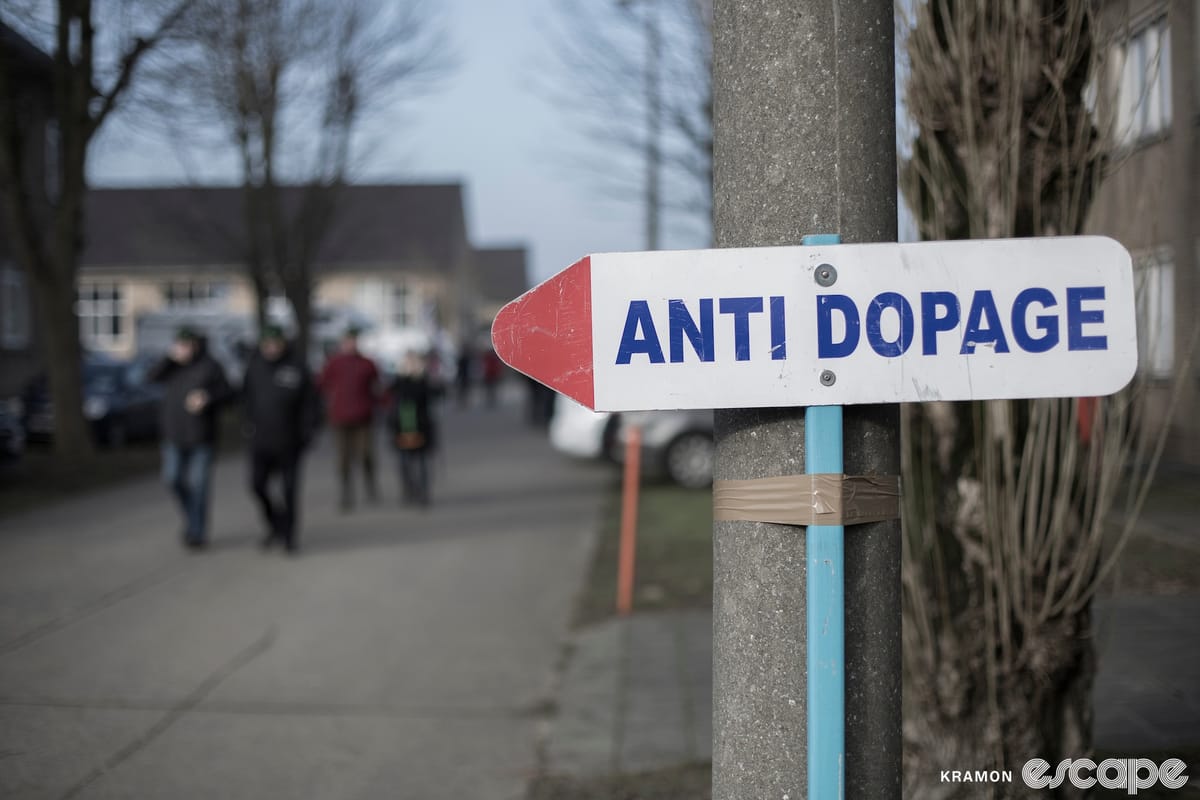
While the nighttime anti-doping knocks gave the press room a much-needed shake awake at the end of week two, let's hope for as much probing of the much bigger and more conseuqential themes of this race.
Firstly, that this was the first Tour de France severely impacted by extreme heat. Fans were asked not to come to the race during the first week due to the heat wave (and the Tour without fans is a non-starter) and then stage 21 was shortened as police instead headed south to help with the wildfires threatening Bordeaux.
On our train ride north from Grenoble to Paris the air grew brown and hazy, as the smoke blew eastward. Thank God the riders also took the TGV post-stage 20 instead of flying; the Tour is already an ecological monstrosity, a choice we all make our peace with, the environment the price of our enjoyment, but the luxury of a chartered flight when a quarter of a million have been evacuated from their homes would have been too on the nose.
 Joe Lindsey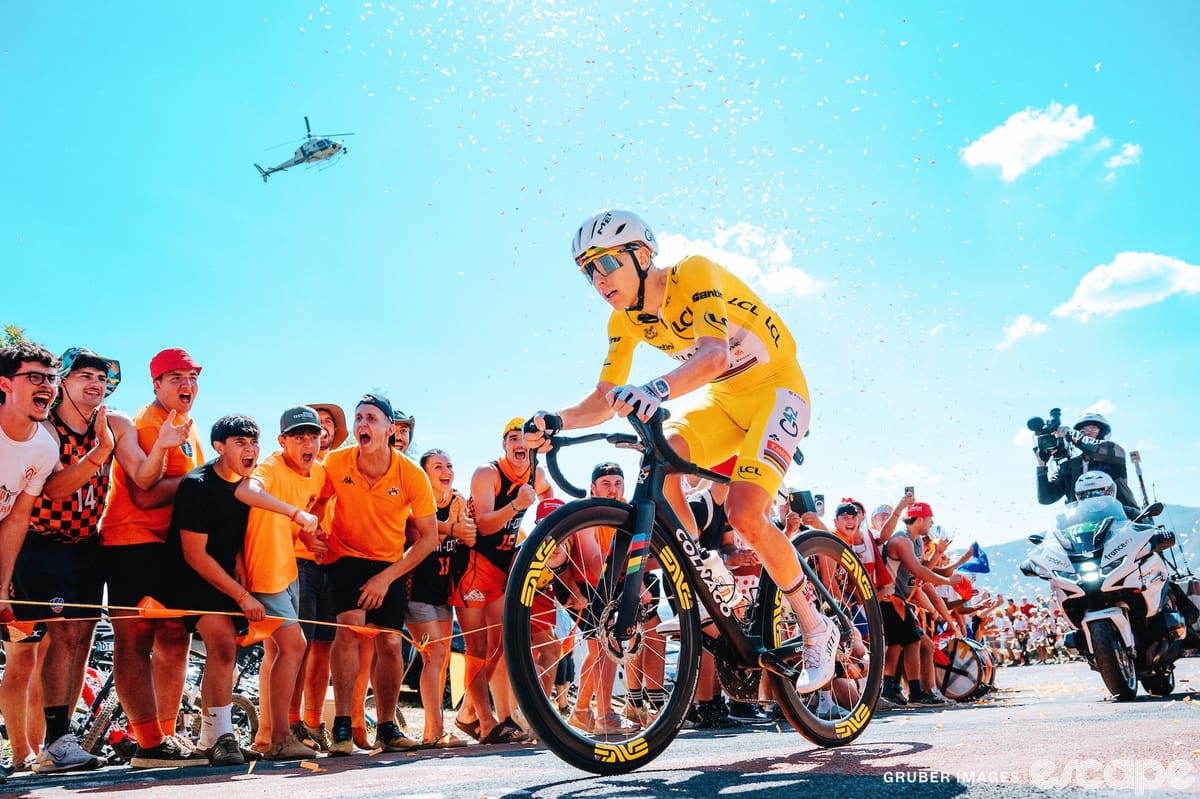
Tour organisers have already ruled out a move away from its historical July slot, to avoid the worst of the summer height as Pogačar has said he would prefer. The Tour is simply too baked into French culture, one of the few pervading cultural moments that the country unites behind as everything else is sliced, diced and reconstituted by algorithms. Earlier stage starts may help somewhat, but what's for sure is that increasingly the Tour will be forced to change, rather than the natural evolution that has seen it grow from a vehicle to sell more newspapers to the sporting behemoth it is today.
In a sports hall a kilometre from the Champs-Élysées, Remco Evenepoel is the first to attend the podium finishers' press conference. He is as lean as he's ever been, relaxed and calm after a stoic performance that he says has allowed him to once again believe that winning Grand Tours is a dream he's allowed to harbour, and that he can also tell his grandkids one day that he finished second behind a guy equalling the yellow jersey record.
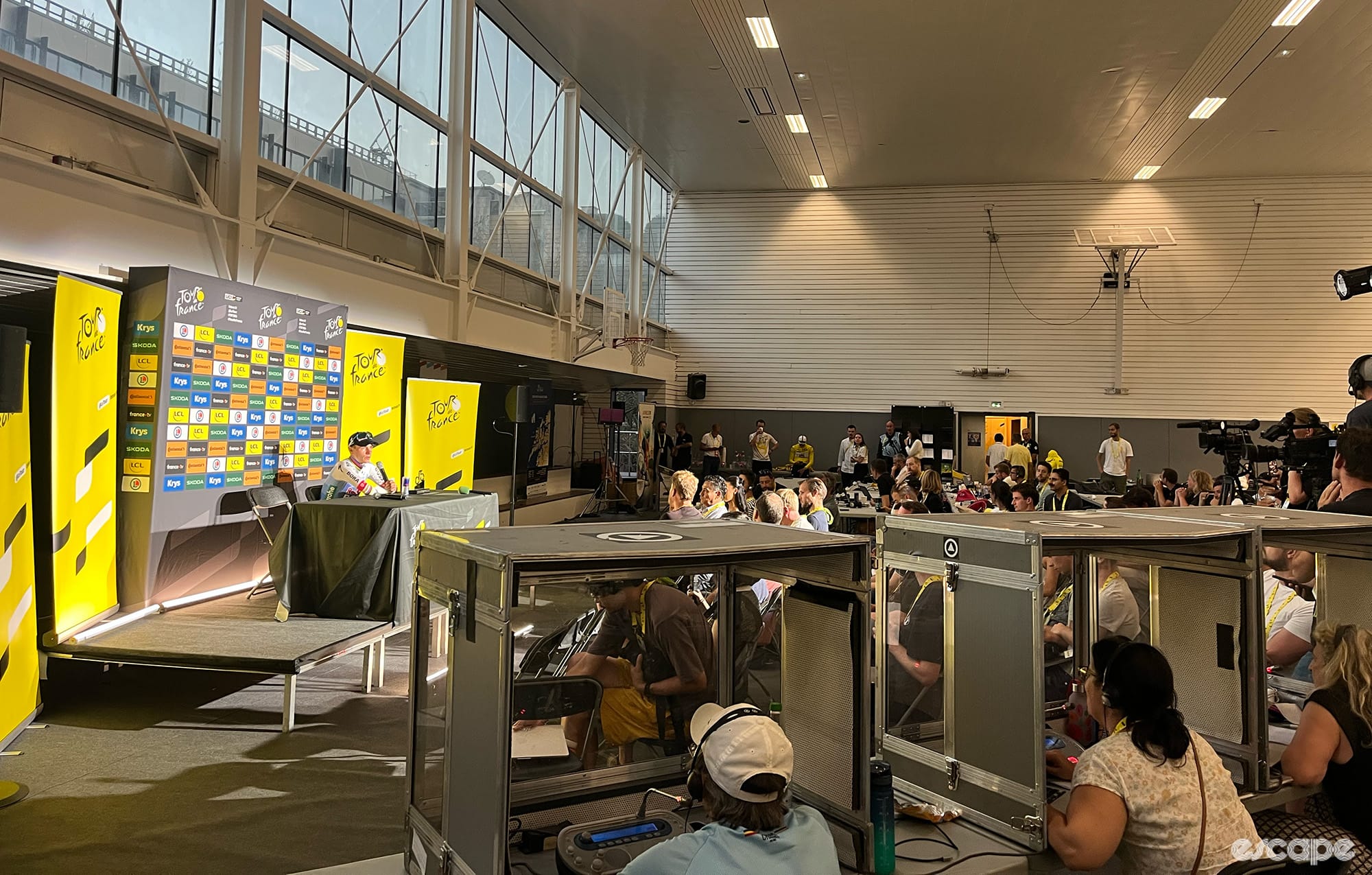
But then he's asked about the extreme heat this Tour. In effect, whether there will be a Tour de France to tell his grandchildren about.
Did we do a good job with this story?