

Welcome back to Threaded!
While a little odd, it’s not unusual for me to think deeply about the tools I naturally reach for and why. While I’ve previously written about my need and preferences for multiple types of hex keys, it feels like I now use ratchets for 80% of fastening – at least in sizes of 4 mm hex and up.
Through this, I’ve come to strongly believe that, at least for me, it’s an all-or-nothing tool selection. A bad ratchet will feel clunky to use, be inefficient, and distract from the task one should be focussed on. Meanwhile, a great ratchet – or ratchets, ideally set up with dedicated bits to avoid swapping – can be more ergonomic, much faster, and perhaps even help to better preserve bolt heads.
Such speed and ergonomic benefits make ratchets a common sight in the most-used drawers of automotive and motorcycle mechanics. And while not the same, I find it strange that ratchets are relatively rare in the world of bicycle mechanics.
In this edition of Threaded, I’ll explain the basics of ratchets, the features I seek, and the ratchets I’ve come to love.
Ratchets 101
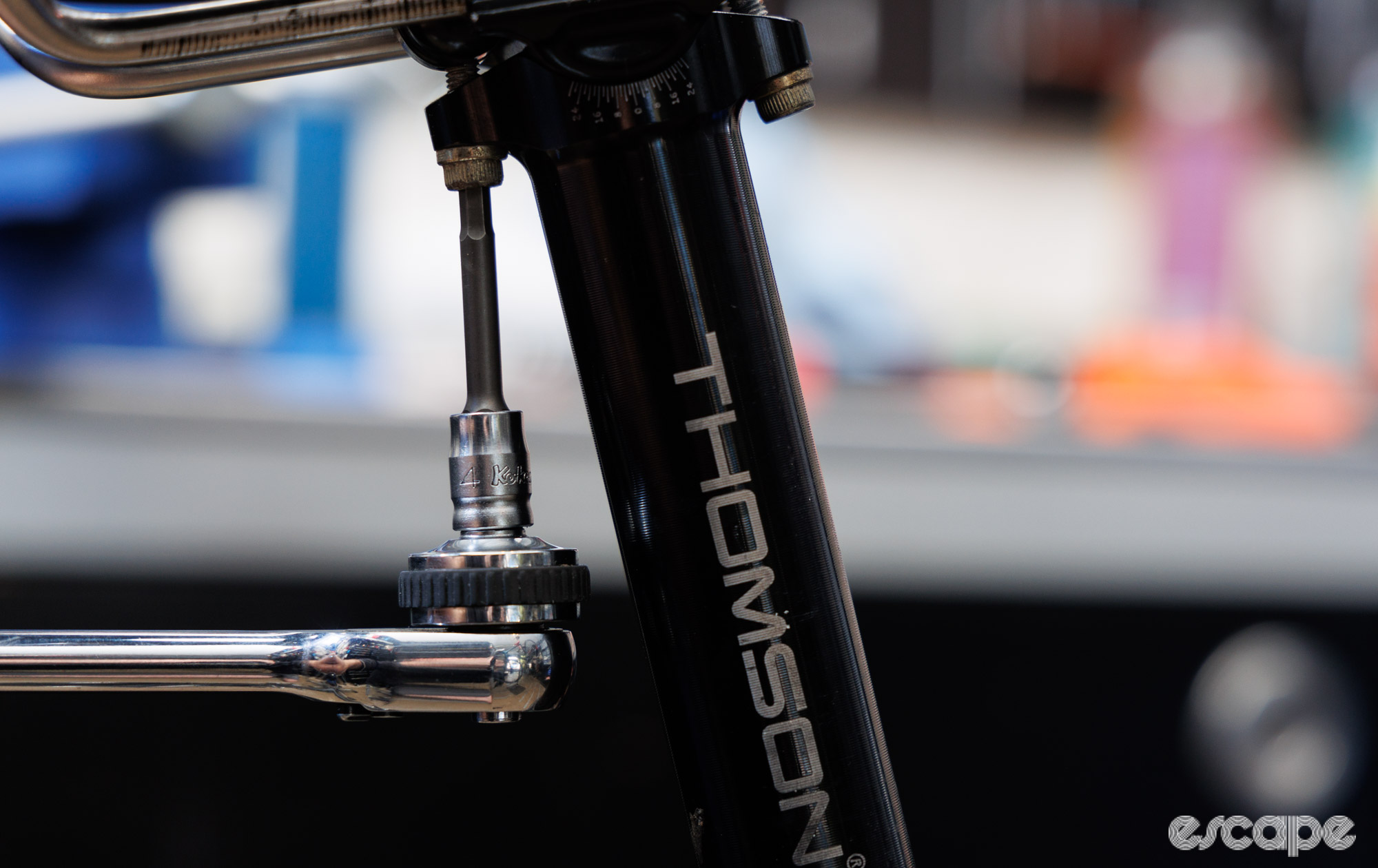
Not unlike the freehub in your rear hub, a ratchet drives in one direction and coasts in the other. While your hub is locked to going one direction, a hand ratchet should be easily switchable in direction, meaning you quickly loosen or tighten a fastener without having to remove and reset the tool to overcome an obstruction. Such obstructions are common in bicycle mechanics, whether from a simple bottle cage, seatpost bolt, or stem.
As with most things, there’s a whole world of ratchet geekery. Beyond the obvious size and handle differences, there are different drive mechanisms, ways that ratchets can spin, pivot, flex or turn to overcome obstacles, and various forms of specialist ratchets for specialist applications. Don’t worry, I won’t take you down that rabbit hole today, but allow me to define some basics.
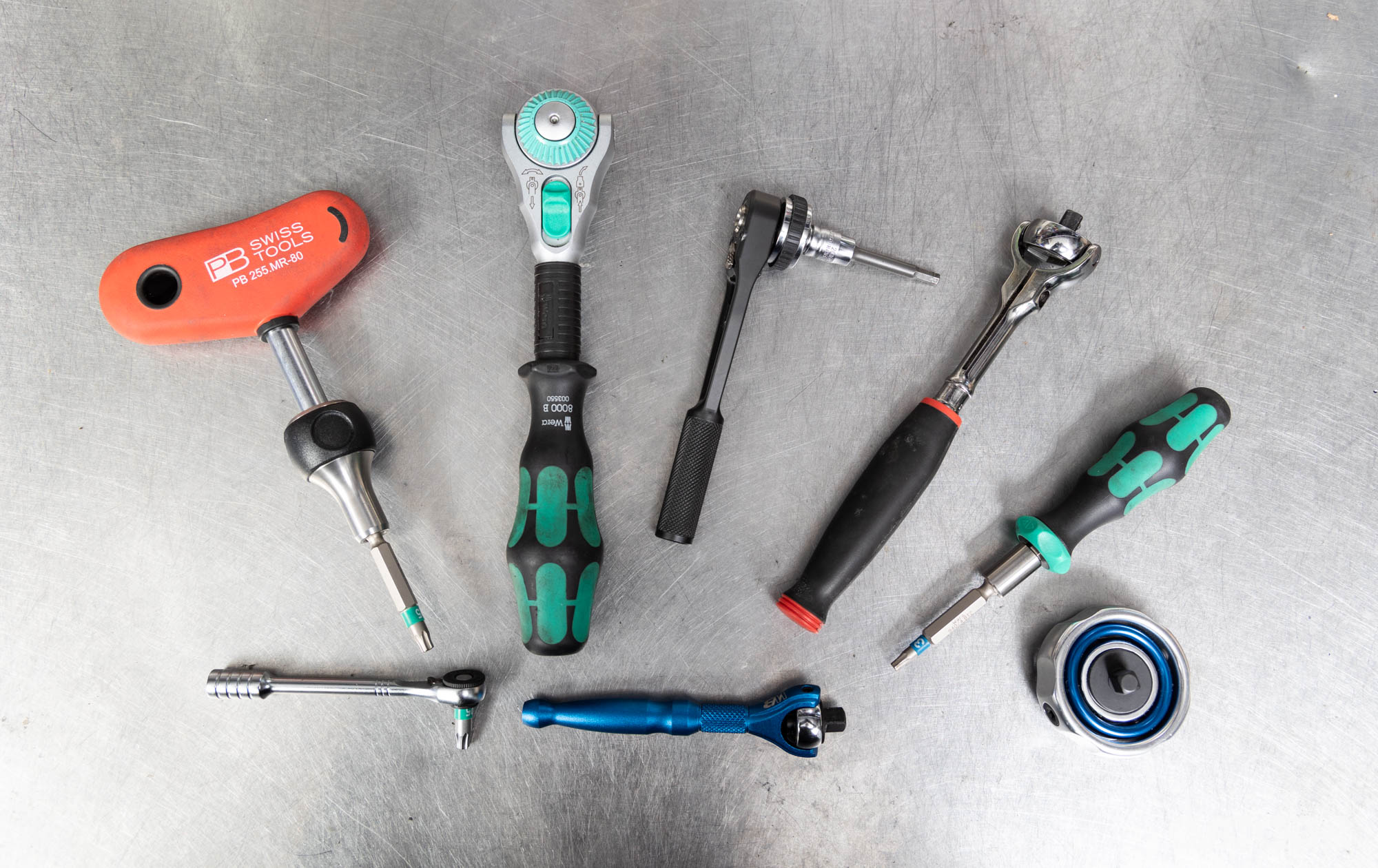
Drive size is a good starting point in talking about ratchets. Broadly speaking, the size of a fastener increases with the required torque, while the drive size of a ratchet and its sockets follow suit. When working on bicycles, you’ll likely encounter ratchets and associated sockets with three distinct drive sizes: 1/4" (6.35 mm), 3/8" (9.5 mm), and 1/2" (12.7 mm). The American tool company Snap-On recommends torque limits of 38 Nm, 108 Nm, and 447 Nm for its 1/4, 3/8" and 1/2" drive sizes, respectively.
The bigger the drive size, typically, the longer the tool’s handle gets to provide easier leverage in producing torque. Meanwhile, smaller drive sizes largely exist to create more compact tools that provide increased clearance in tight spots – a common problem with smaller fasteners on modern bicycles.
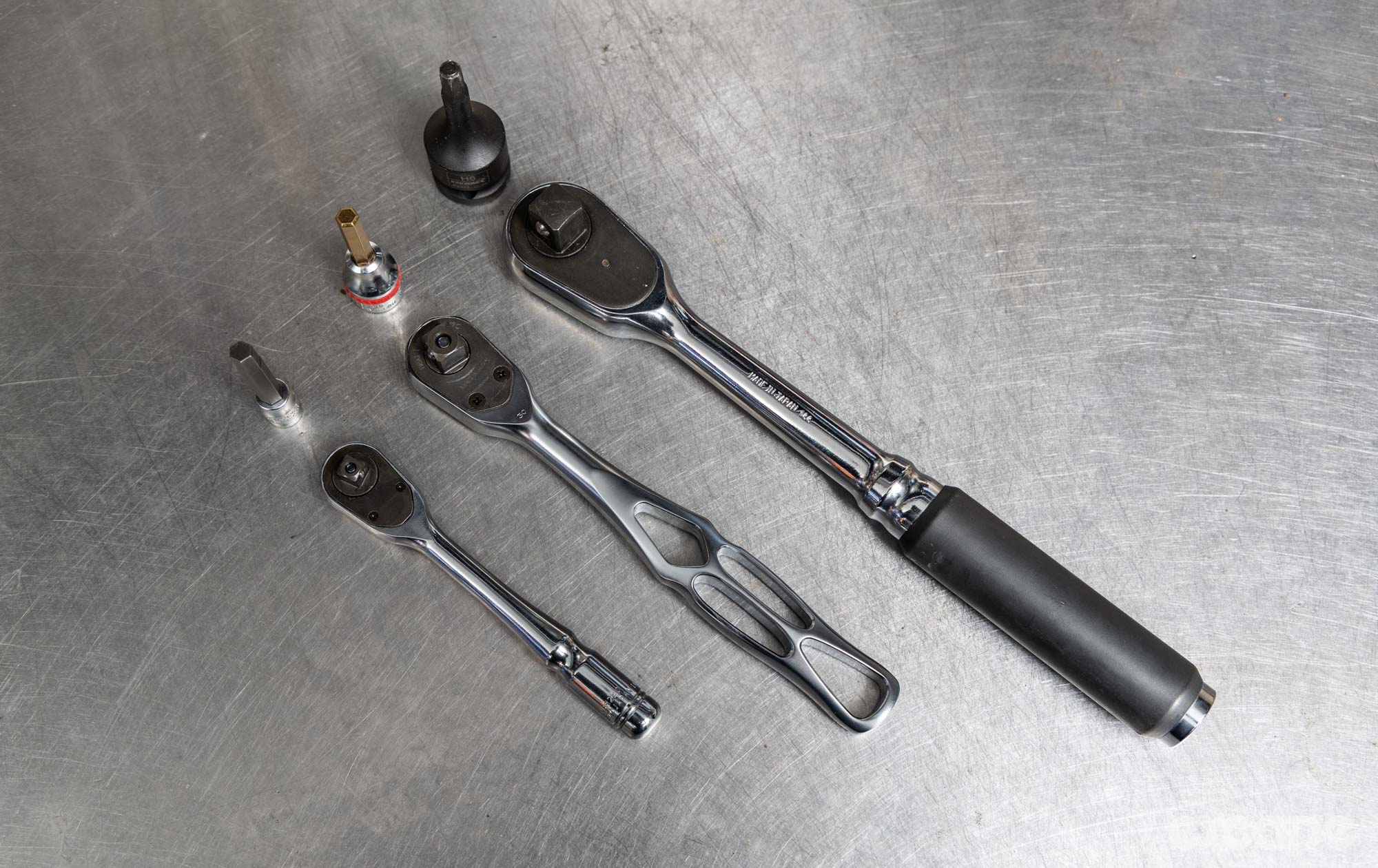
Before going further, it’s worth noting that if you own a torque wrench, you likely already own a tool with a ratchet head similar to those covered in this article. Except for a rare few tools on the market, it’s typically advised to only use a torque wrench for careful assembly work. Undoing tight bolts with a torque wrench (where torque can be above the tool's range) can damage the tool's calibration and/or function.
Ok, let’s talk about those compact ratchets.
The 1/4" drive size
The small fasteners commonly found in bicycles mean that ratchets with a 1/4" drive size are commonly seen and are the practical choice for many repeated tasks. Specifically speaking of bicycles, this drive size is most applicable at or below M6 thread sizes, or put another way, fasteners that require tool sizes of no larger than 6 mm hex and T30.
Did we do a good job with this story?