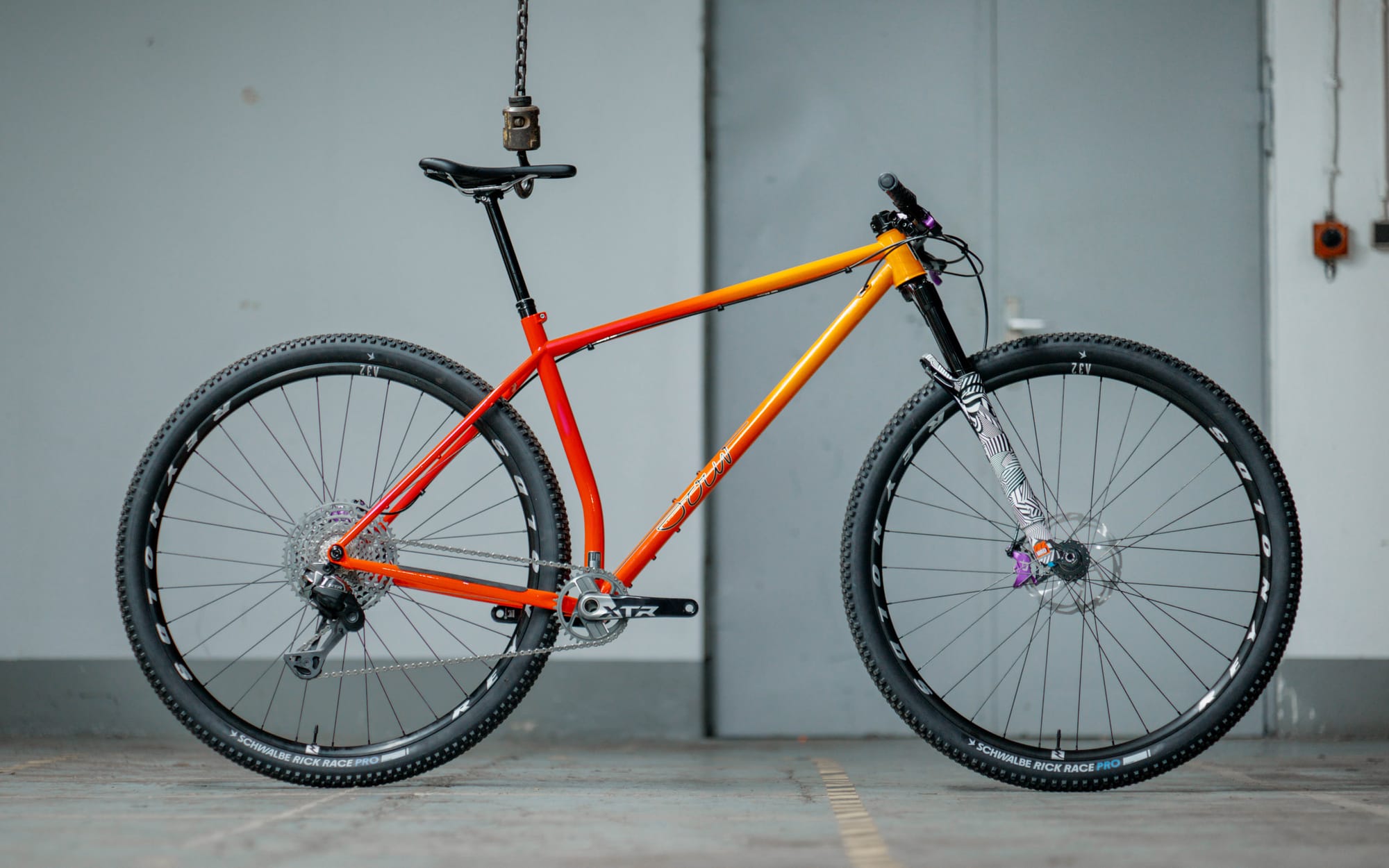


It is easy to think that, for the most part, a 32" mountain bike is simply a 29” mountain bike, plus three inches in the wheel department. Aside from the wheels and tyres, the only real changes are that the fork and chain stays need to be a little longer.
If only it were that simple.
For suspension engineers, a larger wheel doesn’t just change fit and geometry; it changes forces, leverage, and performance. Increasing the wheel diameter alters how the terrain acts on suspension, increases unsprung mass, and makes it even tougher to hit weight and stiffness targets.
A fork for a 32" bike becomes an entirely different engineering problem. If the industry learned anything during the transition from 26 to 27.5 to 29 inches, it’s that scaling up without rethinking the system leads to compromises and a generation of products that the industry quickly wants to forget.
With several brands now experimenting with 32" prototypes, I caught up with Phil Ott, product manager for Manitou, and Cornelius Kapfinger of Intend Suspension to unpack what designing suspension for a wheel this large really involves, and why the biggest challenges aren’t where you might expect.
We don’t need to make the same mistakes again
At face value, the leap from 29 to 32 inches sounds deceptively simple. But as Ott makes clear, that assumption overlooks almost everything that actually matters in the performance aspect of suspension design.
Did we do a good job with this story?