

MULHOUSE, France — Sepp Kuss did what he could, putting on the grimace we've all gotten to know over the past few seasons, sunglasses propped into his helmet, his tell that this is everything he's got. Behind, a group of the race's top favorites hung on: Lipowitz, then Pogačar in yellow, then Kuss's teammate Vingegaard, then Seixas, Del Toro, Evenepoel, Ayuso. Kuss lasted a few kilometers before peeling off, leaving the group with multiple teammates but without real domestiques, no obvious rider to take up the pace. So Vingegaard did. Just as he did on the way to Le Lioran, and before that on the Tourmalet. Both stages where he lost time.
In this dynamic, where every rider left in the front group is their team's leader or is otherwise protected, who takes up the work? Drafting on 9% gradients isn't as crucial as it is at higher speeds, but sitting behind is still easier, physically and mentally. So shouldn't every rider in that group force Pogačar to pull? Or at least force Del Toro to do so? Why would you do work for the man most likely to beat you? Vingegaard's riding has been a bit mad, on its face, as he bleeds time with each successive stage not only against Pogačar but also versus those chasing him from behind. But there is a method to that madness.
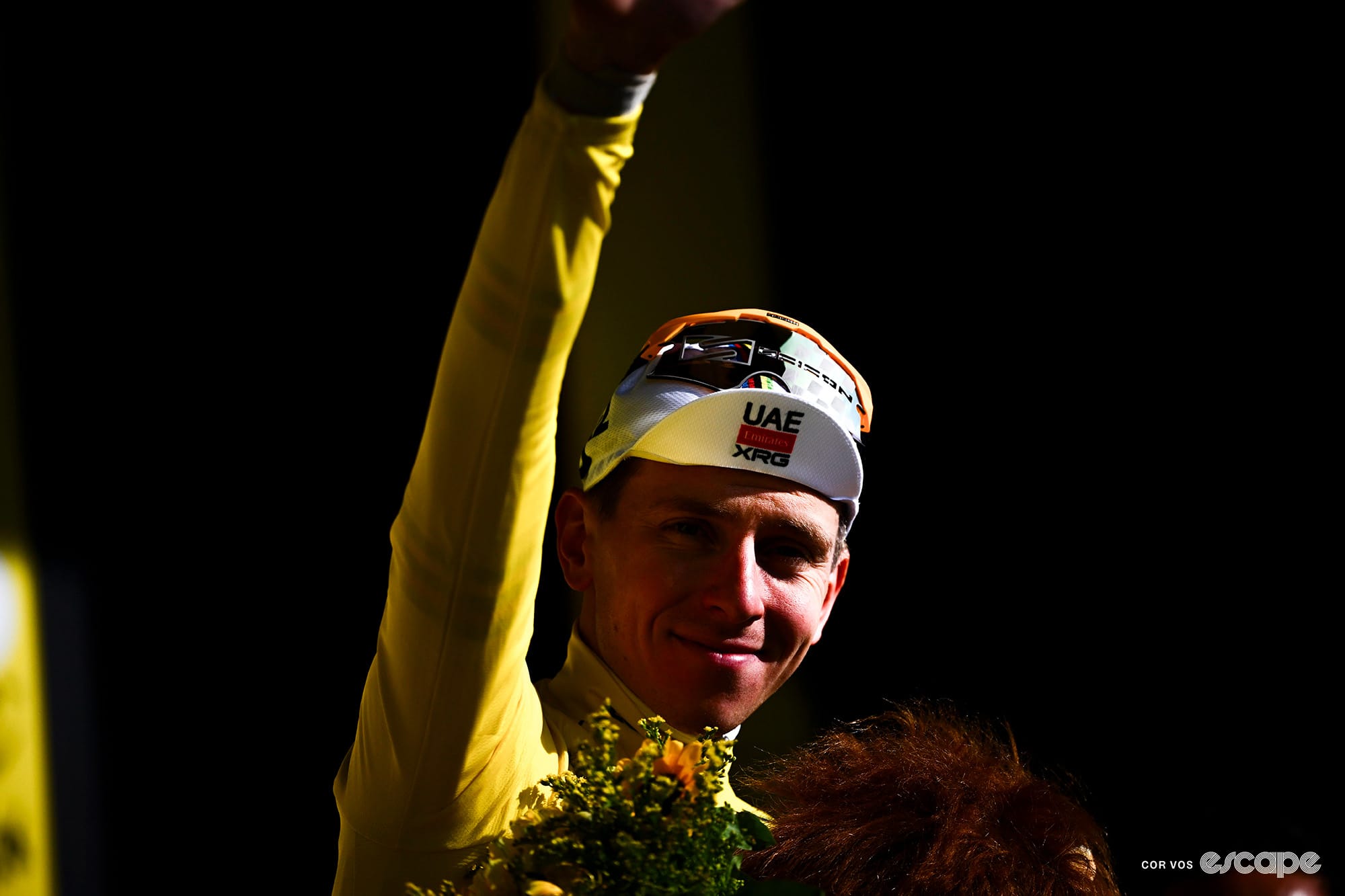
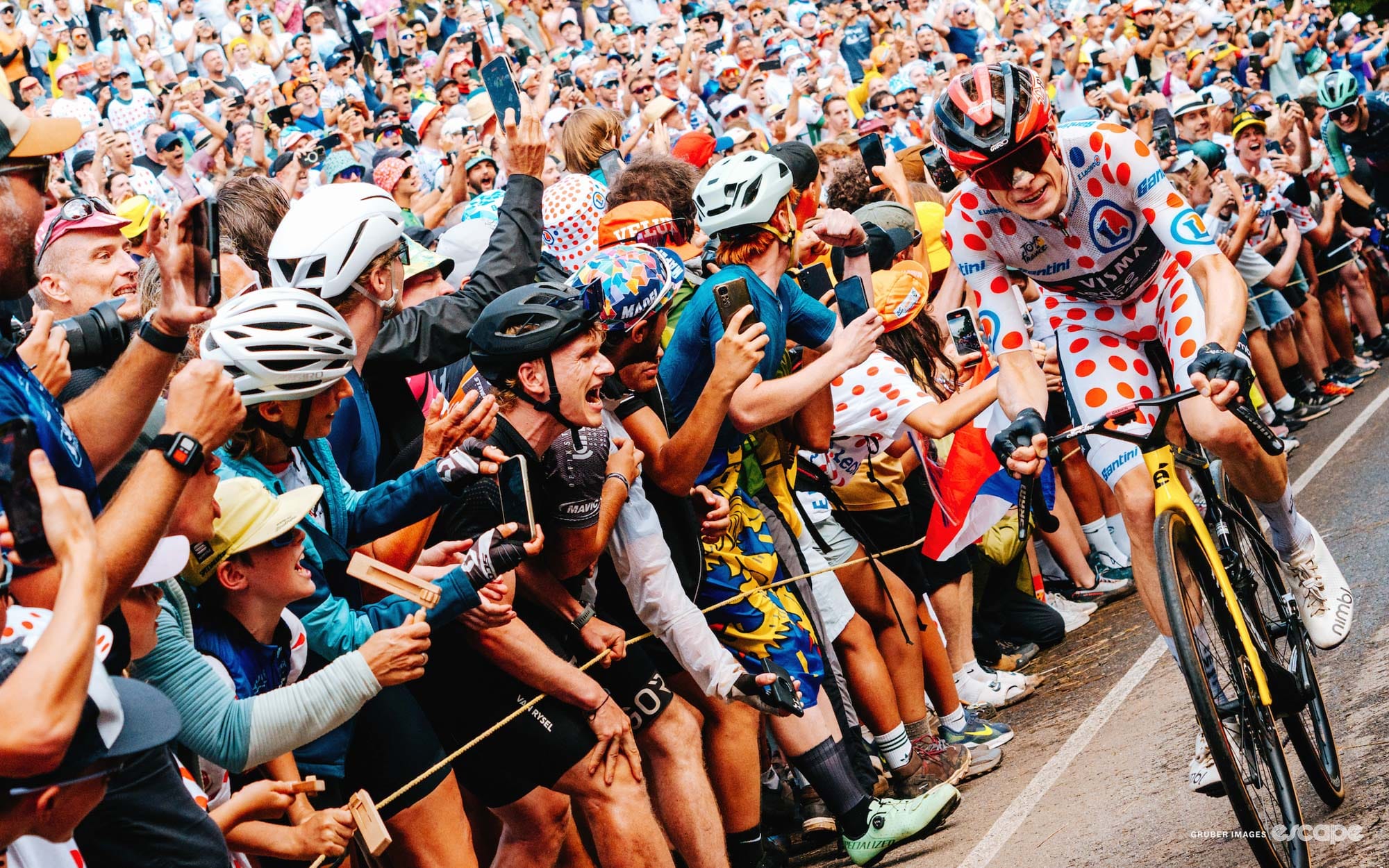
As the fans on Le Markstein closed in, the polka-dotted shoulders of the two-time Tour winner moved to the front of the group, not in an attack, more of a continuance of Kuss's efforts. Vingegaard kept the pressure on, beginning to distance Del Toro and Evenepoel. Behind him sat Pogačar, who didn't look all that fussed. We waited; this status quo surely wouldn't hold until the top. And then the inevitable came, at 7.4 km to go, two kilometers from the top of the final climb. The yellow jersey accelerated, pulling out ten meters quickly, and then ten seconds, and then 20.
Behind, Vingegaard kept pulling. He distanced Seixas and Del Toro briefly, showing he likely is the second best climber in this Tour, but both came back to him. And he kept pulling. His two companions both hit the front on the rolling final kilometers but it was Vingegaard who again put his nose in the wind under the flamme rouge, and who was again distanced by two rivals for that second podium spot in the sprint to the finish line. He lost six seconds to both Seixas and Del Toro, plus the bonus seconds both scooped up.
The why behind these decisions is a combination of understanding Vingegaard's relative strengths and, the unspoken part, the part that Vingegaard and his team will never say out loud, that they are looking backwards as much as they are looking forwards.
Did we do a good job with this story?