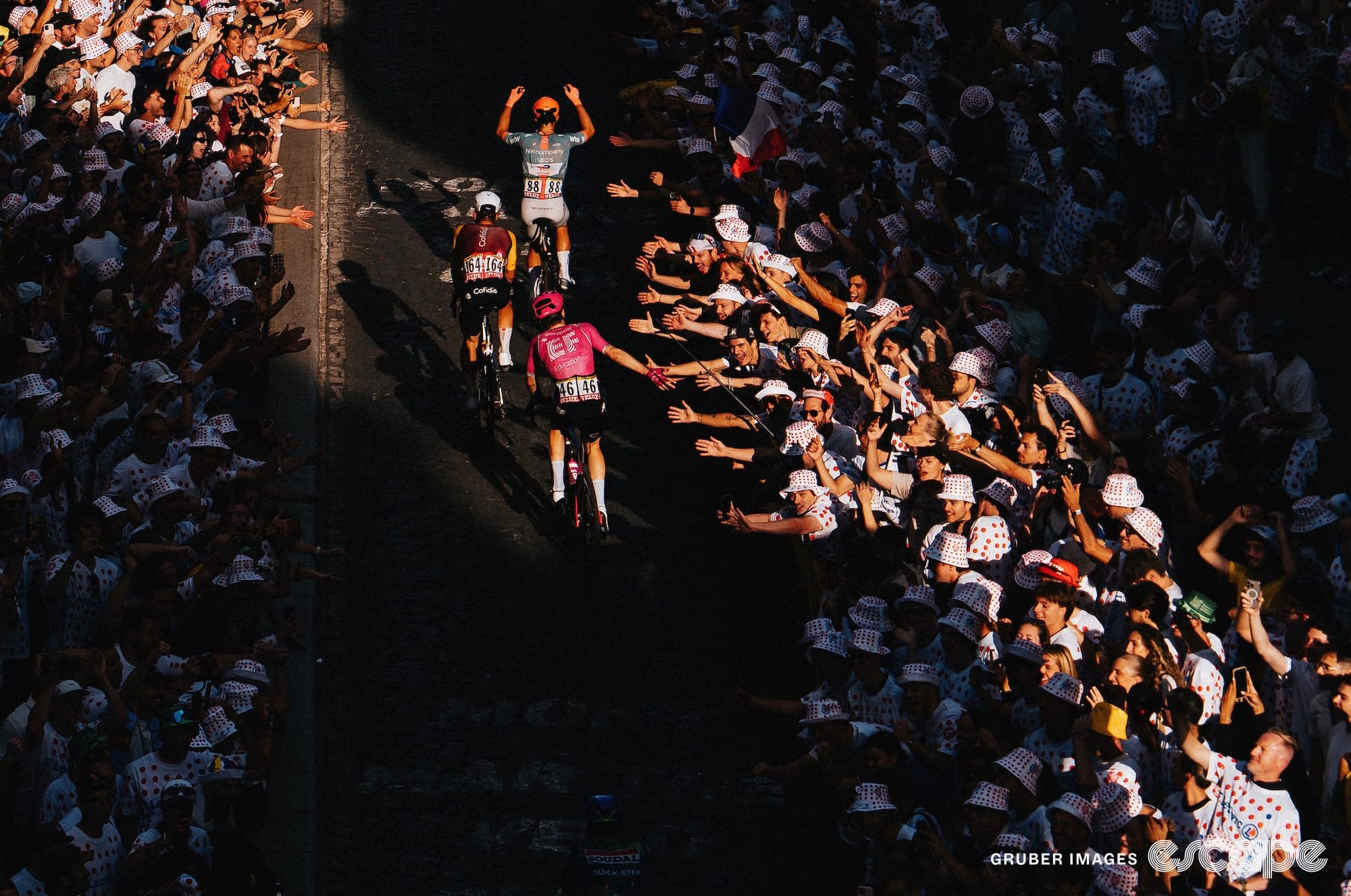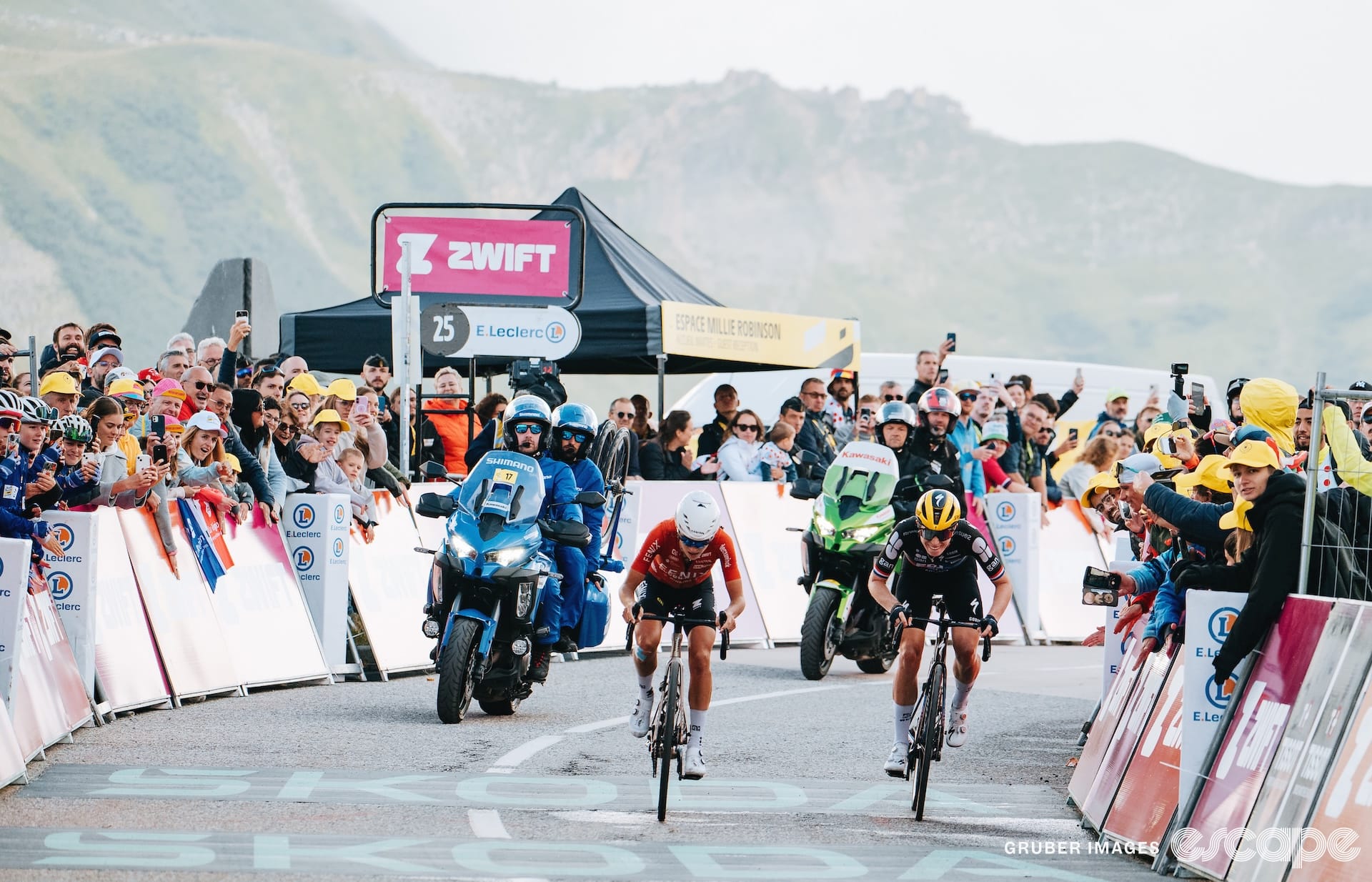


Year after year, the ASO, organisers of the Tour de France Femmes avec Zwift, up their route-making game. Every year they make sure to include one iconic climb from cycling's long history, along with a smattering of stages that together create the perfect playground for yet another brilliant edition of the race.
In its fifth year, the Tour will finally tackle one of the biggest climbs in cycling: Mont Ventoux. This beast will no doubt be the biggest test for those hoping to secure one of the most coveted prizes in cycling, the yellow jersey, but it will not be the only test. A time trial on stage 4 will also play a large role in the overall classification.
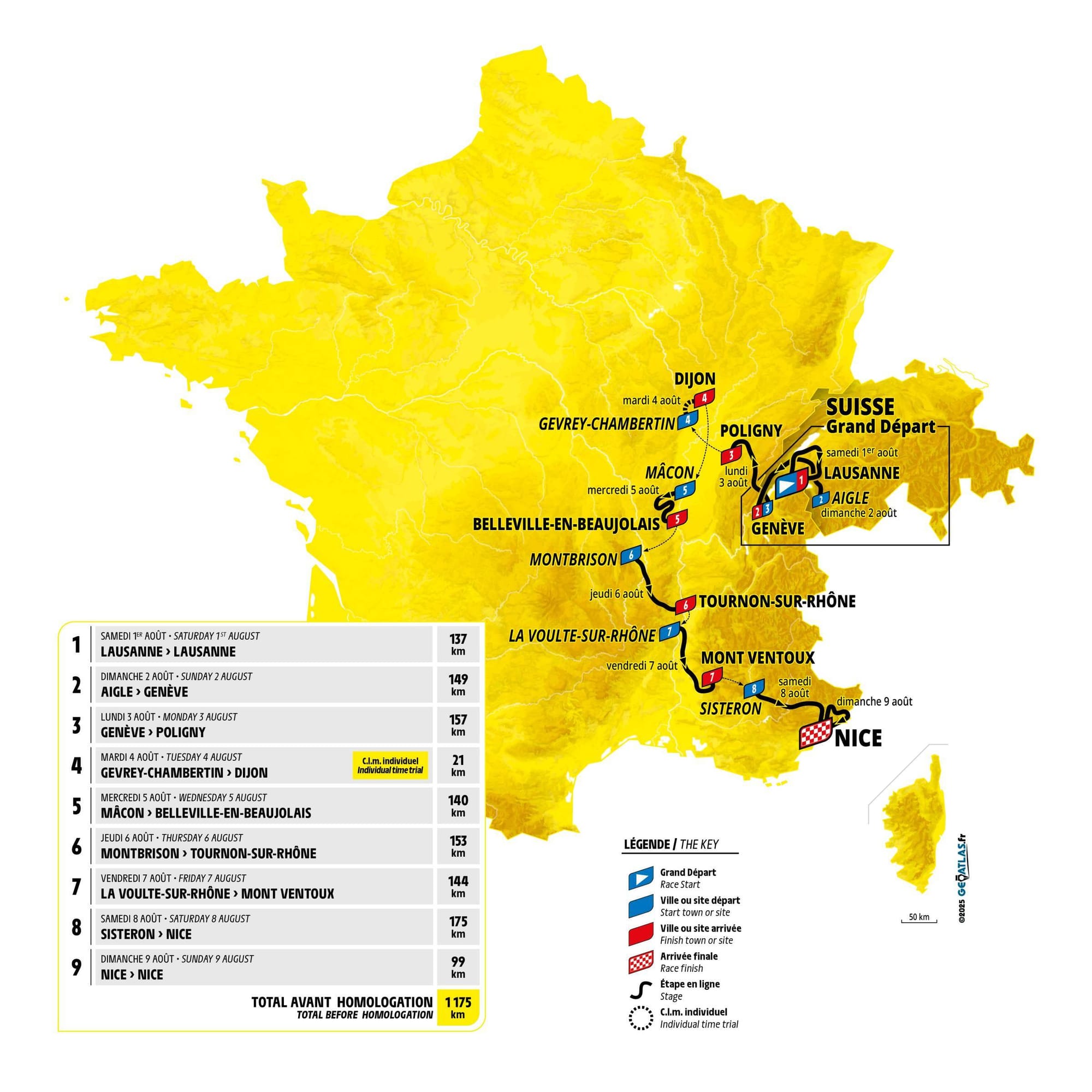
You might think, with an individual time trial and Ventoux on the menu, the other stages might not be as difficult. You would be wrong. The first two stages in Switzerland are punchy and challenging, while stages 5 and 6 cater towards the Classics-style riders.
The course this year might just be the most challenging Tour route ever for the women, with only two stages for the sprinters; the other seven will go to the daring and the bold. It's a race for the dreamers, and there are plenty of riders lining up who will have been dreaming of what they can achieve over these nine days of racing.
Listen to Wheel Talk's route preview here:
Stage 1: Lausanne to Lausanne (138 km)
Date: Saturday, August 1 (expected finish 17:44 CEST/11:44 EDT/+1 01:44 AEST)
Stage type: Slightly hilly
Total elevation gain: 1,626 m
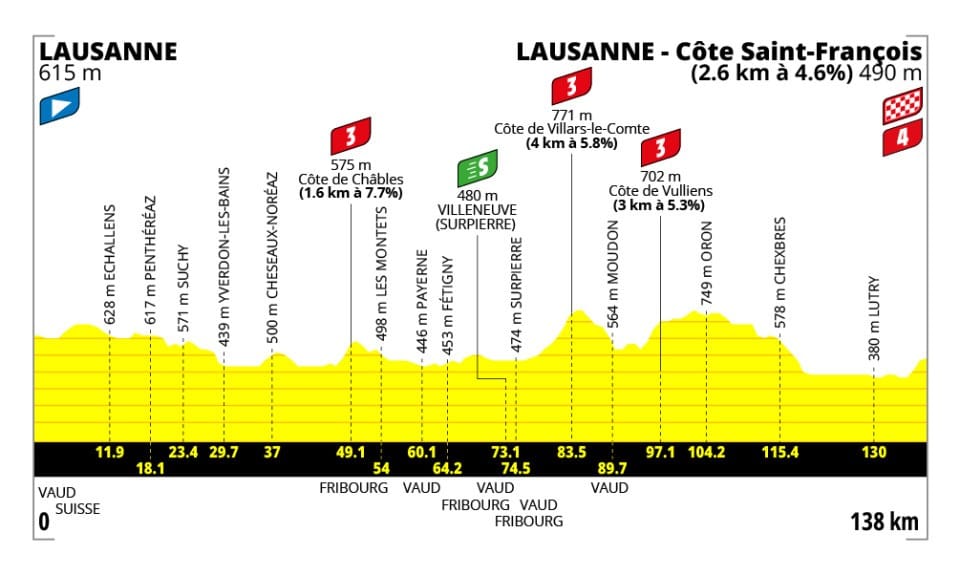
Summary: The opening stage of the Tour is the second "flattest" stage of the race, with only 1,626 metres of elevation gain over 138 km. Most of this is thanks to the three Category 3 climbs in the middle of the stage, and especially the final climb that starts with 44 km to go.
This final ascent will be the bane of the sprinters, who have incredibly limited opportunities in this year's edition. Although the official climb is only 3 km at 5.8%, once the riders have crossed the QOM line, the climb continues on for another 7 km, pitching and rolling before it descends with 32 km to go.
After the descent, the riders take a tricky right-hand turn onto the lakeside where they have 15 km of flat to regroup and reassess the situation. Sprinters' teams will need to really be on it, because the first yellow jersey will be handed out to the first rider across the line, and plenty of women will want to get ahead of the fast women within the final 40 km of the race.
The finish is atop a 2.2 km climb that averages 5.3%. It's nothing major, but could rule out someone like Charlotte Kool and swing in favor of Lorena Wiebes or Marianne Vos.
The riders will have seen the finish already during a neutral rollout (and likely in recon in the days prior to the race), so they will know the twists and turns coming to the line. There is quite a bit of road furniture on the short climb, and two bends in the final 1 km. The final 500 metres is flat and straight, so the winner will be well positioned coming out of the final left-hand turn with 700 metres to go. Not first wheel, but very close to.
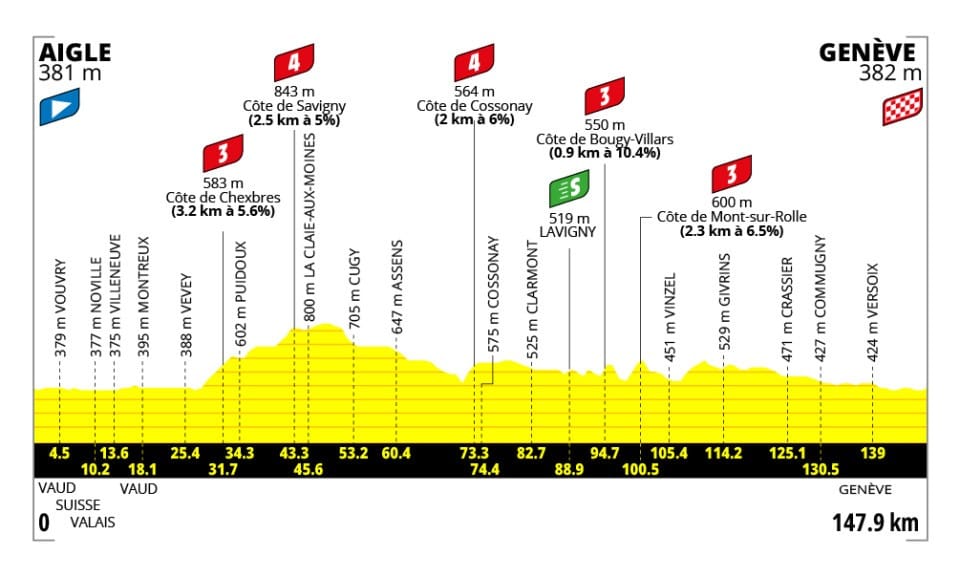
Stage 2: Aigle to Genève (147.9 km)
Did we do a good job with this story?