
It’s been a full year since Lauf Cycles, the Icelandic brand best known for its zero-maintenance leaf-sprung gravel forks, returned to the discipline where it first began – mountain biking.
If the image above hasn't already made it obvious, Lauf Cycles is known for doing things differently. It was arguably the first brand to succeed in adding front suspension to modern gravel bikes. They were then almost two years ahead of others in offering a carbon gravel race bike that clears 29 x 2.25" tyres. And being consumer-direct, it's a brand that is as competitive on price as it is innovative.
With all of this in mind and knowing the bike wasn’t going to be cookie-cutter, a year ago I flew across the world to attend the launch of Lauf’s first mountain bike: the Elja (pronounced El-ee-ya). A year on and I have plenty of thoughts to share about this unique do-it-all cross-country and down-country bike.
Highs: Leading levels of tyre clearance, proven geometry, incredible pricing, easiest full suspension linkage to service on the market, not like everything else.
Lows: Compromised and restricted bottle fitment, some odd choices around bearing preload for the rear linkage, frame can cause leg rub with narrow-stance riders, wireless shifting only, a big bet on tyre widths increasing without adjusting the bottom bracket height to match.
Price: Complete bikes start from US$4,990. The top-end option, as tested, is US$8,990.
Note: A little over a year ago I wrote an “In for Review” article about this bike based on a few weeks of usage and a pre-production frame. This full review repurposes some of those original words, now with build and final ride thoughts.
When this bike first launched, I recorded a bonus episode of the Geek Warning podcast with the founder and R&D lead at Lauf Cycles. The conversation covered the new Elja, the company, wide tyres, and a few related topics.
Key details on the Elja
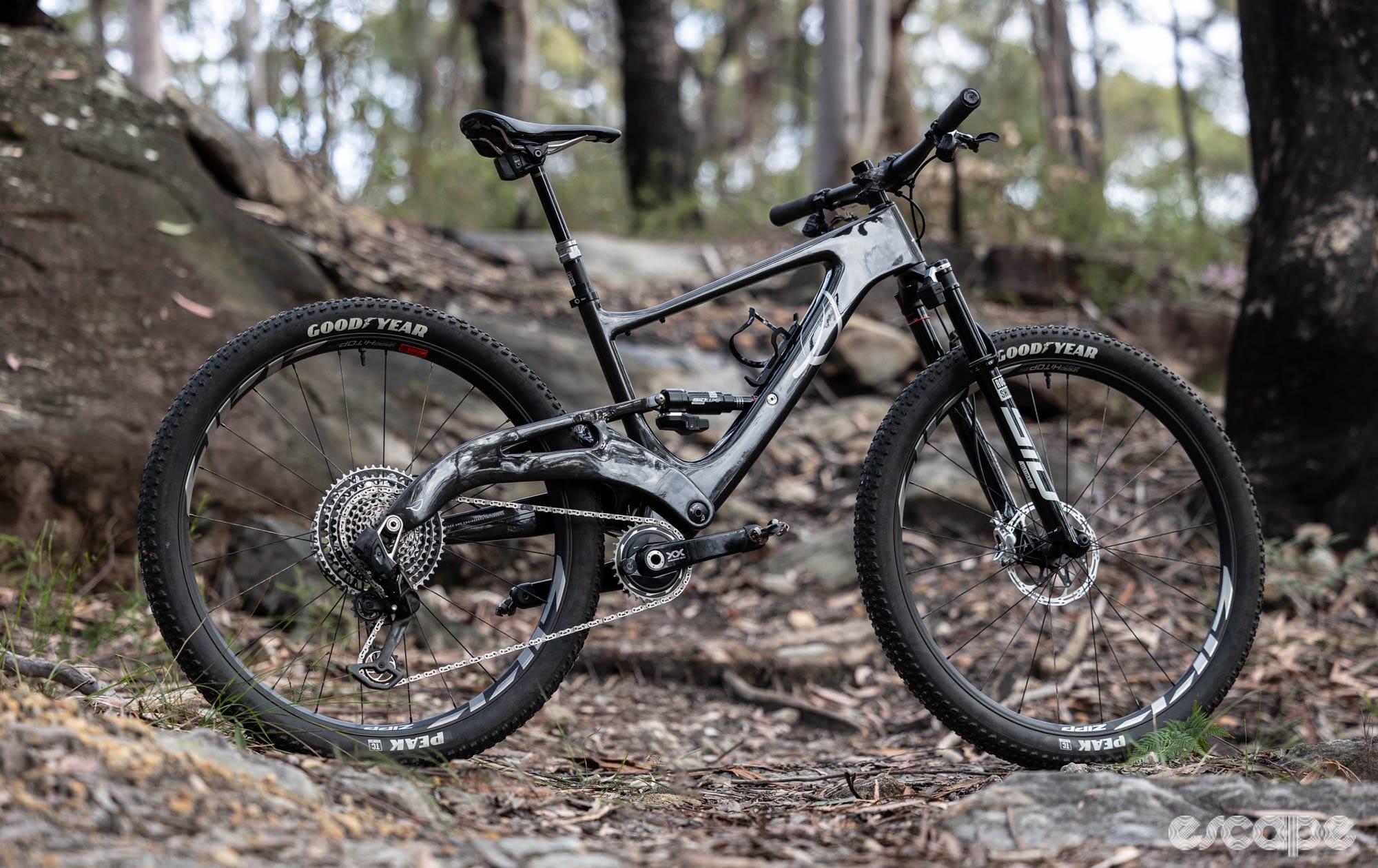
Given Lauf’s history in gravel suspension forks, you may have expected something that drew on the company’s glass-fibre leaf spring experience. Perhaps a bike that took the flexible chainstay (used in countless XC bikes of today) to another level or even one without any main/lower pivot point at all. The Elja is none of that. Rather, the Elja’s design is arguably best described as a throwback merged with modern composites and geometry.
Indeed, the new Elja is a traditional and true single-pivot full suspension bike, with the singular pivot point placed forward of and above the chainring. The full carbon frame offers a claimed 120 mm of rear wheel travel, while up front the bikes can be purchased with either a 120 mm fork (cross-country models) or a 130 mm fork (Trail models). Each of the four frame sizes rolls on 29er wheels, with the tyre clearance so big it gets its own section in this review.
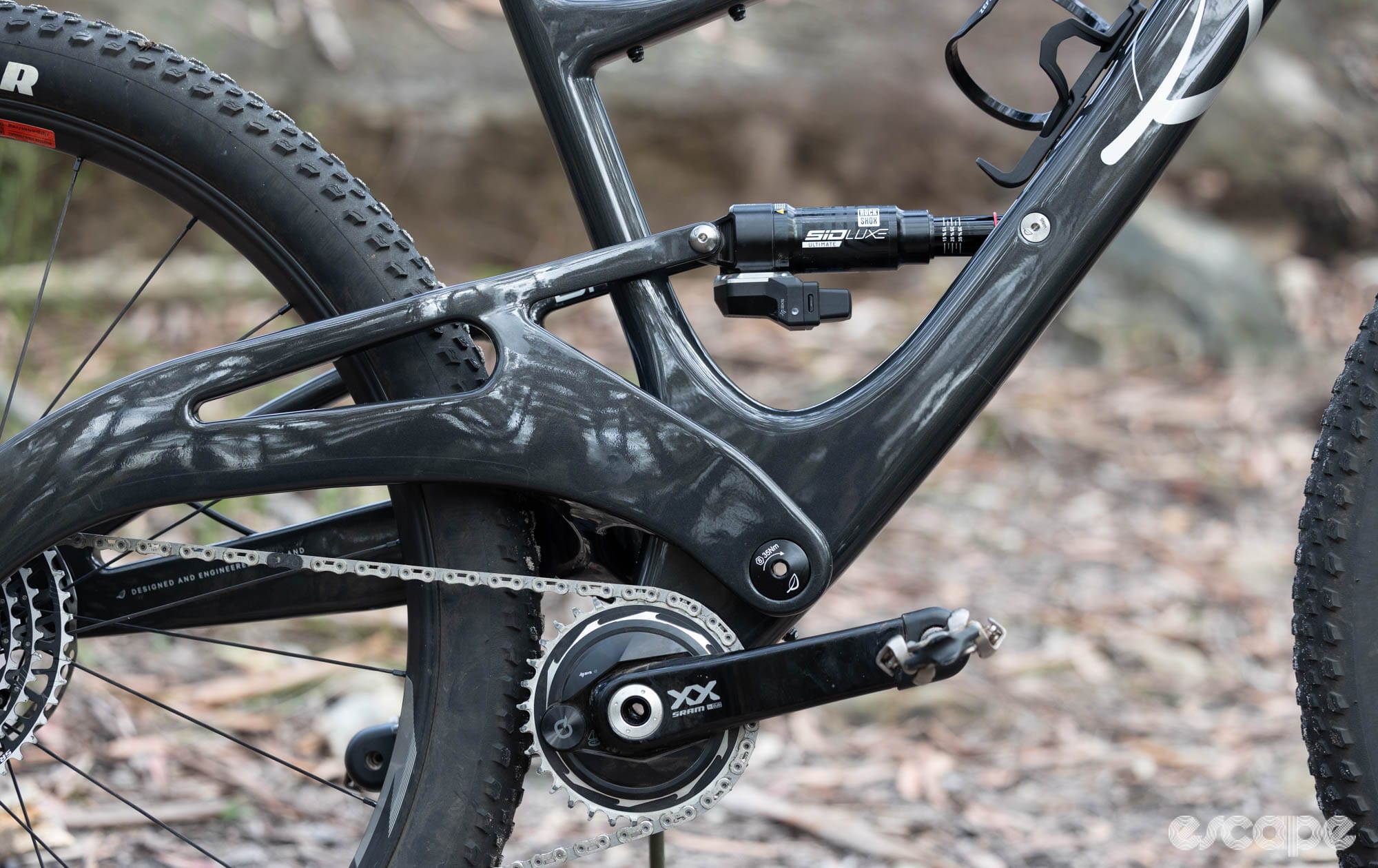
Single-pivot mountain bikes still exist from other brands (most notably British manufacturer Orange), but over the past two decades they’ve largely fallen out of favour for more complicated designs that seek to better isolate the impact of pedalling and braking forces on the suspension, adjust how the travel of a bike is used, provide better-bracing stiffness, or in the case of many XC bikes, just change where the shock sits in the bike. By contrast, Lauf Cycles’ founder Benedikt Skúlason believes the latest crop of tuneable and automatically controlled suspension components can largely help to achieve what some of those more complicated suspension linkage designs aim to do, and saw an opportunity to return to a single-pivot design that’s undeniably simpler to maintain and more cost-effective.
The frame design may be simple, but a quick look reveals significant tube profiles throughout, including an enormous and largely uninterrupted down tube that just about swallows the tapered head tube whole. The seat tube starts well forward of the bottom bracket, and so while its angle looks slack, its effective position is actually rather steep. Out back, the bike's rear end is quite the structure, with plenty of carbon stiffly bridging between the asymmetric left and right sides that sandwich the rear wheel. Beauty is always going to be in the eye of the beholder but generally speaking, old-school mountain bikers with a fondness for old Cannondales and GTs tend to love how this thing looks, while everyone else just thinks it looks weird.
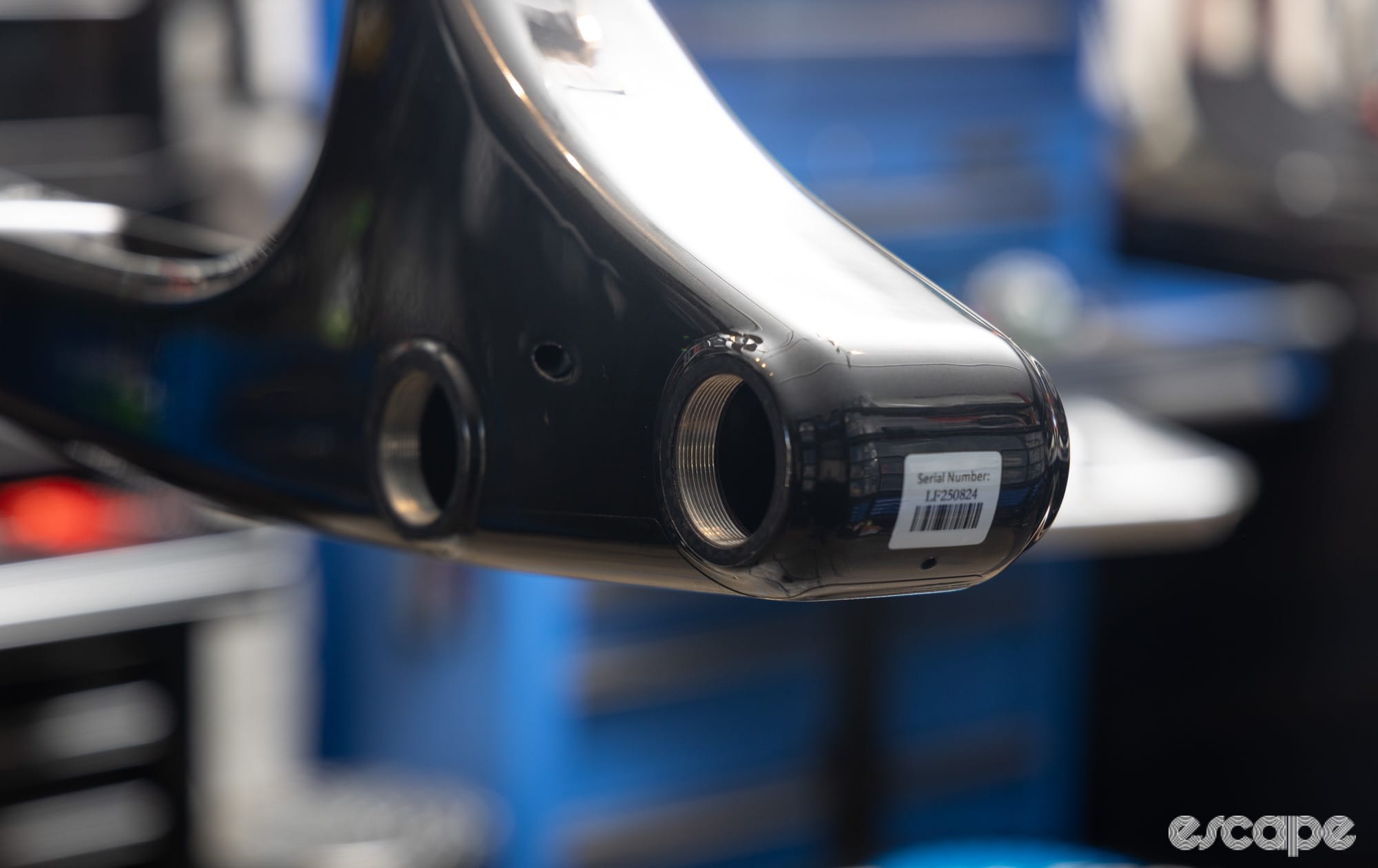
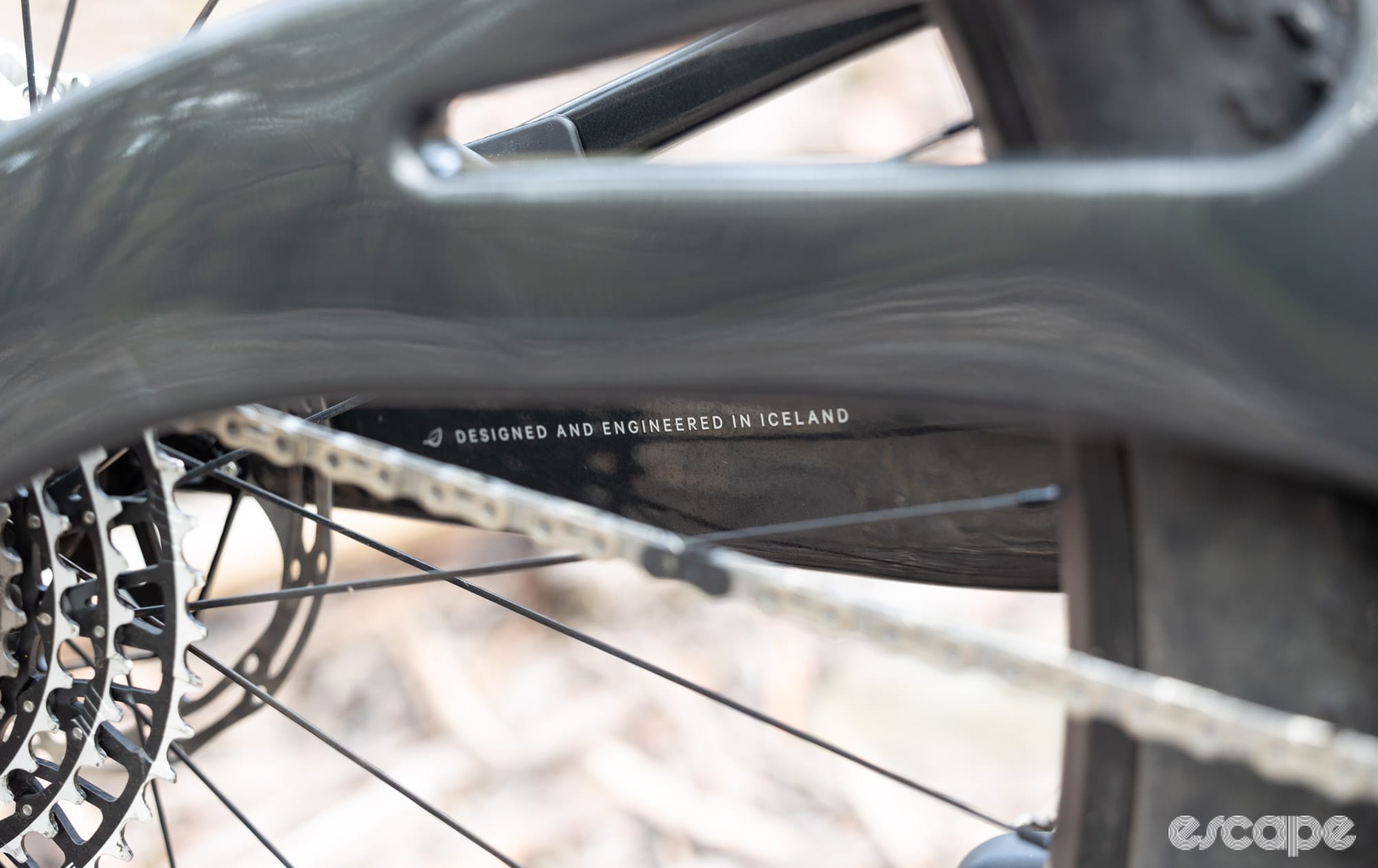
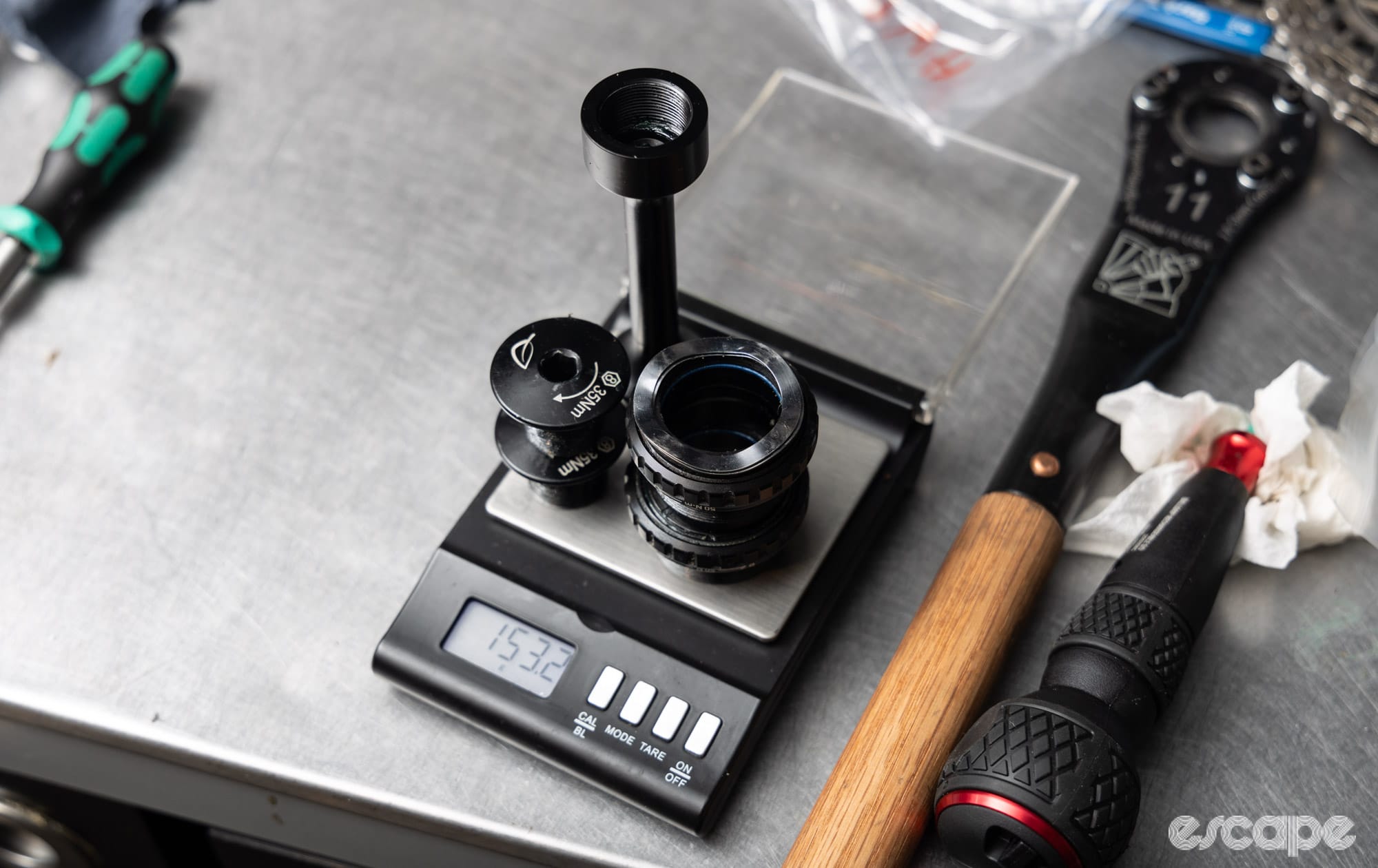
With just one pivot point to tie the front and rear triangles together, Lauf has somewhat humorously given the bike a second bottom bracket. Indeed, the main pivot of this bike is an actual SRAM DUB English-threaded bottom bracket, just like the one between the crankset. According to Lauf, apart from not making a full rotation, the forces put through this main pivot are extremely similar to those demanded of a bottom bracket and so the decision was just too obvious. With just a couple of hex keys and a regular bottom bracket tool required for replacement, the Elja offers the simplest bearing replacement of any bike on the market.
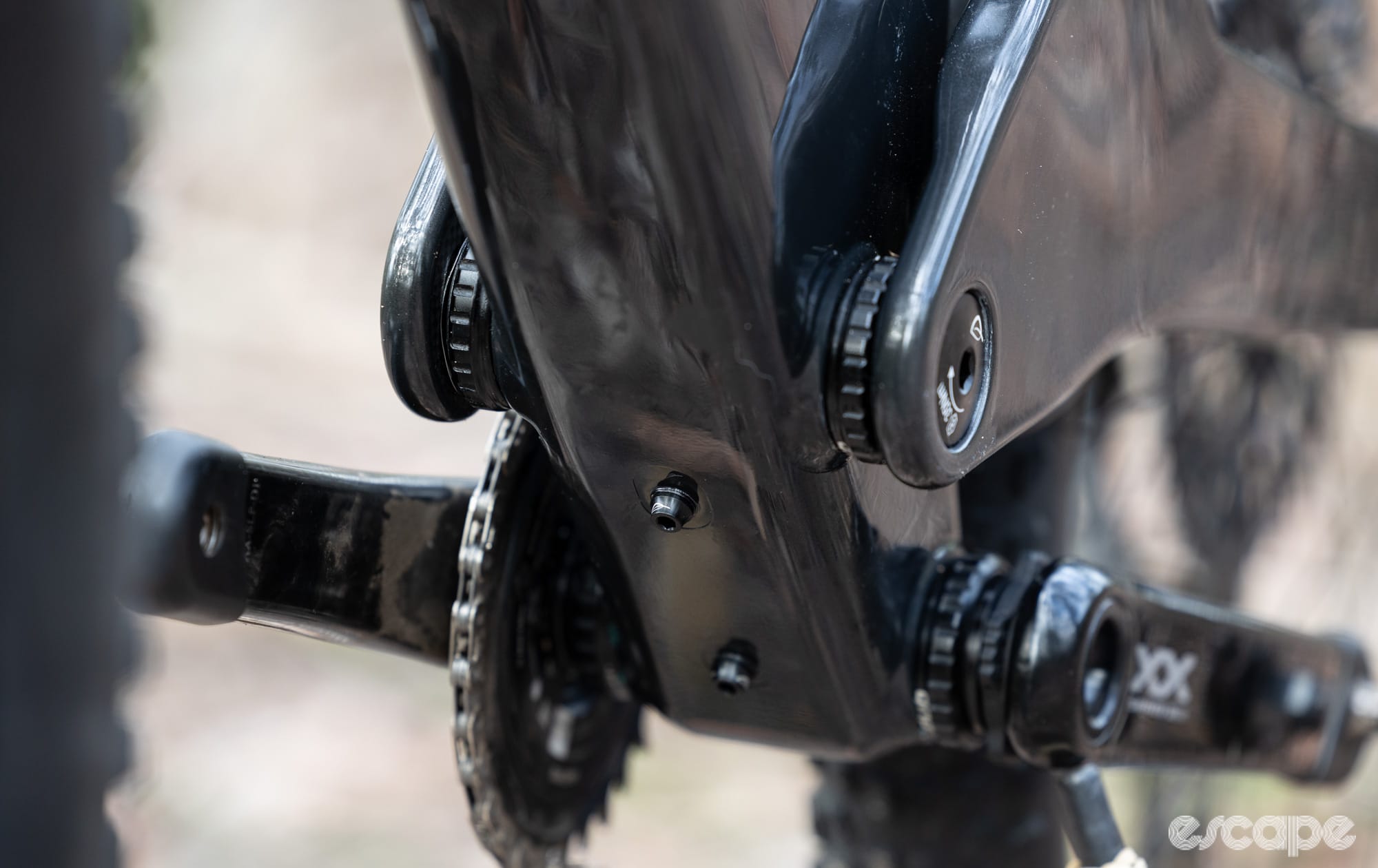
There’s a lot of material in the front and rear ends of the bike, but a single pivot design like this can still flex enough to put unwanted side loads into the rear shock. Many other full suspension bikes counter this by using a reinforced link that helps isolate the shock from such forces, but Lauf’s approach is to actually introduce flex. Here, two thin arms of carbon fibre extend forward of the stiff rear end and are intentionally designed to flex side-to-side before those forces reach the shock. Grabbing the rear wheel and forcibly pushing and pulling it sideways reveals this solution works largely as intended, but the shock is still seeing a minor amount of side loading from initial flex in the pivot assembly.
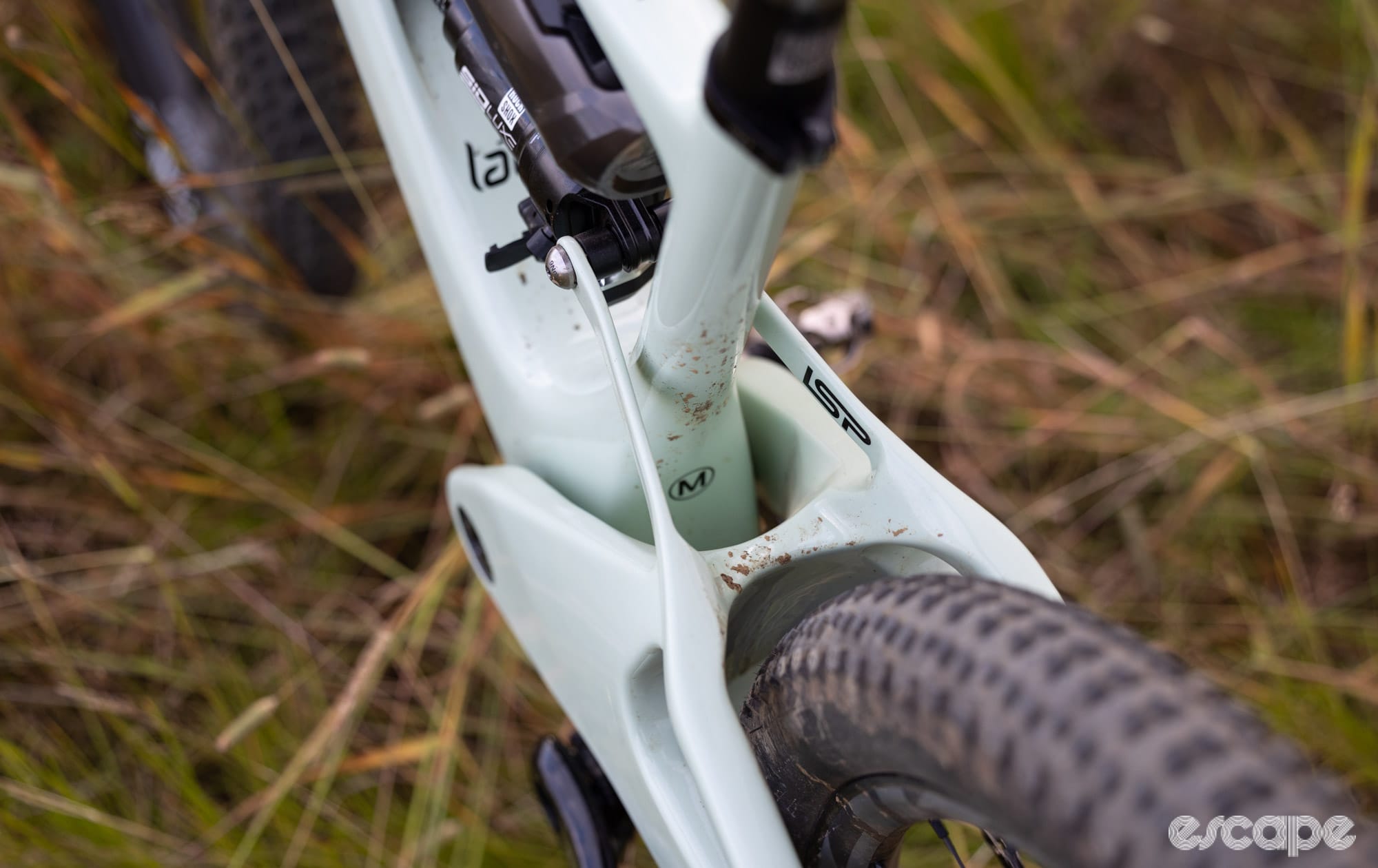
Other frame details include cable ports on just the left side of the head tube, leaving a regular headset to do its job as engineers first intended. However, there are just two ports: one for the rear brake (which is internally guided) and another for a mechanical dropper post if you choose to ditch the provided RockShox AXS Reverb wireless post (supplied with all models). For those doing the math, that leaves no cable port for mechanical shifting, nor any provision for a cable-actuated rear shock lockout. Similarly, it forces those who run a left rear brake (my hand is up) to have a hose that doesn’t come around the head tube in a rub-free way.
More tyre clearance than an open-wheeler
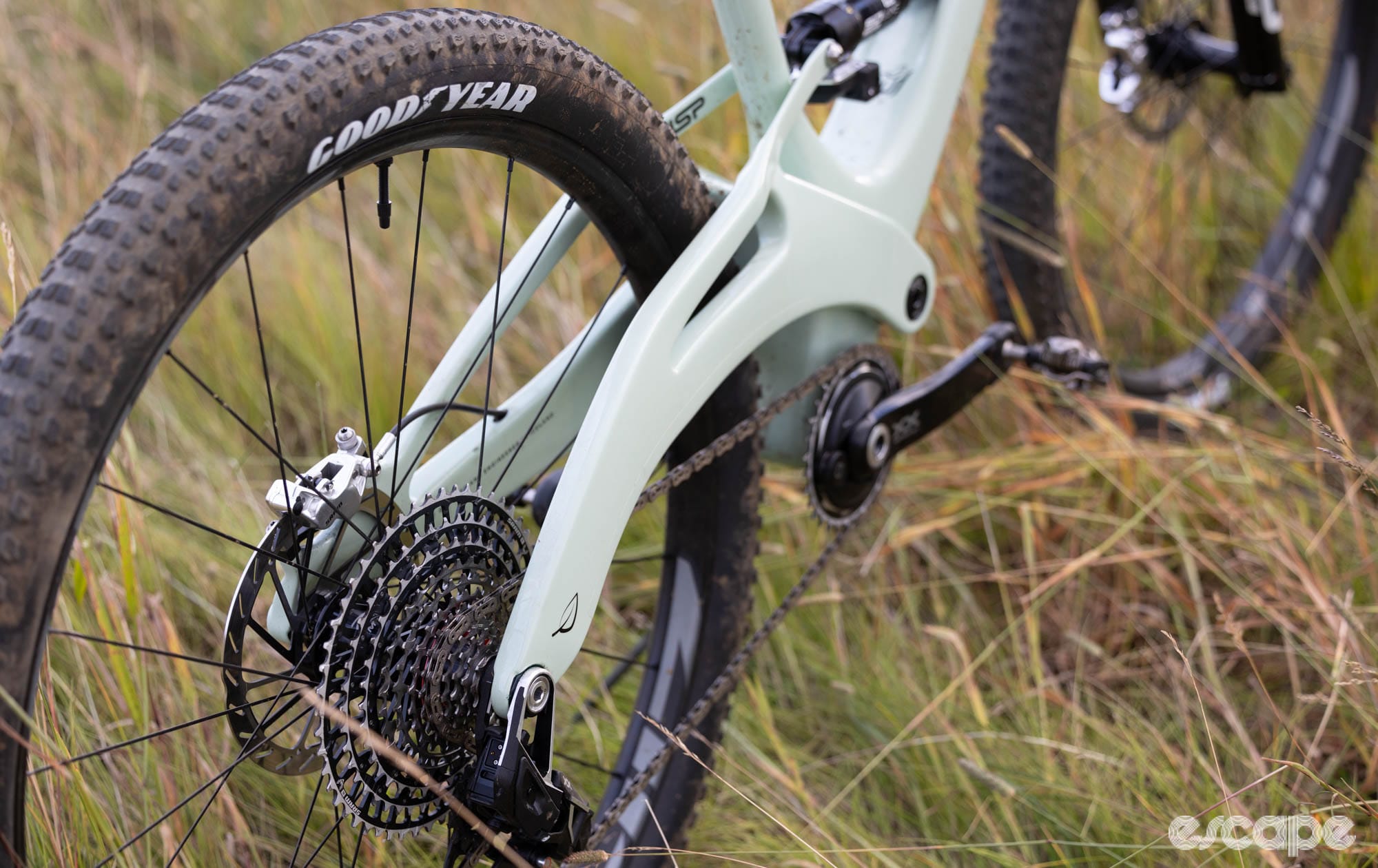
Less seen today, Lauf has adopted an elevated chainstay design on the driveside of the bike. It’s a decision made largely to overcome the common design issue of having to squeeze a chainstay in between the chainring and tyre. By getting the chainstay away from that location, Lauf found freedom in adding more tyre clearance than any other cross-country bike on the market. And while Skúlason merely laughed at the suggestion, it also means you can remove a closed chain from the bike (say, for waxing) by only undoing a single derailleur pulley wheel.
OK, let’s talk about that tyre clearance.
Lauf strongly believes that tyres in cross country should trend wider than the current status quo of 29 x 2.3-2.4" and they’ve provided the space in case others agree. Officially, all sizes of the Elja can fit up to 29 x 3.0" tyres in the rear end and still meet ISO standards. Yep, a tyre so big it has its own naming class: 29 Plus.
It was a few years ago that a few big players (namely Trek and Specialized) made a big push to sell mountain bikes with Plus-sized tyres. Trek had the most success, but the idea largely failed due to hefty tyre weights, sensitivity to ideal tyre pressure, and just a general lack of obvious benefit to the rider.
While there’s a decent choice for trail-oriented tyres in 2.6" and even 2.8" widths, it’s currently slim pickings for lightweight race-focussed tyres in anything larger than a 29 x 2.4" (the limit of most frames). Vittoria has its Mezcal in a 29 x 2.6”, Specialized has been teasing a 29 x 2.5" prototype tyre in World Cups, and Lauf seems confident the trend will continue. Still, perhaps the biggest barrier to tyres trending wider is a lack of race-focussed frames that can fit much wider than 29 x 2.4", but hey, someone had to be first.
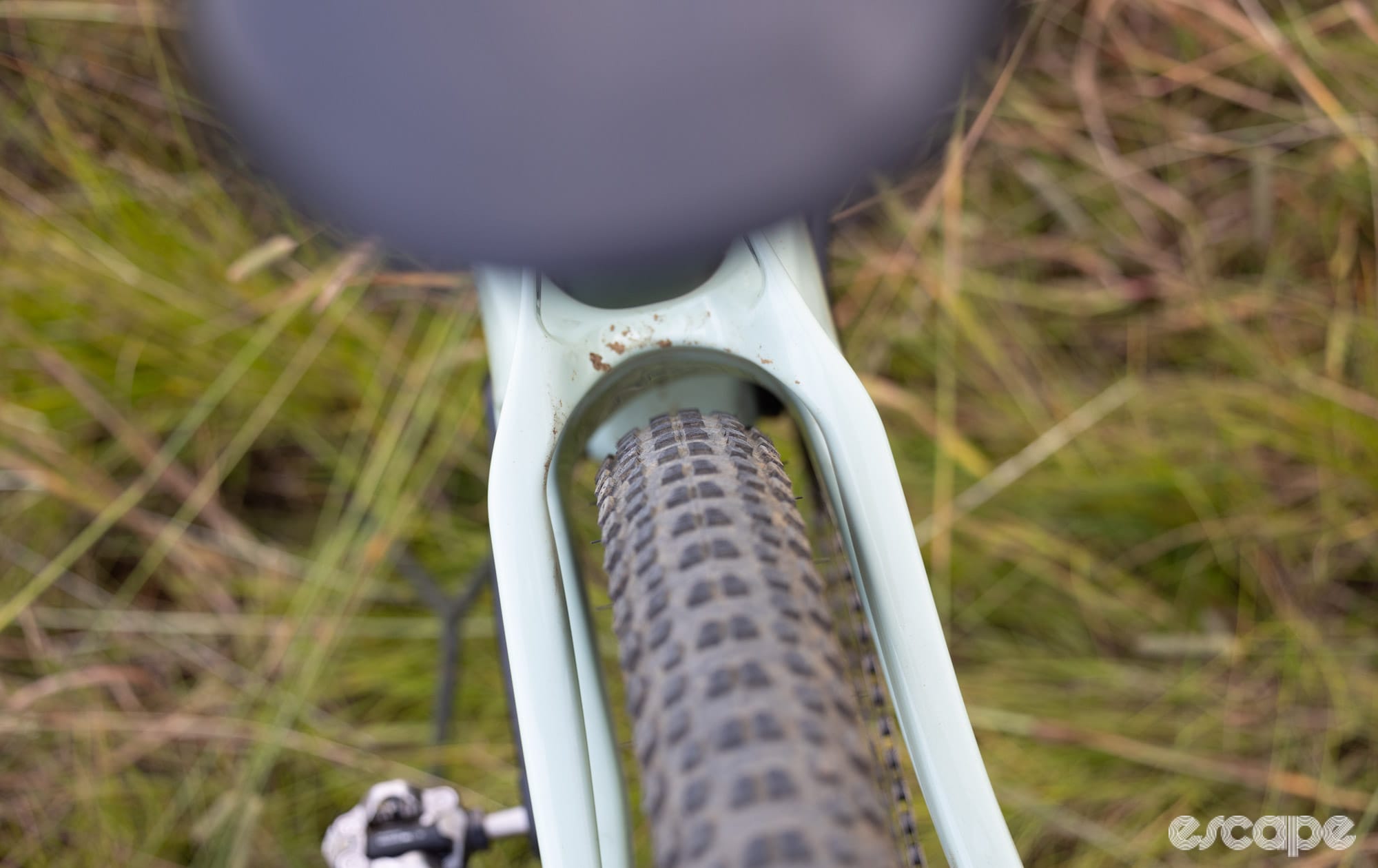
While not going the full hog, all Elja bikes ship with a 29 x 2.6" version of the Goodyear Peak cross-country tyre, a size that Lauf worked on with the tyre specialist to put into production. Bigger it may be, but the tyre measures in at an actual 2.46" (62.4 mm) on a 30 mm-width rim, and so the difference to, say, a worn-in Maxxis Rekon 29 x 2.4" WT (measured 60 mm) isn’t all that significant. As it turns out, those 2.6" tyres were designed around a 35 mm internal rim width, which as you may know, is extremely rare amongst the latest lightweight wheelset options which tend to stick around 29-30 mm in width.
It’s worth noting that while the clearance is all there, Lauf also hasn’t made any big bets when it comes to doing anything funky with the cranks, wheel-spacing (it’s Boost), or matching of the geometry to make such clearance happen.
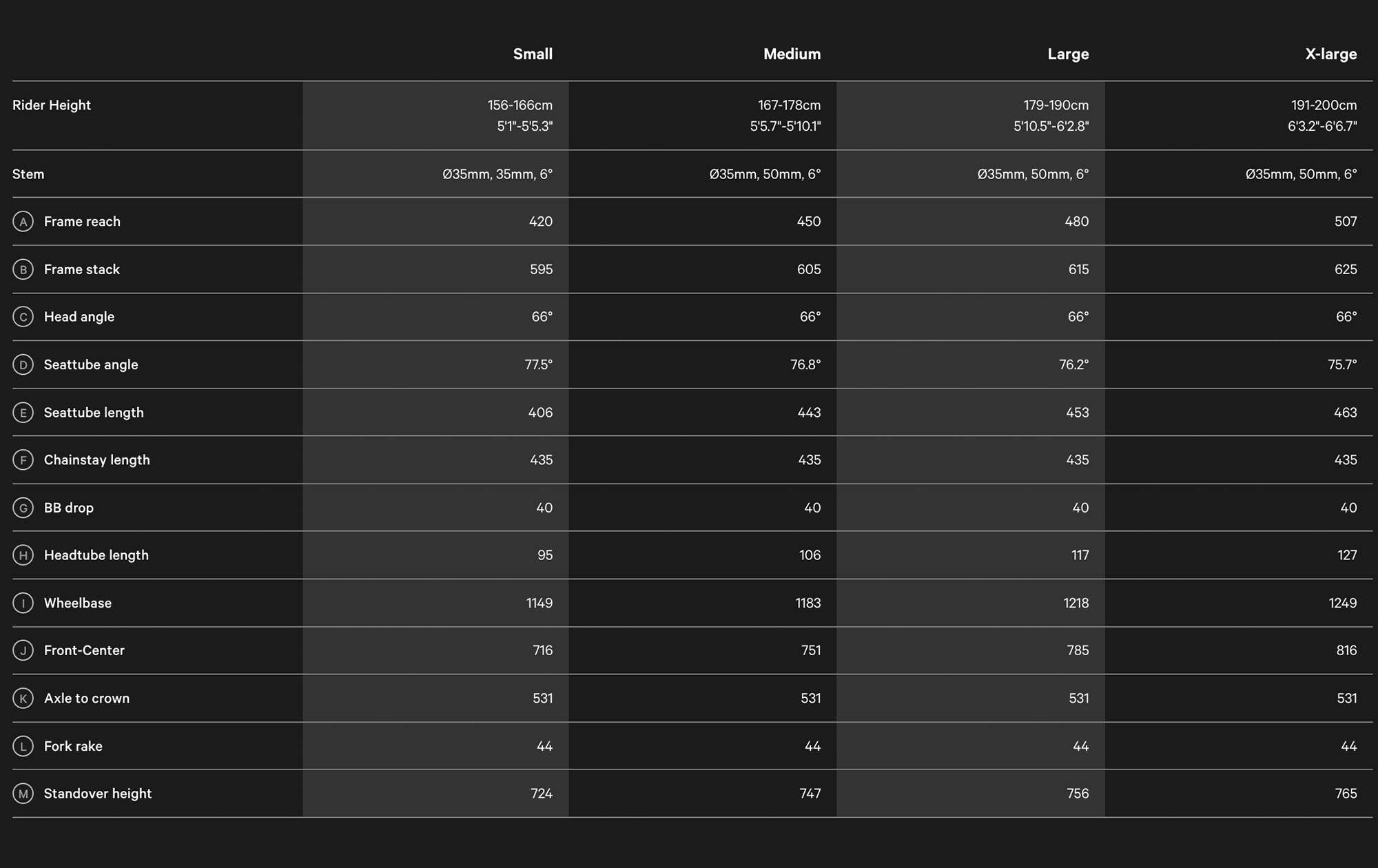
Instead, the figures largely align with and follow a number of other popular progressive-type cross-country bikes (such as the Scott Spark and Specialized Epic 8). For the XC versions with the 120 mm fork on front, the bikes offer a 66° head angle, while the extra 10 mm of travel on the Trail versions slackens that figure to 65.6° (along with slackening the seat angle and raising the bottom bracket). Reach figures grow with 30 mm increments through the four sizes, while the rear chainstay lengths remain unchanged at 435 mm in each size. There’s also a welcomed smidge of extra stack height in the front end compared to many of the direct competitors.
Pricing, builds, and weights
Both front and rear triangles are carbon fibre, but Lauf keeps things relatively simple in terms of the materials used. As a company, they’ve historically avoided using high-modulus carbon fibres that save weight, rather sticking with more mid-range stuff that’s less brittle to impact.
Similarly, Skúlason is no fan of frame storage hatches in carbon frames for how it breaks the flow of fibres and the reinforcements needed to overcome that. A side perk to using mid-range fibres and fewer frame features is that the frames are no doubt cheaper to produce, too.
Big tube profiles and a relatively standard layup mix mean the Elja doesn’t set any new benchmarks for weight. Lauf claims a painted medium frame weighs 1,950 grams without rear shock or thru-axle. I’ve since weighed my medium-size black painted frame at 2,032 grams including all pivot hardware and titanium shock-mounting bolts. Meanwhile, the provided RockShox SID Luxe Ultimate FA rear shock adds 354 g to the figure (excluding AXS battery).
By contrast, some of the very lightest (and most expensive) cross-country frames, such as the Specialized S-Works Epic 8 and Yeti ASR Turq hover around the 1,550 gram mark without a shock. Meanwhile, many second-tier carbon frames tend to sit closer to where the well-priced Elja has landed with the previously reviewed Cannondale Scalpel 2 being such an example with an actual frame weight 2,160 grams, including the RockShox SIDLuxe Select+ rear shock and all frame hardware.
While it may never happen, Skúlason had previously teased that a more premium and delicate high-modulus layup and lighter paint could be used in future to save approximately 200 and 50 grams, respectively. Clearly, the frame design is not the limiting factor here, but rather the purposeful choice to use a more robust (and less expensive) lay-up.
As already mentioned, this simpler frame is the centre to what’s an impressively well-priced bike. And relatedly, for such a small company, Lauf Cycles has built a reputation for being sharp on price. As discussed in the bonus episode of the Geek Warning podcast from a year ago, Skúlason explained that the consumer-direct business model is certainly one factor, as is the build-to-order assembly of the bikes. Other savings are seen through simple single-colour paint options (of which there are four), a more limited size range, that simpler suspension design, a single choice of frame lay-up, and a design that intentionally keeps warranty rates to a minimum.
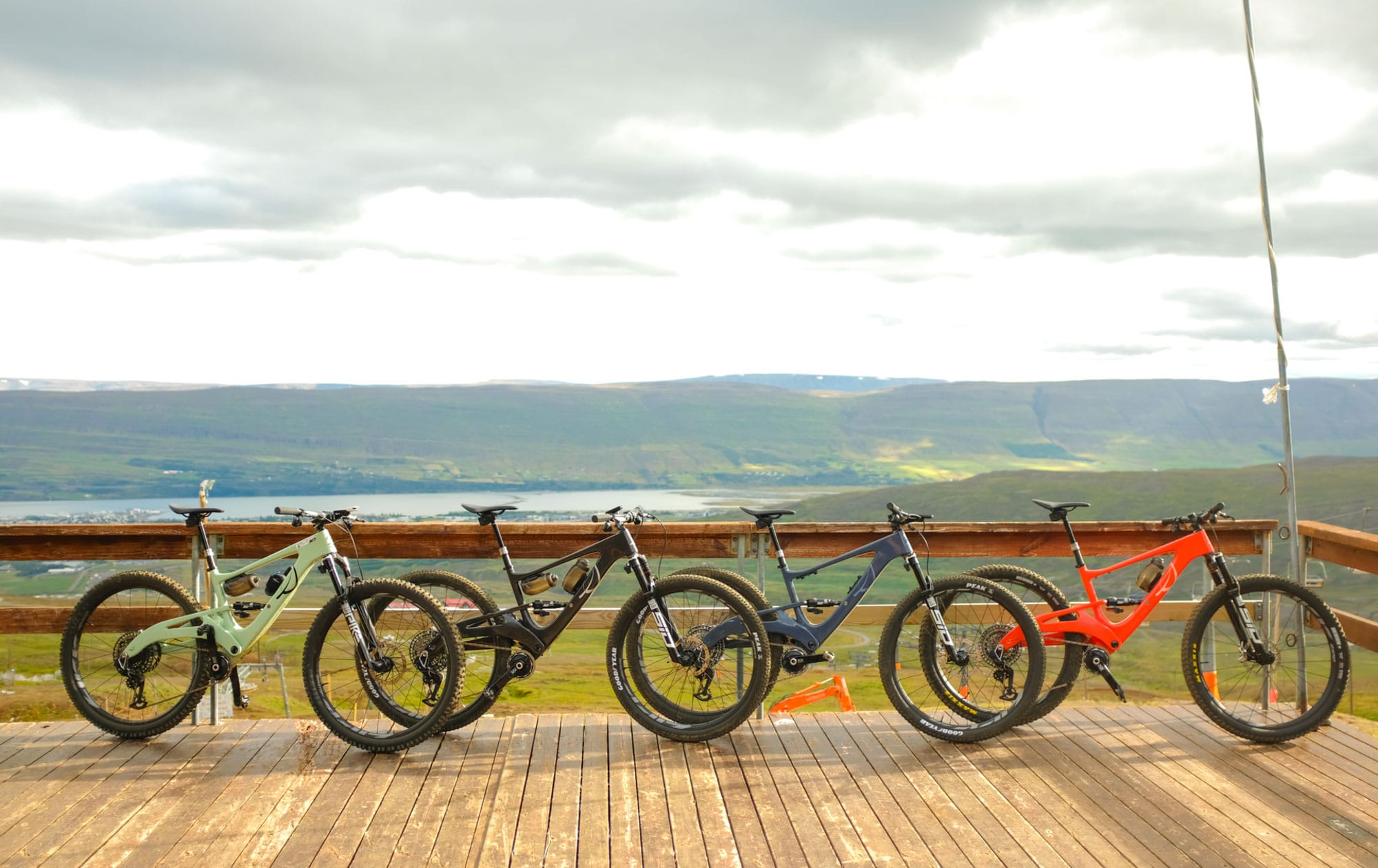
Lauf assembles and ships all of its bikes out of its facility in Harrisonburg, Virginia, USA. You can expect to add a US$99 shipping fee, plus whatever local sales taxes may apply in your region (Lauf handles duties and other unexpected costs at its end which are included in the price). While international sales are available, Lauf lists all of its prices in USD, so I’ll stick to that.
With no options for mechanical shifting, the build kits are best described as high-end and even-higher-end. And whether you’re looking at the Elja XC (120 mm fork) or Elja Trail (130 mm fork) bikes, all build kits slant toward the trail end of things.
Regardless of price point, Lauf impressively equips each bike with an ultra-premium RockShox Reverb AXS (wireless) dropper post (currently the Gen 1 version) and its own 35 mm carbon handlebar with a cut-ready 780 mm width. There’s a stubby FSA 50 mm stem on all sizes except the small, which comes with a 35 mm length.
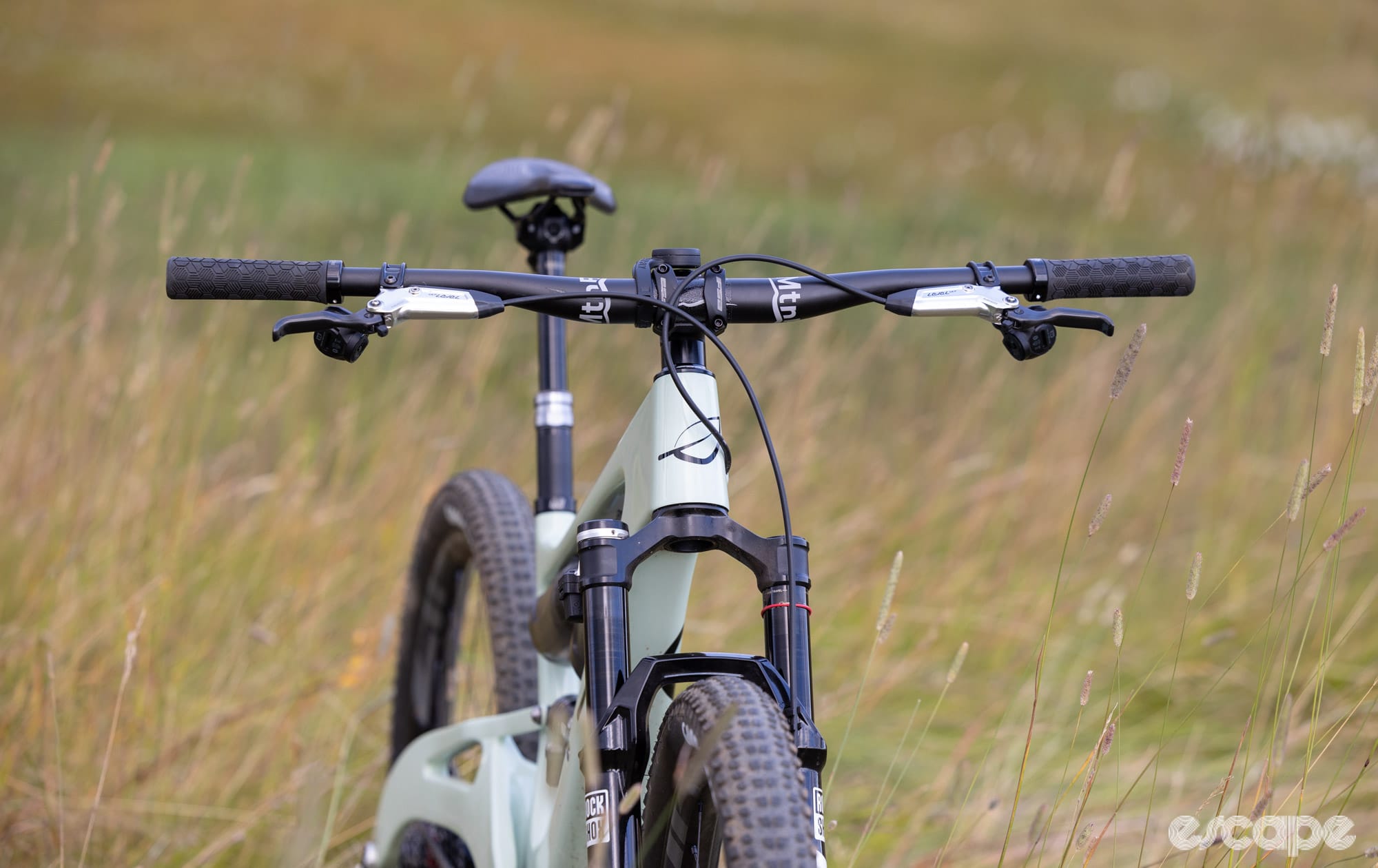
The SRAM brakes are the previous-generation four-piston Levels, and matched with bigger 180 mm rotors front and rear. And of course, those 2.6" (claimed) Goodyear Peak 120 tpi tyres carry a little more bulk too, weighing an actual 815 and 832 g with a little bit of dried sealant. All of these little choices do add up, and as tested, the complete Elja XC Ultimate Flight Attendant weighs 11.35 kg (without pedals or cages, but with a battery of batteries).
The most affordable Elja option is the Weekend Warrior Transmission that sits within the Trail range. At US$4,990, you get a bike with a RockShox Pike Select 130 mm fork, RockShox SIDLuxe Select+ 2 Position rear shock, SRAM GX Eagle Transmission Wireless shifting, and DT Swiss M1900 wheels. Spend US$6,390, and the Trail Race model escalates things way more than I had expected, giving a marginally better fork, upgrading the components to SRAM X0 Transmission, giving you a single-sided powermeter, and Zipp HiTop S carbon wheels.
Then there are the two more-premium options, each available in XC (120 mm front) or Trail (130 mm front) variants, and all with RockShox’s Ultimate-level AXS Flight Attendant suspension. At US$7,590, the Race Flight Attendant has SRAM X0 Transmission, a single-sided powermeter, and Zipp HiTop S carbon wheels. The US$8,990 Elja Ultimate Flight Attendant (tested) swaps in a SRAM XX SL Transmission group, including the spider-based powermeter.
Of course things are never purely apples-to-apples when comparing prices, but for a little context, a new Specialized Epic 8 Expert retails for US$7,200, it features a competitive carbon wheelset, but that price also only gets you mid-range RockShox SID suspension, an X-Fusion dropper, and SRAM GX Transmission. Spend US$11,000 for the Epic 8 Pro, and while it’s a lovely bike, you’re still not getting premium Flight Attendant suspension or an AXS seatpost. In Specialized’s range, you need to spend US$15,000 for the S-Works Epic 8 to get a bike with the flagship SRAM/RockShox AXS package that Lauf’s Ultimate builds offers (again, at US$8,990).
Perhaps one of the nearest comparison points comes from fellow consumer-direct brand, Canyon. Here, US$9,500 gets you the Lux World Cup CFR AXS which features a top-tier SRAM XX SL Transmission drivetrain, super nice DT Swiss wheels, and the top-tier RockShox SID suspension. However, Lauf’s pricing still shines when you consider the Canyon has a mechanical dropper post and manual lockouts.
If you’re chasing the value play, and you're in the USA, then the recently reviewed Ari Bikes Signal Peak 3.0 is the nearest comparison point with similar build kits on offer. Even then, Lauf has a small pricing edge of approximately US$500 for the top-tier model.
There are many ways to cut these apples, but either way, the Lauf represents stellar value for money.
How it rides
Did we do a good job with this story?