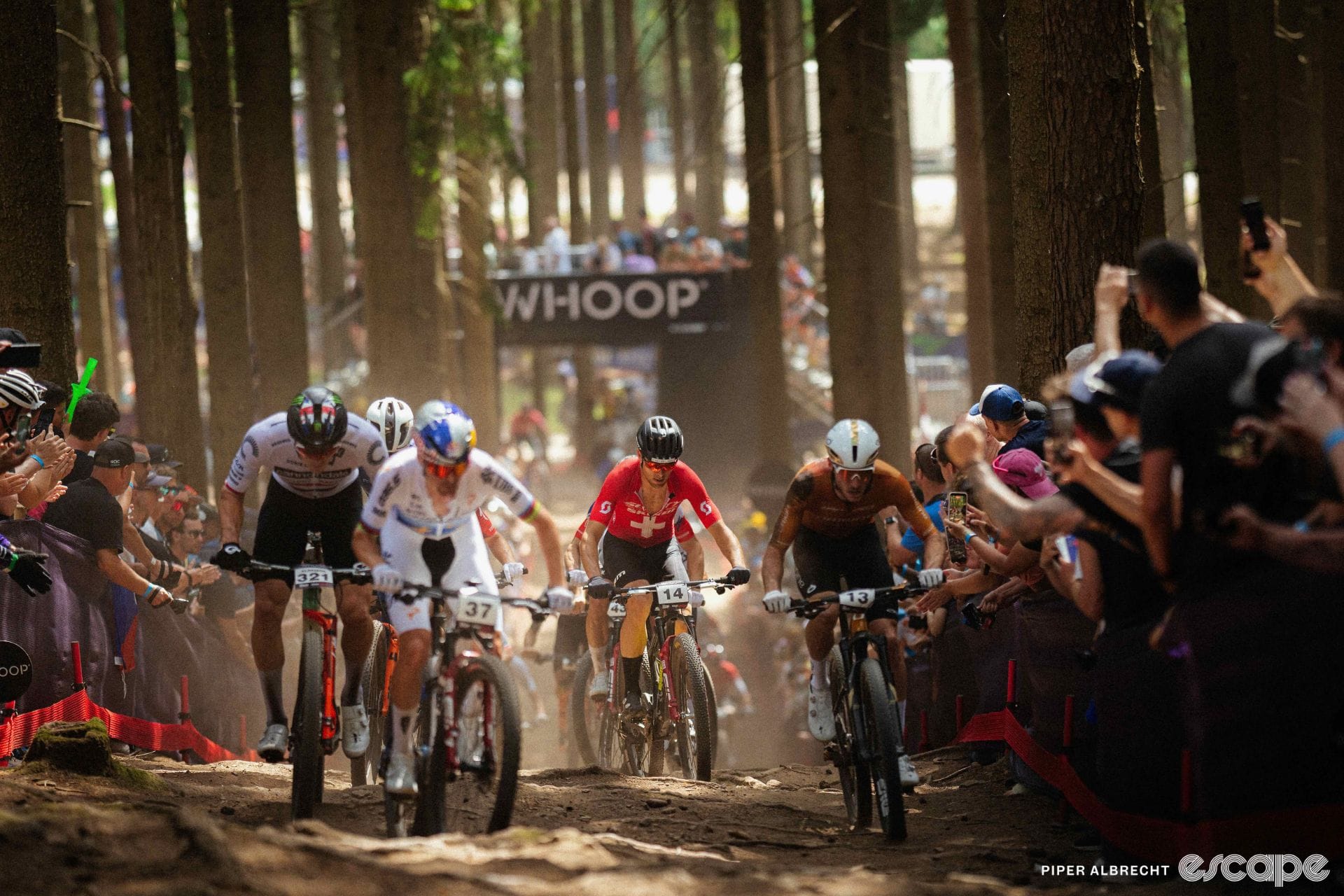


The lights steadily illuminate one by one until all five are red. Then comes the pause. All of the riders have their eyes trained on the gantry. As soon as the lights go green, riders stab feet at pedals and drag race off the line. For those at the front, it’s about holding position, while for those behind, it is the best chance to make up as many positions as possible before the field spreads out.
After the initial max effort there's little respite, with repeated short and punchy climbs are interspersed with technical descending, a combination of demands that has defined modern cross-country mountain bike racing at the highest level.
That combination makes XC uniquely difficult to pace. Holding a fixed power on the long alpine roads of the Giro d’Italia or Tour de France is one thing, but for XC racing, getting the most out of your race is a far more complex equation of anaerobic efforts, recovery, and technical aptitude.
To better understand that puzzle, I spoke with Jolanda Neff, Luca Martin, and Phil Dixon from Cannondale Factory Racing. Alongside their insights sits one of the most detailed analyses of XCO pacing to date: José Luis Sánchez-Jiménez’s study of 512 race files from 110 elite riders between 2021 and 2024.
Modern XC has changed what pacing looks like
XC racing at the highest level rarely settles in one place for more than a handful of years. Since the sport's inception, courses have been getting steadily more technical, lap lengths have been shrinking, and race durations are, in some races, lasting around half as long as they once did.
 Alex Hunt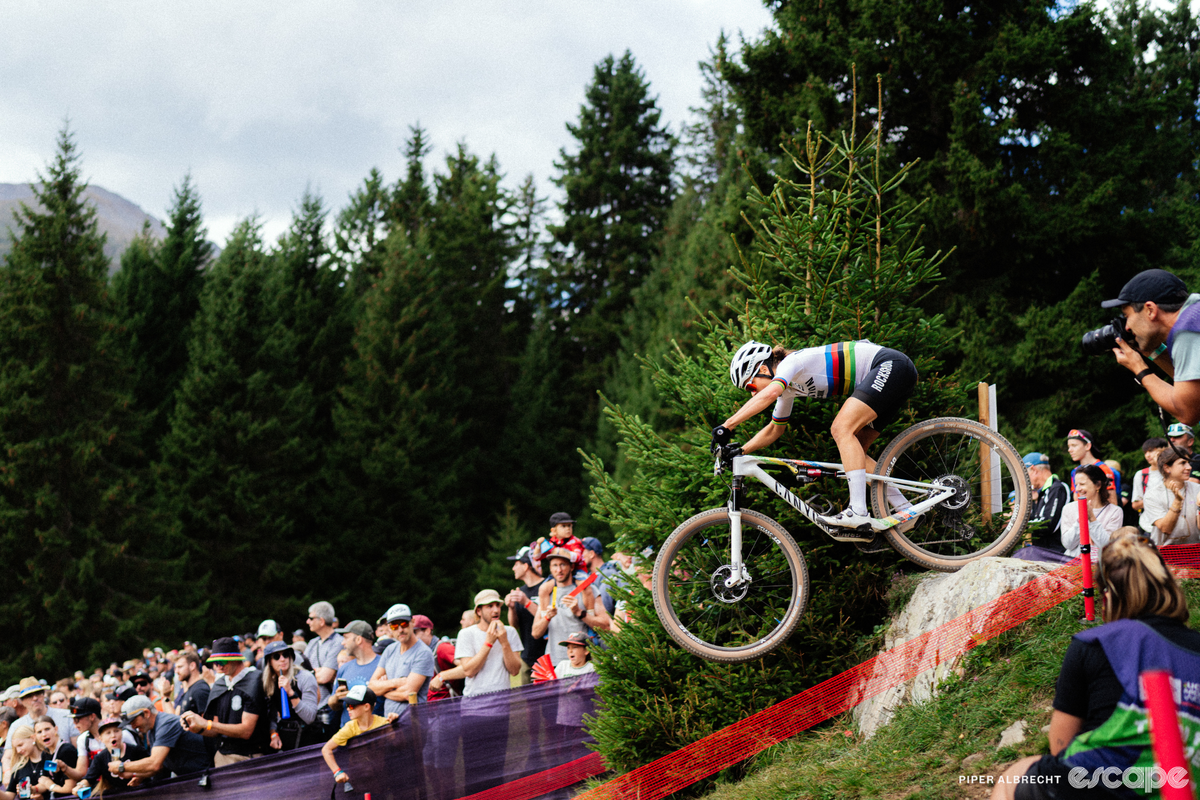
These changes haven’t just happened over decades but in some cases within a single rider's career, as Neff told Escape. “In the 2015 World Championships, we raced for an hour and 50 [minutes] and last year, the World Champs were an hour and 15. Most races are so much shorter now.” Since the early 2000s, XCO World Cups have shortened – both in lap and overall distance – focusing on more explosive racing across shorter, punchier laps, all with the aim of making racing more dynamic.
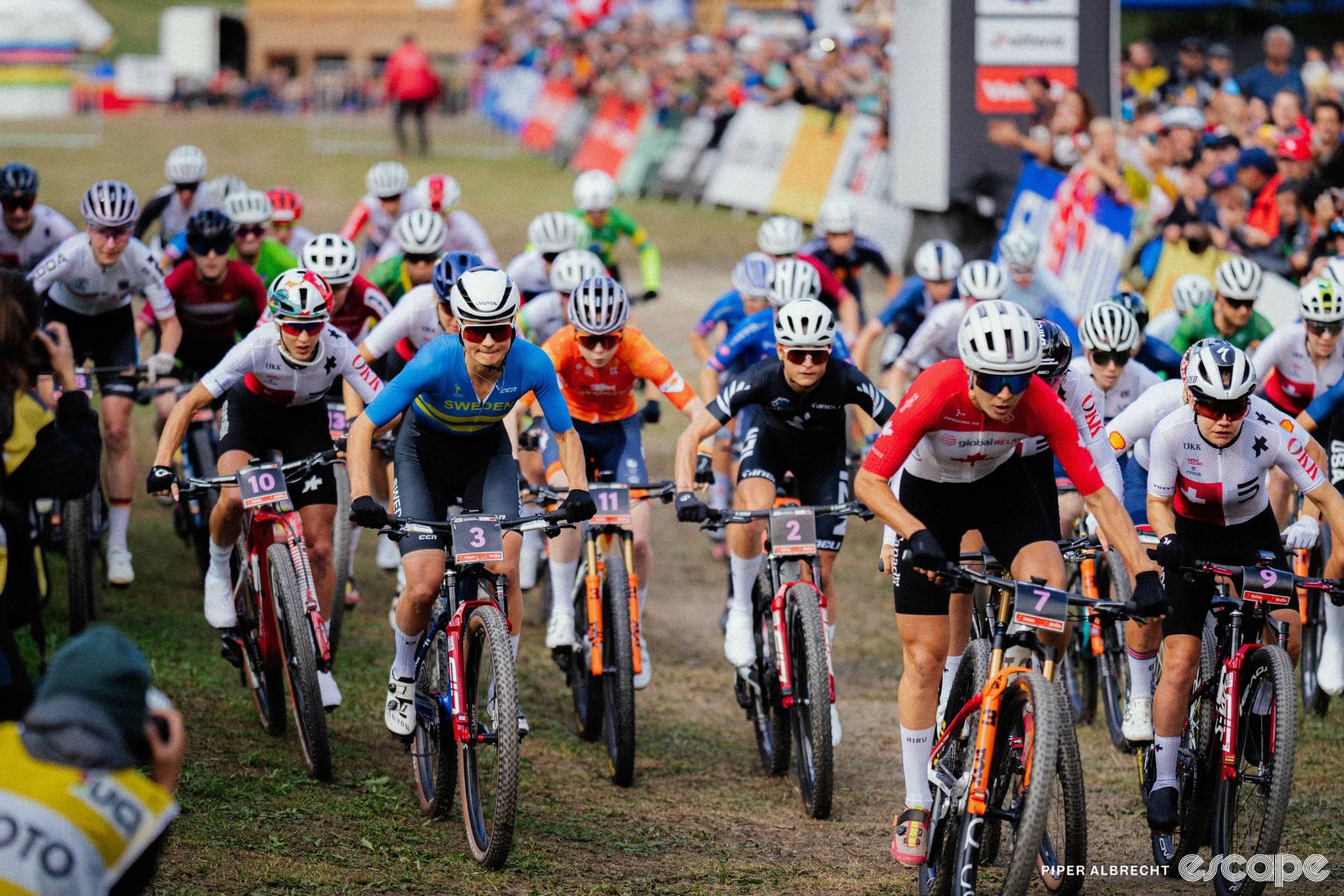
Where multiple, long, sustained climbs used to sit at venues like Albstadt, Germany, now courses typically use a more rolling profile with multiple short, explosive ramps. “It used to be an uphill for like eight, nine minutes and then one downhill,” Neff explained. “Nowadays it is constantly up and down.” She pointed to the Tokyo 2020 Olympic Games course as an example: “It was like 14 uphills in one lap, and each one was like 30 seconds.”
Did we do a good job with this story?