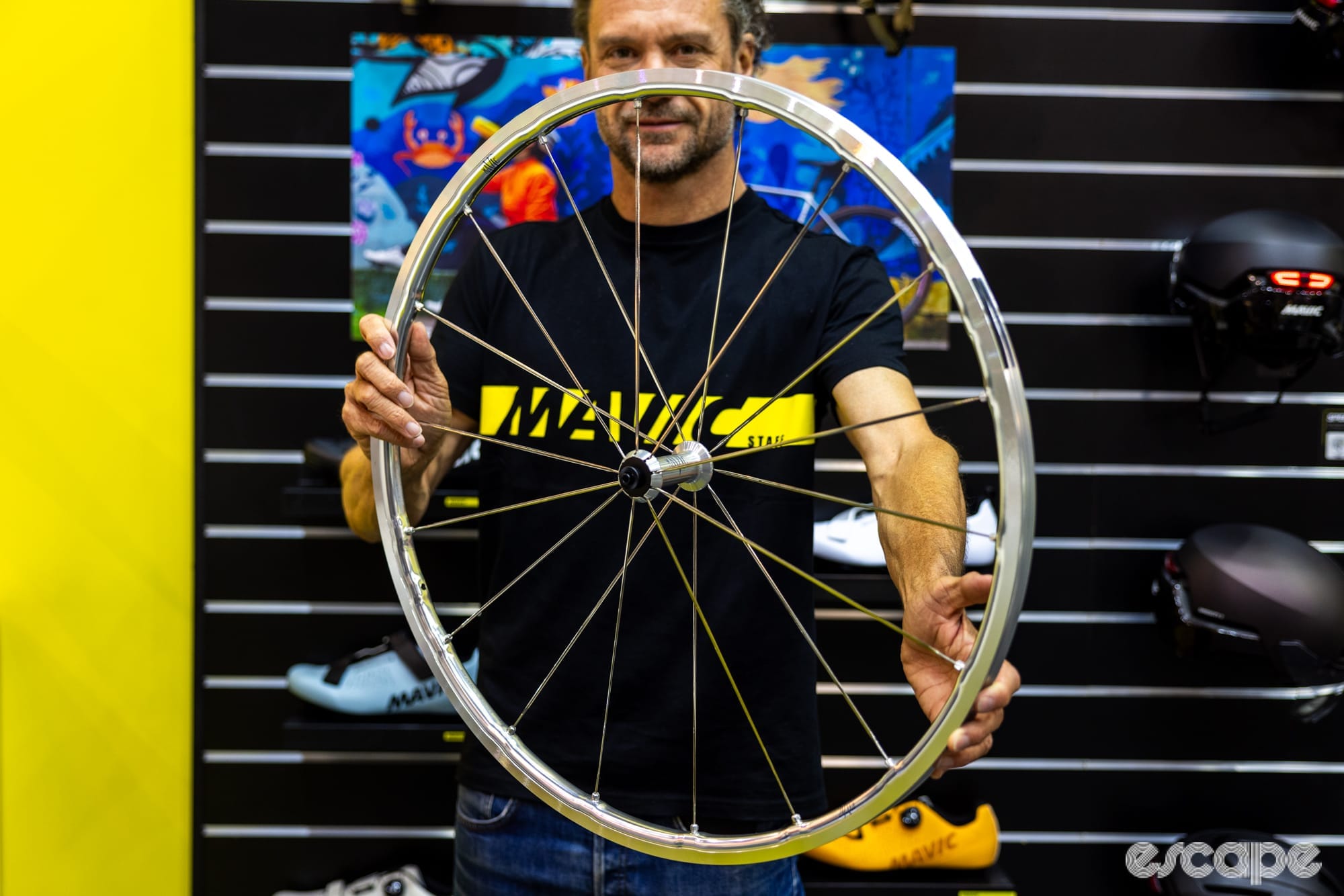

Mavic has been making wheels for over a century, and in that time, it's become one of the most recognisable brands in the sport. The French company, based in Annecy, launched the first aluminium rim in 1934 and served the Tour de France peloton with its yellow neutral-service cars for decades.
But after the highs have also come lows. After years being part of Amer Sports, Mavic was sold in 2019 to Regent, a Californian private equity firm, and that lasted barely a year before the brand was placed in receivership. In July 2020, Bourrelier Group beat 13 other bidders to take over the brand.
Bourrelier is a family business, built by Jean-Claude Bourrelier, and focused on home-improvement retail – as well as investment. It bought Mavic into its portfolio, and kept the French production site and the Annecy R&D, and pitched the deal around a long-term return to technical leadership rather than a quick turnaround.
The new owner then put the brand through a hard restructuring — cutting the range, shuffling the supply chain, consolidating manufacturing from four plants down to one. However, under the new ownership, Mavic has continued to make a loss. The group's financial results from late April showed that Mavic's revenue was down by a fifth compared to 2024. Bourrelier group admitted that "While we remain convinced of the Mavic brand's worldwide value and of its ability to benefit fully from the coming recovery, we remain vigilant and continue to take the steps needed to adapt to the market and return to break-even as quickly as possible. Despite this difficult sector context, the long-term trend and growth prospects remain favourable given the expansion of cycling."
Alberto Morgando, an Italian mechanical engineer with a background in private equity and household appliances, took over as CEO in early 2024, with a mandate to return Mavic to profitability. Just before that, in late 2023, the company had reopened a North American subsidiary and service centre in Waterbury, Vermont, run day-to-day by sales and marketing manager Josh Saxe.
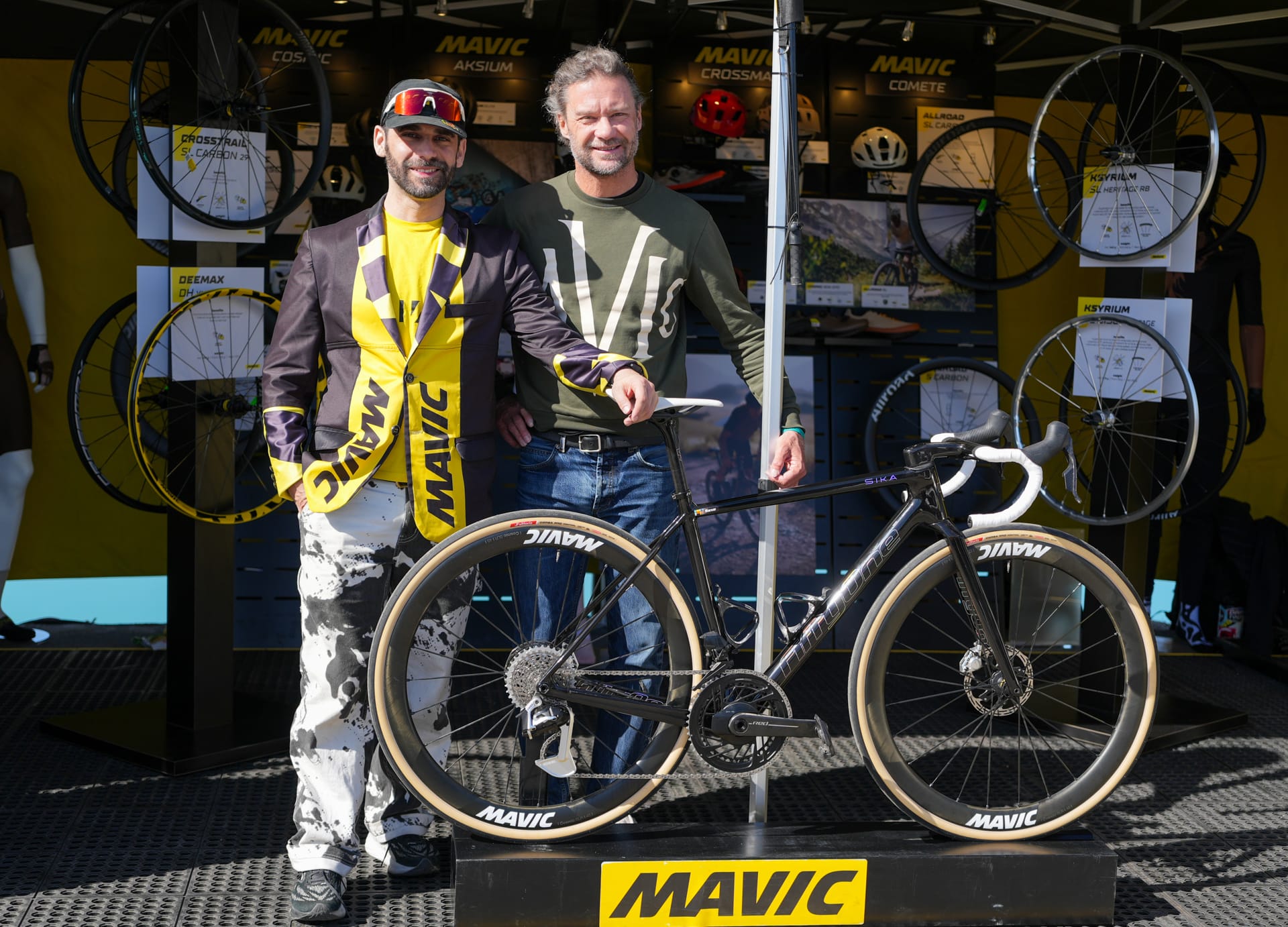
At Sea Otter 2026, we caught up briefly with Morgando and Saxe. The brand had its iconic black and yellow branding facing you as soon as you entered the expo, and its new athletes made visits to the booth to meet fans. For several years Mavic all but vanished from major markets, the United States included, leaving owners struggling to find warranty parts and service – physical presence seems now more crucial than ever to regain trust.
The next year is promised to be a big one in terms of product for the French brand, but it is still clear that Mavic isn't trying to get back on its feet at an easy time. Not only is the wider cycling market in turmoil, but that's especially the case for brands relying on aftermarket sales, Mavic among them.
The following interview has been lightly edited for flow and clarity.
Suvi Loponen: To start with a broad question … where would you say Mavic is as a company right now?
Did we do a good job with this story?