

Monday April 6, 2026, was much like any other day for Melbourne-based rider Nick Squillari.
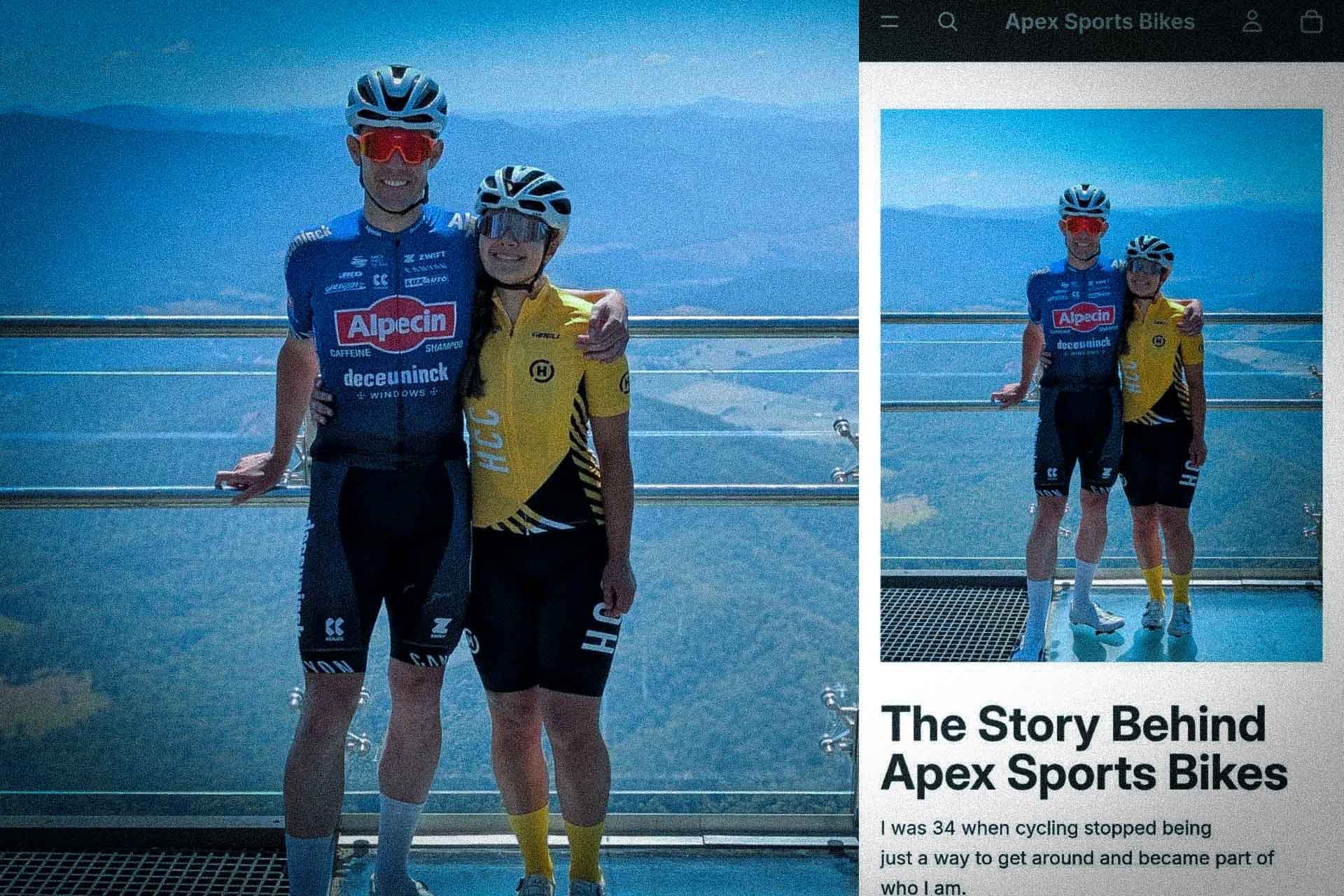
He rode to work, rode home, and was sitting on the couch before getting stuck into dinner, when a message pinged into his Instagram DMs from a follower, asking if he’d come across the website for Apex Sports Bikes. The link Nick clicked on led him to what seemed to be a webstore with a physical address in the Adelaide suburb of Salisbury. The store’s ‘About Me’ page had a lengthy origin story for the business, complete with a picture of the ‘store owner’, Timothy Moreno, with his partner. But there was a problem: the picture was actually of Nick and his partner, Amy. Nick’s response, understandably: “what the fuck?”
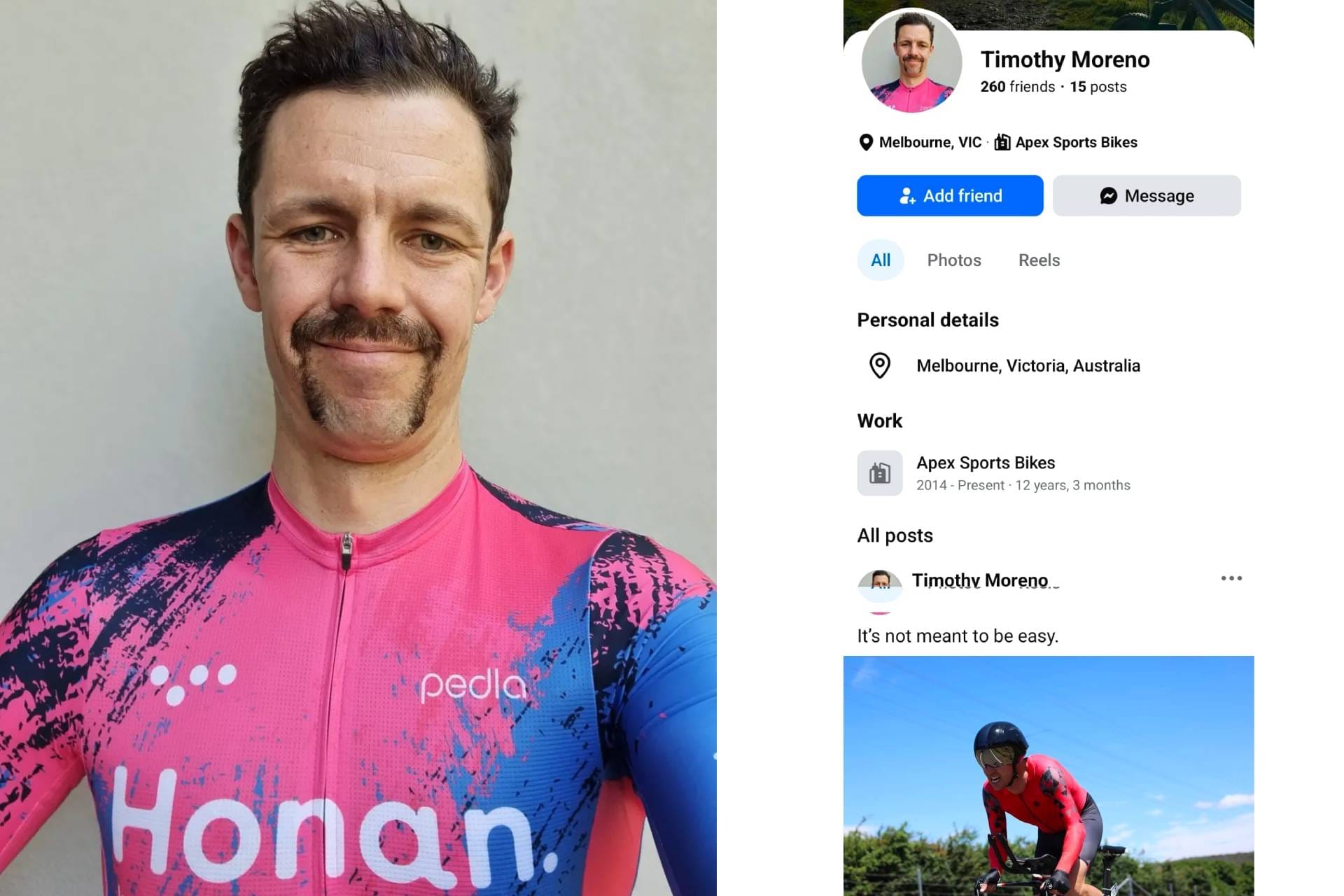
Things got weirder, because his pictures weren’t just on the homepage. There was apparent effort put into the creation of this site and supporting materials, which extended to a social media link to a Facebook profile for ‘Timothy Moreno’ – again featuring exclusively Nick’s pictures. The page’s history stretched back some two years, with more than 250 ‘friends’. “Nice one, boss,” read one comment from a Luzon, Philippines-based Facebook friend, on an 18-month-old picture of Nick riding at a Melbourne crit.

Over the past couple of years, Escape Collective has reported on a number of scams that are designed to ensnare the cycling community: either through AI slop, or fake closing-down sales, or fake brand outlets. These have typically originated in China or Vietnam, where there are big businesses propping them up, making cycling just a small part of a grimmer big picture.
 Iain Treloar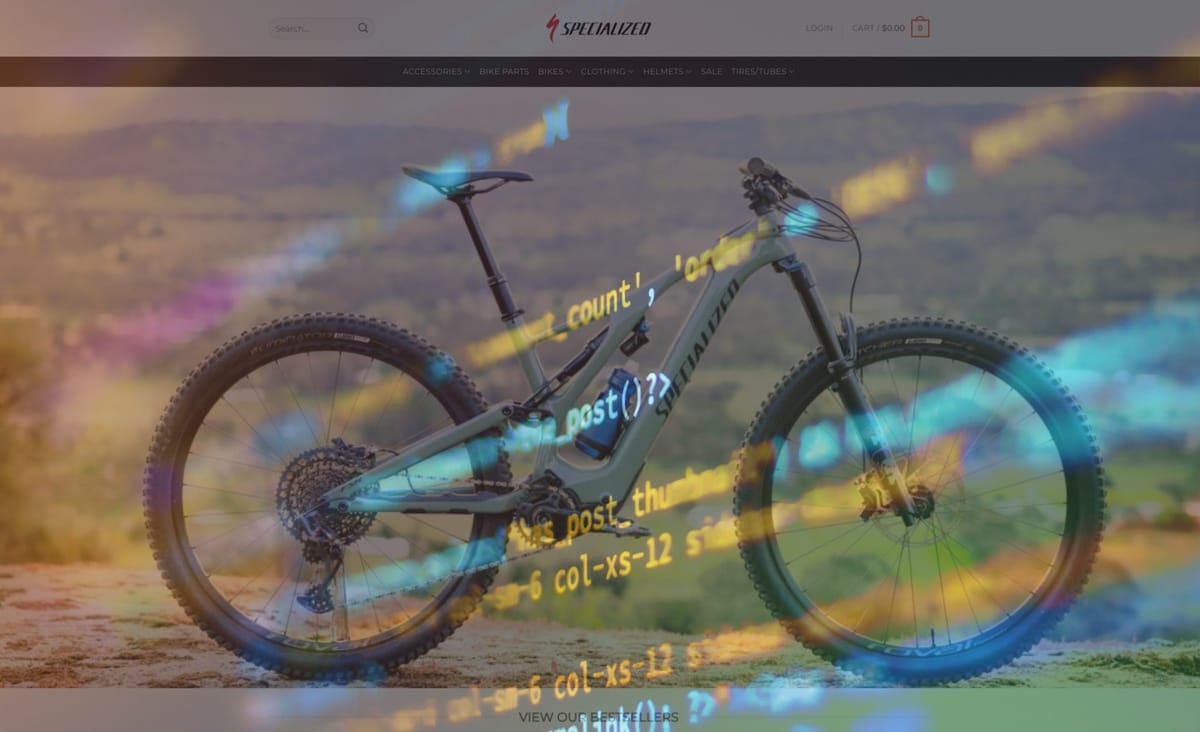
But unlike fake Specialized outlets which could’ve sold improbably priced products to the inattentive, anywhere in the world, there was a local flavour in the case of Apex Sports that was unlike any such network I’ve investigated in the past. This also offered the unique opportunity to look into a scam while it was both active and geographically convenient – I could talk to the people affected and try to unpick the harms of the scam while it was still underway. Real people, real places, real products at mostly real pricing.
There were Australian Business Numbers (ABNs) to follow, addresses I could scope out in suburbs I’ve lived in, banks I’d been a customer of, and a Facebook profile that stole the identity of a person I actually knew.
The face
Nick Squillari was my conduit into this story. He is a member of both Escape Collective and Melbourne’s cycling community, who’s been a perennial performer in his favoured time trial discipline, notching up a number of top 10 results at the Australian national championships. Last year he won an ITT bronze medal in his age group at the UCI Gran Fondo World Championships (the winner was later sanctioned for the use of performance enhancing drugs, upgrading Squillari to silver). Separately, he is co-founder of the shoe brand VeloKicks. All of those factors mean that he has an awareness of the mechanisms of digital marketing, and has an understanding of the murkier sides of the internet. So, when he was presented with pictures of himself propping up the existence of a bike shop that doesn’t exist, he found himself a bit confronted, but was perhaps not as perturbed as you’d expect.
“I guess it’s kind of indicative of the age we live in, because it was all a little bit surreal,” Squillari told me. He’s often dealing with scam customers at VeloKicks, and in our conversation we spoke about the increasingly treacherous nature of the internet: for Squillari, it almost felt like an inevitability of that overall brokenness that something like this could happen. There’s a “lack of digital literacy” that, he feels, makes circumstances like this “easy picking” for the scammers.
Squillari’s partner, who was also pictured in many of the fake Facebook posts and on the fake webstore’s ‘About Us’ page was, he told me, “a little bit disturbed”, but swung into action with her “pragmatic engineer” brain to try to get the site taken down.
The obstacles the couple encountered were numerous. The store’s economic infrastructure was provided by Shopify, an e-commerce titan that is known in some quarters for its resistance to removing bad actors from its platform – in part, perhaps, because they lack financial incentivisation to do so, as they take the same cut from dubious transactions through fake webstores. Squillari was familiar with the DMCA takedown process of Shopify, having used it for VeloKicks, but “the process is a bit painful” and drawn out: “they came back and just asked all the questions they asked previously, in a different format. And so it took them [another] week to respond to that.”
There were even more obstacles at play when flagging the Facebook profile. “Meta were hopeless, as you might expect,” Squillari told me. There was no logical way that he could find within the Facebook ecosystem to get his pictures removed, and only after mobilising “dozens of people” to flag it as a scam was the profile removed. That, too, took longer than a week; Squillari says Meta initially told him “we don’t see any problem with this profile and we’re going to keep it up”, before it eventually disappeared – he’s not sure whether that was at Meta’s initiative, or whether the scammer “knew the jig was up once the Shopify was pulled.”
Either way: a month after the Apex Sports Bikes site was first registered and a couple of weeks after it first popped up on Squillari’s radar, this mysterious store was gone. So, too, was Timothy Moreno – whoever, and wherever, he was.
The consumers
Before the store disappeared, though, it had fulfilled its mission: fleecing unwitting consumers.
Did we do a good job with this story?