

It's 7:15 on a Sunday morning and as the coffee brews my finger hovers above a series of photos on an eBay listing, looking for my next bike. Well, one of my next bikes anyway.
Within just a few seconds, I know it's not the right one. Like you, probably, I've looked at a lot of online bike listings, and on this particular search, I have a clear sense of what I'm looking for and a finely tuned ability to quickly ascertain whether something's a fit or not. Usually, it's not, and that's all my fault.
I could've solved this issue long ago. I could've solved it in 2020 when the perfect bike appeared on eBay and in the financial uncertainty of the COVID-19 pandemic I hesitated and then it was gone, sold to someone with more confidence, or at least cash. Hell, I could've solved it as far back as 1998, when I had one in my possession and decided – in a rare moment of fiscal responsibility – that I couldn't afford it. There would be more chances, I thought.
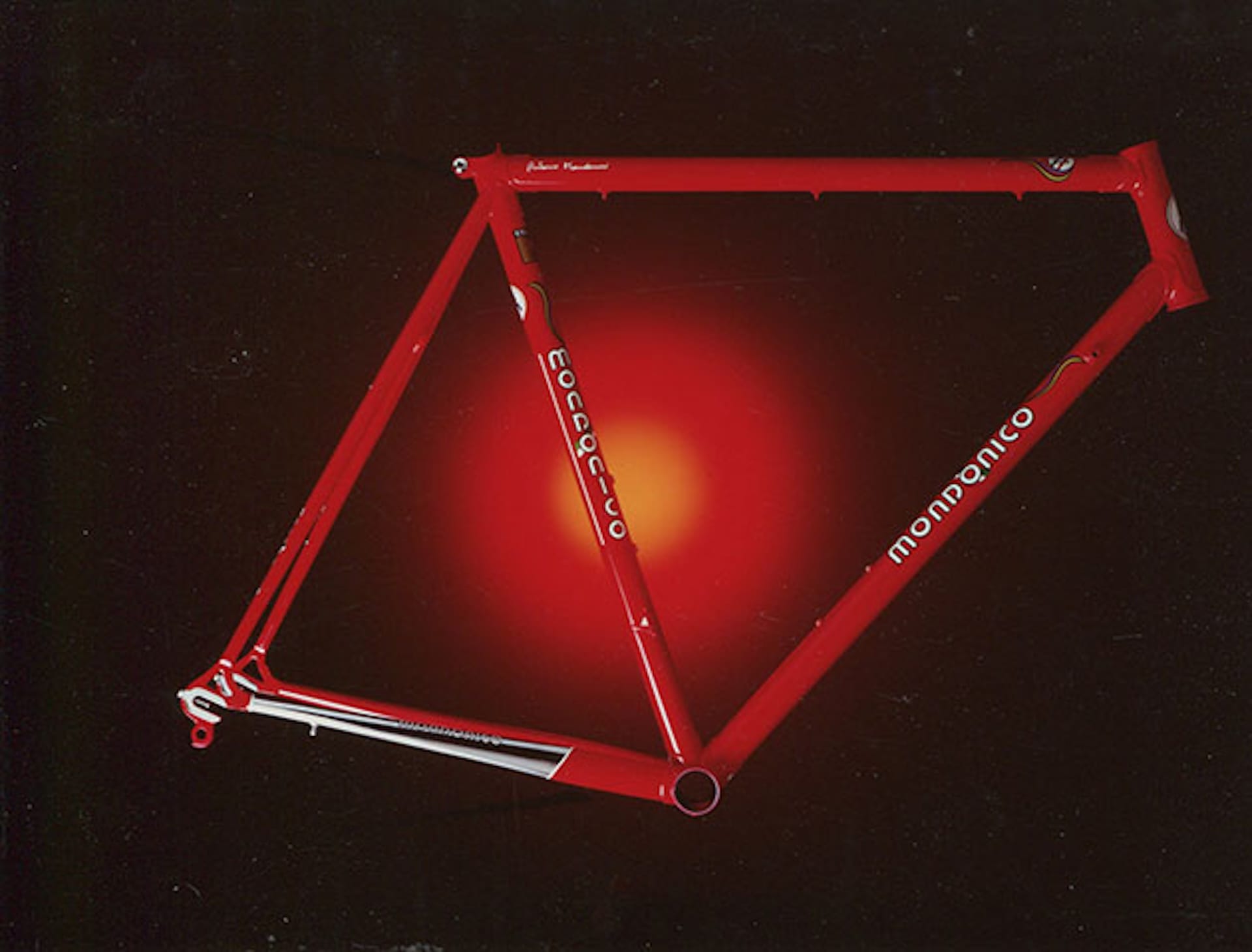
I don't wish for many bikes these days. I have some lovely ones, and I don't ride them enough. But if I were to add three to my stable, they would be a modern hardtail in steel or titanium, a compact e-cargo bike, and a Mondonico road frame. And that last one will prove to be the hardest to find.
The name Mondonico might not mean much to you, in part because the frameshop has been closed for almost 20 years now. It lacks the instant cachet of Colnago or De Rosa or Masi, storied Italian marques that are the bread and butter of vintage Italian steel bikes still traded today among enthusiasts and collectors. And that – along with my personal history with the brand – is exactly why I love it.
Antonio Mondonico was a second-generation framebuilder in the classic Italian tradition, building by hand in a small shop in Concorezzo, Italy, near the famous Monza autosports track. Antonio learned the craft from his father, Giuseppe, who started building frames in 1929 with his brother, Angelo. And had things gone differently, Mondonico might have become an iconic Italian brand, but the associations that proved so pivotal for brands that followed, like Colnago with Eddy Merckx and Pinarello with Miguel Indurain, weren't part of Mondonico's experience (a young Sean Kelly did briefly stay with the family before winning the amateur "Piccolo" Giro di Lombardia in 1976 at the start of his career).
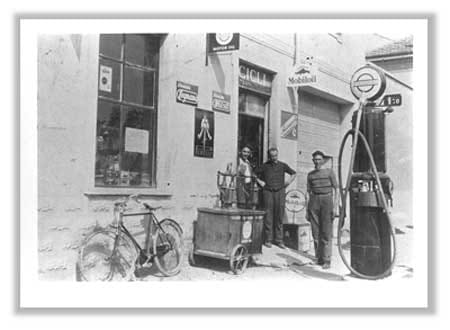
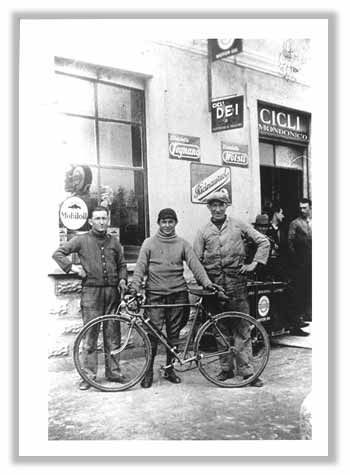
The original Cicli Mondonico shop.
When Giuseppe died in 1973, Antonio closed the shop and for a time worked for other brands, including Gianni Motta – where he was a team mechanic and met Kelly – and Colnago. He re-opened the shop in 1979 and in the early ‘80s went into business with Paolo Guerciotti, supervising an operation that eventually made 2,000 or so frames (mostly Guerciottis) a year. That arrangement didn't last either, and by 1989 he was back in his home shop, brazing frames and teaching his young son, Mauro, the craft.
Did we do a good job with this story?