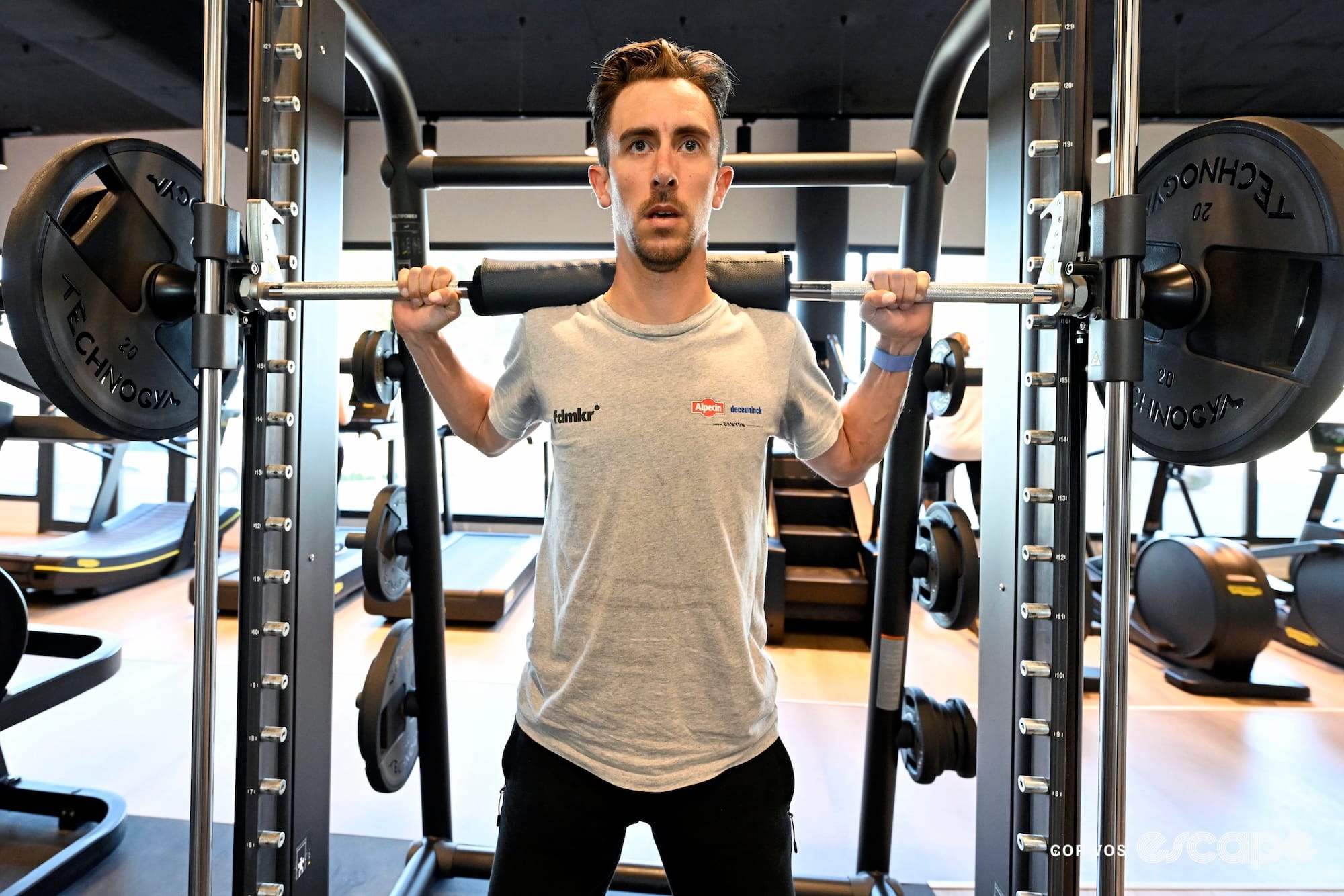


There are plenty of myths in cycling – that black aero socks are faster, or that shaving your legs saves an average of five watts. But the idea that cyclists do not need to strength train is one that has stuck around longer than most.
Many argue that because cycling is an endurance sport centred around cardiovascular fitness, strength training doesn’t offer riders much in the way of performance gains. There is a common notion that cycling gives you all the leg strength you could ever need, and that squatting a barbell does not translate to turning the pedals. And then there’s the dreaded statement I’ve heard time and
time again: “I just don’t want to get bulky.”
The fact is, while cycling is undoubtedly an endurance sport, it is also a power sport. Whether you’re an elite athlete or just like to ride your bike on the weekends, muscular strength is a foundational component of fitness. Arguably even more important, is that resistance training offers a whole host of benefits that will improve your longevity and quality of life both on and off the bike. Let’s dismantle some of the most common myths and misconceptions surrounding strength training for cyclists.
Myth 1: 'Lifting will make me too bulky, and ruin my power-to-weight ratio'
I hear a lot of people, not just cyclists, admit that they are reluctant to pick up the weights because they’re concerned about getting too bulky. My response to that is usually, “Do you know how hard it is to actually get bulky?”
People lift weights intentionally for years, eat copious amounts of protein, and lift 5-6 times a week and still struggle to put on muscle mass. So, I try to reassure them that hitting the gym twice a week is certainly not going to make you bulky, even by a cyclist’s standards. But in all seriousness, for cyclists in particular, the volume of strength training you have the time and capacity for is highly unlikely to cause significant muscle growth. Hypertrophy (increasing muscle size) requires specific stimuli: high training volume, short rest periods, and most importantly, a large calorie surplus. However, if you are managing to tick off all those boxes, while still maintaining a large volume of heavy endurance training, then we actually get a physiological phenomenon called the “Concurrent Training Effect”.
Did we do a good job with this story?